
Some films don’t demand attention — they haunt it. They stay in the body like a song you forgot you knew.
Wong Kar Wai’s In the Mood for Love didn’t just tell a story — it created a mood that reshaped how we think about love, memory, and time. Twenty-five years on, its power hasn’t faded. If anything, the ache has only sharpened.
At HYGY, we’re interested in that kind of cinema — not what’s trending, but what lingers. What shapes how we see, feel, and remember. This is one of those films.
— Gaziza, Editor
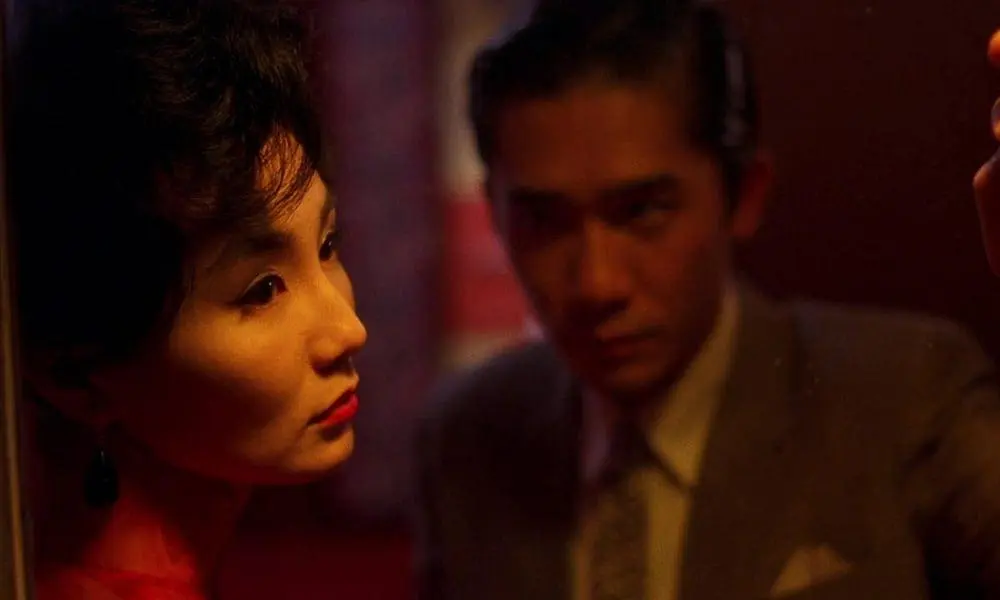
Time doesn’t pass in In the Mood for Love; it breathes. It loops. It sighs through cigarette smoke and echoes down narrow corridors of regret. To watch Wong Kar Wai’s 2000 film is to surrender to a slow, aching hypnosis — one where glances carry more weight than dialogue, and desire is defined as much by what is left unsaid as what is spoken aloud.
It is a film about longing suspended in time, recollection stitched into fabric, and the fragility of human connection. But beneath its surface lies a complex production history, a director notorious for improvisational chaos, and performances forged through creative friction — all culminating in one of cinema’s most enduring portraits of love restrained.
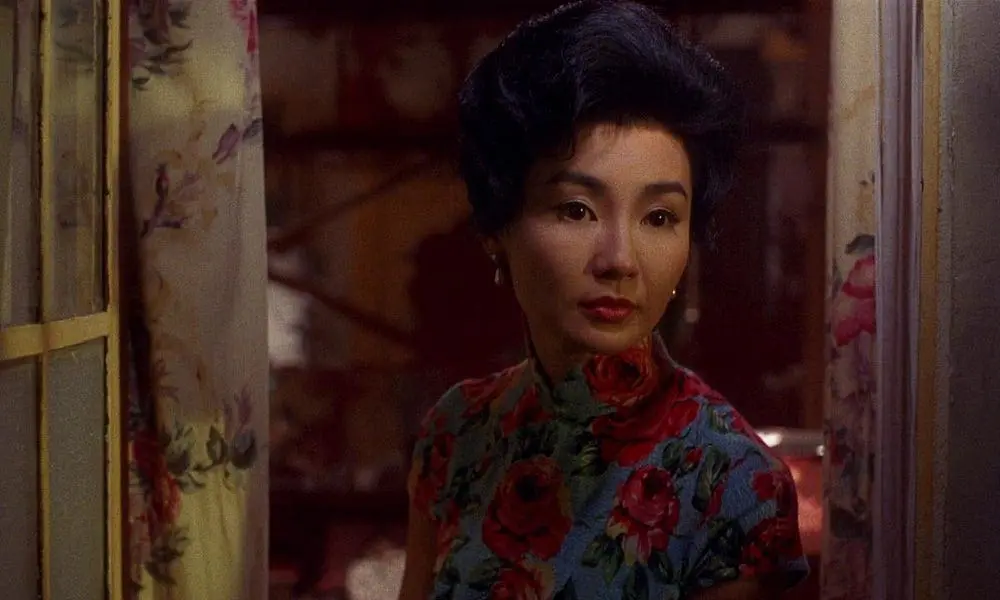
Set in 1962 Hong Kong, In the Mood for Love captures a city caught between tradition and transition, much like its characters. The film emerged as the second instalment of an informal trilogy that began with Days of Being Wild (1990) and concluded with 2046 (2004). But unlike its siblings, In the Mood for Love lives in hesitation — in the pauses of speech, in the static poetry of routine.
Wong Kar Wai initially envisioned a more sexually charged, playful narrative about a man and woman both suspecting their spouses of infidelity. But the tone shifted during production. As the characters and the actors began to inhabit the silences between lines, the film evolved into something more meditative. It became less about betrayal and more about the impossibility of pure connection in a world governed by societal codes and emotional self-censorship.
The early 2000s marked a resurgence of global interest in Asian cinema, and In the Mood for Love arrived at a time when Western audiences were craving introspection over exposition. Wong’s film, with its cultural specificity and timeless ache, became a quiet yet seismic moment in world cinema.
The metaphor BFI draws between the circling Alpine trains and the film’s cyclical repetition feels apt — Wong’s characters seem to circle one another endlessly, never fully arriving, only accumulating shared silence.

Wong Kar Wai is known for directing without a finished script — an approach that fosters spontaneity but demands trust and endurance. In the Mood for Love was no exception. Shot over 15 months across multiple countries (including Hong Kong, Thailand, and briefly Cambodia), the film’s production was infamously turbulent.
Tony Leung and Maggie Cheung, both seasoned actors, found themselves caught in an ever-evolving process where motivations, scenes, and even the genre seemed to shift on a weekly basis. Wong, ever the jazz musician of cinema, would reframe the film’s core as the shoot progressed. Initially titled Secret, the movie began with the idea of an affair but gradually evolved into a study of suppressed desire.
Reports surfaced of tension between Wong and Maggie Cheung, stemming from the director’s elusive direction and her frustration with endless takes — many of which were never used. But from this friction emerged a rawness that permeates Cheung’s performance. Her Su Li-zhen isn’t acted — she is inhabited. You can feel the exhaustion, the quiet implosion, the repressed fury in every frame.
The final film, then, is a mosaic assembled from fragments of unused subplots, discarded scenes, and false starts. Wong distilled from the chaos a kind of emotional truth that only exists when logic is thrown aside and instinct is allowed to guide the edit.
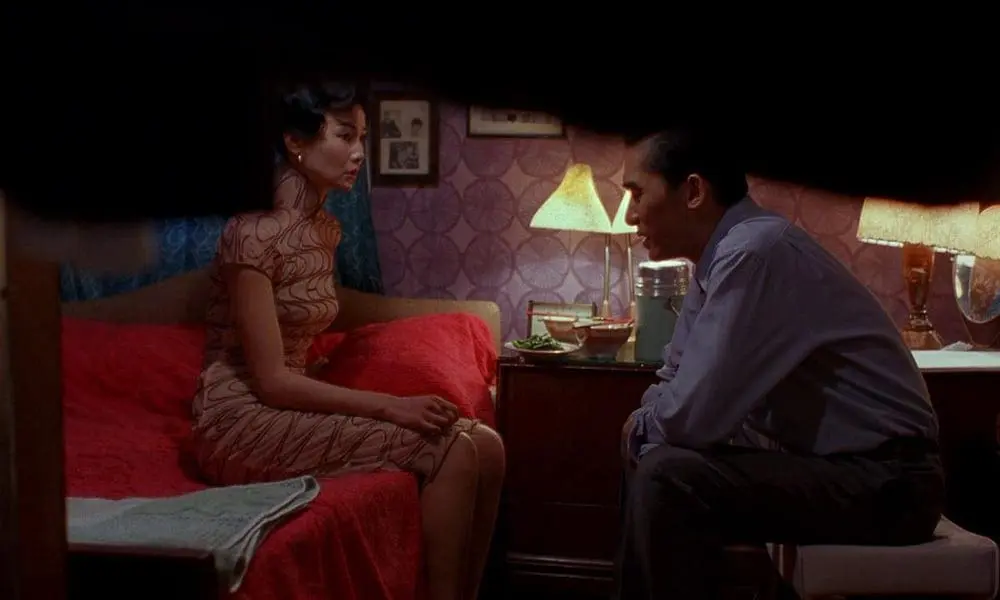
If the story is minimal, the form is maximal. In the Mood for Love speaks not through exposition, but through visual seduction and sonic rhythm. Christopher Doyle and Mark Lee Ping-Bin’s cinematography crafts a world of rich reds, shadowy greens, and claustrophobic browns, each frame saturated with melancholy. The use of mirrors, doorways, and half-seen perspectives traps the characters inside emotional mazes they can’t escape.
Costumes, particularly Maggie Cheung’s cheongsams, are not mere fashion but mood indicators. Each dress marks a shift in her inner life, echoing the cyclical nature of time. The mise-en-scène is obsessive, curated to the point where objects feel like mnemonic triggers: noodle bowls, typewriters, radios.
Then there is the music — always the music. Nat King Cole’s Spanish ballads bleed nostalgia. But it’s Shigeru Umebayashi’s haunting “Yumeji’s Theme” that becomes the film’s heartbeat. It repeats like a ritual, scoring slow-motion sequences of passing bodies and capturing the rhythm of yearning that the characters cannot articulate.
Editing is its language here. Scenes bleed into each other through dissolves, not cuts. Dialogue fades mid-sentence. The passage of time is ambiguous, mirroring how recollection distorts chronology. What happened and what was imagined often overlap. This is not a narrative; it is an atmosphere.
As noted by the BFI’s retrospective, Wong’s use of 360-degree shots and slow tracking movements is not just aesthetic; it is ritualistic. The camera mimics the internal loop of longing, subtly echoing how memories move in spirals, rather than straight lines.
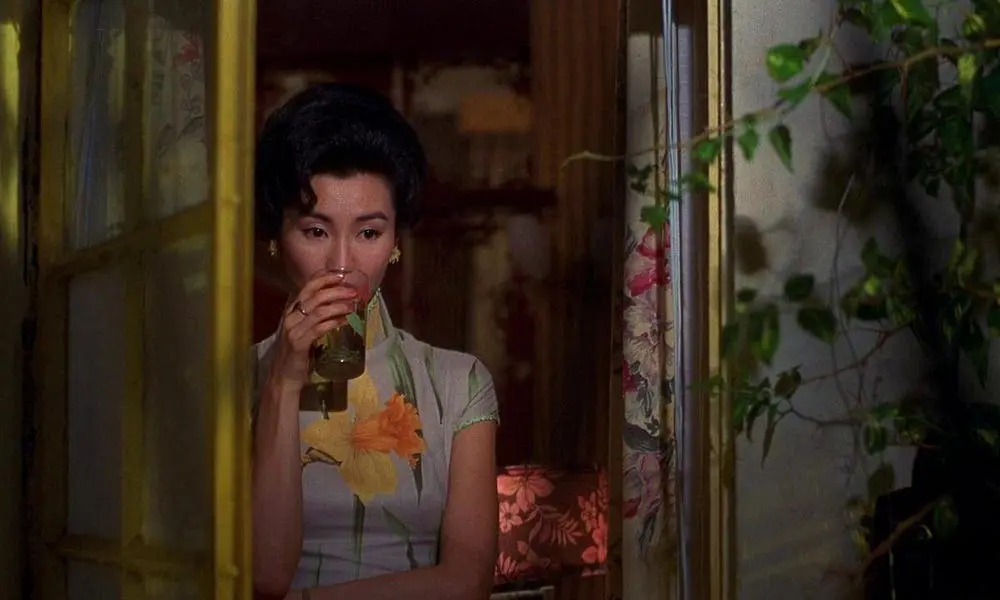
At its heart, In the Mood for Love is a meditation on what it means almost to love someone — and how the ache of what could have been can haunt more than heartbreak itself.
Chow Mo-wan (Tony Leung) and Su Li-zhen (Maggie Cheung) don’t engage in a typical affair. Instead, they flirt with emotional closeness while meticulously avoiding its consummation. Their mutual understanding — that they must not become like their unfaithful spouses — becomes both a moral anchor and a tragic curse. They rehearse hypothetical confrontations, role-playing their partners’ betrayals, as if trying to decode the script of their own discontent. But the more they pretend, the more real their bond becomes.
Desire here is never direct. It’s elliptical, a slow orbit around a centre they never dare approach. This is where the film draws its deepest power: in restraint. Wong Kar Wai shows us that love doesn’t need to be acted on to be felt. The decision not to cross a line becomes the defining gesture of intimacy.
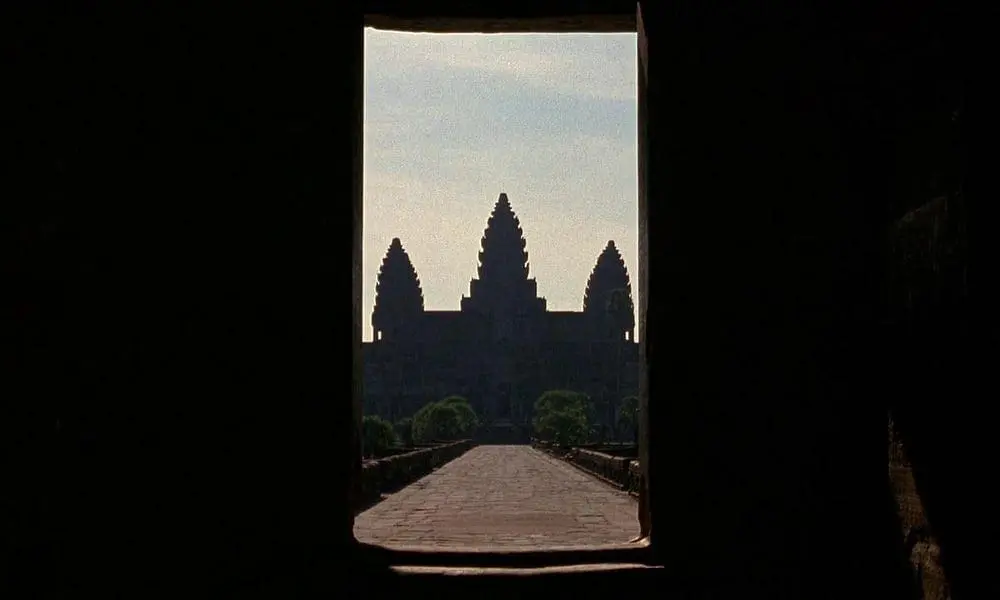
And remembrance becomes the film’s true antagonist. The past lingers like perfume on fabric. Even when the characters part, even as years pass, the emotional residue remains. The film’s final moments, set at Angkor Wat, suggest that secrets, once whispered into ancient stone, become eternal. Chow’s final act isn’t confession — it’s catharsis.
Wong’s cinematic language, as the BFI describes it, avoids emotional confrontation. Instead, it embraces dissonant shadowy interiors, silence between sighs, and secrets left unvoiced. This aesthetic mirrors the traditional Hong Kong restraint that frames the film’s moral undertones.
In the Mood for Love is not a film you finish — it’s one you carry. It lingers in the subconscious like an unresolved melody, replaying itself in moments of solitude, in dim corridors, in fleeting glances shared with strangers.
Its impact is twofold. Cinematically, it is a masterclass in mood, control, and negative space — a lesson in how restraint can speak louder than expression. Emotionally, it is a mirror held up to the part of ourselves we often silence: the recollection of what never was, the version of life we almost lived.
For filmmakers, it serves as a blueprint for atmospheric storytelling that relies on narrative rather than exposition. For audiences, it is a reminder that cinema can be emotional before it is intellectual. And for lovers — past, present, or imagined — it is a quiet elegy for connection lost to time and circumstance.
Twenty-five years on, the film remains as relevant and aching as ever. Not because the world hasn’t changed, but because longing, silence, and memory — the things Wong Kar Wai captures with devastating beauty — never go out of style.
In their commemorative notes, the BFI poignantly observes the film’s ending as a final whisper — secrets buried into ancient stone in Angkor Wat, echoing like unanswered prayers. It’s a fitting image: desire turned into ritual; longing preserved not through expression but through reverent concealment.


