
Words by Valerie Aitova
Television has always been a mirror – reflecting back the anxieties, aspirations, and aesthetics of its era. But some shows do more than reflect culture. They shape it. Whether it’s Friends popularising the oversized coffee mug or Euphoria redefining teen beauty standards, certain series embed themselves so deeply in our collective consciousness that they become generational templates. They don’t just define what we watch – they shape who we become.
In the streaming age, that influence has only grown more complex. Cultural timelines have collapsed. Gen Z binges Sex and the City for the wardrobe and Gilmore Girls for the seasonal nostalgia, while older viewers turn to Euphoria or The Summer I Turned Pretty to understand what contemporary youth looks and sounds like. Shows no longer live and die by the linear broadcast schedule. They’re rewatched, remixed, and recontextualized in an endless loop – a process that strengthens their cultural staying power and expands their impact beyond the original audience.
In media studies, this is called “cultural recycling” – where older texts are kept alive not through reruns, but through online reappropriation, fan edits, and meme culture.

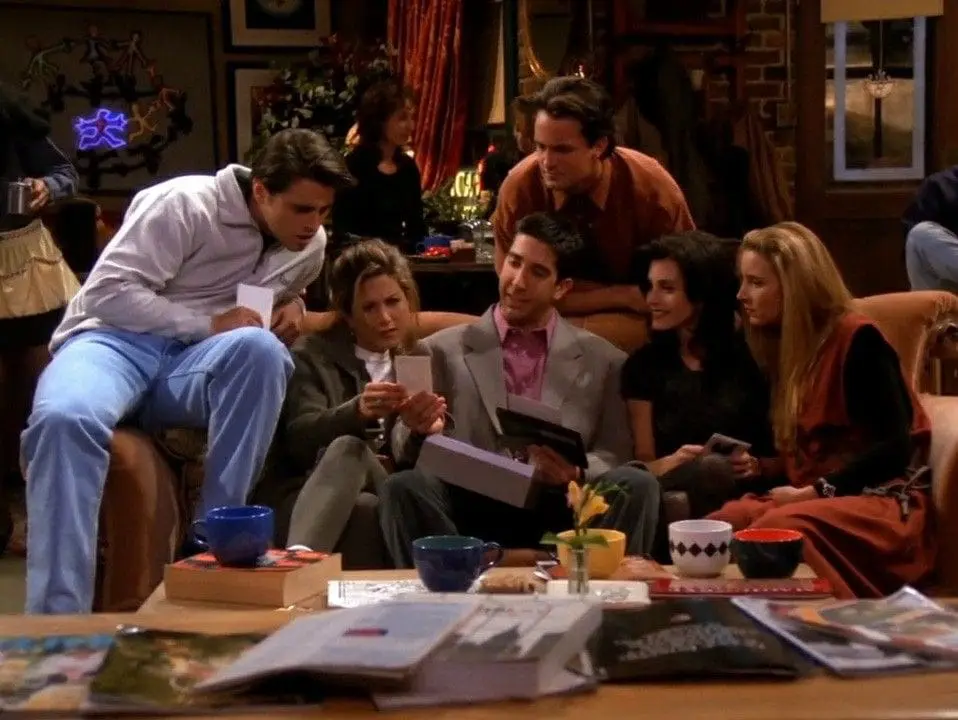
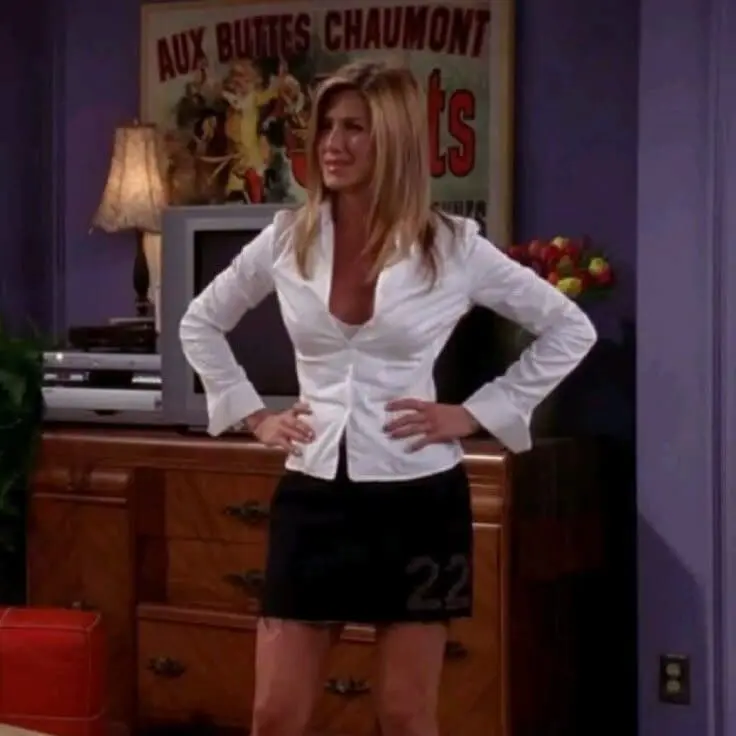
Take Friends, for example. Beyond its sitcom structure, the series offered a blueprint for adulthood rooted in communal living, aspirational apartments, and a curated version of chaotic independence that felt achievable. Its archetypes – the sarcastic everyman, the perfectionist overachiever, the charmingly self-absorbed friend – distilled a 1990s optimism about young adulthood. For many millennials, this was the first time adulthood looked fun – full of chosen family, sarcasm, and consistent hangouts. Its fashion, though understated, became iconic – think Rachel Green’s mix of ‘90s normcore and department-store chic, a style that still circulates on Pinterest boards and TikTok outfit recreations.

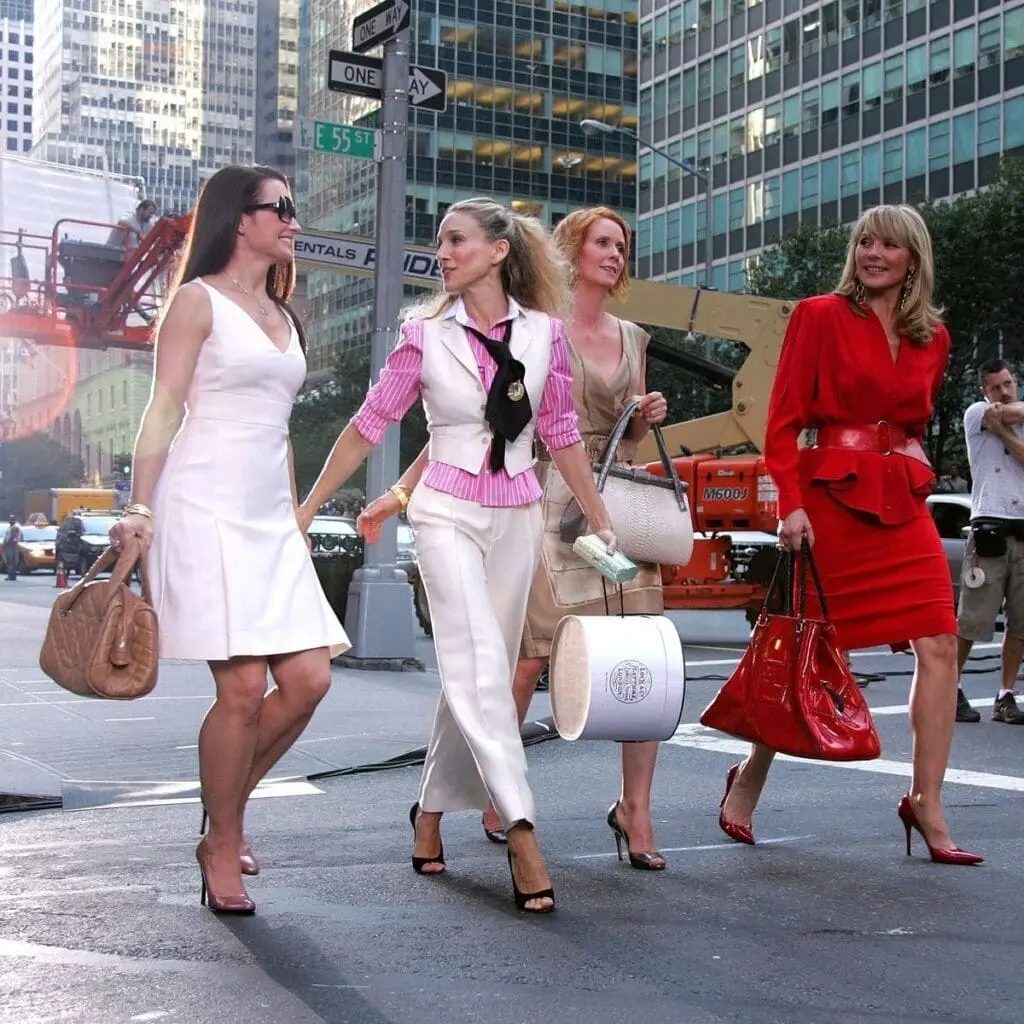
Sex and the City, which aired just a few years later, upped the stakes. If Friends was about shared rent, Sex and the City was about personal branding – glamorising brunch, singledom, and designer shoes as markers of self-worth. Each character embodied a type – the romantic idealist, the pragmatic realist, the guarded cynic, the unapologetic wildcard – and each mapped onto a different vision of modern womanhood. Carrie Bradshaw became shorthand for a kind of aspirational independence: single, stylish, and living beyond her means. The show normalised self-reinvention as a life strategy, embedding the idea that identity could be actively curated – a concept that now feels foundational to social media culture.
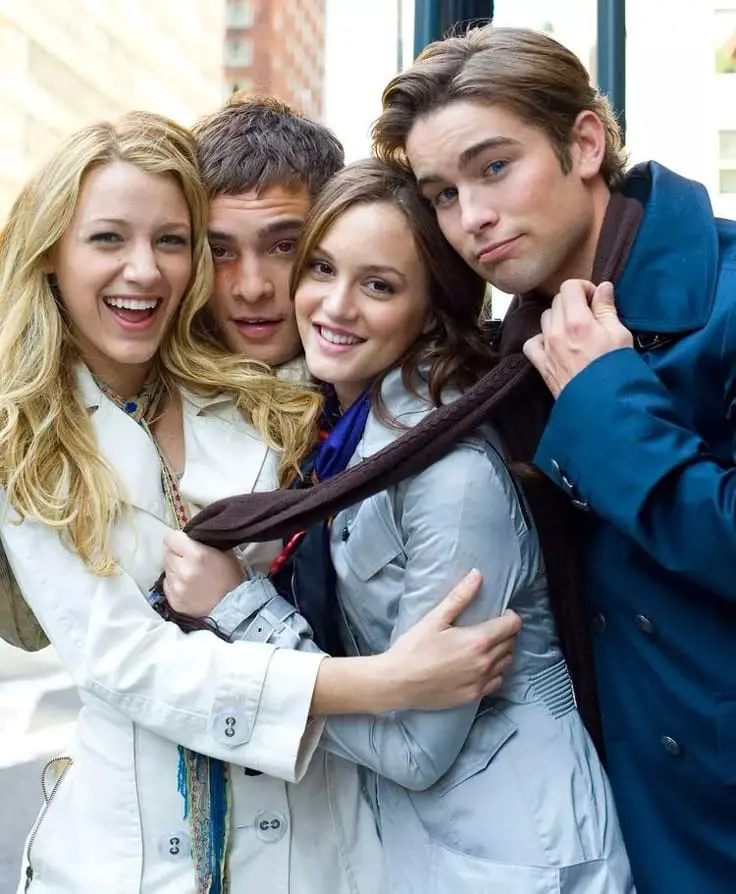
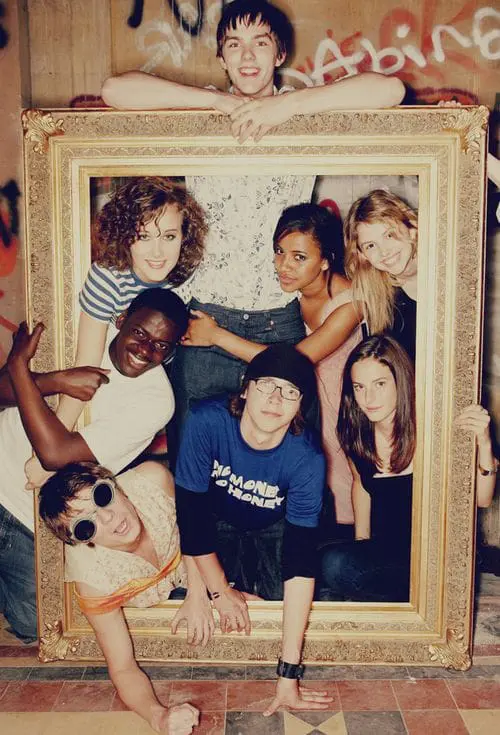
By the late 2000s and early 2010s, shows like Gossip Girl and Skins began to reflect a more fractured, digital-age adolescence. Gossip Girl wasn’t just about wealth; it was about performance – a precursor to influencer culture, complete with identity surveillance, status games, and image management. Its characters performed versions of themselves for an invisible audience, long before Instagram made that dynamic universal. Meanwhile, Skins, which aired in the UK, became a cult favourite for its raw portrayal of teen life. It was gritty, emotionally volatile, and unfiltered – the kind of show that suggested pain, partying, and self-destruction weren’t aberrations, but rites of passage. While different in tone, both series captured the uncertainty of a generation coming of age in a world already mediated by digital connection, where identity was both hyper-visible and unstable.
As Gen Z came of age, TV’s emotional and aesthetic codes shifted again. Euphoria has arguably become the defining show of the moment, not only for its intense focus on addiction, trauma, and emotional instability, but for how it packages those themes visually. Makeup, lighting, and wardrobe function as emotional storytelling tools, signalling character arcs as much as dialogue does. Its archetypes – the disillusioned outsider, the hyper-confident queen, the hopeless romantic – are familiar, but refracted through a post-Instagram lens that demands every emotion be both felt and styled. The show isn’t just watched – it’s mimicked. On TikTok, tutorials on Maddy’s eyeliner or Cassie’s morning routine serve as mini acts of identity alignment.
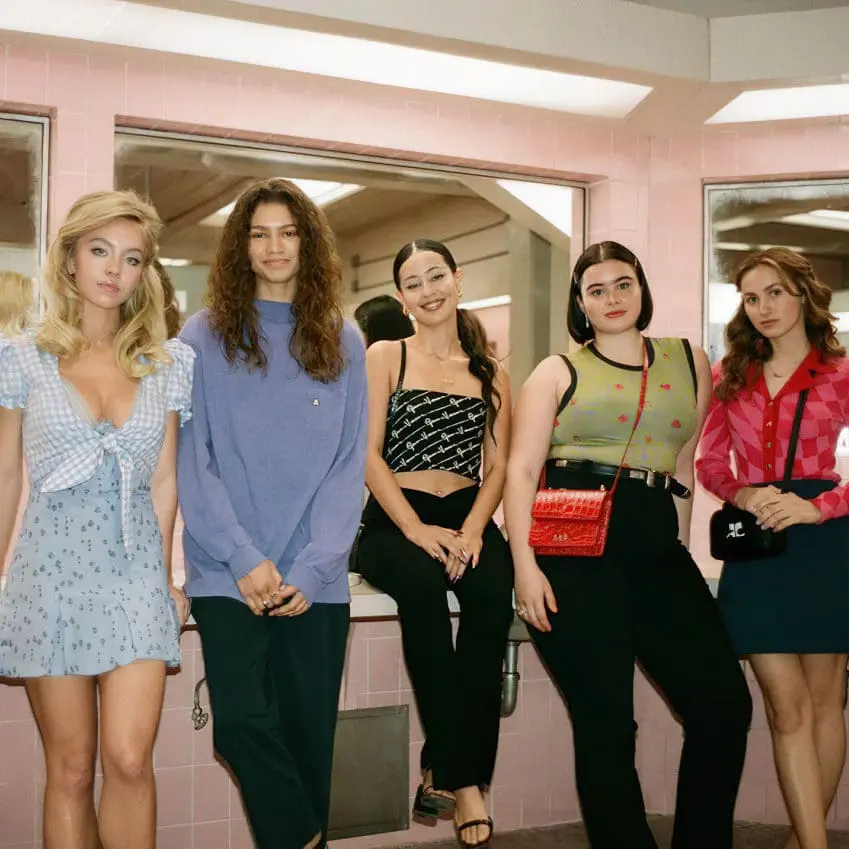
Euphoria TV-show, photo from Pinterest
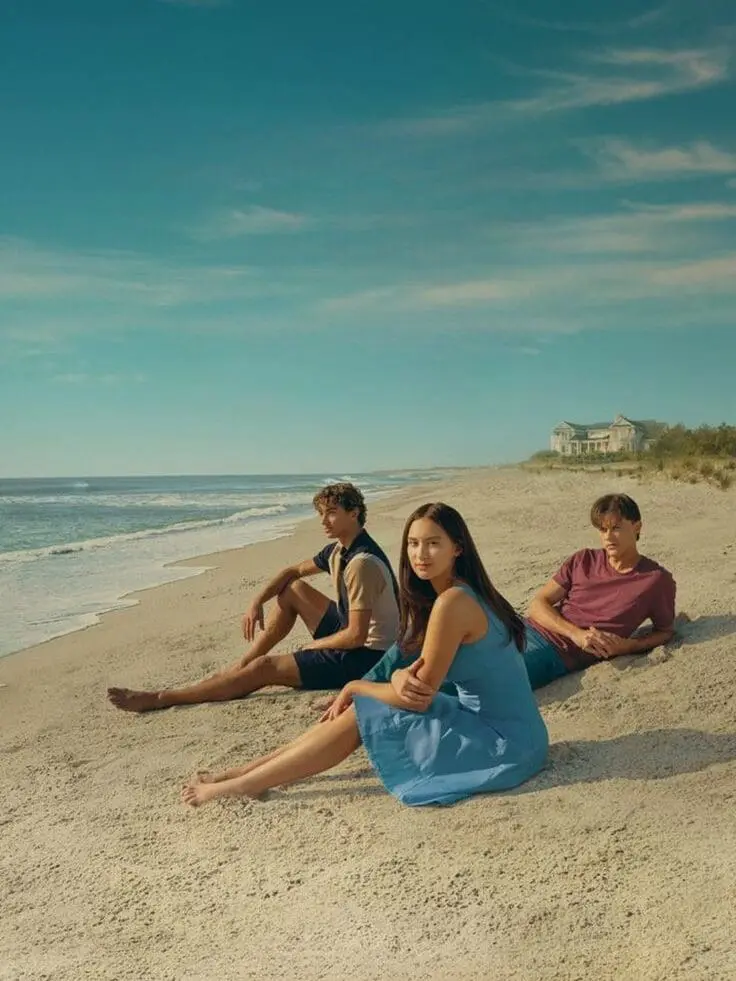
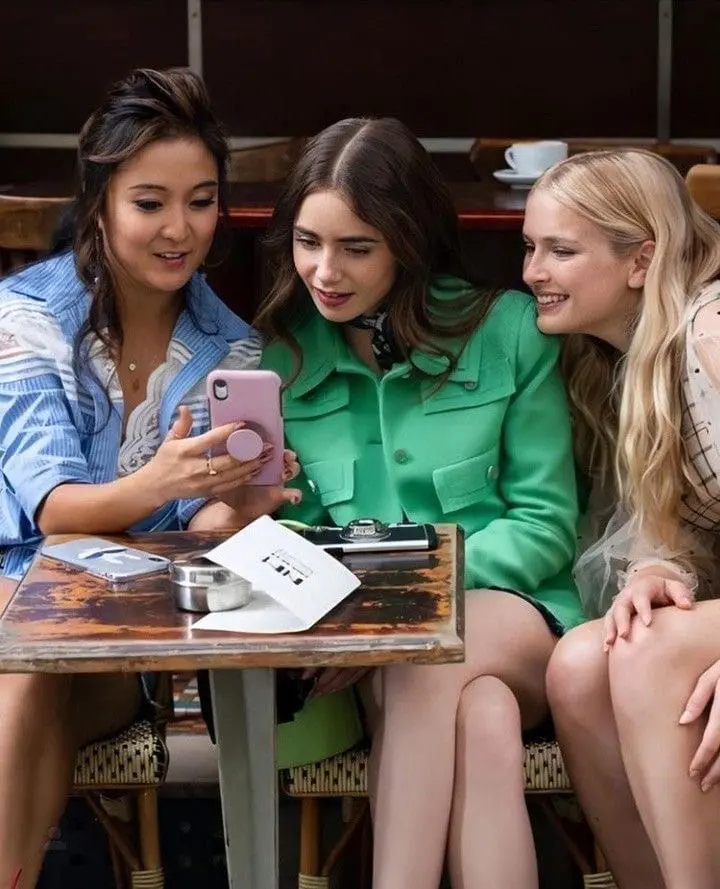
The Summer I Turned Pretty leans into romanticised nostalgia – beach houses, love triangles, and the illusion of an endless summer, soundtracked by Taylor Swift. Bridgerton plays with fantasy and aesthetics, offering a regency-era escapism that taps into a different kind of self-performance. Emily in Paris, despite or because of its critical backlash, finds its footing as a hyper-stylized vision of modern femininity – impractical outfits, idealised independence, and the fantasy of perpetual reinvention. These series may look like pure escapism, but they are also cultural scripts. They teach viewers how to dress, how to desire, and how to frame their lives – the aesthetics are simply the most visible layer of deeper narrative fantasies about love, ambition, and belonging.
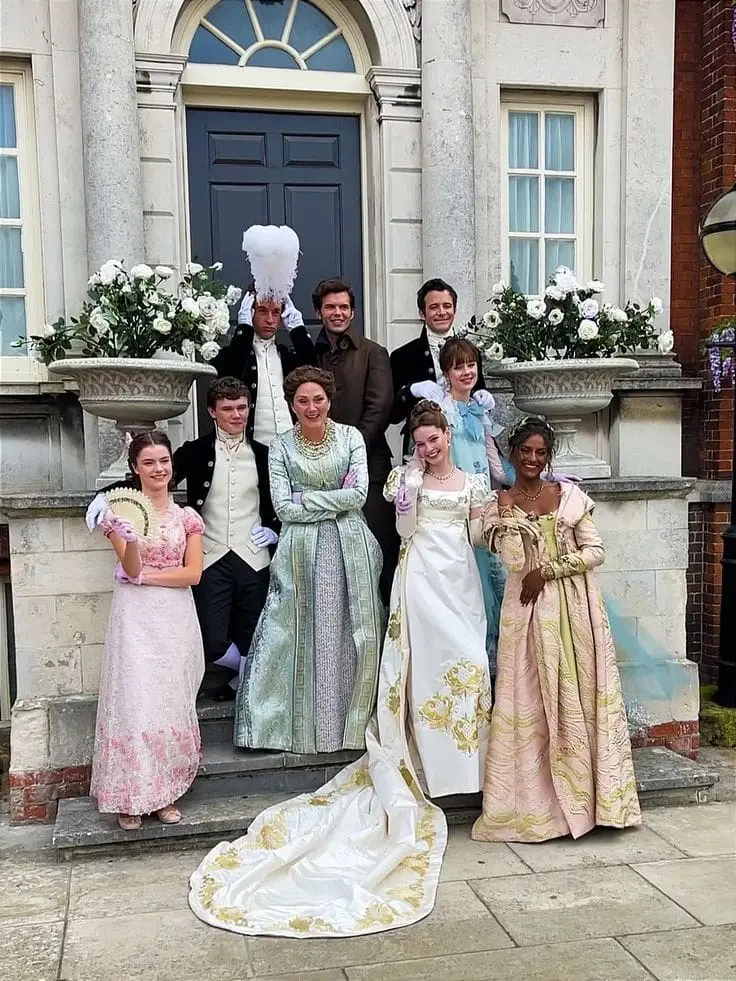
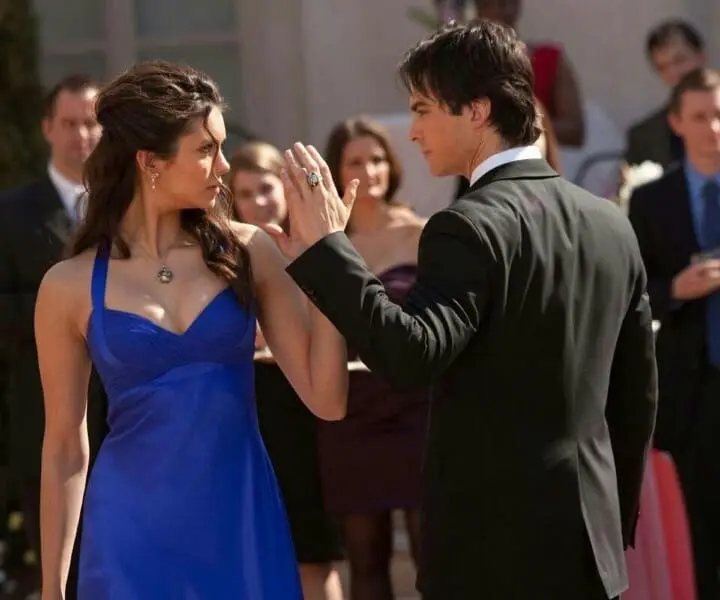
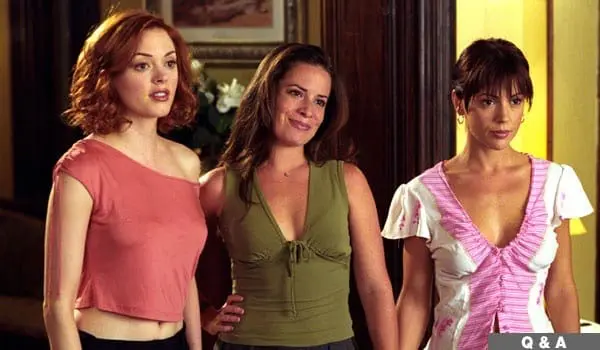
What’s notable is how some TV-shows gain second and third lives long after their original air date. Gilmore Girls has become synonymous with fall and comfort-viewing – the unofficial TV soundtrack to book-girl TikTok. The Vampire Diaries and Pretty Little Liars continue to trend through aesthetic edits, memes, and nostalgia-fuelled discourse. Charmed, which once catered to Y2K-era feminism, is now revisited as a soft witchcore precursor – complete with bootcut jeans, crystals, and complicated sisterhood. These aren’t just characters – they’re reference points, narrative anchors that resurface whenever a generation wants to revisit or reframe its formative stories.

Streaming culture fuels this continuous rediscovery. The algorithm doesn’t care what year a show aired – it cares what vibes. In practice, this means Friends can be “new” again to someone who’s just turned fifteen, and Euphoria can feel timeless, despite being distinctly post-Instagram in tone. Nostalgia here isn’t passive – it’s curated. Viewers actively seek out shows that fit their mood or aesthetic, constructing a media diet that blends eras, genres, and emotional tones into a personalised cultural identity.
TV’s role in identity formation isn’t just about characters or storylines – it’s about how viewers internalise and project those narratives. We borrow mannerisms, recycle dialogue, soundtrack our lives with their drama. Online, we live inside the edits: the YouTube montages, the fan cams, the TikTok “what I would wear” trends – all of it turns passive consumption into cultural participation.
And there’s something inherently comforting about returning to a familiar show, especially when the world feels unstable. These series offer structure, continuity, and predictability. They provide emotional rehearsal space – a way to process relationships, ambition, heartbreak, and change by watching someone else go through it first.
So yes, the shows we grew up on, and the ones we loop now, matter. They give shape to our aspirations and language to our feelings. They offer a kind of cultural shorthand, helping us navigate identity in an era where the self is increasingly mediated, performed, and aestheticised. Whether we’re quoting Lorelai Gilmore, dressing like Serena van der Woodsen, or crying to a Euphoria soundtrack, we’re not just watching TV. We’re participating in an ongoing conversation about who we are – and who we’re becoming.


