
Words by Natasha Djanogly
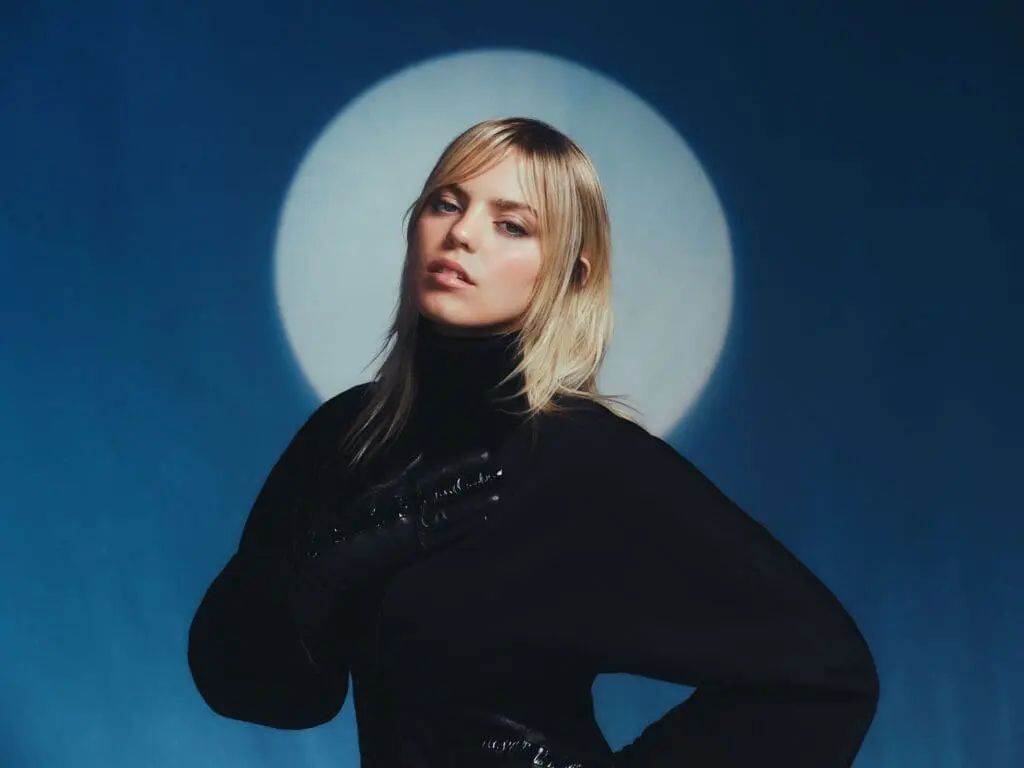

Queer women are front and centre — not only are they breaking barriers, but they’re making history and redefining cultural narratives. The music industry is no different. Whether it’s bisexual rapper Doechii winning Best Rap Album of the Year at the 2025 Grammys or lesbian artist Reneé Rapp being introduced by the cast of The L Word at Coachella, the visibility of queer women in music has soared.
However, despite what some people seem to think, queer identity existed long before Queer Eye, Ellen DeGeneres, and Gen Z “woke culture.” Queer women have always been here — and, of course, so has their music.

Going back to the 17th-century French opera singer Julie d’Aubigny — known for her typically male fashion sense and allegedly burning down a convent to save her girlfriend — to revolutionary queer Black American artists like Bessie Smith, Ma Rainey, Gladys Bentley, and Big Mama Thornton of the early 20th-century blues era, to Y2K pop icons like Lady Gaga and Madonna, queer women have been singing, writing, and producing forever.
The only difference is that now, their queer identities and immense contributions to popular music are more openly acknowledged, expressed, and celebrated.
For the most part, queer references in mainstream music were historically obscure and needed to be decoded. From Tumblr to Reddit, fans have dissected popular lyrics for queer references and subtext. At the centre of these speculations is current pop star Taylor Swift, whose lyrics — like “You could hear a hairpin drop” — and looks, such as her hair dyed in Bisexual Pride Flag colours, are constantly analysed by the Gaylors, a group of her fans who believe Swift is queer and has been secretly communicating this through her work.
Notably, songs don’t need to be specifically about queer love to be considered queer and analysed. Songs like Gloria Gaynor’s I Will Survive or The Weather Girls’ It’s Raining Men have long been embraced as gay anthems simply for their themes of yearning, allyship, or empowerment that are central to the queer community.
Today, however, many mainstream songs are unapologetically queer, often containing overt, and sometimes explicit, references to queer attraction, relationships, and empowerment — whether that’s bisexual artist Halsey in 2021 singing “She’s on the tip of my tongue” in Honey, or Billie Eilish proudly stating “I could eat that girl for lunch” in her hit 2024 song Lunch.
Music is a form of protest — when a queer woman artist releases explicitly sapphic songs and those lyrics go viral, she is both making space for queer women in a largely heteronormative world and reclaiming female sexuality in a misogynistic and exploitative industry that has long profited from the sexualization of women. This is especially true when it comes to artists who belong to multiple marginalised social groups and face even more challenges in the industry, such as queer women who are of global majority or have disabilities.
From the rise of social media to changing social norms regarding sexuality, numerous factors have contributed to the growth of lesbian visibility in mainstream music. Previously, artists had to rely on music labels to gain recognition and were often pressured to conform to marketing expectations and industry standards.
Yet, with social media and music-sharing platforms like Instagram, TikTok, YouTube, and SoundCloud, artists can bypass major labels and release their music directly to fans — without modifying or hiding their personal expression and identity to fit a label’s idea of success. For example, in 2012, the hugely successful bisexual Brazilian singer Ludmilla went viral after posting her song Fala Mal de Mim on YouTube.
Growing visibility is also a result of increasing social acceptance of the LGBTQ+ community. While significant challenges remain, there has been notable progress — whether through the legalization of same-sex marriage in 38 countries, grand pride parades, or growing queer representation on TV. As more artists come out and achieve success, and as LGBTQ+ rights and advocacy expand, new queer artists feel increasingly empowered to come out as well.

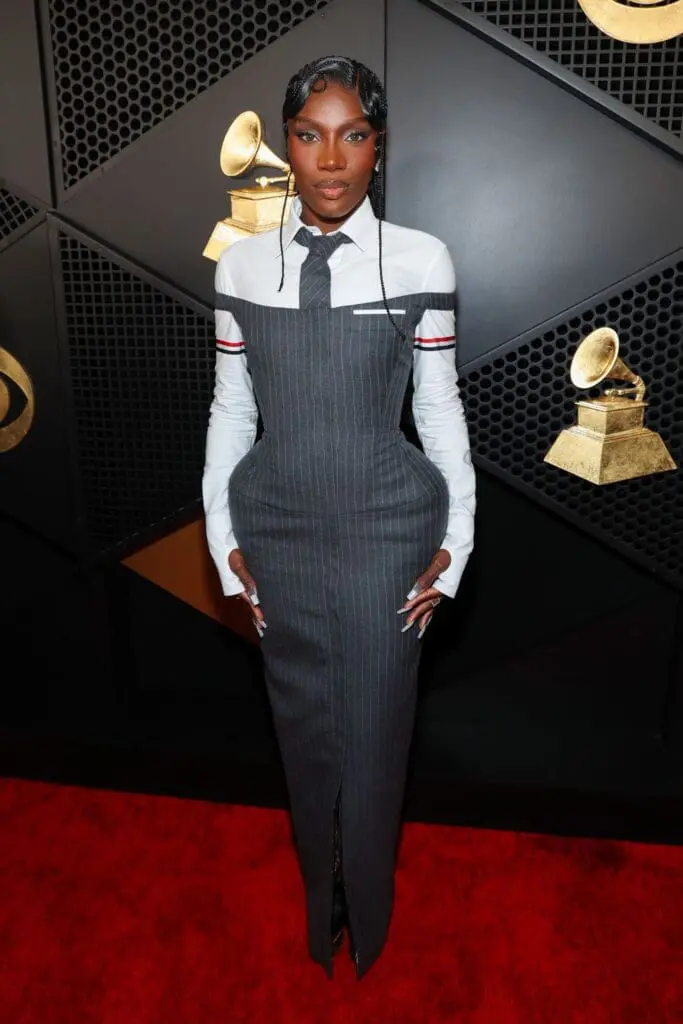
While this shift is positive, controversy has arisen around problematic trends like queerbaiting — the practice of creating an ambiguous public sexuality to attract a wider audience and gain popularity without explicitly expressing queer identity or advocating for LGBTQ+ rights. Many artists, including Katy Perry, Billie Eilish, Normani, Ariana Grande, Cardi B, and Rita Ora — some of whom openly identify as queer — have been accused of queerbaiting. Critics argue that this perpetuates harmful stereotypes, invalidates queer identity, and taints the visibility of queer women artists.
Some artists have also been criticized for promoting the stereotypical idea of a temporary or experimental queer experience. Rita Ora’s Girls, featuring Bebe Rexha, Cardi B, and Charli XCX, famously faced backlash for its lyrics: “Red wine, I just wanna kiss girls, girls, girls.” Lesbian singers Hayley Kiyoko and Kehlani criticized the song for being harmful, with Kiyoko tweeting that the lyrics “fueled the male gaze while marginalizing the idea of women loving women.”
However, this raises another question: Must music artists publicly share, prove, or defend their identity to make queer references in their work? The discussion around queerbaiting is complex; while some see it as exploitative and problematic, others consider it an expression of sexual fluidity.
Bebe Rexha addressed this in response to the backlash, saying:
“My sexual life is nobody’s business, but we’re singing a song about kissing girls, and that remains true to who I am. It’s the life that I live, and it’s honest to me… People automatically went for the negative instead of saying: ‘Well, maybe these girls do kiss girls, maybe Bebe is bi.’ You don’t know about my sexual orientation, so I felt disrespected.”
Despite these debates, whether these women artists are explicitly expressing their queer sexuality, hinting at it, or becoming the subject of worldwide discussions about queerbaiting, queer identity is increasingly present, visible, and discussed in pop culture, the press, and mainstream music generally.

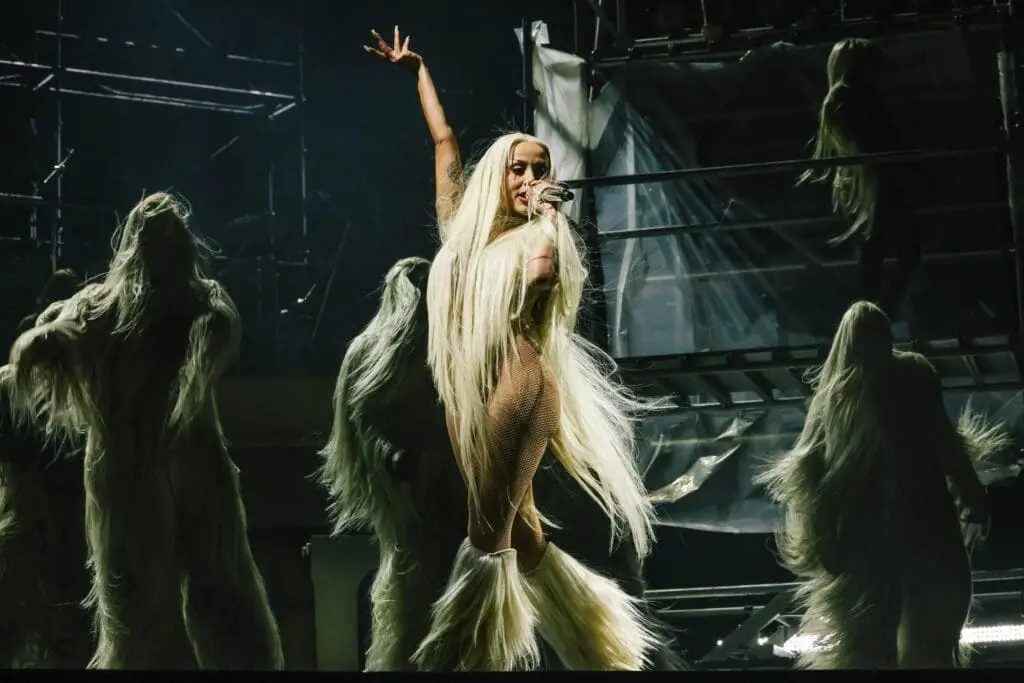

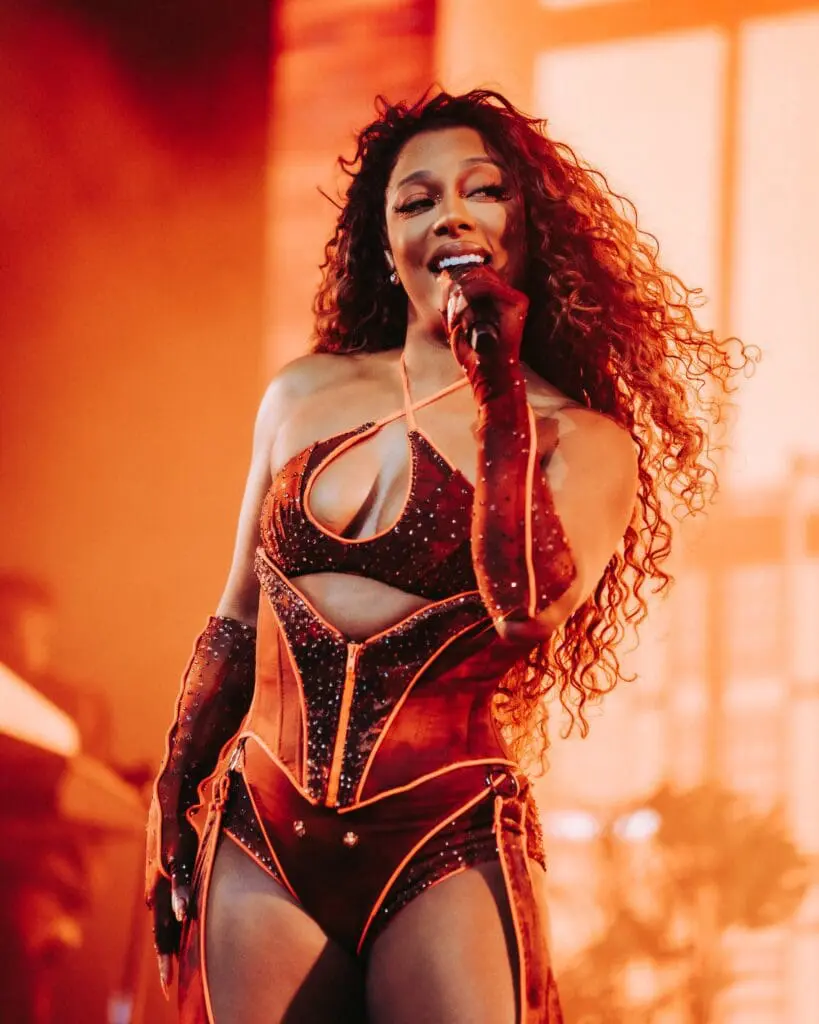
This year, Coachella — the iconic desert music and arts festival and one of the most famous festivals in the world — was dominated by a diverse lineup of legendary queer women artists, including Victoria Monét, Chappell Roan, Ice Spice, Ludmilla, Brittany Howard, Reneé Rapp, Doja Cat, and Billie Eilish.
As queer women artists continue to successfully contribute to mainstream music and proudly centre their once-marginalised identity, or identities, they are driving a cultural shift that goes beyond music. These women are reshaping the perception, and representation of all marginalised people in every area of life, inspiring a world that encourages and celebrates diversity, expression, and success for EVERYONE.


