
Words by Naveed Mir
Edited by Valerie Aitova
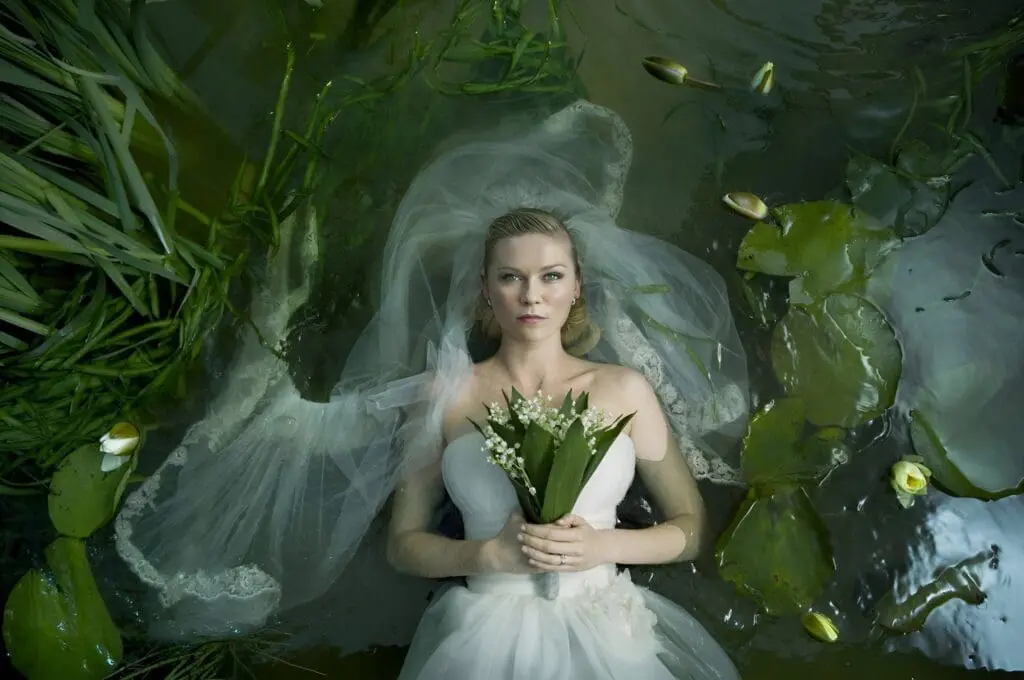
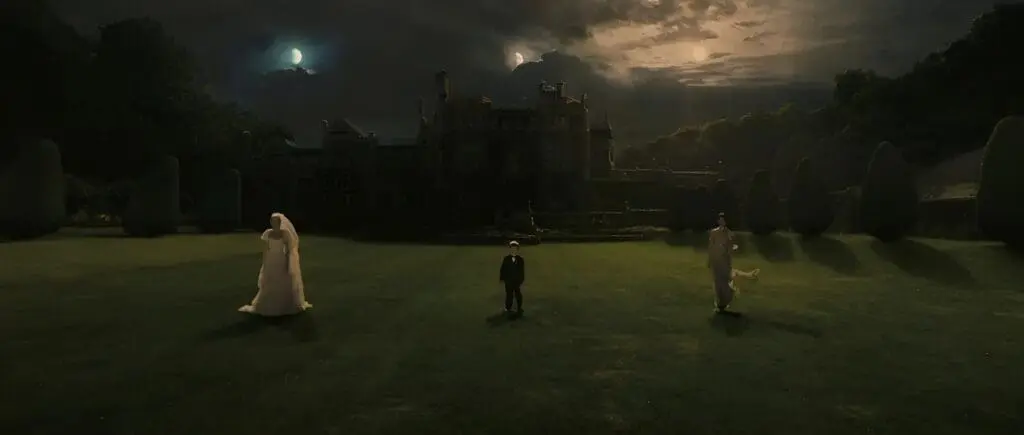
There’s a moment in Lars von Trier’s Melancholia where Justine, luminous and inert, lies naked beneath the night sky, gazing up at a rogue planet on its final descent toward Earth. In that stillness, we are confronted not with terror, but with a strange acceptance, an image not of death, but of surrender.
This is where von Trier’s cinema lives: on the fault lines between destruction and intimacy, between devastation and the sublime.
One of the most provocative and polarising figures in contemporary cinema, Danish filmmaker Lars von Trier has long positioned himself as a provocateur within European and particularly Scandinavian film traditions. Drawing on a lineage of emotional austerity and philosophical introspection that runs through Ingmar Bergman to Carl Theodor Dreyer, von Trier’s work explores despair, sexuality, and the disintegration of meaning with operatic intensity. His so-called “Depression Trilogy” Antichrist (2009), Melancholia (2011), and Nymphomaniac (2013) mark a profound exploration of mental illness, grief, and the seductive pull of catastrophe.
In these films, the apocalypse is not merely an external event but an internal state, and the female protagonists do not resist collapse; they embody it. Their emotional unravelling becomes a lens through which we examine the limits of rationality, the futility of redemption, and the beauty of surrendering to chaos.
Across Melancholia, Antichrist, and Nymphomaniac, Von Trier constructs a cinematic world shaped not by plot or narrative satisfaction, but by raw psychological conditions depression, grief, sexuality, guilt each rendered with visceral elegance. His films ask not what happens, but how it feels to come undone. And in doing so, they offer a radical invitation: to feel our interior ruins as if they were cosmic events.
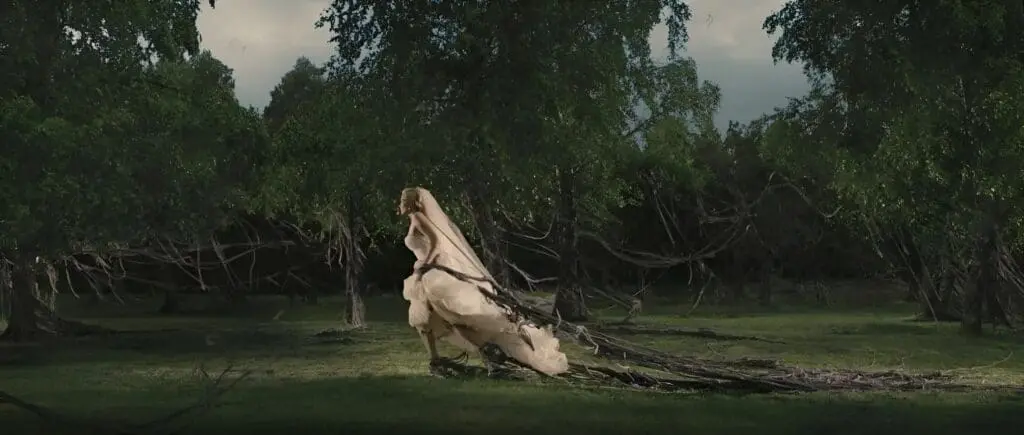
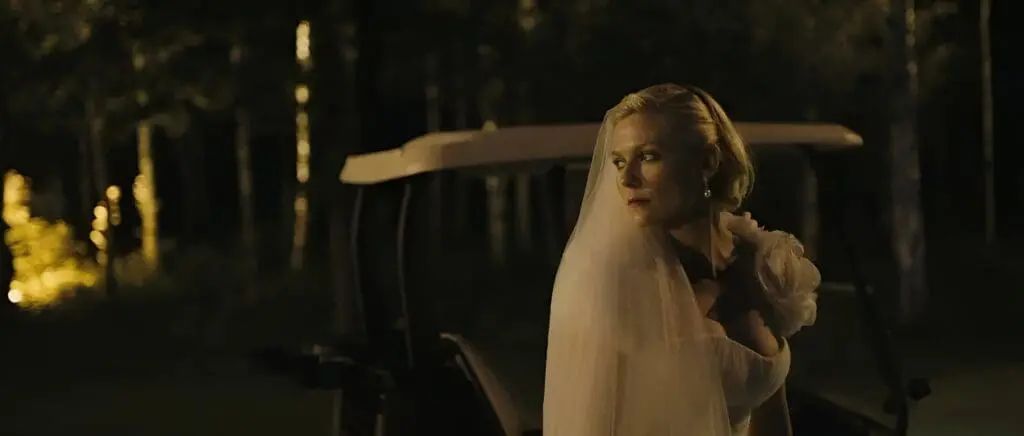
In Melancholia (2011), the central metaphor is as grand as it is precise: a planet named Melancholia is on a collision course with Earth. Von Trier splits the film into two parts first Justine’s wedding, then her sister Claire’s unraveling as doomsday nears. But more than a disaster movie, Melancholia is a phenomenological study of depression’s gravitational pull. “The world is evil,” Justine says at one point. “Nobody will miss it.”
According to Film Quarterly, this fatalistic clarity is part of what makes Justine not simply depressive, but prophetic. She’s not afraid because she already lives in the truth: a world stripped of illusion. Unlike Claire and her husband John, who place their faith in science or social rituals, Justine does not perform hope. Instead, she embodies a kind of emotional realism awareness so raw it becomes sublime.
This theme emerges visually, too. The opening sequence, a slow-motion montage set to Wagner’s Tristan und Isolde, is a gallery of haunting, surreal tableaus: birds fall from the sky, horses collapse, Justine sinks into the grass. These images are not plot devices; they are emotional x-rays, revealing the film’s affective core before the story even begins. As NoFilmSchool argues, von Trier distorts time and space to reflect the internal contours of melancholia itself.
Where Melancholia presents depression as a cosmological condition, Antichrist (2009) roots its existential dread in the brutality of grief. Following the death of their child, a couple retreats to a remote forest cabin “Eden” only to descend into psychosexual madness. What begins as therapy becomes exorcism; what appears to be healing becomes sadism.Von Trier’s camera is both intimate and violent, swaying handheld through dense forests and brutal sex, grounding horror in the natural world. Here, grief is not poetic but grotesque, a primal scream against nature’s indifference. As with “Melancholia”, the film rejects Enlightenment logic: the male protagonist, a therapist, attempts to “treat” his partner’s hysteria, only to find that reason has no foothold in emotional wilderness. Nature, like trauma, cannot be tamed.
The film sparked outrage for its graphic imagery and supposed misogyny. But to reduce it to provocation is to miss its power. Antichrist is not a story about evil women, but about the impossibility of control over pain, over nature, over desire. The same emotional entropy that undoes Claire in Melancholia and consumes Joe in Nymphomaniac is already blooming here like rot beneath Eden’s trees.
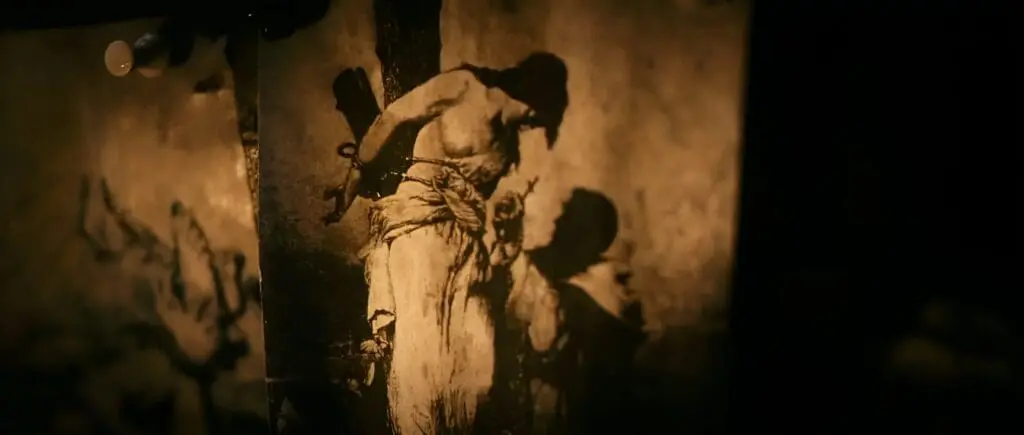
Nymphomaniac (2013), Von Trier’s four-hour opus on a woman’s sexual life, seems at first to pivot away from the apocalyptic scale of Melancholia and the gothic intimacy of Antichrist. But beneath its episodic structure and ironic chapter headings lies the same aesthetic of emotional dissection.
Joe (Charlotte Gainsbourg), bloodied and collapsed in an alley, is found by Seligman, a reclusive intellectual. She then recounts her life in confessional bursts erotic, tragic, absurd. But Nymphomaniac isn’t simply about sex; it’s about the architecture of shame, the politics of pleasure, and the alienation that grows from lives lived outside social scripts.
Stylistically, Nymphomaniac extends Von Trier’s visual language. Jump cuts, mixed formats, and on-screen diagrams create a fragmented aesthetic that mimics Joe’s psyche, disjointed, overloaded, yet searching for coherence. In a way, the entire film becomes a kind of psychological archive of one woman’s attempt to narrate herself into meaning.
What emerges across these films is not simply a set of recurring themes but a coherent emotional landscape. Von Trier builds a world in which internal states have external consequences, where grief can rot the forest, depression can summon the end of the world, and shame can flatten language into confession. But this world is not nihilistic. As The Guardian notes, Melancholia is “beautiful in its stillness”, finding transcendence not in survival, but in surrender.
The final shot, a makeshift “magic cave” built for Claire’s son as the planet nears collision, is both childlike and profound. It suggests that in the face of annihilation, ritual still holds meaning. Not to stop the end, but to witness it together.
This echoes across von Trier’s oeuvre. From the handheld realism of Breaking the Waves to the theatrical cruelty of Dogville, he constructs moral laboratories, cinematic crucibles where emotion is not just performed but endured. His characters suffer, yes. They also see with a clarity sharpened by collapse. The planet arrives, and she does not flinch.
But this world is not nihilistic. As The Guardian notes, Melancholia is “beautiful in its stillness,” finding transcendence not in survival, but in surrender. The final shot, a makeshift “magic cave” built for Claire’s son as the world comes to an end, is both childlike and profound. It suggests that, in the face of annihilation, ritual still holds significance. Not to stop the end, but to witness it together.
This echoes across Von Trier’s oeuvre. From the handheld realism of Breaking the Waves to the theatrical cruelty of Dogville, he constructs moral laboratories cinematic crucibles where emotion is not just performed but endured. His characters suffer, yes. But they also see clearly, painfully, and sometimes beautifully.
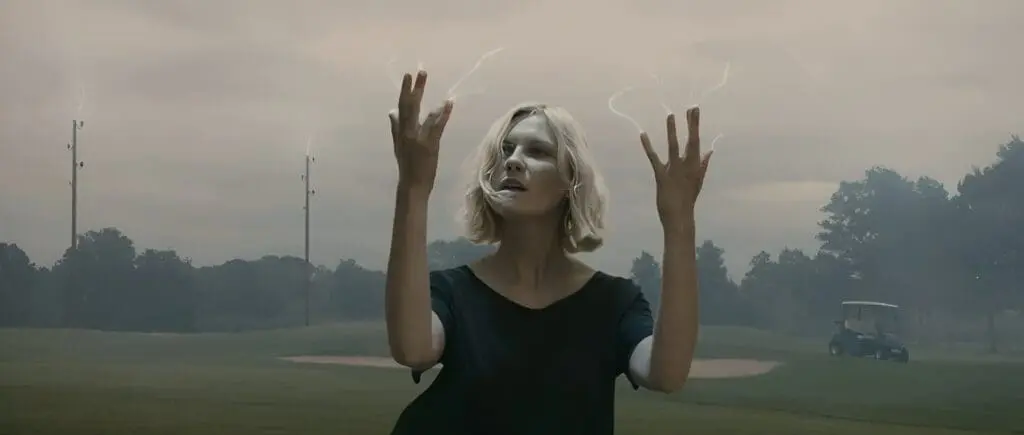
For Justine, it does. Her emotional world has already ended before the planet arrives. Melancholia’s collision offers the peace of no longer having to pretend, no longer having to perform joy, hope, or stability. In von Trier’s world, the apocalypse becomes a mirror: it reflects what was already broken inside.
Justine sees the world as it truly is, not through the lens of denial, but clarity. In that sense, she isn’t sick, but honest. Depression becomes a mode of perception, one stripped of delusion and artifice. She does not panic as others do, because she has already accepted the fundamental truth: things fall apart.
In Nymphomaniac, Joe is punished not for her cruelty, but for her appetite. The more she pursues pleasure, the more she is pathologised. The punishment is not about ethics, it’s about control. Von Trier reveals the discomfort society has with women who own their pleasure without shame or apology. The deeper tragedy is that Joe herself internalizes this punishment.
What frightens the men in these films, be it Seligman, John, or the therapist in Antichrist, is not female evil, but female opacity. Women in von Trier’s universe are not symbols to decode but subjects to encounter, and in those encounters, when men cannot categorise them, when logic fails, fear takes over.
In Von Trier’s cinema, devastation is not spectacle; it is diagnosis. He peels back the surface of ordinary life to expose what has always been trembling underneath: the illusion of order, the burden of performance, the fragility of reason. His films insist that what we often call dysfunction, depression, despair, and insatiable desire may be lucid responses to an unlivable world.
There is a terrible clarity in his characters’ descent. Grief is not cured; it is honoured. Pain is not anaesthetised; it is confronted. Von Trier’s women do not offer solutions; they offer presence. They resist being simplified, consumed, or saved. And it is in their resistance that we find the most uncomfortable truths.
Ritual, collapse, surrender, these are not signs of failure, but of reckoning. The end, in von Trier’s universe, is never just an ending. It is the moment the mask falls off, the silence after delusion. Not an apocalypse, but a clearing.
Not the world breaking apart, but the truth finally breaking through.


