
Words by Lola Carron
Edited by Valerie Aitova
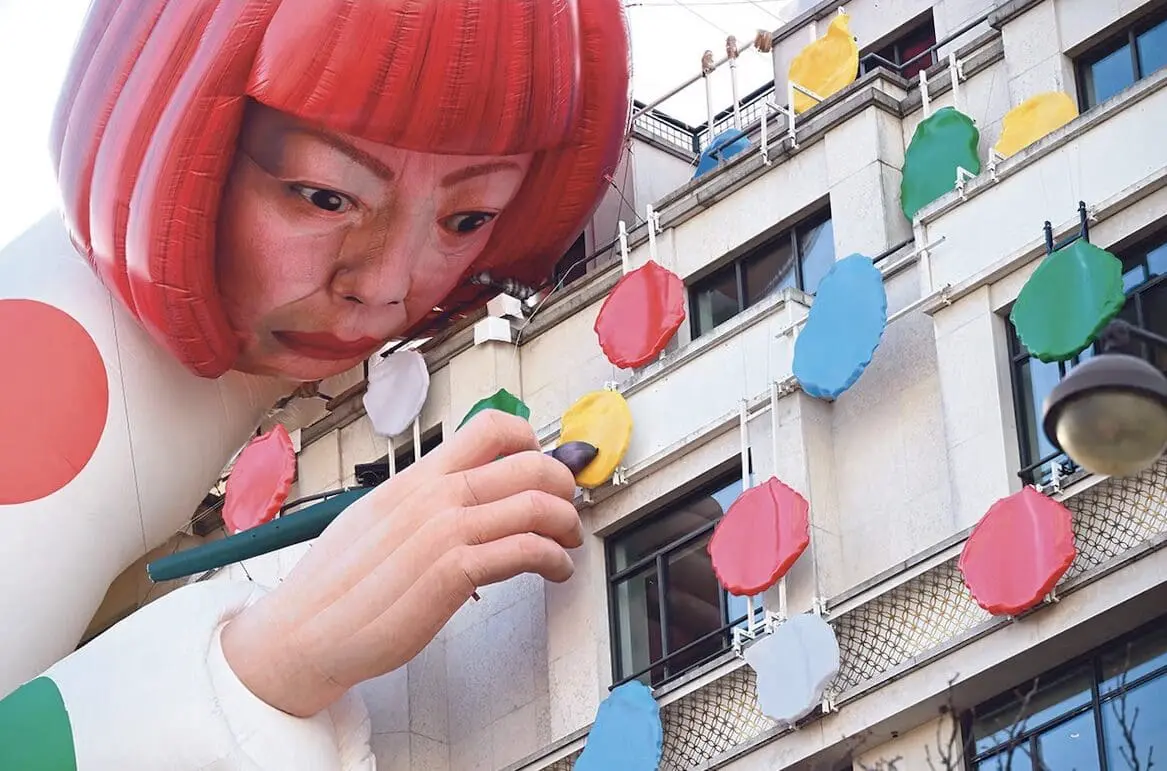
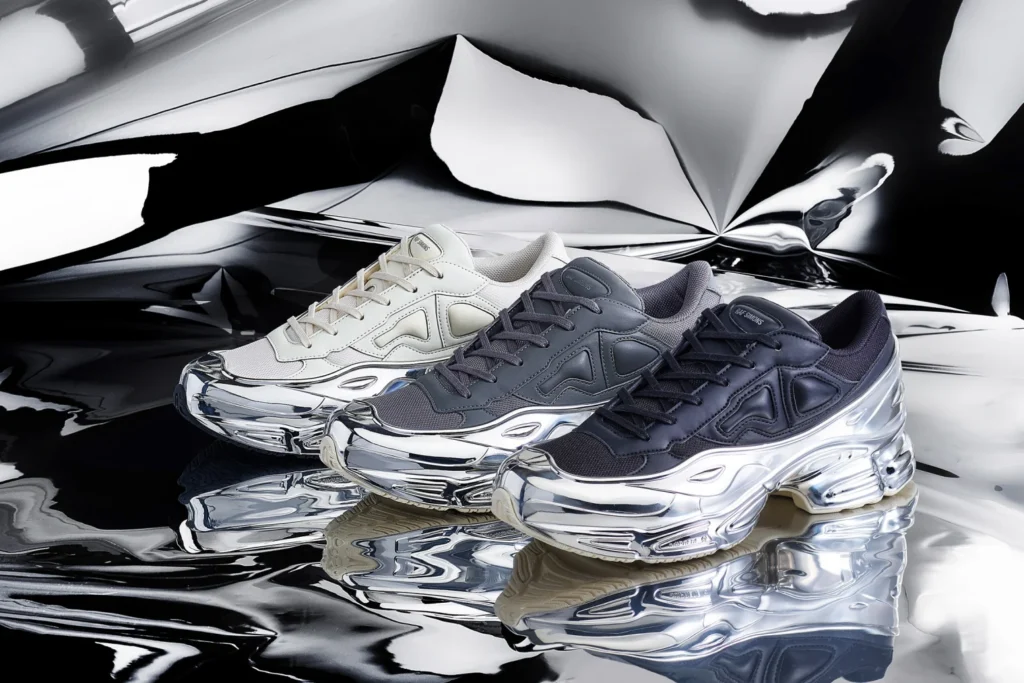
Fashion has become addicted to partnership. The industry may not have invented it, but look across the luxury landscape and the high-street storefronts, and you’ll see the same story: the lone-star designer is out, and the co-star is in. This shift speaks to a deeper cultural fatigue; a world where individuality is replaced by brand synergy, and the thrill of originality gives way to constant reinvention. Once a rare, headline-making event, Raf Simons’ debut with Adidas or the art-meets-commerce genius of Louis Vuitton and Takashi Murakami two decades ago comes to mind. The collaboration has curdled into the industry’s default setting.
Now, the release calendar is a constant, suffocating hype cycle. We’ve lurched from the sublime (Gucci x Balenciaga’s ‘Aria’ collection, a subversive, mutual ‘hacking’) to the utterly surreal (McDonald’s x Palace Skateboards, or Crocs x just about everything). The collaboration, or ‘collab’ as it’s now lazily termed, is no longer a moment of true fusion; it’s a necessary mechanism for survival. It’s the industry’s safety net, a guaranteed injection of cultural currency and, crucially, sales.
But in this rush to co-brand everything that moves, a crucial question hangs in the air: has this cultivated dependency finally killed originality?

For decades, the great fashion collaborations were acts of alchemy. They paired distinct visions to create something wholly new. They weren’t about matching logos; they were about intertwining worlds.
When Jil Sander partnered with Uniqlo in 2009 for the seminal +J line, it was a democratic masterclass, bringing the former’s stark minimalism to a mass market without sacrificing her stringent integrity. Similarly, when Stella McCartney and Adidas first connected, they forged a new path for high-performance, high-fashion sportswear. These were strategic, long-term visions built on shared aesthetics or mutual gaps in the market. They were additive.

The contemporary collab, however, is often subtractive. It’s a temporary fix built on virality and scarcity, designed to dominate the conversation for 72 hours before the next one drops. The goal is no longer a philosophical exchange, but a logistical one: reach extension. Brands are trying to solve three modern anxieties with one limited-edition drop: how to capture the attention of Gen Z, how to move excess inventory, and how to create an ‘entry point’ into a luxury brand for a younger consumer who can’t yet afford the main line.
The model is simple: partner with a brand outside your sphere-food, tech, or even toys-to shock the algorithm. The logic is that the sheer unexpectedness of a Tiffany & Co. x Nike Air Force 1 drop will generate more social impressions than a dozen beautifully crafted runway gowns. When it finally arrived, at £350 and meme-worthy for its underwhelming design, the hype deflated into irony, underscoring how the spectacle now outshines the craft. The garment itself becomes a secondary concern; the real product is the ‘I was there’ moment of the release.
The collaborations proliferating today are not monolithic; they operate across distinct cultural stratospheres, each type telling a different story about our collective, contemporary obsession with irony and juxtaposition.
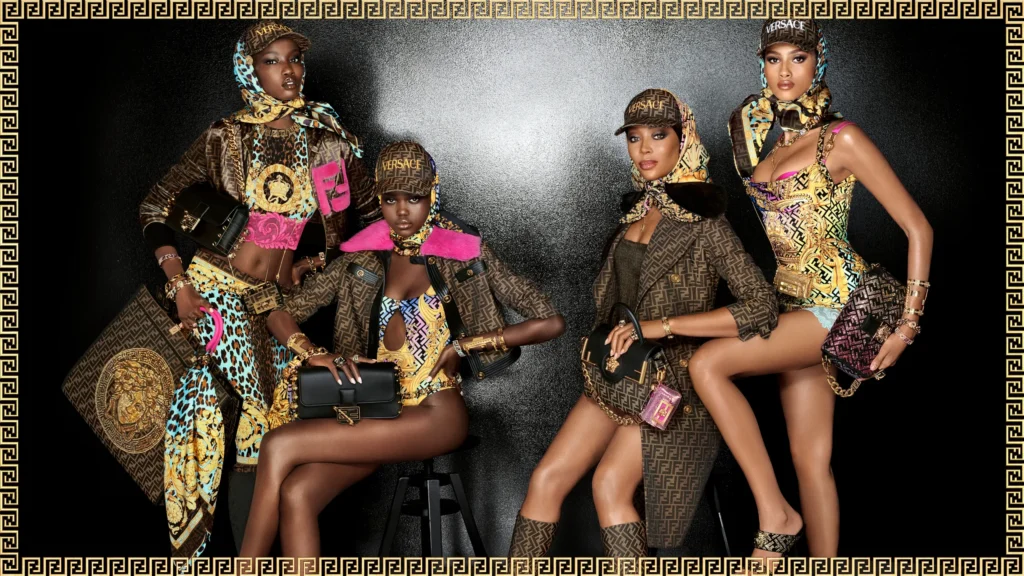
There is the Fashion x Fashion pairing, the ‘mutual hacking’, where industry heavyweights like Fendi and Versace (or Fendace, as it was famously dubbed) briefly swap creative directors and monogrammes. These exercises are designed to celebrate heritage while carving out a profitable, slightly anarchic moment. They are safe bets, generating immediate conversation and excitement among fashion insiders, yet they rarely ripple out to the general public in a meaningful, lasting way. They remain an internal dialogue.
More frequent is the Fashion x Lifestyle mash-up, often defined as the ‘aspiration play.’ These pairings, visible in the constant, cyclical releases of Prada x Adidas, aim for aesthetic fusion. They attempt to marry the performance credibility of a sneaker brand with the intellectual cachet of a luxury house. The result is typically expensive, high-quality basics. A form of access to the luxury label that often feels slightly bloodless, lacking the true edge of either original partner.

But where originality often goes to die is in the Fashion x Utterly Mundane category, a space dedicated entirely to the gimmick. When high-fashion houses plunge into partnerships with everyday food, transport, or utility brands; Balenciaga x Crocs or Gucci x Xbox, the intention is often pure shock. It’s a cynical play on meme culture, treating the consumer less like a connoisseur and more like an ironic commentator. It’s a knowing, patronising wink that essentially says,
“We know this is ridiculous, but you’ll buy it anyway because of the logo”.
This reliance on the sheer unexpectedness of the collision often proves the most reductive, risking the message that the only way fashion can be interesting is by referencing something far outside of its own craft. It’s the sartorial equivalent of an in-joke, but one that begins to feel less like clever commentary and more like creative exhaustion.
The chief risks of this hyper-collaborative environment are oversaturation and brand dilution. When a brand like The North Face teams up with Supreme, Gucci, and KAWS within a few seasons, the spark inevitably fades. Collaboration has become the norm, and in a market built on novelty, the norm is the last thing a luxury house wants to be.
Furthermore, these rapid-fire drops can confuse a brand’s ethos. If a label is selling £800 handbags one week and £80 Crocs the next, the consumer’s understanding of its core values-be they craft, exclusivity, or innovation-becomes fragmented. The message is simple: the pursuit of immediate cash flow has superseded the preservation of a singular, distinct vision. The brand identity becomes a floating signifier, capable of meaning anything and, therefore, meaning nothing at all.
But for every cynical co-branding exercise, there is still the potential for substance. The most compelling collaborations today are those that bypass the hype circus and remain committed to true, philosophical exchange.
Take the enduring work of Dries Van Noten, who has long collaborated with artists, dancers, and set designers to root his collections in genuine creative dialogue. His approach isn’t about slapping a logo on a familiar item, but about letting another discipline shape the collection’s texture and mood. Think of Loewe x On, performance wear recast through luxury craftsmanship, a collaboration defined by process, not hype. It’s the same principle guiding the best sustainable partnerships today, where innovation in material and technique takes precedence over name recognition.
These rare exceptions prove that the engine of creativity isn’t broken, just frequently misused. The best collaborations are, in essence, short films-a distinct vision, contained in a limited frame. The majority, however, are just extended advertisements.
The cult of the collaboration has stripped fashion of its stillness, the unhurried silence required for a new idea to take form. In its place is a constant, digital hum of cross-promotion. For now, the hype model works: a quick hit of cash and cultural oxygen. But as consumers tire of these aesthetic one-night stands, the industry will relearn what it once knew, that true exclusivity lies in standing alone.


