
Words by Juanda B Rustam
Edited by Valerie Aitova
Surrealism in the fashion world? Don’t be surprised, because surrealism is actually a lack of clarity in something, or, one could say, an expression of a person in a work. Only the person himself understands its meaning and significance. Meanwhile, connoisseurs of the work can only guess, plus everyone has their own natural way of interpreting things. For Haute Couture, Schiaparelli was able to make surrealism artistic and popular. If you want to find the true origins of this surrealist upheaval, just flashback to the art movement of the early 20th century. At that time, artists and fashion designers really enjoyed exploring ideas from the subconscious mind. Surrealism, in its core, can also be said to be irrational in action. This action then became a solid milestone for Schiaparelli.
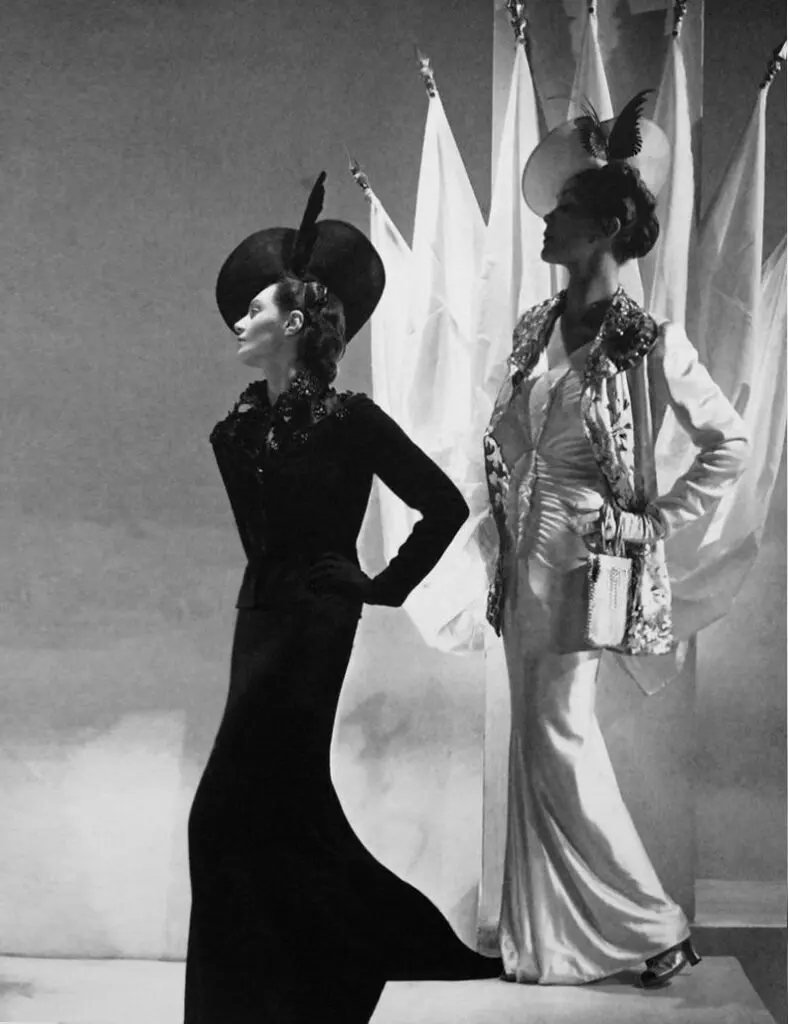
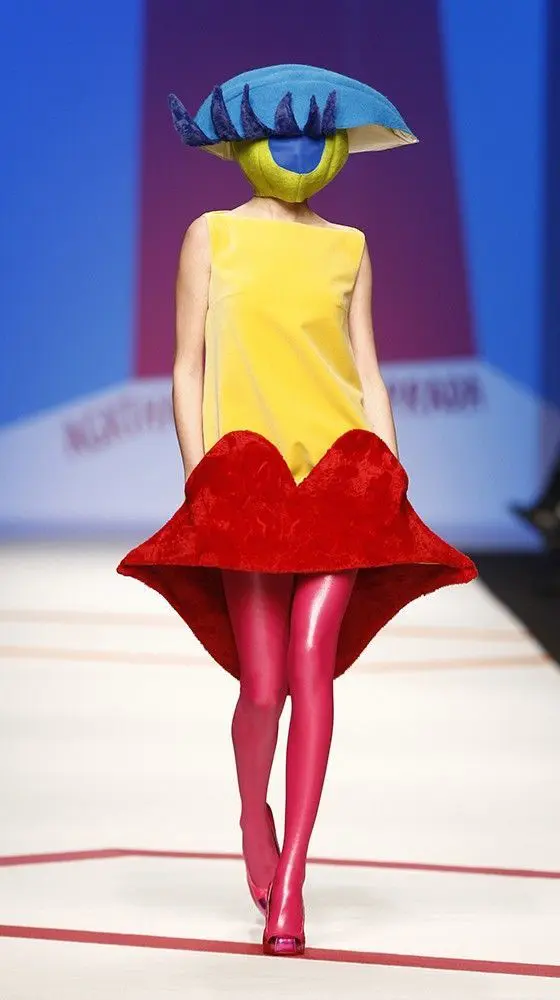
Elsa Schiaparelli’s iconoclastic determination indirectly led to her work’s originality becoming uncontrolled and even appearing unethical. The established standards of taste and beauty in women’s fashion design were literally transformed by contrast, and that’s how surrealism worked in fashion, because fashion styles must not only be unique but also break with conventional fashion patterns. Schiaparelli was not only a surrealist figure in fashion, but also influenced the fashion tastes of women of all ages, and her surrealist work added glitz and glamour to fashion shows. In 1927, Elsa Schiaparelli, a fashion designer from Italy whose work is also mostly in the form of knitwear, founded her Maison Schiaparelli with full confidence, and her surrealist work is evident in the use of gold as a material. Noses, eyelids, mouths, and other bodily structures are depicted, and in this case, one element of surrealism is something that is both illogical and defies convention. Imagine gold as we know it, a solid material, highly unfriendly to skin conditions and far from comfortable to wear; it can’t be called an innovation in the use of materials, either, because gold is not a development of basic fabric. But once again, surrealism will never be understood by people; they can only guess based on their own depth of interpretation. Gold in the world of fashion can be very artistic, but its true essence cannot be accurately understood. That’s what Daniel Roseberry, one of the creative directors who once created a collection for the Schiaparelli fashion house, did.
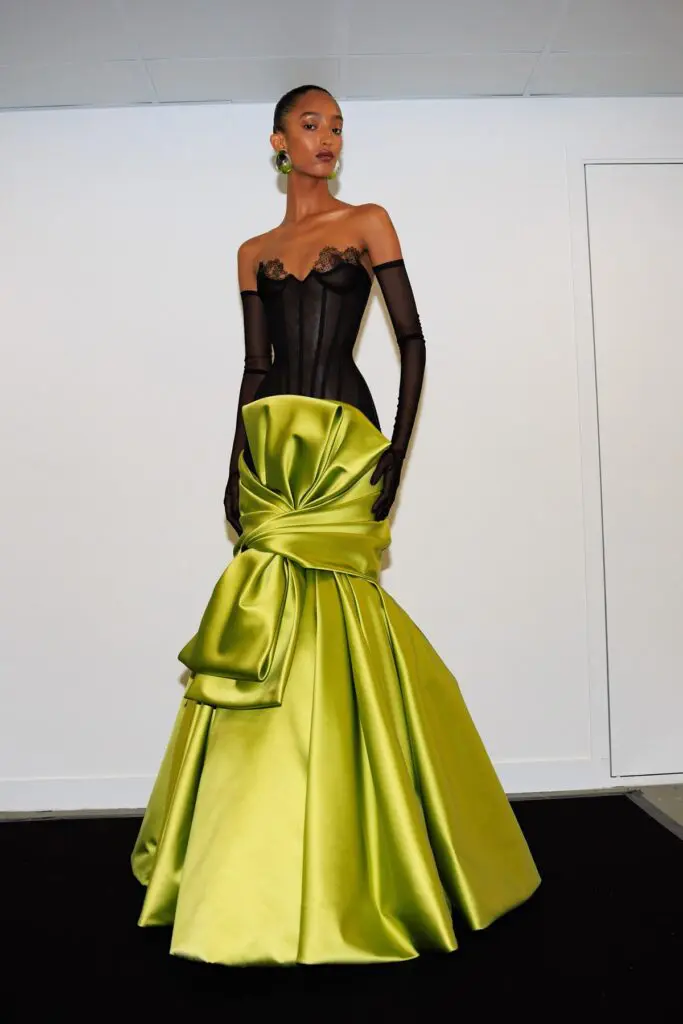
Ulla Johnson and Alexander Calder also explored surrealism with oversized earrings. The fashion house Miu Miu wasn’t to be outdone, with UFO-shaped earrings resembling aliens becoming a mainstay in their fashion shows. Their actions as key players in the fashion world have made surrealism even more prevalent.
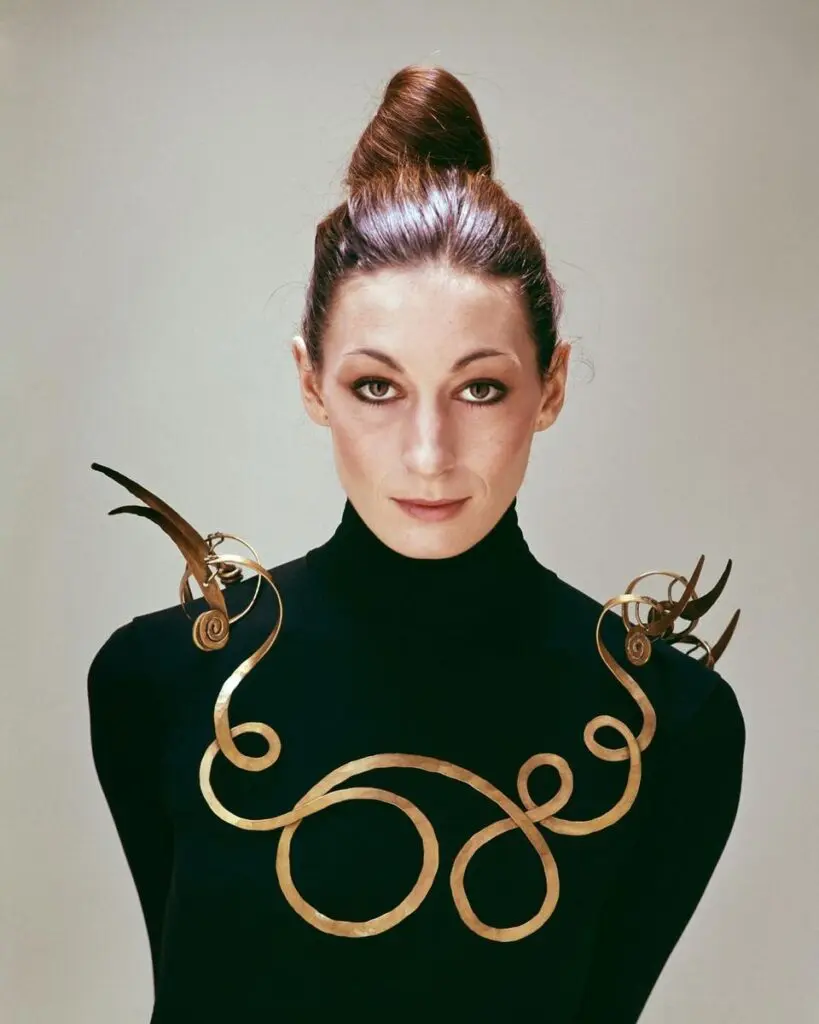
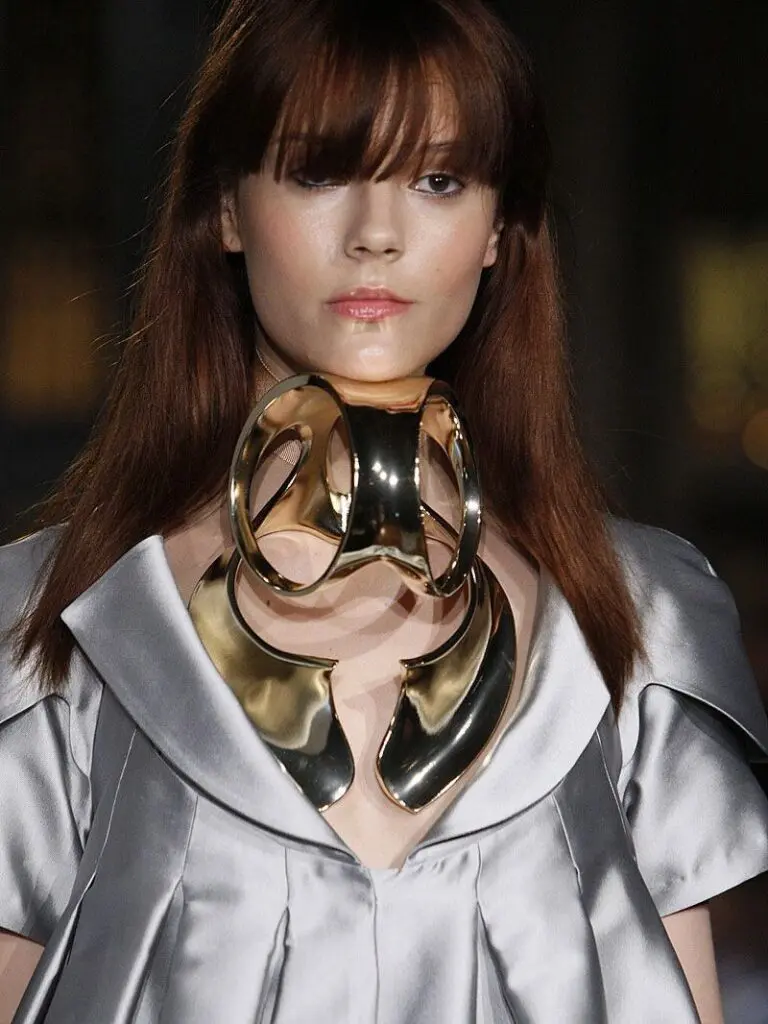
If so, is surrealism becoming more accessible to fashion enthusiasts?
It certainly takes time, and it’s uncertain how everyone will accept it in a specific way.
Other world-renowned fashion houses also enjoy exploring surrealism. Dior even takes surrealism in a dualistic direction. The appearance of blood in its collection makes people think of two elements: suspenseful or medical. Suspenseful would lead to something horrible, while medical is an element in medicine. What is clear is that Dior shows things that are part of the reality of human life. The brand that calls itself Marni also applies surrealism, but not to products, but to audiences, through a virtual meal together. Similar but not the same, that seems to be what Saint Laurent did. A campaign that also implies the existence of the city of Paris. The video, titled French Water, appears in which many women are shown at a luxurious dinner, then suddenly the moment turns into a dream. There is also a scene of throwing glasses, then another scene showing something suddenly disappearing. In the final scene, the clothes they are wearing suddenly change.
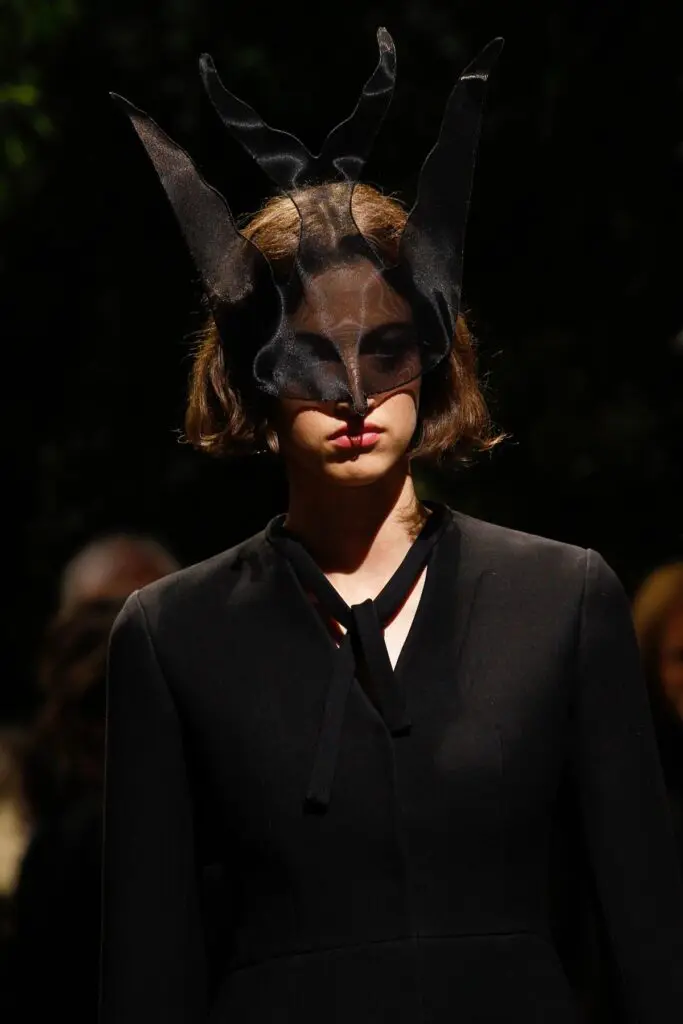
What these fashion brands do is a combination of logic and ideas, but it is far from considering reality. This is what drives fashion design toward one thing, and that’s how surrealism came to be. The widely publicized Surrealist Manifesto of 1924 opened the fashion world’s eyes and minds to this. Creativity, a crucial part of fashion creation, provided the perfect niche for surrealism. The unreal in reality creates a compelling appeal without reason. That’s how surrealism takes root in the essence of creativity.
How does surrealism manifest in fashion thinking?
Certainly, surrealism opened the minds of designers through personal openness and freedom. Surrealists knew full well that fashion’s nature is to embody beauty and build trust, while gracefully manipulating communication. Based on this, designers consciously recognized it, becoming familiar with it, both literally and abstractly. Furthermore, they sparked emotions in the imagination and led to provocation. In their execution, this provocation became a distortion of logic, radical innovation, and the realization of illusion.
Surrealists always took the motif of normalization from the strange. Things that were odd and contrary to reality became good ideas, then eventually became something familiar. However, there were things that were out of sync in their methods. However, because Surrealists continued to use creativity, everything could be annulled proportionally. The lobster dress designed by Elsa Schiaparelli was indeed very sensational, and became something of pride and flattering in the fashion world around the 1930s. In retrospect, the dress was clearly vulnerable to the essential comfort of women, but its appearance was a very surprising innovation and creative breakthrough in the essence of Surrealism, of course.
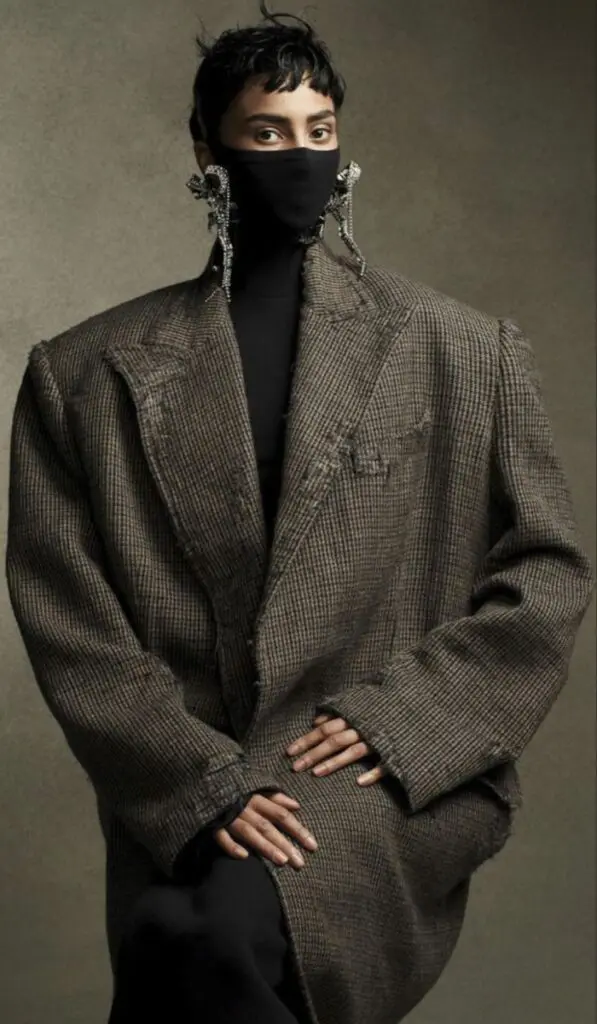
Current-generation fashion brands like Untitled in Motion also focus on the surreal. Their casual wear is synonymous with bright colors, yet with a hint of strangeness in the cuts and patterns of their textures. Liminality and dreamlike moments are two key elements that generate ideas in each of their fashion designs. Still discussing the current generation of surrealist fashion designers, right in the heart of New York City, Dauphinette presents quirky traditional designs. Childish paintings are embedded on jackets, creating a mysteriously feminine yet masculine look. Accessories are also a mainstay of this brand’s products, in the form of earrings made from real fruit. In addition to men’s jackets and earrings, there is another surprising design, where the jacket is layered with flowers. In the process, the flowers are crushed between two layers of recycled PVC. Surrealism is present not only in the final design stage but also in the main process, and this is a fabric interpretation that is confusing and beyond the standard logic of fashion fabrication.
Unlike early couture surrealism, which relied on spectacle and symbolism, contemporary designers treat surrealism as part of the process – embedding strangeness into materials, construction, and everyday wearability. What was once theatrical now feels quieter, more tactile, and closer to lived experience.
Fashion design can be found on runways, in retail, and even at thrift stores. However, the emergence of an idea and the strength of a concept is not easy. In the studio, fashion designers grapple with brand identity, market research, target selling, and creativity. Amidst these major issues, there are inevitably smaller ones, such as a lack of ideas and backgrounds. They are never able to articulate and convey these ideas in a design. The neglect of intrinsic elements can never be addressed, but it can impact every design, down to the smallest detail. That is the beginning of the surreal.
In essence, surrealism is a fashion design that has great potential to be both impressive because of its design and depressing because of miscommunication with its audience.
Surrealism is the understanding of misunderstanding.
Fashion designers have found themselves in a strange state of mind regarding the normal. This has given rise to classic styles mixed with historical elements, while Y2K fashion introduces a retro-futuristic ambiguity. It’s important to remember that simplicity of thought can contrast with wild imagination, resulting in a strange yet distinctly absurd look – that is what surrealism is all about.
Surrealism in fashion can be a depressing concept when miscommunication takes over. A graphic blouse may be beautiful on its own, but becomes disrupted by awkward pattern clashes, excessive layering, or asymmetrical details that overwhelm the design.
At the same time, surrealism can also be an impressive concept, where creativity and innovation captivate audiences through unexpected yet thoughtful placements of art and design elements, as seen on luxury fashion runways. It is this delicate balance, between mainstream wearability and intentional awkwardness, that defines surrealist fashion.


