Words by Gaziza Omirzak
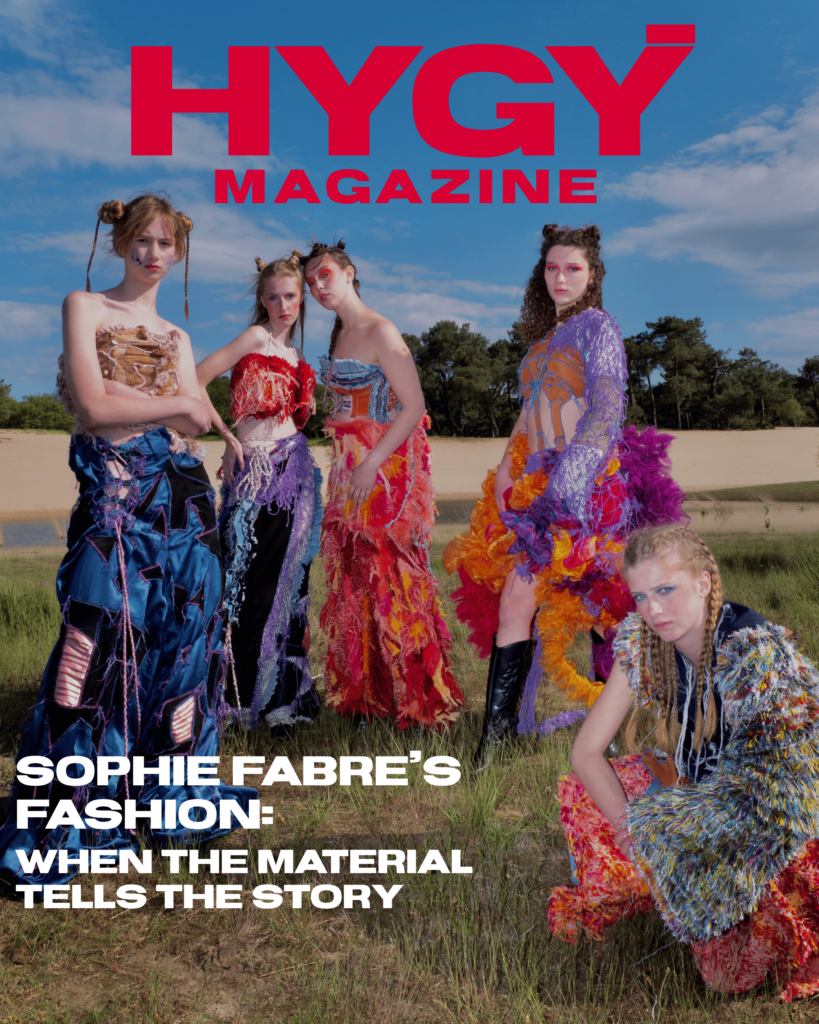
When Sophie Fabre’s favourite pair of boots finally gave out — split seams, cracked leather, beyond wearable — she didn’t toss them. She dissected them. Flipped the heel upside down, noticed it mirrored a corset cup, and built a top. From trash.
“I couldn’t throw them away. They were part of me. So I gave them a new life.”
This is Sophie Fabre’s design ethos in a nutshell: mourn nothing, waste nothing, reinvent everything.
At 24, the Dutch designer and multidisciplinary artist is reworking what fashion can be — literally. Her work isn’t just upcycled, it’s resurrected. It’s emotional. And it’s quietly critical of the system we’re all part of.
“Fast fashion is too fast. There’s no space for love in it anymore. I want to bring that love back by slowing it down. That’s why I leave the threads visible, the imperfections untouched. So people can see the care in it.”
Raised in a wildly creative household — her mom designs bridal dresses, her grandmother crafts toys and cushions — Sophie’s early years were stitched together with fabric scraps, doll clothes, and a sewing machine small enough for child hands.
“My mom taught me how to sew when I was eight. After that, I never stopped.”
She studied at Den Bosch and later graduated from HKU in Utrecht in 2024, but don’t mistake her for a textbook fashion designer. She calls herself an “upcyclist, maker, artist, editor, tufting nerd, emotional sewer” — and yeah, all of it shows.
There’s no sketchbook-to-seamline process here. Sophie works like a sculptor with fabric.
“I let the materials lead me. I don’t like clean plans. It’s more emotional. Sometimes I just cut and sew and see what happens.” Her materials come from attics, vintage shops, her friends’ closets, and sometimes the literal trash. “One man’s trash is my runway,” she laughs. “No, but seriously — people throw out amazing things.”
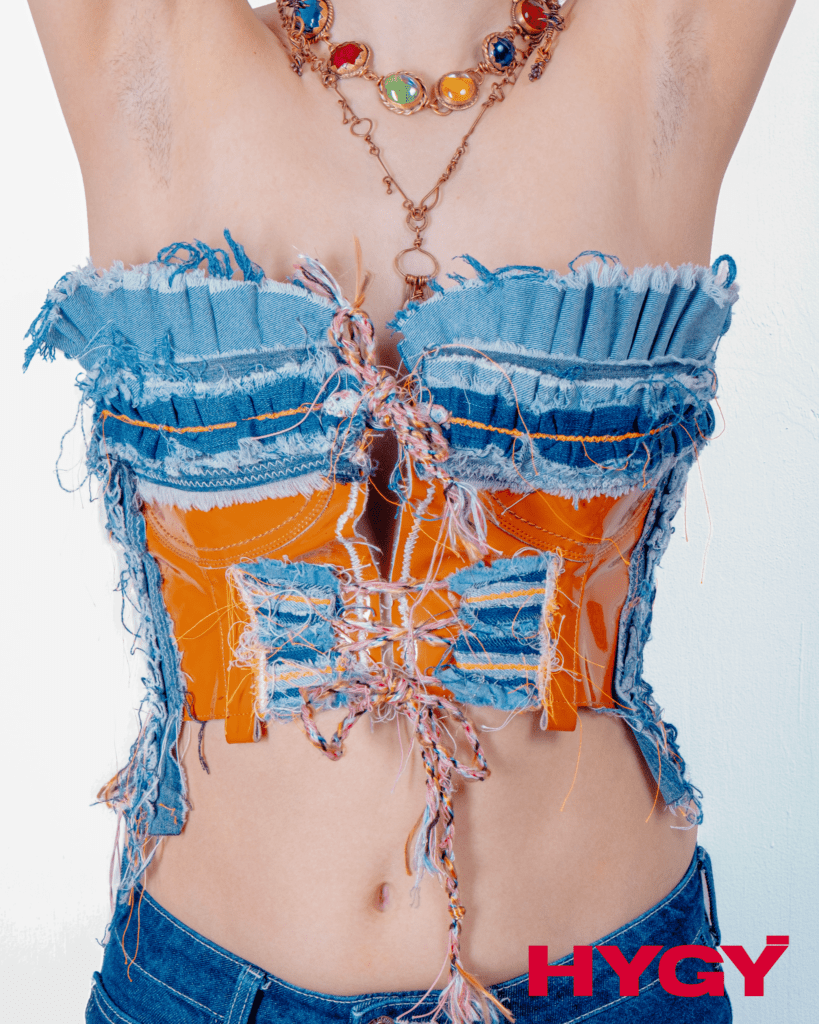
Take the now-iconic boot corset top: stitched from patent leather cut with a Stanley knife, reinforced on a leather sewing machine, and finished with old jeans and handmade cords she wove at the Textielmuseum in Tilburg.
“It was such a pain,” she admits. “The leather was stiff, and shaping it without losing the silhouette was a challenge. But it’s one of my favourite pieces. People always ask where I bought it.”
Spoiler: she didn’t. And you can’t.
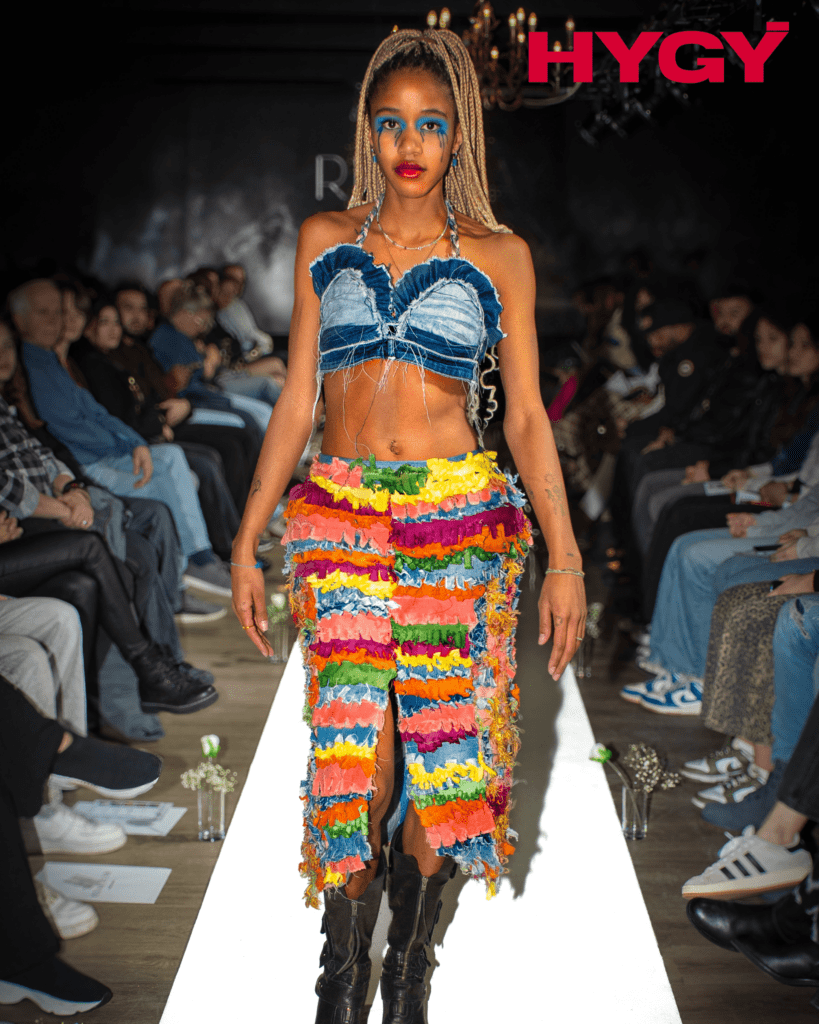
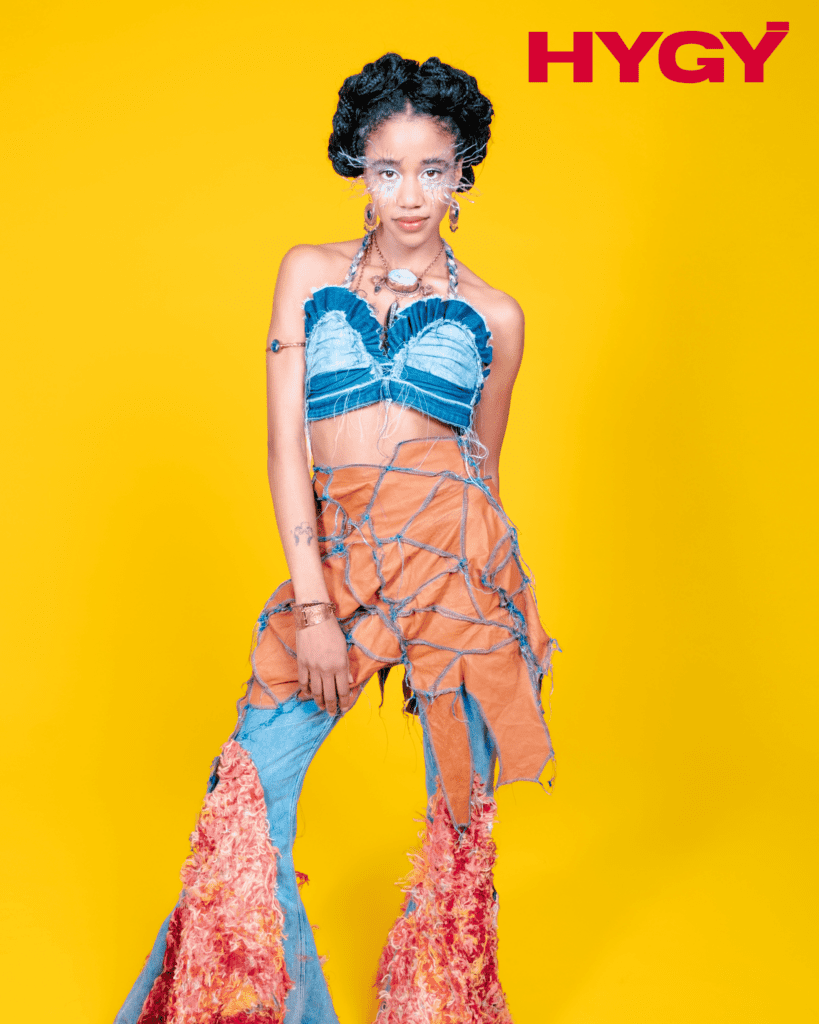
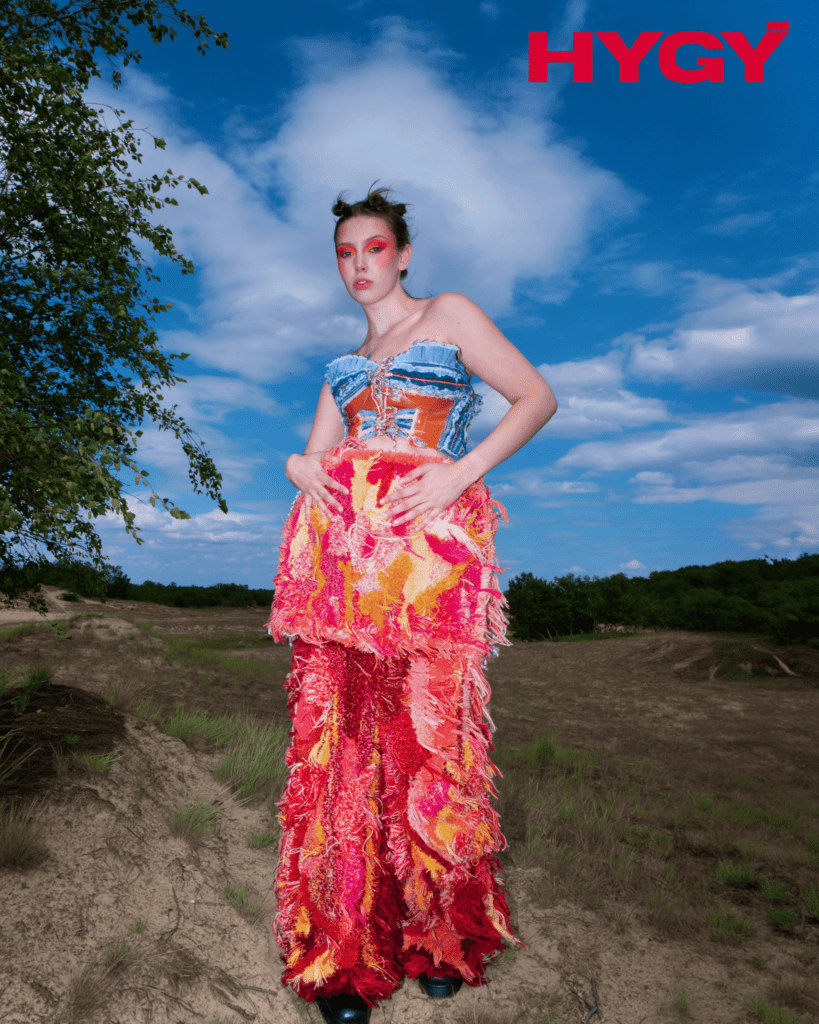
Her graduation collection was stitched entirely from waste. There was a top made from ripped tights and a dusty curtain, a pair of trousers tufted from floor scraps of wool, and a purple skirt that took over 60 hours to hand-knot, thread by thread.
“My hands were sore for days,” she laughs. “But I wanted the labour to be visible. Fashion should show its process.”
Her studio feels like a sanctuary for lost things — piles of discarded fabrics stacked high, colour-coded yet wonderfully chaotic. “I know where everything is,” she says. “Even the strange stuff. Once, I used a piece of an old curtain — it had this beautiful tension when pulled taut.”
For Sophie, upcycling isn’t just sustainability — it’s storytelling. “I want people to feel something. Like, really feel it. You should be able to look at a garment and imagine the life it had before. Fashion is so cold now. I want to warm it up again.”
There’s a distinctly anti-perfectionist vibe in her work, which is funny considering she describes herself as a perfectionist. “It’s hard for me to let go. But this process forces me to. The materials have a will of their own. If I try to force them into something neat or expected, it never works.”
So what does success look like for someone who’s breaking the rules while stitching her own?
“I want to be part of the next generation of designers who make people feel again. Not just buy, wear, throw away. I want people to stop and think — ‘wait, what is this made of? Who made it? And why does it move me?”
In a world where clothing is made to be forgotten, Sophie Fabre is making pieces you couldn’t forget if you tried. Her fashion doesn’t follow trends. It doesn’t even follow logic. It follows instinct. It follows thread. It follows feeling.
And maybe that’s the future we need — not faster, cheaper, cleaner fashion. But messier, slower, more human fashion. Fashion that asks questions. Fashion that remembers.
As Sophie puts it:
“I’m not trying to be perfect. I’m trying to be real.”