
Words by Eleni Leokadia
Edited by Valerie Aitova
Adored by both Hailey Bieber and dads everywhere, the suit has always been a force to be reckoned with. From Giorgio Armani’s dropped, loose shoulders in the 90s – putting female comfort and practicality at centre stage – to 80s power dressing signalling liberation for women in the workforce, the suit remains one of the most polarising items fashion has to offer. Despite this, in recent collections the suit was sported less; probably due to the blazer oversaturation of the early 2020s, which saw tailoring styled with pretty much anything, joggers and trainers included.
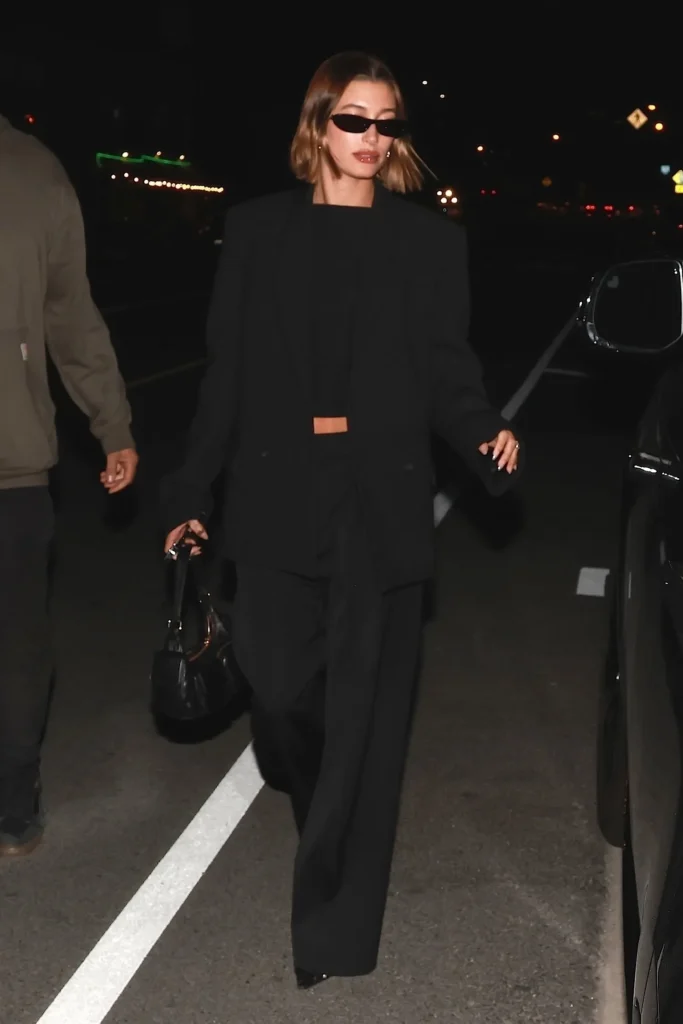
This highly anticipated fashion season however, shoulder pads were back on the menu, and at Fashion Month, we feasted.
Tory Burch started off strong in New York setting the sculptural tone for the rest of the season, with classy tailoring: boxy padded blazers in neutral colours embellished with rhinestone lapels, worn over box-pleated, low-rise skirts – part 80s cool, part ‘90s office glamour. Kallmeyer, on the other hand, opted out of rigidity and in for loose linen ensembles fit for a seaside escape; soundtracked by a theatrical soundtrack. Frayed seams and loose hems had no other choice but to sway to the beat.

Across the ocean, in Milan, quiet-luxury veteran Bottega Veneta presented a symphony of suits, orchestrated by its newest conductor, Louise Trotter. Continuing in the French capital, tailoring reached its crescendo. Saint Laurent, Stella McCartney, and surprisingly, Acne unveiled sculptural creations within the same 24 hours. Even Jonathan Anderson’sDior joined the chorus that jam-packed day, reimagining the suit entirely; giving us a “for her” version of his debutante menswear vision. Who else but Loewe’s surrealist himself would dare a cropped, bare jacket, bridging 18th century with 21st?

Depending on who you ask, the suit is either the height of discipline or the height of déjà vu. One thing’s certain: designers everywhere are buttoning up this season. Is it another recession indicator? A bid to justify price hikes through the language of “luxury”? Or just another way to lure us into spending under the guise of sophistication, who knows? But one thing we do know for sure is the suit always comes back.
Despite this, where there’s restraint, there’s always rebellion. As tailoring reclaims the runway, others are reimagining structure altogether; choosing bra padding over shoulder padding, swapping sculptural wool for sculptural lace.
Take The Attico, for example: its office-siren lingerie, fronted, of course, by Amelia Gray’s illustrious six-pack, dominated everyone’s feeds. Dolce & Gabbana presented pajama-adjacent bra tops fit for both the club and a sleepover. The trend’s biggest contributor, Prada, ventured into uncharted bustier territory, with uneven seams and boxy cut-up silhouettes revealing the frame; part sultry, part arts-and-crafts experiment.
It’s tempting to brush off the suit’s resurgence as a purely aesthetic revival; trends cycle all the time, don’t they? A few seasons pass, a new generation rediscovers and reinvents a silhouette, and just like that, it’s fresh again.
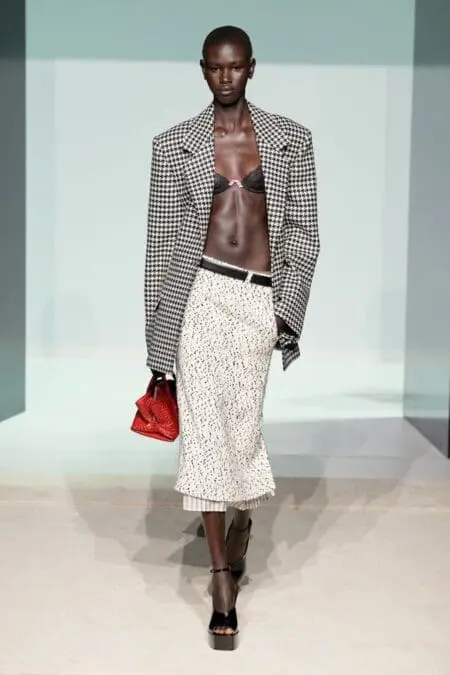
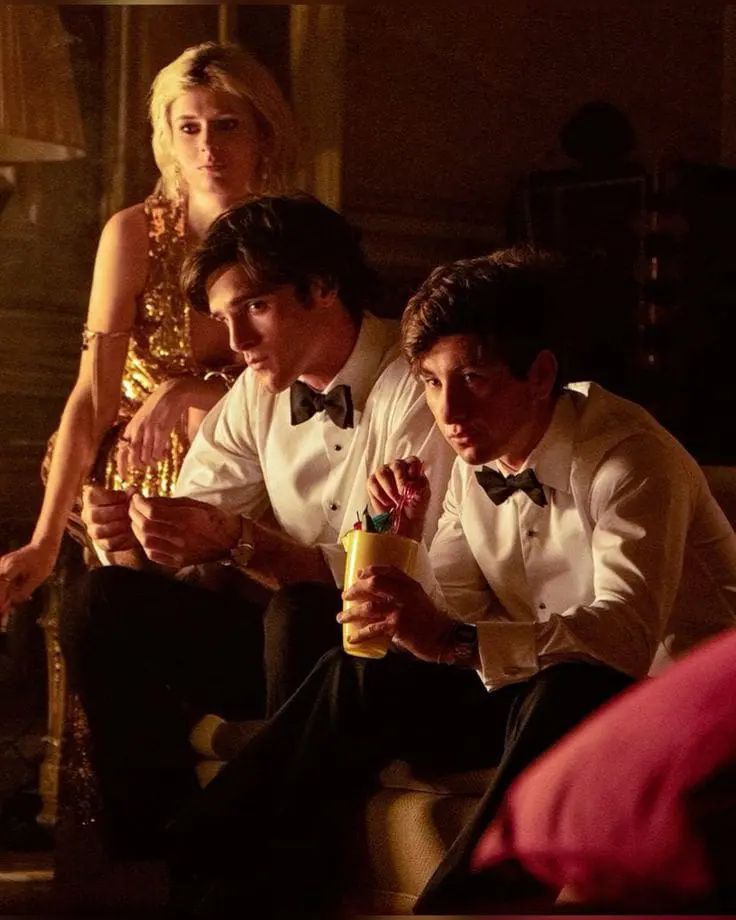
Yet fashion never exists in a vacuum. With traditionalism and “proper dressing” back in circulation, the suit’s return starts to feel like more than an aesthetic revival. It mirrors a wider cultural tilt toward conservatism – one that extends far beyond Fashion Month’s runways. Across Germany, the U.S., the U.K., and France, right-leaning politics are reshaping public discourse, while on social media, tradwife influencers whisk away pastries in milkmaid dresses and femininity coaches romanticise submission as elegance. Even pop culture is echoing this shift: the recent Saltburn-style fascination with old-money manners and “quiet luxury” aesthetics reflects a collective craving for control disguised as class. In this climate, the suit starts to feel less like fashion and more like safety for designers. Proper, controlled, and, crucially, financially lucrative; a siren call amidst a luxury slowdown. After all, isn’t trailblazing ingenuity just a small price to pay for profit?
And with that comes Newton’s third law: every action must have a reaction.
The bra emerges as a counterargument – a rebellion in prudence, at once playful and pointed. Visible bras become political arms; a nuanced response to the orthodoxy of the other side, challenging the rigidity of traditional tailoring. Yet the freedom they promise is often slippery. As fun as the bra worn solo can be, especially when rocked by one of our favourite it-girls, Zara Larsson or Tyla to name a few, it is permitted only in specific translations: thin, lean, and toned; small, ample, and perky. Outside these carefully curated parameters, the same look reads as vulgar, “too much”, or outright offensive.
What feels like liberation on the feed is often a performance, dictated by the male gaze or by the algorithms of social media, rather than a genuine expansion of sartorial freedom. In this light, the bra-as-top, much like the suit, becomes a tool of subtle control, a carefully measured reaction to the other extreme, rather than a radical act of self-expression. Choice may appear to exist, but only within a narrow, pre-approved spectrum.
And when this season’s “it” look is a shirtless blazer with a bra peeking underneath, the lines merge more than divide. The contrast itself becomes the concept, which raises the question: what does rebellion in fashion, and more specifically, fashion liberation, look like when both sides are holding hands? When one is pure conservatism and the other, liberation within it?
Maybe we have work to do beyond fashion, if that’s the case. Whether we bare skin or hide behind tailoring, when both serve the same machine, liberation starts to look like another product line. Perhaps the next frontier of rebellion isn’t in what we wear at all, but in refusing to let the system dress us in the first place. After all, it doesn’t matter whether you’re Angela Merkel in a colourful suit or Tate McRae in a corset top – we’re all facing the same cultural zeitgeist.


