
Words by Maggie Arandela-Romano
Milan Fashion Week September 2025 will be remembered as one of those rare seasons where fashion went beyond fabric. It was about games, spectacle, cinema, and, above all, history. Diesel made people play, Ferrari shifted gears into luxury, Dolce & Gabbana staged cinema on the catwalk, and Armani gave Milan its most emotional farewell.
Diesel threw the city into a frenzy with its now-famous “egg hunt.” Oversized cracked shells, surreal denim, and sculptural silhouettes stormed the runway, a chaotic yet symbolic nod to rebirth and disruption.
But the show didn’t stop at the catwalk. Across Milan, installations turned the hunt into a citywide experience, where fans were challenged to track down hidden Diesel eggs. The winners of this unconventional treasure hunt were rewarded with access to an exclusive, invite-only after-event, a Diesel playground where the creative energy flowed just as freely as on the runway.
Glenn Martens proved once again that Diesel doesn’t just design — it provokes. The egg hunt was more than a gimmick; it became a cultural moment that blended fashion, fun, and community.
Amid the chaos of Diesel’s rebellion, Anteprima chose restraint. The brand offered an oasis of elegance, showing that true power lies in quiet confidence. Silhouettes flowed with architectural precision, metallic threads caught the light with controlled brilliance, and fabrics moved with an ease that felt almost liquid.
Anteprima reminded Milan that understatement is not weakness — it is sophistication. Every look was wearable yet artistic, carrying a Milanese sharpness that doesn’t need to shout to be seen
Ferrari made it official: it is no longer dipping into fashion but standing firmly as a luxury house. The collection mixed technical mastery with sensual tailoring, turning racing red, jet black, and metallic sheens into wearable statements. Every detail echoed speed, power, and modern elegance.
The front row proved Ferrari’s global ambition. Celebrities like Gulf, Theo Jang, and Kook Dong-Ho sat shoulder-to-shoulder, their presence signaling the brand’s influence far beyond Italy. Gulf’s appearance, in particular, created buzz — his effortless charm aligning perfectly with Ferrari’s bold yet polished aesthetic.
But beyond celebrity wattage, Ferrari’s show carried something more telling: a statement of intent. With Asia’s luxury markets booming and sports-meets-luxury on the rise, the presence of Gulf and K-pop figures wasn’t just star power — it was cultural strategy. Ferrari is accelerating into fashion’s global mainstream, positioning itself as both aspirational and accessible, speed and style fused into a lifestyle.
This was a show about acceleration. Ferrari Style no longer plays the role of the outsider in luxury fashion. It is officially here, ready to race at the front.
Dolce & Gabbana blurred the line between cinema and runway in a way only they could. Their baroque-inspired collection of corsetry, lace, and embroidered coats carried their DNA forward, but the true moment wasn’t on the runway — it was in the audience.
When Miranda Priestly and Nigel appeared, Milan Fashion Week turned into a film set. Cameras snapped, whispers spread, and for a few moments everyone knew they were witnessing history. This wasn’t just a cameo. It was an iconic moment that fused Hollywood and Italian glamour into a single frame.
More than a spectacle, it was meta-fashion at its sharpest: a merging of meme culture, cinema nostalgia, and live runway theatre. Dolce & Gabbana showed that in 2025, fashion doesn’t just reference film — it becomes it. The runway became a screen, the audience, the actors, and everyone present part of the story.
The show reminded us why Dolce & Gabbana thrives on spectacle: fashion is theatre, and Milan was the stage.
And then came Armani.
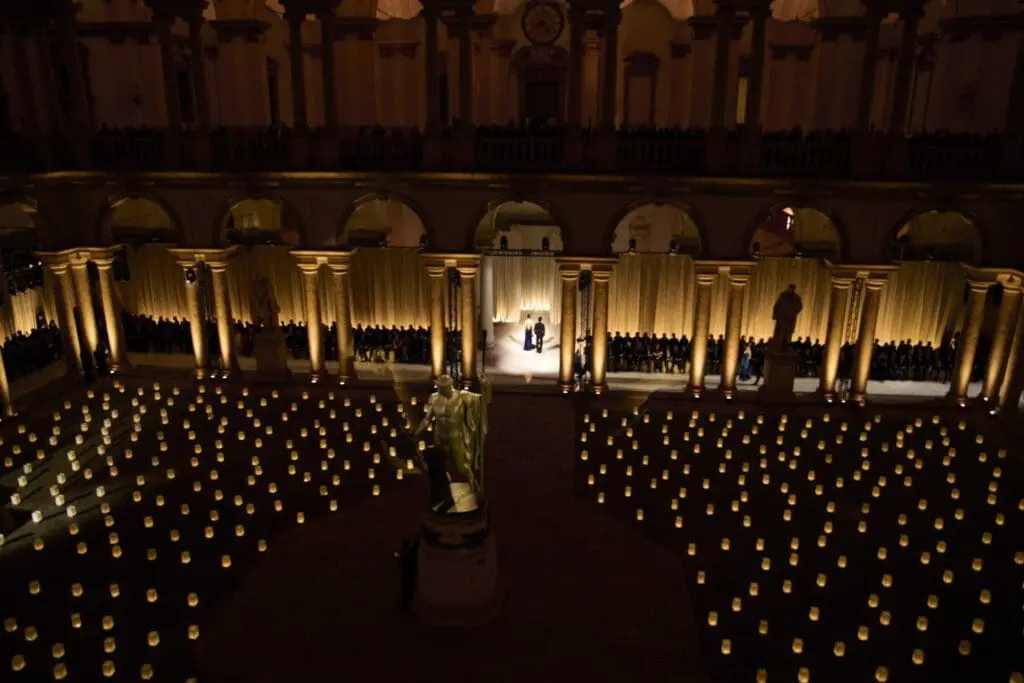
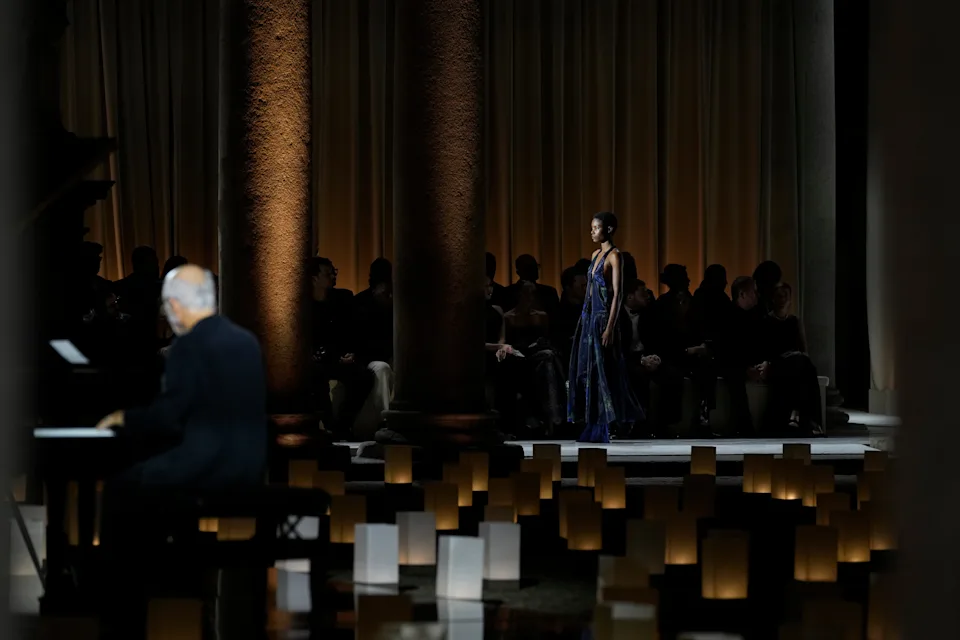
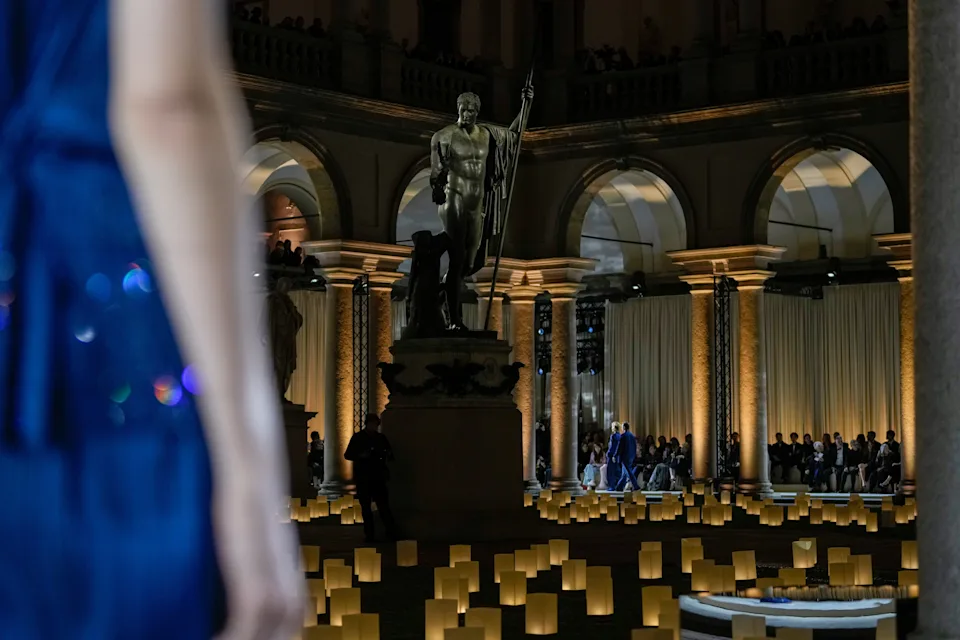
For the first time, the house presented a show without Giorgio Armani himself. The weight of that absence filled the air even before the first model walked. The venue, Pinacoteca di Brera, was transformed into a sanctuary — hundreds of candles illuminating the hall, casting long shadows that whispered of legacy and time.
The collection stayed true to Giorgio’s language: fluid tailoring, understated palettes, a quiet strength in every silhouette. It was not a season about reinvention; it was about permanence. The very essence of Armani — discipline, elegance, timelessness — stood untouched.
But the clothes were only part of the story. The audience itself became a living tribute. Major fashion families were present: Francesca Versace, stunning in her presence, Lavinia Biagiotti with her inherited grace, and countless others who came not for fashion but for memory. Celebrities from film, music, and politics filled the front row, creating a constellation of respect for the man who defined Italian style.
The emotional peak arrived at the finale. When Silvana Armani and Leo Dell’Orco walked hand in hand down the runway, the silence was overwhelming. No theatrics, no soundtrack — only the sound of applause, broken by tears. Faces in the audience glistened with emotion; many wept openly. For Milan, for Italy, for fashion — it was the closing of a chapter that cannot be rewritten.
Re Giorgio’s absence was palpable, but so was his presence. Every candle, every cut of fabric, every bowed head was a reminder of what he gave to the world. He was not just a designer. He was a builder of identity, a storyteller of elegance, a king whose reign will echo far beyond his passing.
That night, Milan Fashion Week didn’t just end. It stopped in silence, to say goodbye.
Milan Fashion Week September 2025 was more than a fashion calendar entry.
• Diesel made people play.
• Anteprima reminded us to breathe.
• Ferrari confirmed it was here to stay.
• Dolce & Gabbana gave us an iconic moment where cinema kissed couture.
• Armani gave us history, memory, and love.
This season wasn’t only about clothes — it was about what fashion can hold: joy, power, fantasy, and farewell.
For me? It was bittersweet, but I am happy I got the chance to honour the one and only Re Giorgio.


