
Words by Maggie Arandela-Romano
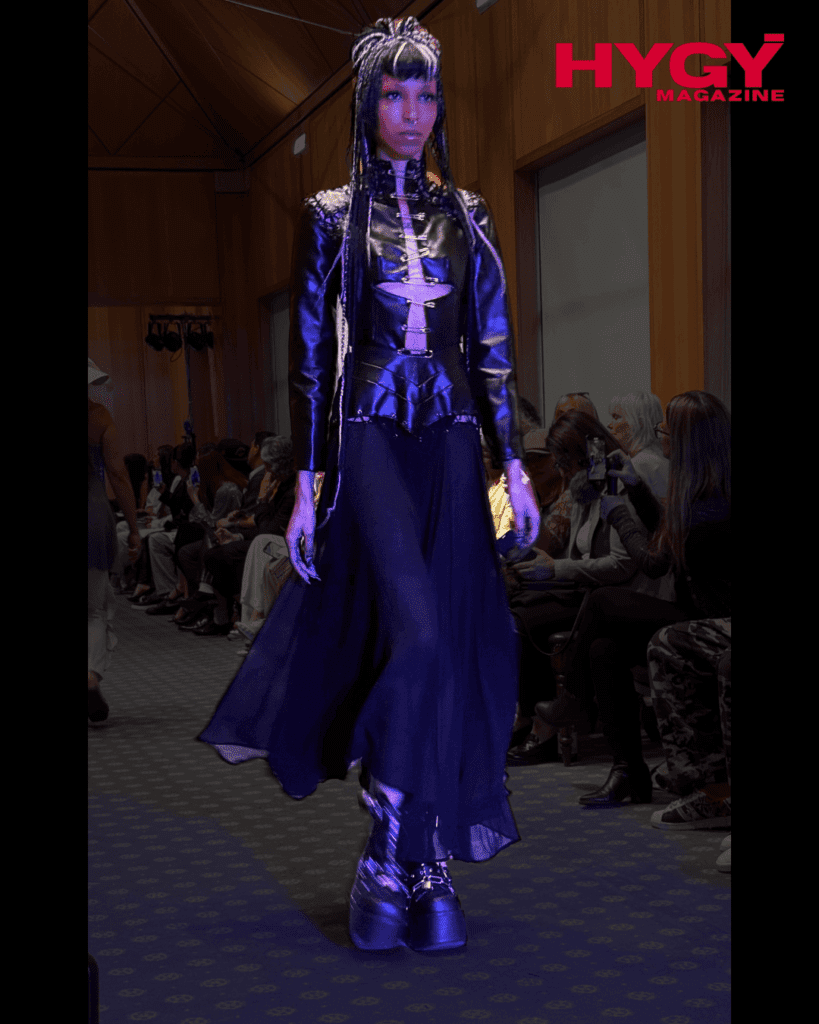
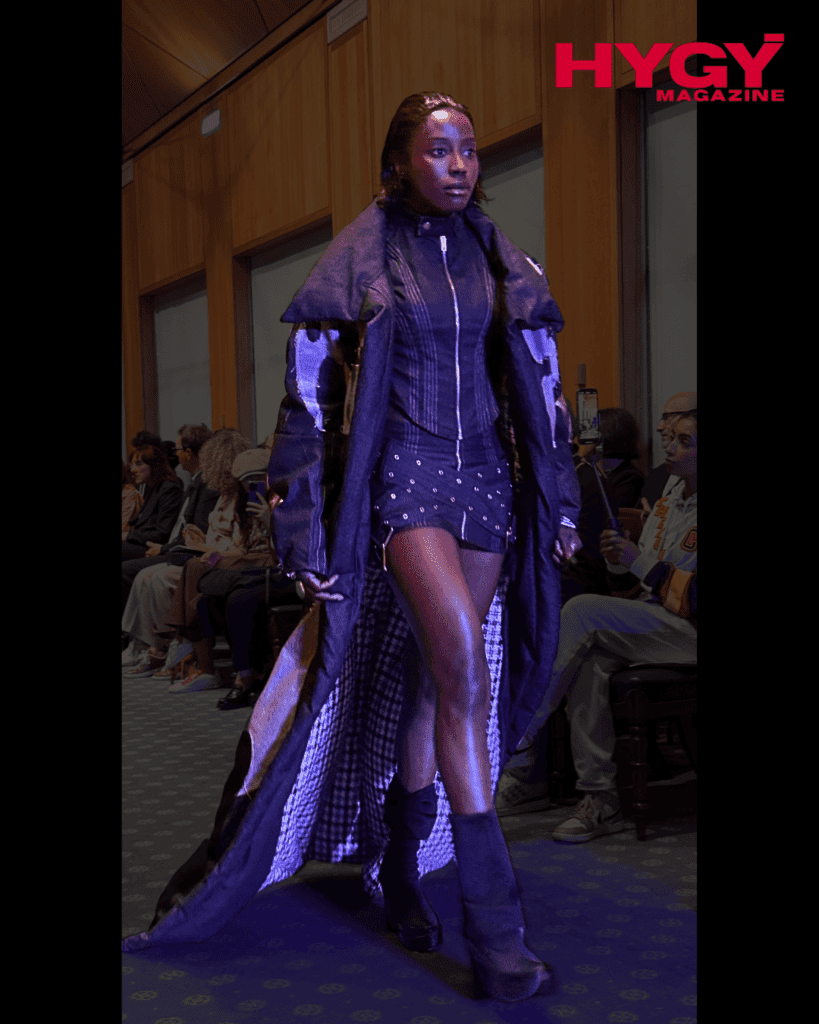
There’s a kind of magic that happens when creative talent meets precision, elegance, and purpose. That magic was fully alive at the Jimmy Choo Academy Graduate Fashion Show 2025, held within the elegant wood-panelled halls of Haberdashers’ Hall. The event not only showcased the refined skills and avant-garde visions of the graduating class, but also affirmed the Jimmy Choo Academy (JCA) as one of London’s most dynamic and forward-thinking creative institutions.
This year’s show had a special energy. Family members, fashion professionals, press, and curious creatives packed the space in anticipation — not just for the spectacle, but for the sense of possibility that comes when tomorrow’s designers take center stage.
Although Professor Jimmy Choo himself could not attend in person, his family was present, lending the evening a touch of warmth and continuity that reminded the audience of the academy’s heritage and ethos.
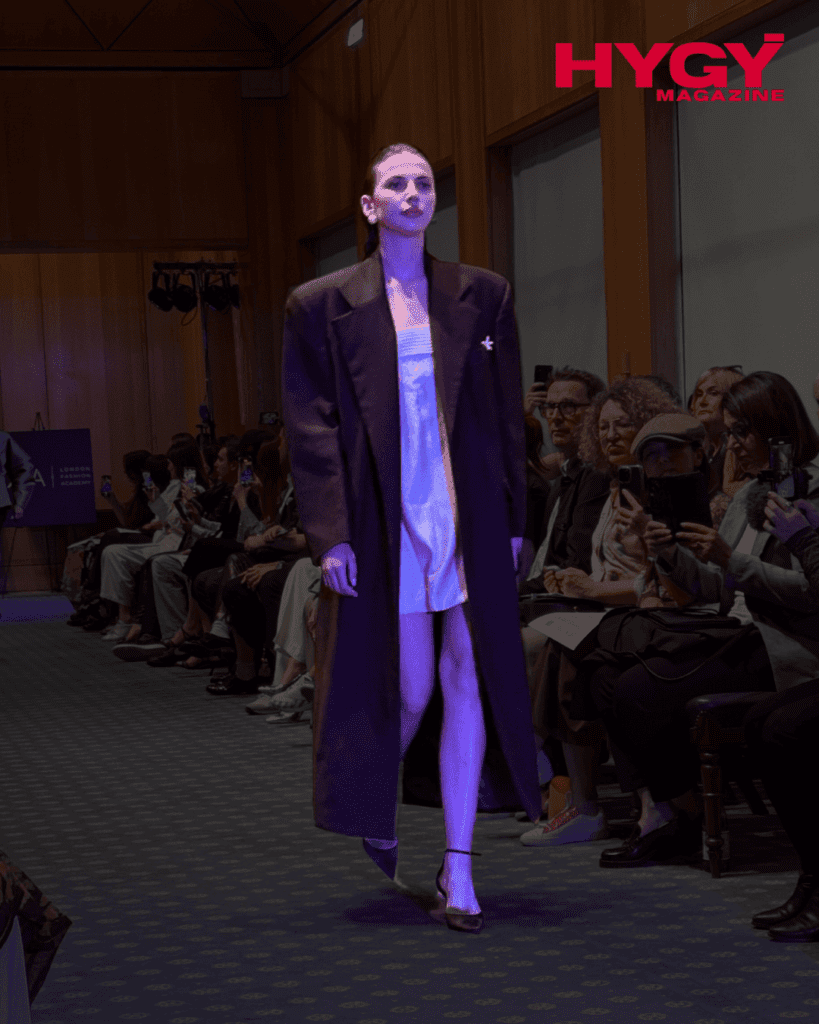
The standout moment of the night belonged to Olivia Parkinson, who was awarded the coveted “Designer of the Year” title. Parkinson’s collection, a dark and sculptural ode to sensual modernity, was a masterclass in restraint, tailoring, and subtle provocation.
The audience held its breath as one of her signature looks — a sweeping, fluid black gown with an extreme plunge and exaggerated sleeve drapes — glided across the runway.
It was daring without being loud, sophisticated without losing edge.
The award was presented by the Academy’s Principal Andrew Ginn, while Karen Millen OBE graced the celebrations as well.
Parkinson’s quiet confidence as she took the stage reflected the composure that had been woven through her entire presentation.
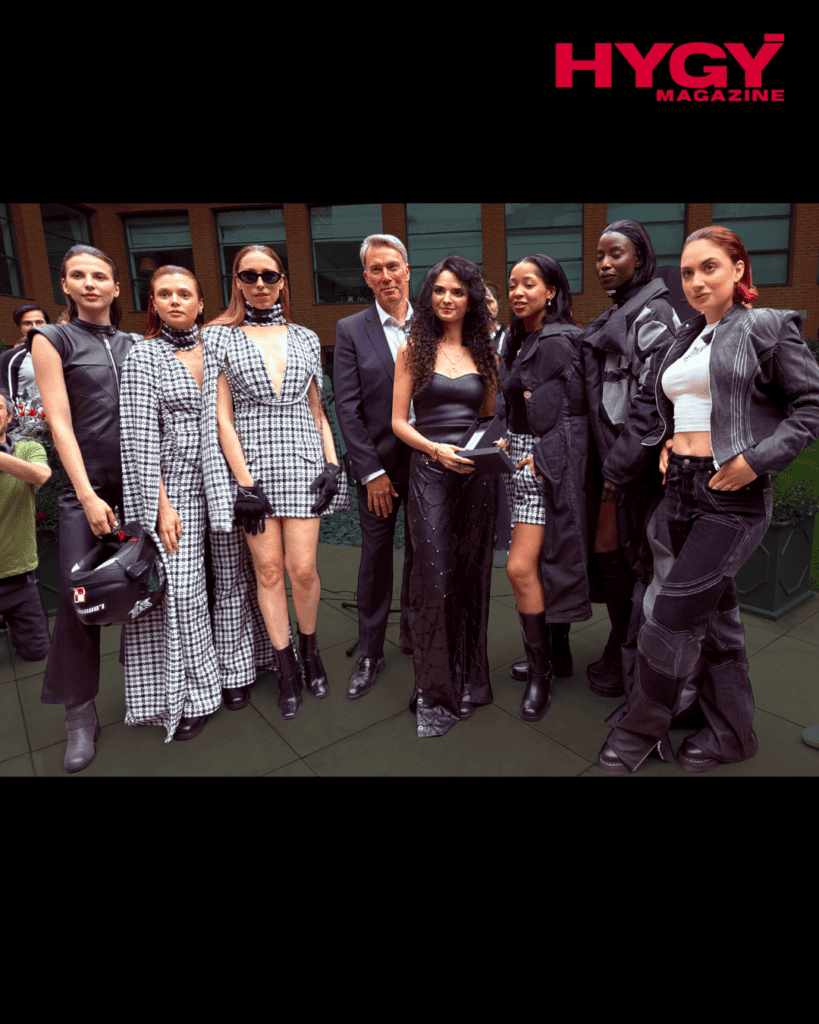
Founded by Professor Jimmy Choo OBE, the academy has built a reputation not only for technical mastery in design and craftsmanship, but also for encouraging experimentation and individuality.
It’s a place where boundary-pushing is encouraged — so long as the execution is impeccable.
The 2025 graduates made that philosophy visible. The runway reflected not a single overarching trend, but rather a diverse constellation of ideas. From deconstructed tailoring to elegant sportswear, from romantic femininity to sculptural minimalism — each collection felt personal.
Yet there was cohesion too — a shared sense of discipline and vision that set this showcase apart from more chaotic student shows.
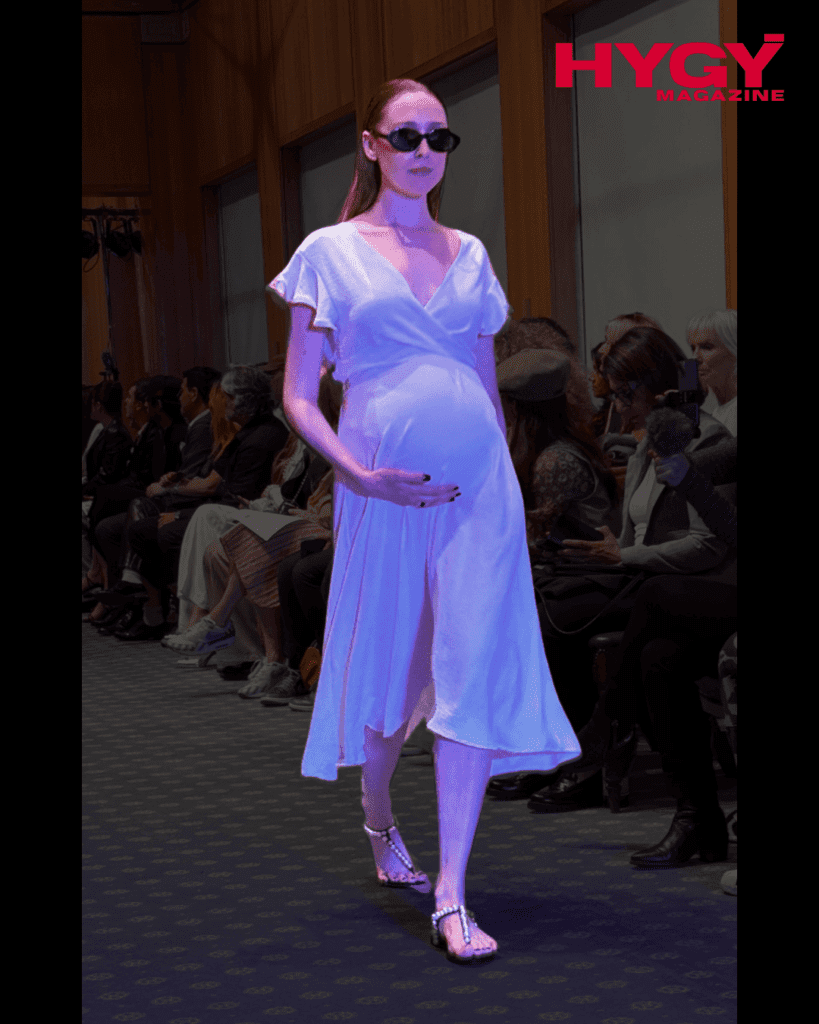
One of the most applauded segments of the evening came from a capsule ready-to-wear maternity line — an elegant and unexpected inclusion that proved fashion can be both beautiful and inclusive.
The pre-maman pieces merged style and function with surprising grace: soft yet structured silhouettes, elastic panel detailing, discreet layering, and clever pattern-work that adapted to form without compromising design.
This collection wasn’t just a novelty — it was a clear statement about the future of fashion. In a world that often sidelines pregnant bodies, it was powerful to see them re-centred — not in tokenistic ways, but with genuine attention to cut, comfort, and presence.
One piece in particular — a tiered ivory dress with architectural shoulders and a soft cinch under the bust — drew audible murmurs of admiration from the crowd.
The audience’s reaction suggested a shift: people are ready for fashion that considers all bodies at every stage of life — not just as a niche, but as part of the main narrative.
Beyond Parkinson’s striking work and the maternity showcase, several collections caught the eye with strong storytelling and polish.One male model wore a look that blended streetwear ease with kimono-inspired construction: wide trousers in pinstriped cotton, paired with a belted wrap jacket in charcoal denim.
It was a clean, confident hybrid of East-meets-West styling, earning approving nods from several front-row stylists.
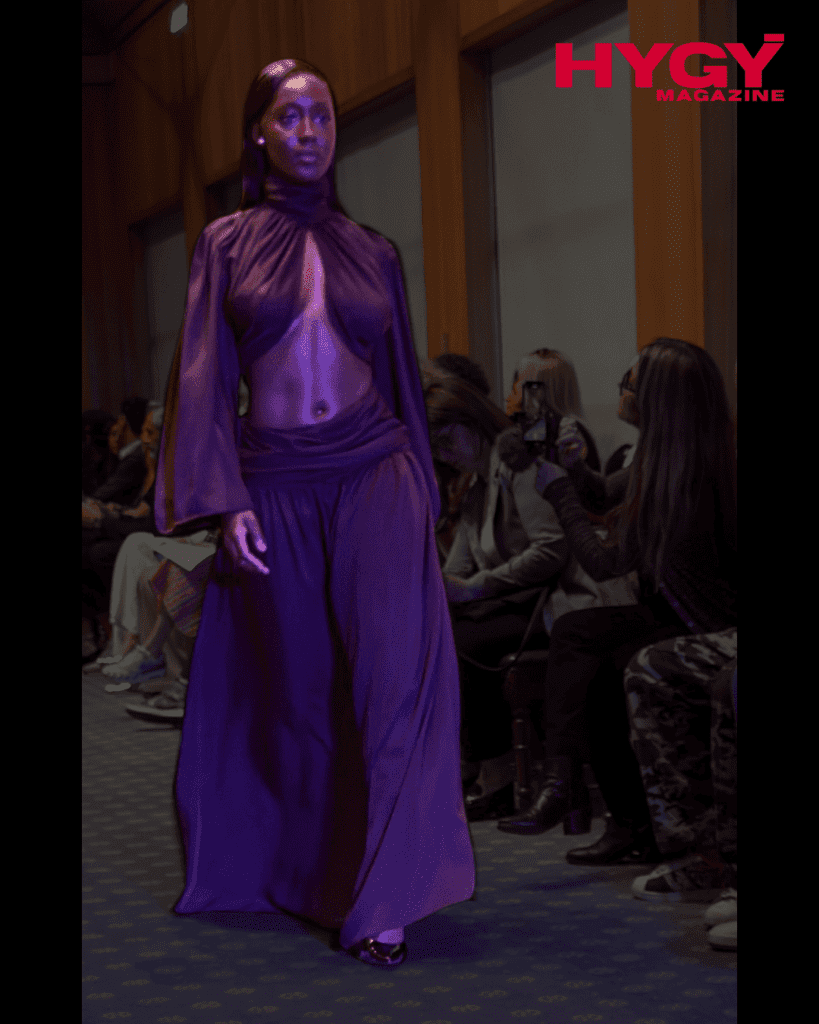
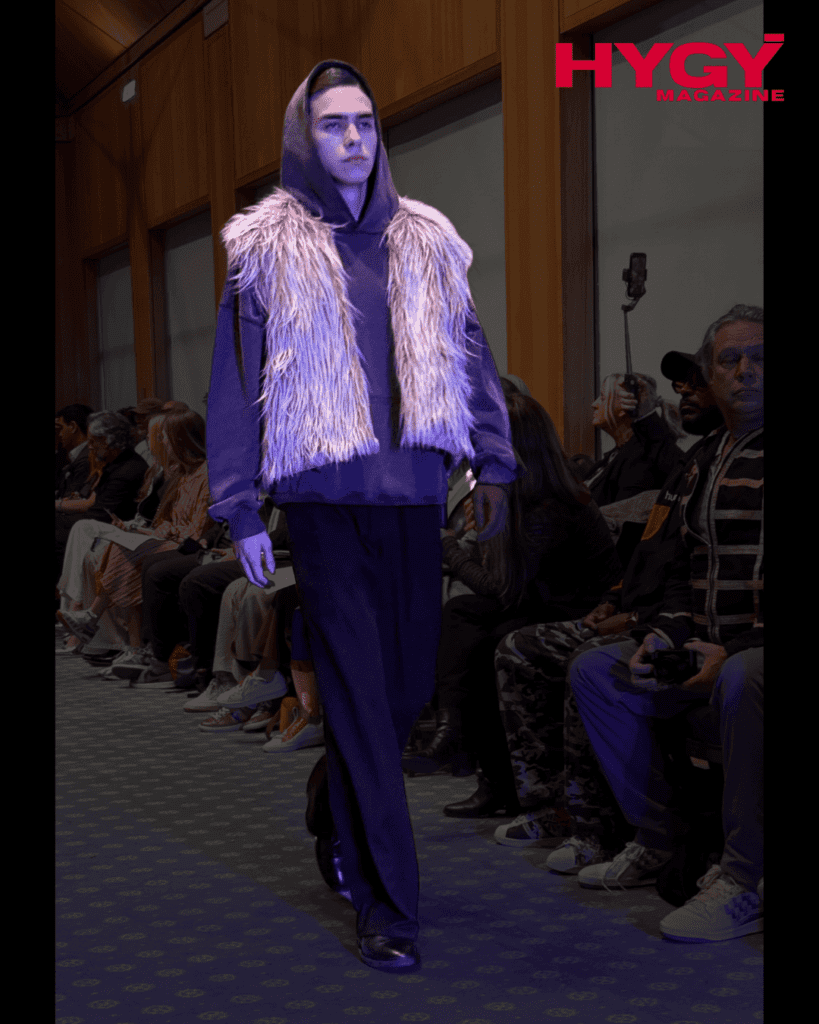
The show reflected not only a diversity of styles, but also of bodies, backgrounds, and gender expressions. The casting was inclusive without being self-congratulatory.
Models moved with confidence and personality — each walk told its own story, adding to the layered texture of the evening.
Fashion shows can sometimes feel detached from reality. This one didn’t. It was grounded, intentional, and refreshingly sincere.
As the final model walked, the applause didn’t wait. This was more than a student show. It was a statement of what fashion can become when craft, education, and freedom intersect.
The entire class proved that the future of fashion isn’t something to be feared or fought — it’s something to be celebrated.
And as the lights dimmed in Haberdashers’ Hall, one couldn’t help but feel inspired.
If these designers are the future, we’re in good hands.


