
Interview with Katarina Protsack — Valerie Aitova
For Katarina Protsack, founder and creative director of Blue Nude, creativity begins in sound. Before sketches, before textiles, before the logistics of production, there is listening. A playlist acts as the emotional climate of a collection – its mood, its temperature, its internal weather system. “Music has always been the biggest creative force in my life,” she says. It is not inspiration as decoration – it is the starting point.
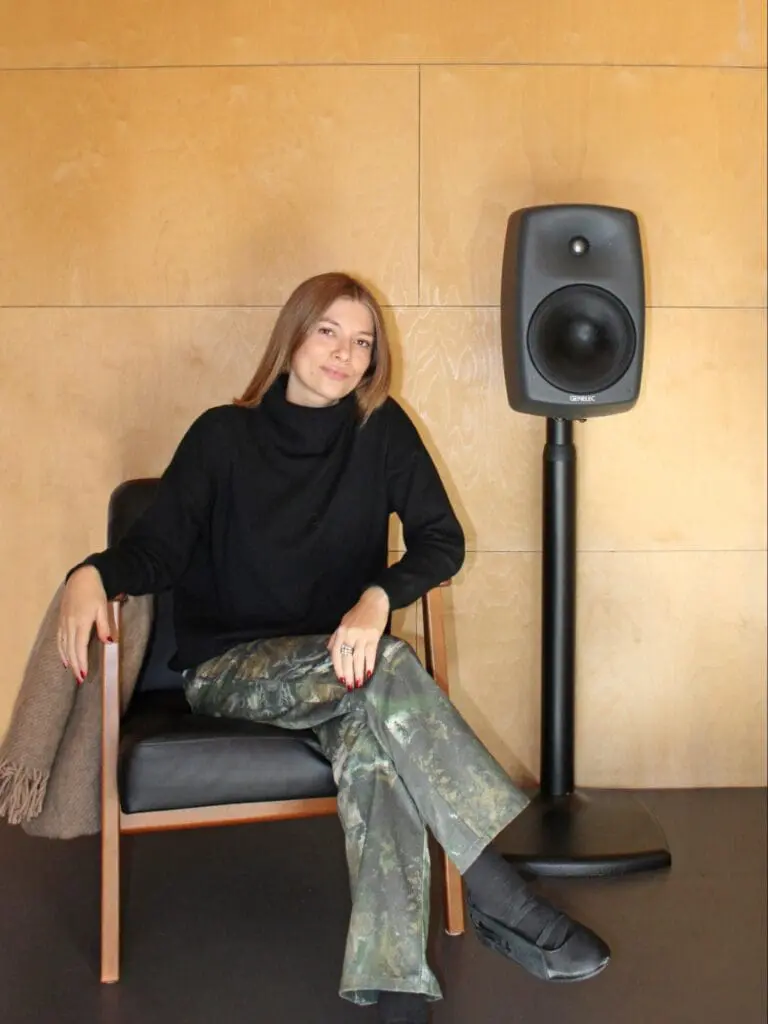
Protsack did not arrive in fashion through formal routes. She trained as a classical clarinetist, where sensitivity is structured through breath, tone, and silence. The connection between performance and clothing did not reveal itself immediately. “I don’t think I actually connected them until Blue Nude,” she says. “They were always two separate interests of mine… but then I realised how much of an asset it was that I can get such a strong visual sensation from music.” Blue Nude became the moment the two planes – sound and form – merged.
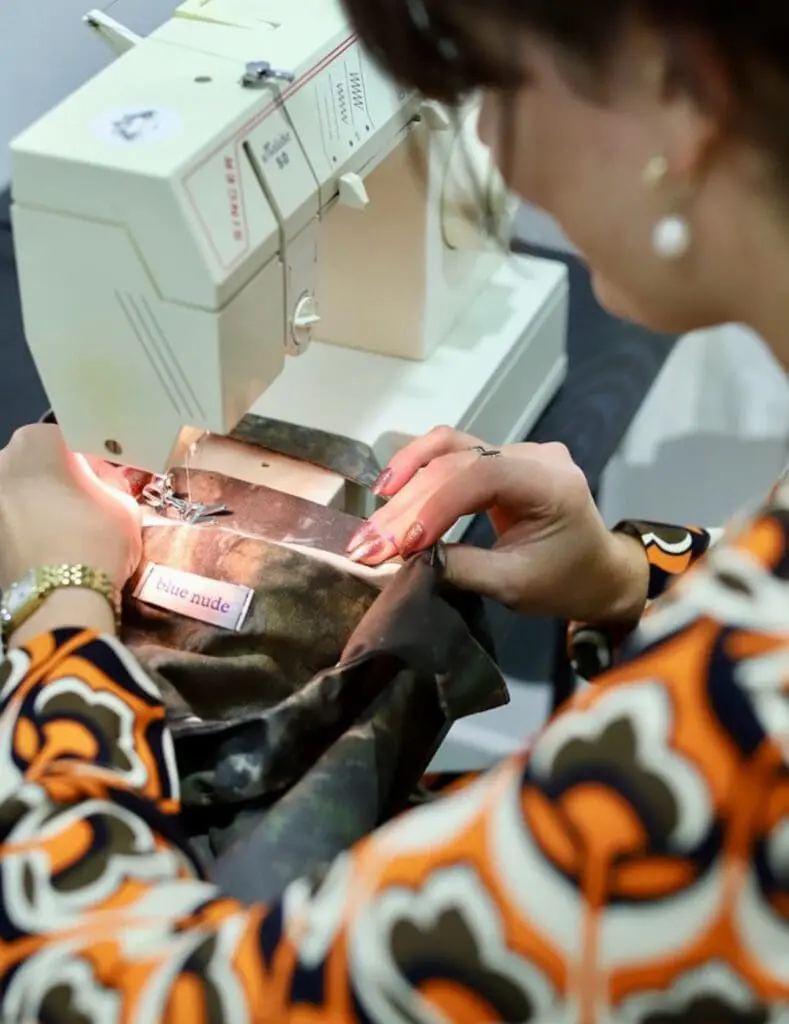
Being self-taught gave her process a distinctive openness. “It was probably more trial and error – learning how to create the systematic process of manufacturing and developing goods,” she says. In her early production meetings, she had to learn fluency as she moved. “I had to do a little bit of ‘fake it till you make it’ – learning discreetly on the fly.” Yet this lack of technical conditioning allowed her to remain expansive.
“You can get from point A to point B in a thousand different ways. Each way is valid.”
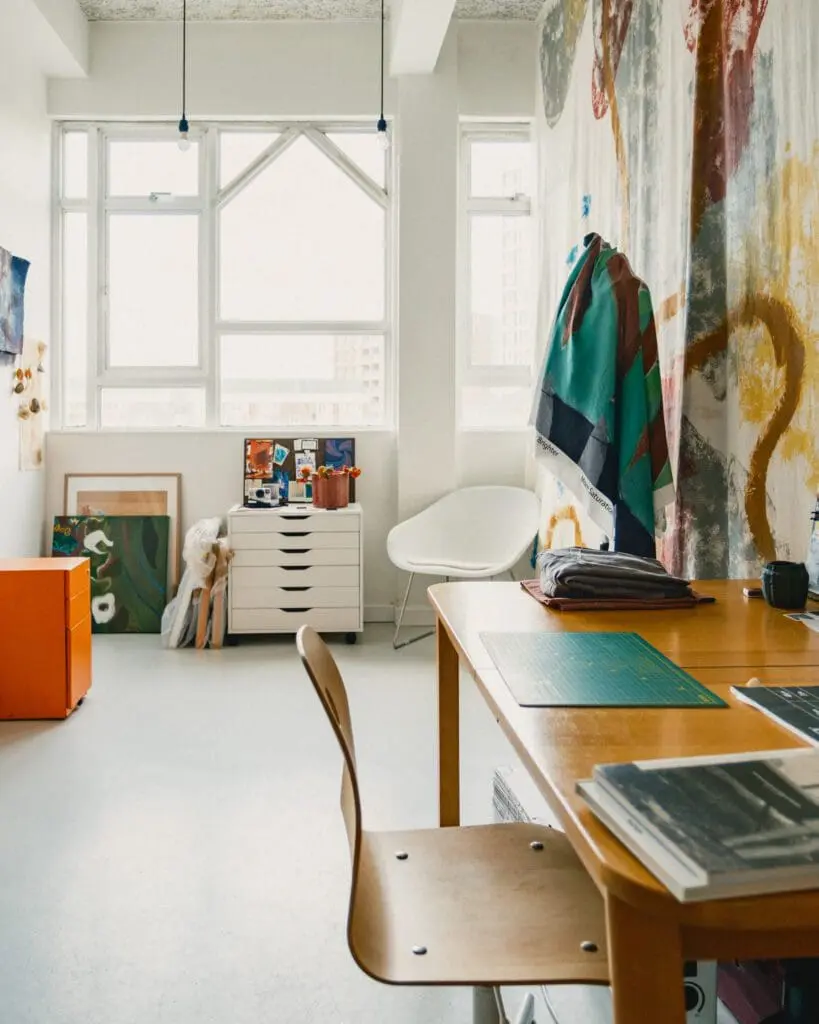
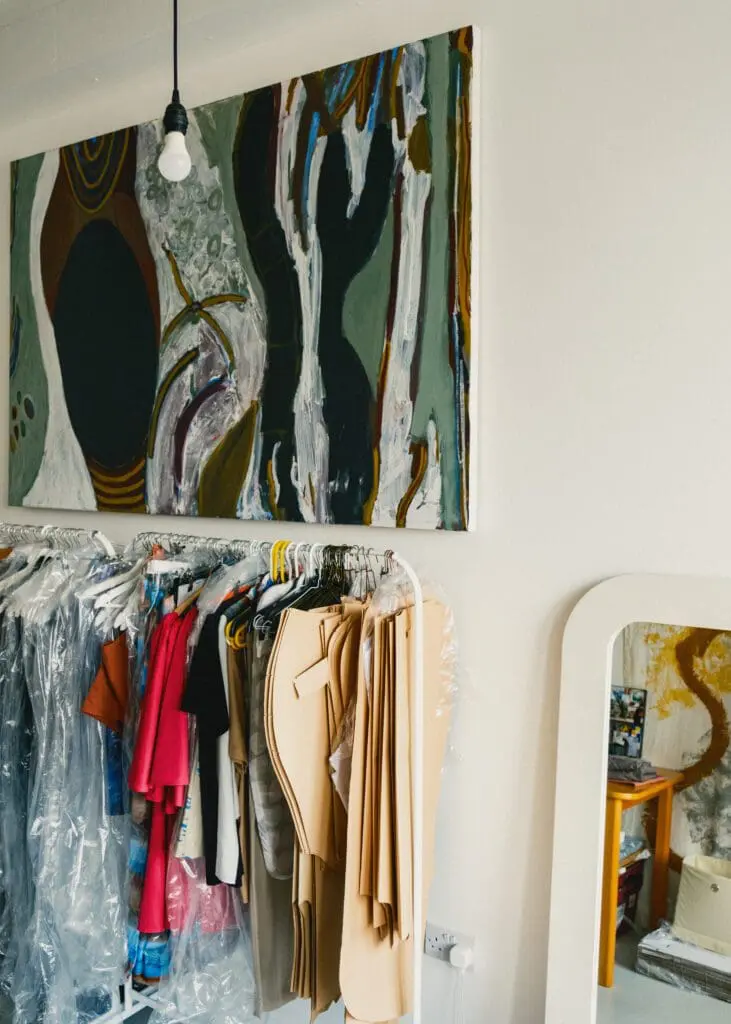
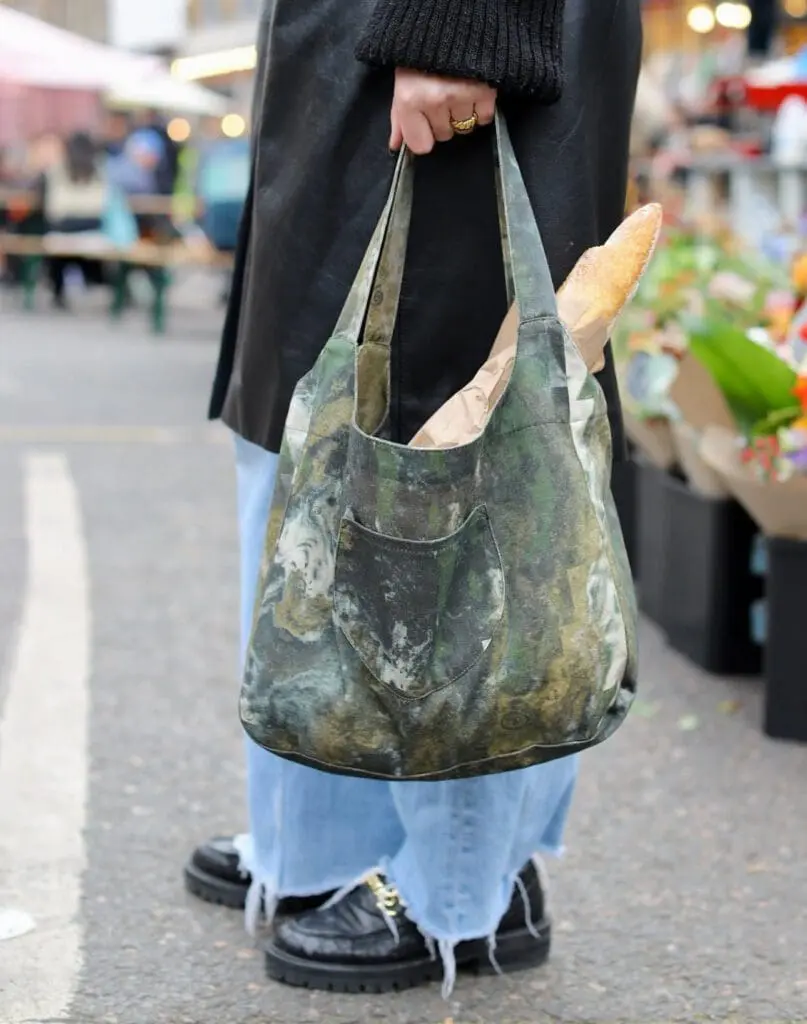
The result is a brand that treats clothing not as surface or spectacle, but as atmosphere – something that holds an emotional climate. The garments move quietly, attentive rather than insistent.
In many ways, Blue Nude reflects a wider shift happening in independent fashion – away from image-led identity and toward work built from interior sensibility. The focus is not on the clothes as objects of display, but on the emotional tone they carry. Instead of offering a visual argument for how one should appear, the brand creates a space for how one might feel. The collections move at a slower pace, asking for attention rather than demanding it, and this slowing down becomes part of the experience. It is fashion as environment, not declaration – a quiet but deliberate refusal of speed, spectacle, and the pressure to constantly be seen.
This interior dimension gained public presence with the launch of Feel Good Radio on Netil Radio. The suggestion to return to radio had followed her for years, but she waited until the voice she wanted to share felt fully formed. “When I first moved to the UK, I felt like a student of the musical culture here, and I wanted to wait until I understood my own unique perspective,” she says. After teaching herself to DJ last year, she felt the readiness click into place. “Now that I have the tool and the skill, I can do it.”

The show shifts seasonally. Spring and summer lean warm – Bossa Nova, light jazz, soft house. Autumn and winter turn inward – “a little more pensive and reflective,” she says. “I really love Yin and Yang.” Light and dark, exterior and interior, held in rotation.
“Netil Radio is an independent radio station that’s been part of the Hackney community for a really long time,” she says. The connection was immediate – creative alignment rather than strategy. “I really respect them for giving me a show when I’m not operating in a dance music format.” The show does not build energy through tempo, but through tone. Listeners find themselves entering genres they did not expect, discovering that music can move without speeding up.

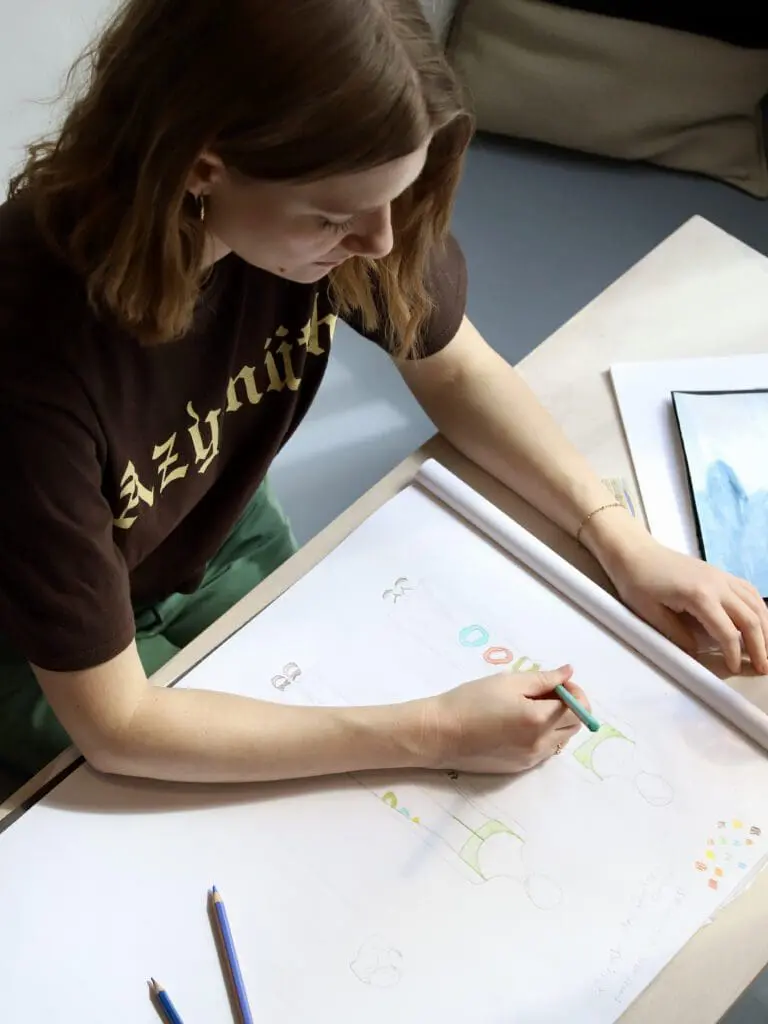
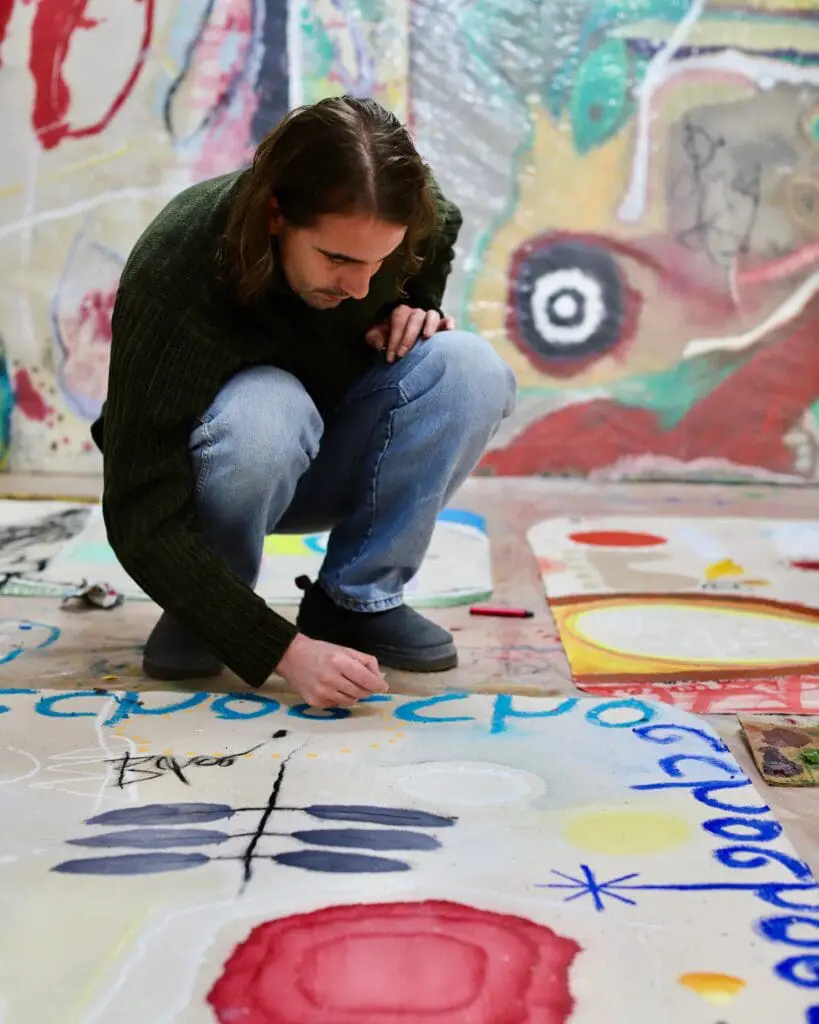
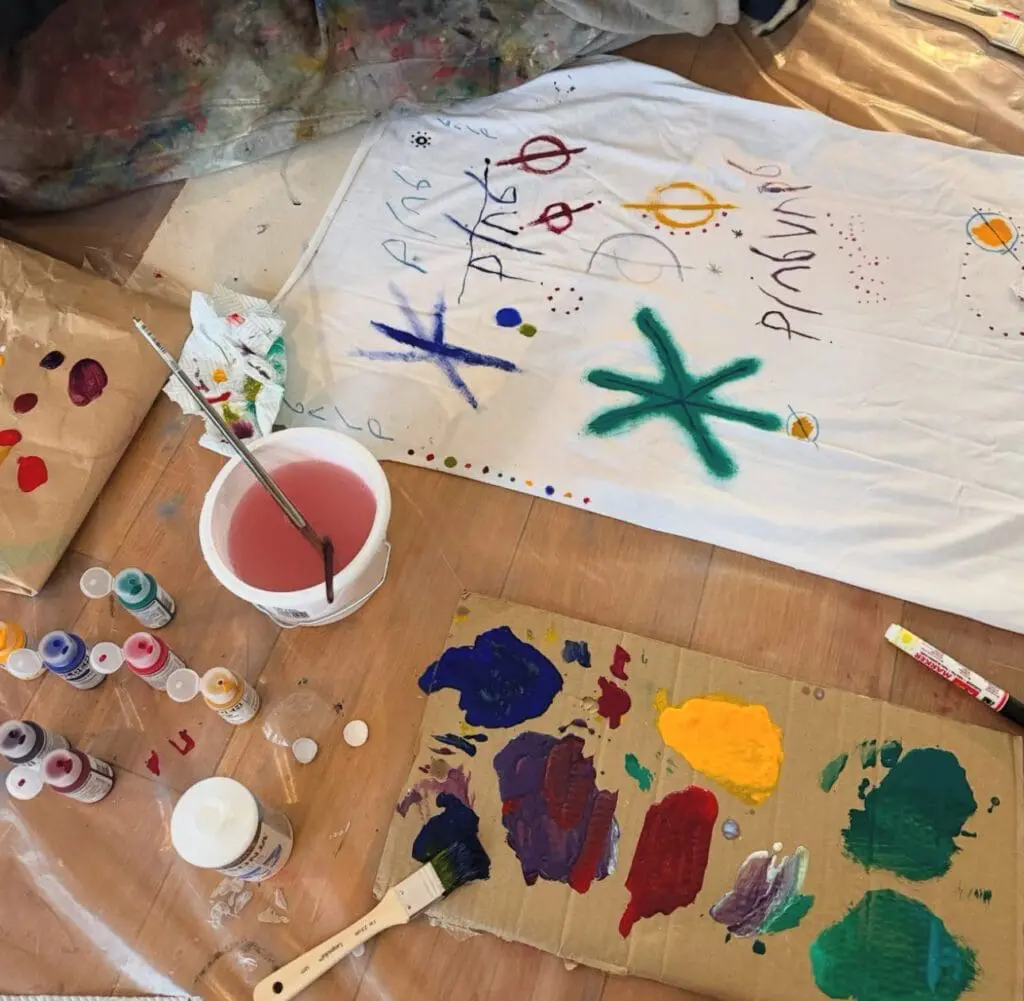
This same attention shapes her collections. With Raha, she built a sonic world of desert warmth. Created in collaboration with artist Chisara Vidale, the collection leans into tactility and closeness, translating music into clothing that feels lived-in rather than styled. “Raha is definitely more of a deserty tone with darker reds and sandy colours,” she says, and the playlist that accompanied it carries that same slow heat – percussion that lingers like sunlight on stone, music that moves at the pace of afternoon. Textures follow suit: brushed cottons, soft wools, fabrics with a touch of grain – clothes that feel like a warm climate remembered from the inside. The garments follow that rhythm: unhurried, grounded, full of breath.

Forá, in contrast, is coastal and open, formed on Hydra. Developed alongside artist Laurence Watchorn, whose work traces the movement of light across surfaces, the collection draws from a landscape where nothing is hurried. “For Forá, a playlist is very blue, in my mind,” she says. “Blue is my least favourite colour, but in Hydra I felt connected to it.” The playlist moves like light across water – soft chords that shimmer and recede, a tide of sound rather than direction. The garments hold that openness: air, tide, horizon.
When asked her actual favourite color, she answers immediately. “It’s orange.” Warmth without spectacle.
Travel, for Protsack, is not about sourcing influence. It is about noticing what rises. “I like to pick out a very specific aspect of a place that jumps out to me – a word, a mood,” she says. “I don’t dictate it. It’s very natural.” Her recent trip to Svalbard, near the North Pole, shifted something quietly within the work. “It’s the most northern inhabited island in the world,” she says. She traveled there during the transition between polar night and returning sun, crossing tundra by snowmobile and sled. The experience wasn’t about landscape as image, but atmosphere: white-on-white, horizon dissolved, time moving differently.
The next Blue Nude collection, releasing at the end of this month, is shaped directly from that sensation. Not an illustration of the Arctic, but an exploration of spaciousness, stillness, and the feeling of light returning after absence.

Lately, Protsack has been listening to Polygonia’s Dream Horizons – dark, layered, spiritual electronic music that unfolds slowly, like something built from within. “I honestly love it”, she says. For her, music is not background but a structuring force: it sets the tempo at which life and work move. That same measured pacing shapes Blue Nude’s approach to making. Sustainability isn’t positioned as a marketing pillar, but as a natural extension of how she works – small-batch production, made in London, attentive, unhurried. “Music helps me focus”, she says. The radio show exists without commercial purpose. “It’s just purely creative and expressive.” The clothes are made with that same clarity: not to respond to urgency, but to hold space.
Looking ahead, Protsack imagines Blue Nude becoming more dimensional rather than larger. “A public physical space beyond my personal studio,” she says. A place where clothing and sound can be listened to rather than consumed. Not a store. A space to spend time in.

Blue Nude isn’t designed to attract attention quickly. It asks for a different pace of looking. The collections come from an internal mood before they become material, and that mood stays present in the clothes.
They feel lived-in from the beginning – familiar in a way that is difficult to name, but easy to recognize once you’re inside it.


