
Words by: Lola Carron
Edited by: Valerie Aitova
Fashion rarely arrives when we think it does. By the time a microtrend hits your feed, it has usually already been filtered, exaggerated, and flattened into something consumable. One week it is everywhere. Next, it is embarrassing to admit you ever wanted it.
That delay is not accidental. Trend forecasting tends to capture fashion only once it has been named, packaged, and sold back to us. But long before trends are labelled, they appear somewhere else first: on bodies.
More specifically, they appear in fittings, castings, and backstage conversations. These are not polite spaces. The fashion industry is blunt, fast-moving, and often unforgiving. Clothes are judged in real time. Opinions are honest, unapologetic, and sometimes brutal. People talk openly about what feels exciting, what already feels tired, and what will not survive beyond a few weeks.
Leyla Ucar hears those conversations daily.

As a signed working model moving constantly between London, Amsterdam, and wider European fashion circuits, Leyla spends most weeks in castings, fittings, and on set. Her job requires her to inhabit clothes before they are explained, marketed, or declared “in”. Patterns emerge there quietly, through repetition and logistics, through what stylists keep pulling, what brands keep requesting, and what models are repeatedly asked to wear before the internet clocks it.
“People assume trends just appear from social media,” she explains. “But most micro-trends actually start on the runway years before. Social media just exaggerates elements of them.”
Those early signals are not only about silhouettes. They are also about geography.
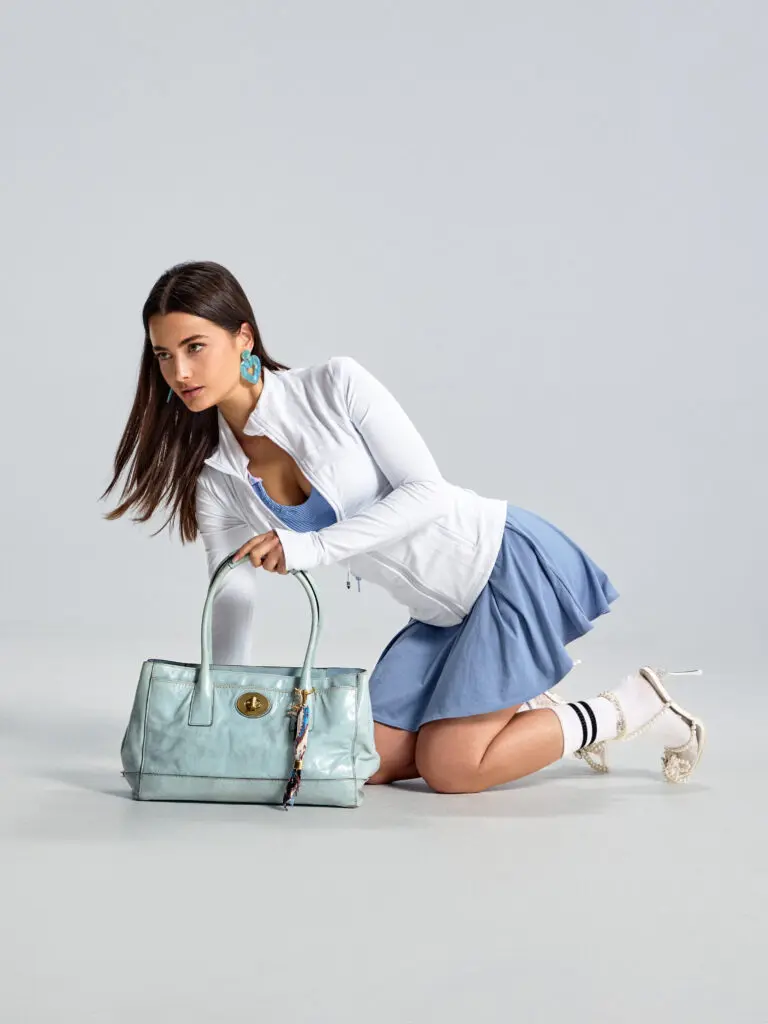
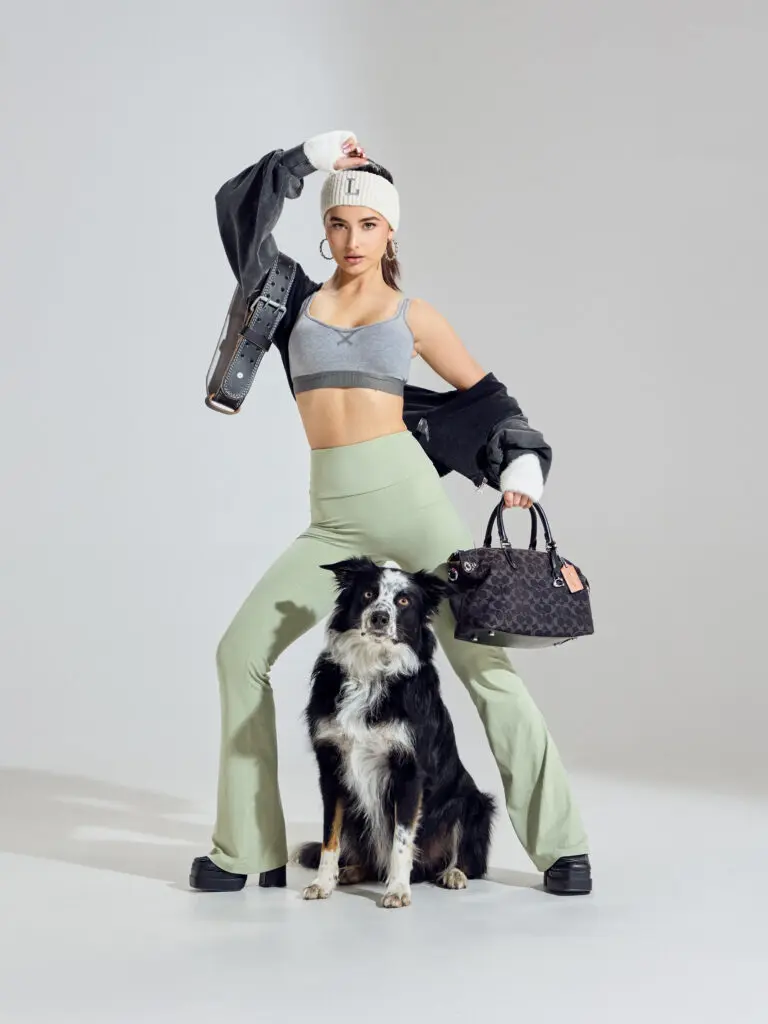
When she was asked: “Is there anything you’re seeing around shoots that the internet hasn’t fully clocked yet?” – “Scandinavian brands,” Leyla says without hesitation. “Especially streetwear labels. They’re becoming huge.”
She has seen them repeatedly while working across Europe, particularly in Amsterdam, where boutiques were already stocking them heavily. Arte Antwerp stood out to her: unisex, oversized, deliberately relaxed. “Very cool,” she says. “Kind of like Jaded London vibes, but for men.”
These brands are not viral yet. They are circulating quietly, passed between stylists, models, and editors before algorithms catch on. It is a reminder that fashion rarely travels from screen to street. It moves body to body first.
From backstage exchanges to casting requirements, Leyla has a front-row seat to fashion’s near future. Based on what she is seeing, wearing, and hearing across the industry, several shifts are already shaping how fashion feels moving toward 2026.
One of the clearest of these shifts is happening in denim. After years of silhouette whiplash, denim appears to be stabilising.
“We went from huge cargo jeans to skinny jeans, and people hated that skinny jeans came back,” Leyla says. “Bootleg sits right in the middle.”
On castings, this shape is already being prioritised. Brands want something figure-hugging without feeling restrictive. “They still show your figure but give movement,” she explains. “That model off-duty look is always going to be desirable.”
Rather than nostalgia, this shift feels practical. In an industry fatigued by extremes, moderation reads as relief. Lace, too, is being reworked under this logic. It is no longer treated as purely delicate or decorative.
“Lace details layered over jeans, peeking sleeves, lace tops,” Leyla says. “It keeps coming back.”
What has changed is context. Lace now appears under tailoring, paired with denim, offset by leather or metallics. It functions less as ornament and more as friction. A return to late nineties and early 2000s references where sensuality felt sharper and less performative.
Nobody is touching the 2010s yet, Leyla laughs. “Rightfully.”
That backward glance is not about nostalgia for its own sake. It reflects a wider stabilisation of silhouettes across fashion, where experimentation is happening less through cut and more through detail. As the body becomes less exaggerated, expression shifts elsewhere.
Leyla notices repetition in details that feel intentional rather than novelty-driven: chunky belts, metallic and studded finishes, silver replacing gold. Baker and newsboy hats are resurfacing as a way to anchor an outfit’s mood.
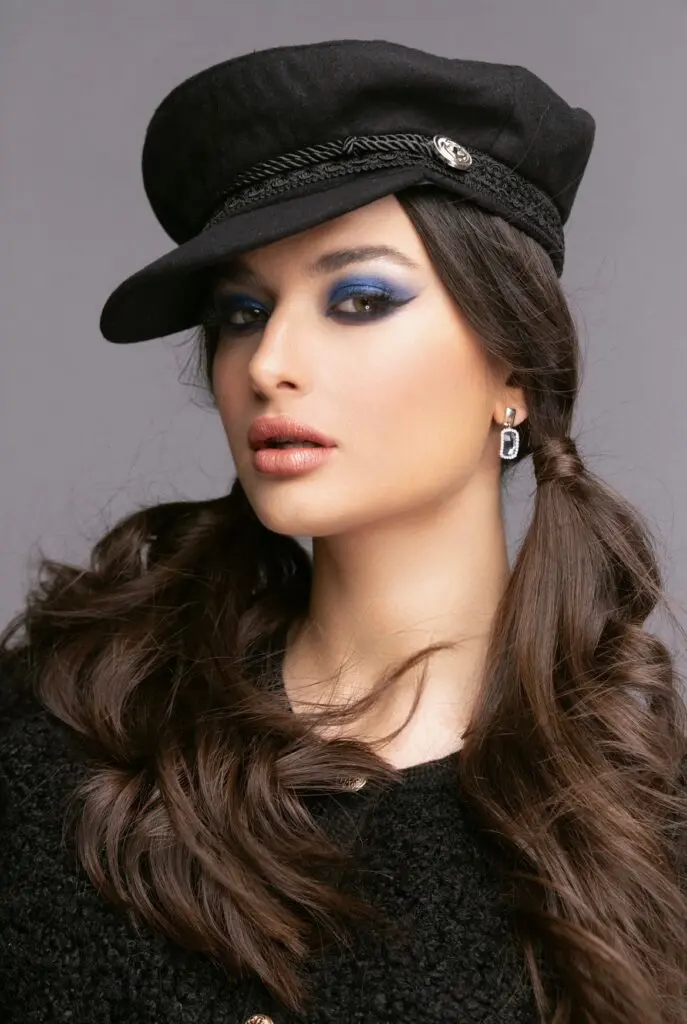
These are not statement pieces in isolation. They operate as shorthand, communicating edge, polish, or authority with minimal effort. Fashion here responds to how clothes are worn in real life, not just styled for images.
As expression migrates away from excess, it begins to show up in subtler places. On set, hair is already moving away from precision.
“Messy buns, soft blowouts,” Leyla says. “The ultra-structured Hollywood wave is fading. The side parts are back.”

The repetition is subtle but consistent. Hair now looks lived-in rather than perfected, signalling a quiet rejection of hyper-control after years of slick minimalism. That shift doesn’t stop at the hairline.
Makeup is undergoing a similar recalibration. “People want elements of 2016 again,” Leyla explains. “Smoky liner, metallics, tight-lining, grunge. But with softer bases. Less harsh contour, more blurred lips.”
She sums it up simply: “Rockstar girlfriend, but polished.”
The emphasis is impact over perfection. Expression without heaviness. But these aesthetic shifts are not just ideological. They are shaped by something far more mundane.
Behind all of these shifts is a practical reality. Modelling is governed by logistics.
“Comfort. Always,” Leyla says. “Stylists hate turtlenecks because they mess with the makeup. No big jumpers without zips.”
Zip-ups, joggers, vests. What is aestheticised as model off-duty is, in reality, functional dressing shaped by labour. That practicality has quietly influenced everyday style and explains why comfort has dominated for so long. But even here, tension is emerging.
“We used to wear mini dresses, massive heels, full glam,” Leyla says. “Now it’s jeans and trainers. It’s comfier, but I kind of miss getting dressed up.”
That sense of absence matters. Fashion is not rejecting comfort, but it is beginning to feel constrained by it. The ease that once felt liberating now risks becoming monotonous, flattening the emotional charge that dressing up used to carry.
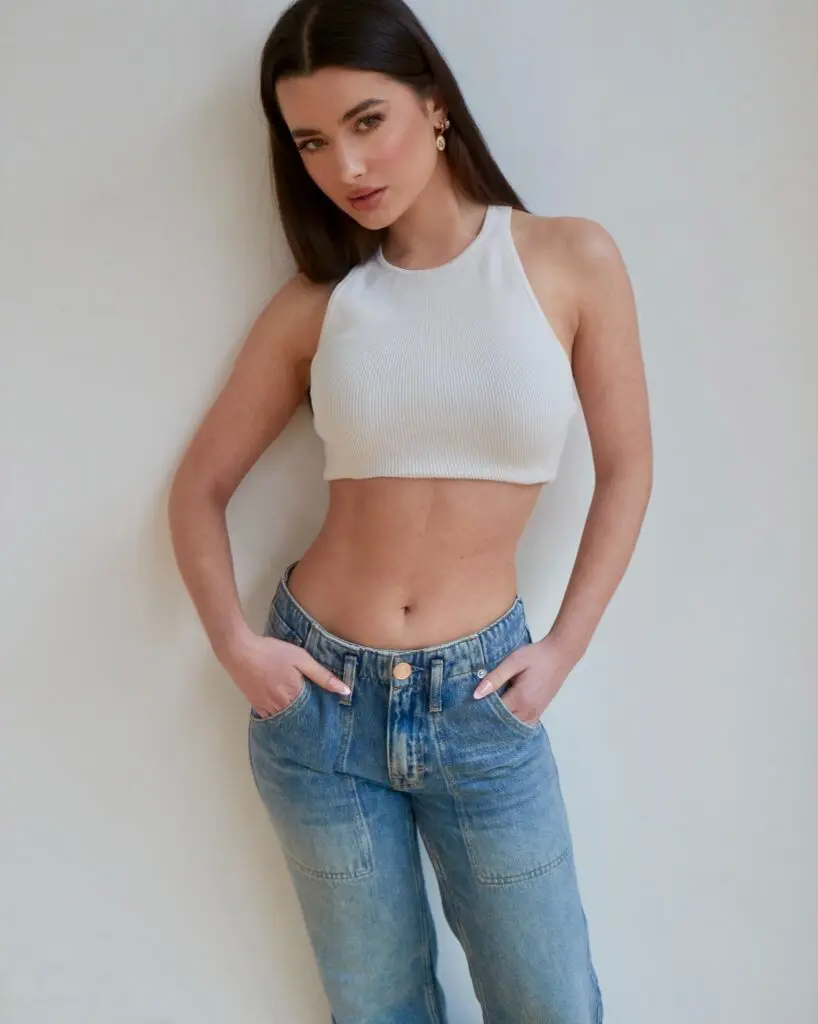
“People are bored,” she says. “Everything has felt safe and neutral. I think people will be more adventurous again.”
That boredom exists alongside contradiction.
“It’s both,” Leyla says, when I ask whether fashion is genuinely evolving or simply recycling itself. “There’s more individual expression now, especially with micro-trends. But because everything moves so fast, it doesn’t have the same lasting cultural impact anymore.”
Trends flare, circulate, and disappear before meaning can settle. What remains is mood rather than movement.
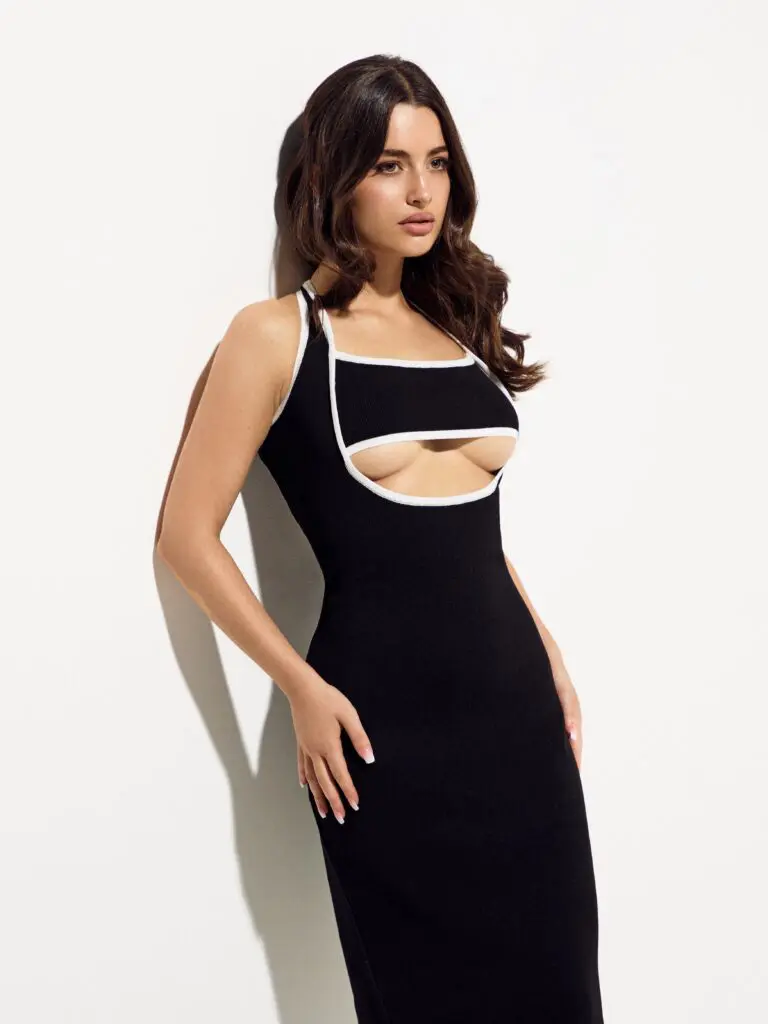
For Leyla, one figure captures this shift particularly well: Luiza Cordey.
“She’s a Pinterest board come to life,” Leyla says.
What stands out is not virality, but instinct. The way Cordey handmakes pieces she has absorbed visually, the confidence that feels lived-in rather than styled. She represents a generation less concerned with performance and more attuned to authorship.
That distinction matters. In an industry exhausted by overexposure, the next it-girls will not be the loudest. They will be the ones who feel inevitable.
This is not a manifesto. It is an observation already underway, shaped by repetition, honesty, and bodies moving through the industry before trends are named.
And if fashion’s next chapter is forming, it is happening exactly where it always has. In fittings where opinions are unfiltered. In castings where clothes are judged without hype. In spaces where what will last is separated, quickly and honestly, from what will not.


