
Words by: Lola Carron
Edited by: Valerie Aitova
Luxury fashion rarely announces its shifts outright. Trends are softened, language is obscured, and change arrives disguised as continuity. But long before silhouettes evolve or hemlines rise, fashion makes its intentions clear elsewhere – in casting.
Recent luxury campaigns share a noticeable restraint. Faces are less expressive. Bodies appear quieter, less eager to perform. The mood is emotionally distant rather than seductive, controlled rather than aspirational. This is not the glossy spectacle of the hype era, nor the high-drama fantasy that once defined luxury advertising. Instead, it feels deliberate. Inward-looking. Unhurried.
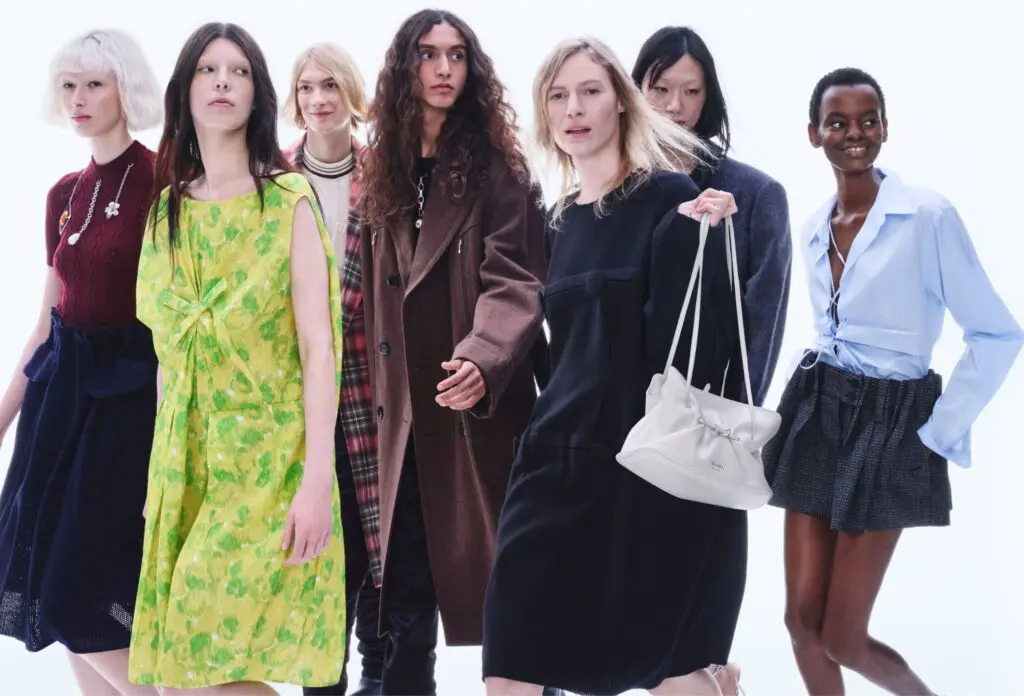
This matters because clothes tend to lag behind casting. Collections take seasons to materialise. Campaign images, by contrast, respond quickly. They are often conceived early, shaped by instinct and strategy rather than trend confirmation. Casting, in this sense, acts as fashion’s early warning system. It signals where brands are heading before those ideas crystallise in fabric.
To read casting as surface-level representation is to miss its real function. Casting is not just about who is visible. It is about how a brand communicates power, relevance, and authority.
Much like typography or colour, it functions as part of a brand’s visual grammar, signalling who the brand is speaking to, how it expects to be read, and the level of cultural literacy it assumes its audience already has.

The choice between youth and age, softness and severity, charisma and detachment is never neutral. These decisions shape how desirability is framed and who is expected to recognise it. In luxury fashion especially, casting is less about aspiration and more about alignment. It establishes the emotional register of a brand before the clothes are even considered.
What is striking now is not diversity in isolation, but a shared tonal shift.
Across major houses, casting is becoming less emotive, less explanatory, and less eager to perform relevance. Instead, it is quietly assertive. This is not fashion trying to be liked. It is fashion reasserting control.
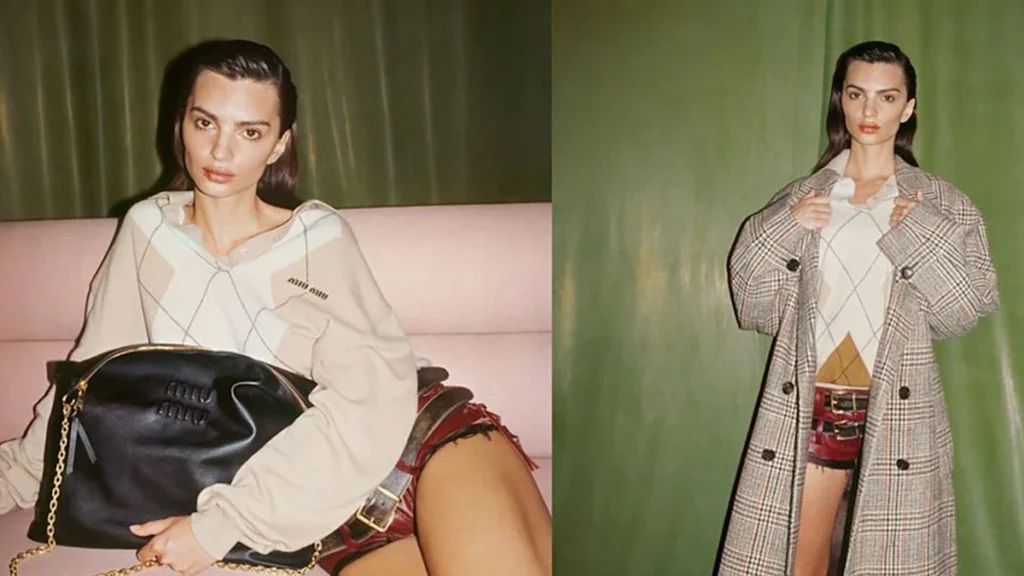
Miu Miu is often referenced for its age-diverse casting, but that framing barely scratches the surface. The brand’s most consistent casting choice is not age, but attitude.
Across recent campaigns and runway imagery, particularly from the early 2020s onwards, Miu Miu has repeatedly favoured models who appear uninterested in the viewer. Expressions remain flat. Posture is unperformative. There is awkwardness, defiance, and sometimes visible discomfort. These are bodies inhabiting clothes rather than selling them.
This is not accidental. Miu Miu’s casting anticipates fashion’s shift away from aspirational fantasy toward intellectual intimacy. The brand assumes its audience does not need spectacle to be convinced. Instead, it offers recognition. You either understand the reference points or you do not.

This mirrors a broader recalibration in luxury marketing. Fashion is no longer speaking to consumers who want to be dazzled. It is speaking to those who want to feel culturally fluent. Casting becomes a test of literacy. The reward is not desire, but belonging.
Prada’s relationship to casting has long been ideological rather than aesthetic. The brand consistently favours severity, intellectual distance, and bodies that resist softness. Beauty is rarely the goal – control is.
Historically, Prada has worked with non-models, older faces, and unconventional physiques, often positioning them in stark, confrontational compositions. This aligns with the brand’s broader refusal of trend-led desirability. Prada does not sell fantasy. It sells positions.

Casting at Prada functions as an assertion of authority. The clothes are not meant to flatter. They are meant to signal alignment with a particular worldview. This is why Prada campaigns often feel emotionally withholding. They are not asking to be liked. They are asking to be taken seriously.
In this context, casting becomes an extension of the brand’s intellectual legacy. It reinforces the idea that fashion can be cerebral, uncomfortable, and resistant to mass appeal. The message is clear. Taste is not democratic.
Where Prada’s authority is built through resistance, other luxury houses are exercising control through reassurance.
Under recent creative direction, Bottega Veneta’s casting has leaned toward maturity, restraint, and physical composure. Youth is present, but it is not fetishised. Bodies appear grounded, confident, and unhurried.
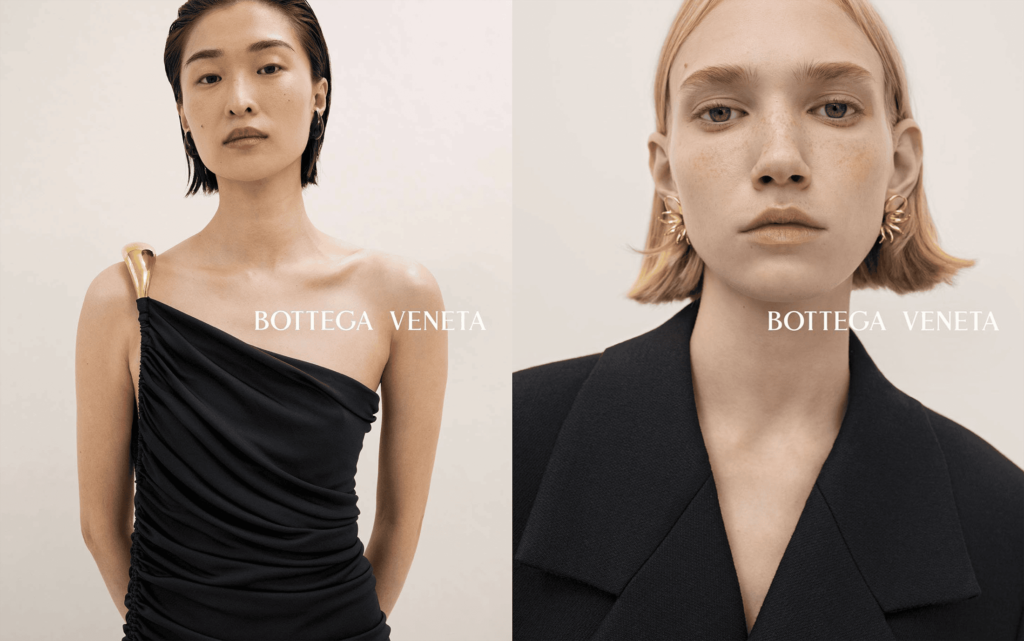
This reflects luxury’s post-hype recalibration. After years of virality-driven fashion, visibility has lost its power. Credibility has replaced novelty as the primary currency. Casting signals this shift before the clothes articulate it.
Bottega Veneta’s models do not perform urgency or aspiration. They embody stability. In an industry that has exhausted spectacle, calm becomes a form of authority. The brand positions itself not as culturally reactive, but culturally anchored.
This is casting as reassurance. It communicates longevity, confidence, and restraint. It tells the viewer that relevance no longer requires noise.
Casting is not a stylistic afterthought. It is a strategic process shaped by collaboration between creative directors, casting directors, and marketing teams. Models are selected not just for appearance, but for semiotic value. What a body signifies is often more important than how it photographs.
Campaign casting is frequently finalised before collections are fully locked. This alone undermines the idea that casting simply reflects the clothes. More often, it leads them. It establishes the emotional framework within which the collection will later be read.
This is why casting operates as a predictive tool. It allows brands to test and signal ideological shifts without committing to overt design changes. It is a low-risk, high-impact form of communication.
Casting discourse has increasingly been flattened into questions of representation. While visibility matters, this framing is incomplete. Representation asks who is present. Ideology asks what is being normalised.
When casting is treated solely as a diversity checklist, its communicative power is diminished. Casting does not simply show different bodies. It constructs norms, defining which attitudes, energies, and forms of presence are legitimised within fashion.
The current shift toward quieter, more controlled casting is not neutral. It reflects a retreat from performative authenticity and emotional excess, and signals a renewed emphasis on taste as a form of gatekeeping.
Fashion is not becoming more inclusive or more conservative in simple terms. It is becoming more selective. Casting reveals this before collections do.
The faces we are shown now are not louder or more expressive. They are composed, contained, and often resistant to emotional access. This is fashion recalibrating its relationship to power. It is choosing credibility over spectacle, authority over appeal.
Long before fashion tells us what to wear, it tells us who to look at. And right now, it is choosing carefully.
If casting is where fashion shows its hand, then this quiet shift suggests a future that will ask to be read more closely than it asks to be admired.


