
Words by Lola Carron
Edited by Valerie Aitova
London is always a moodboard in motion, but this season, it felt particularly cinematic. From latex love letters to medieval football kits, the city pulsed with designers determined to make their mark. LFW SS26 wasn’t just about silhouettes or references – it was about storytelling, conviction, and letting the fabric speak first. These are the shows that didn’t whisper; but shouted.
Mark Fast doesn’t do quiet. His SS26 show was a headrush – a high-octane symphony of mesh, denim, and neon that throbbed like the inside of a club at 3am. Staged at EartH, the venue’s industrial cool amplified every heavy bassline, setting the tone for a collection that blurred sound and sensation.
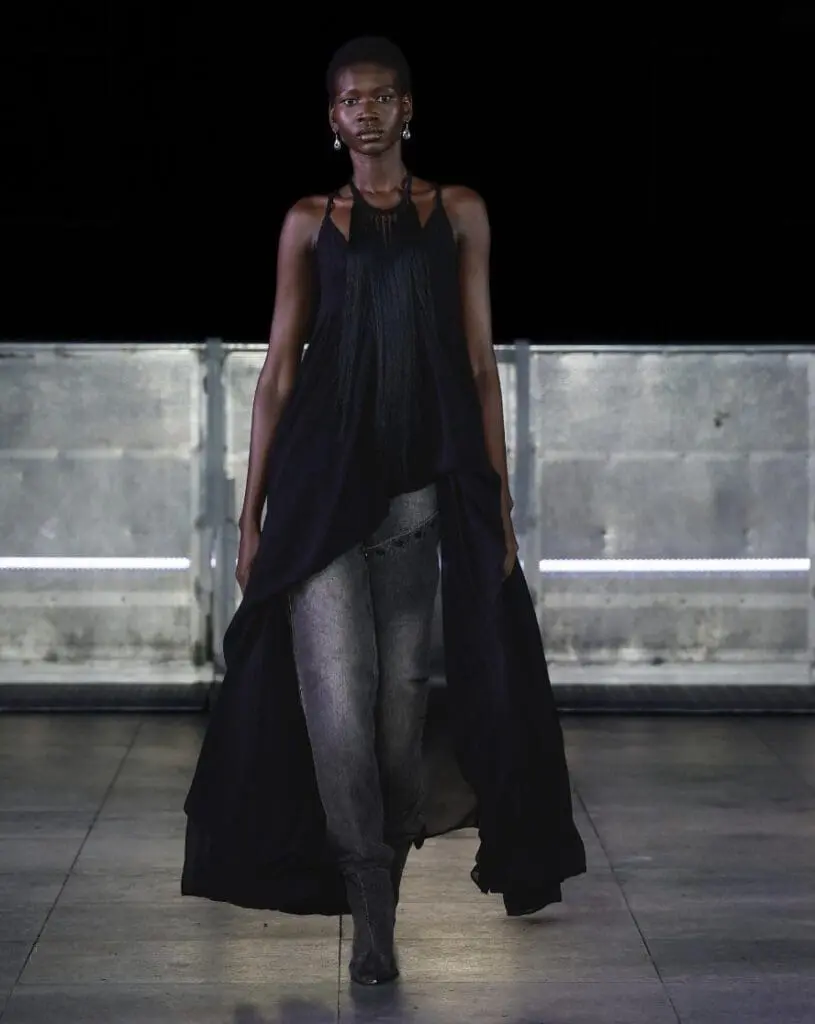
Fast’s signature knitwear returned with more muscle. Bandage dresses in slick lilac and moody greys clung like static, while cropped denim was reworked with couture-grade finesse. The Stone Rose Crochet Dress, with its knotted fringe and hypnotic hip sways, captured the essence of the show: raw, rhythmic, and completely alive. Models stormed the runway at an almost punk pace, creating the kind of blur that made you miss half the details but feel every beat.
There’s a confidence in Fast’s latest outing – a refusal to pick between function and fantasy. Sportswear nods were layered beneath high-gloss tailoring, creating tension in all the right places. “I want people to feel the music in the clothes,” Fast said backstage, and the collection delivered exactly that. He’s not just designing for a night out; he’s dressing the feeling of one.
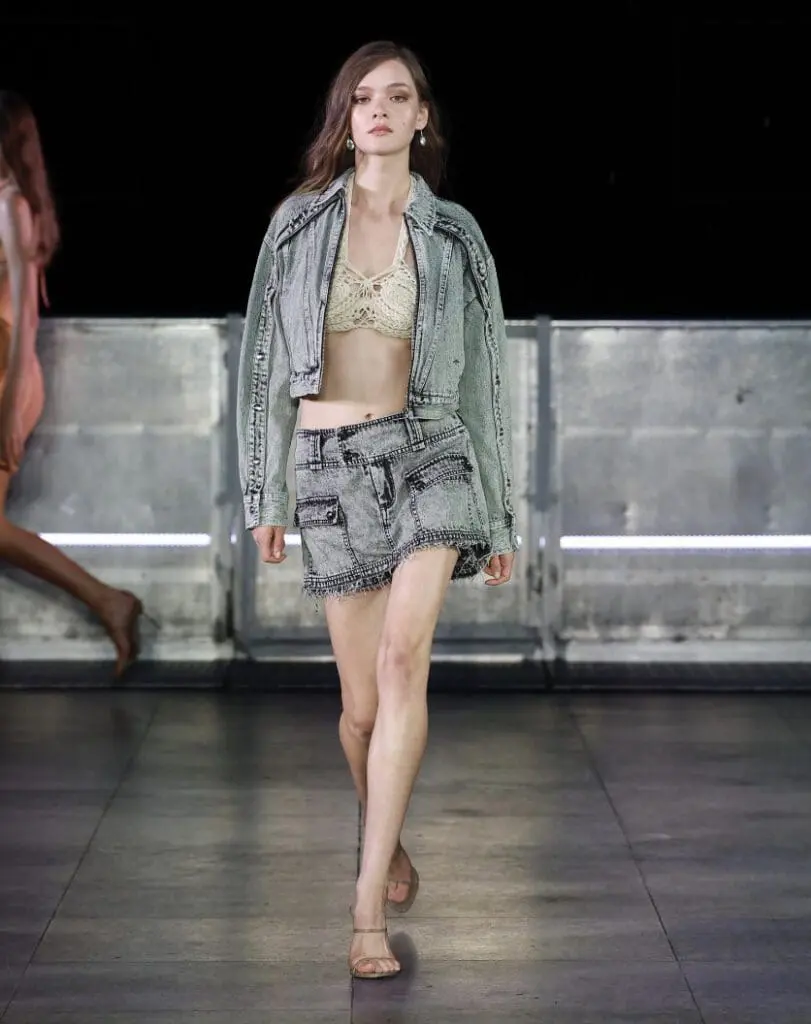
At the Barbican, Harri gave latex its read- to-wear moment and somehow made it look soft. Known for surrealist silhouettes and semi – impossible garments, Harri bent one of fashion’s most inflexible materials into coats, jeans, and partywear that bordered on practical.
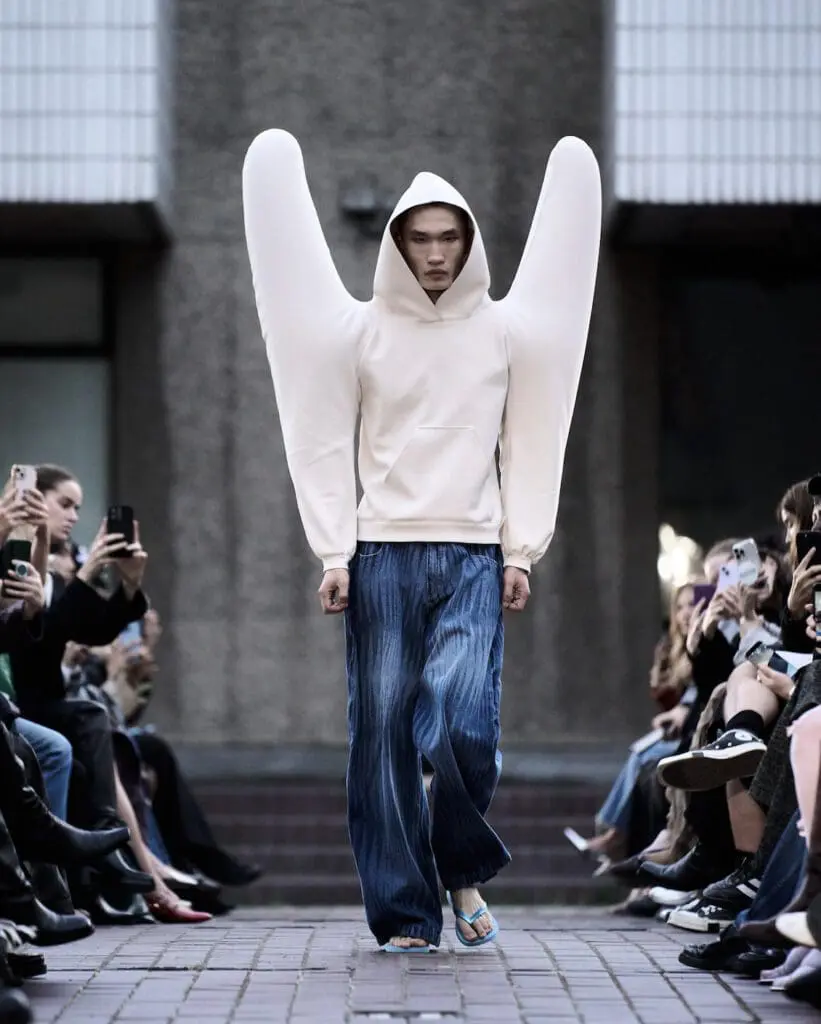
But make no mistake: this was still Harri. Lower torsos were proudly on display, and sensuality was stitched into every pleat and panel. A brown latex overcoat opened the show with a surprising warmth, while mesh inserts and unexpected tailoring proved that kink and comfort can share a sentence.
When asked about the spirit of the collection, Harri answered with a single word: “London”. And really, what’s more London than blending seedy glamour with streetwear swagger?
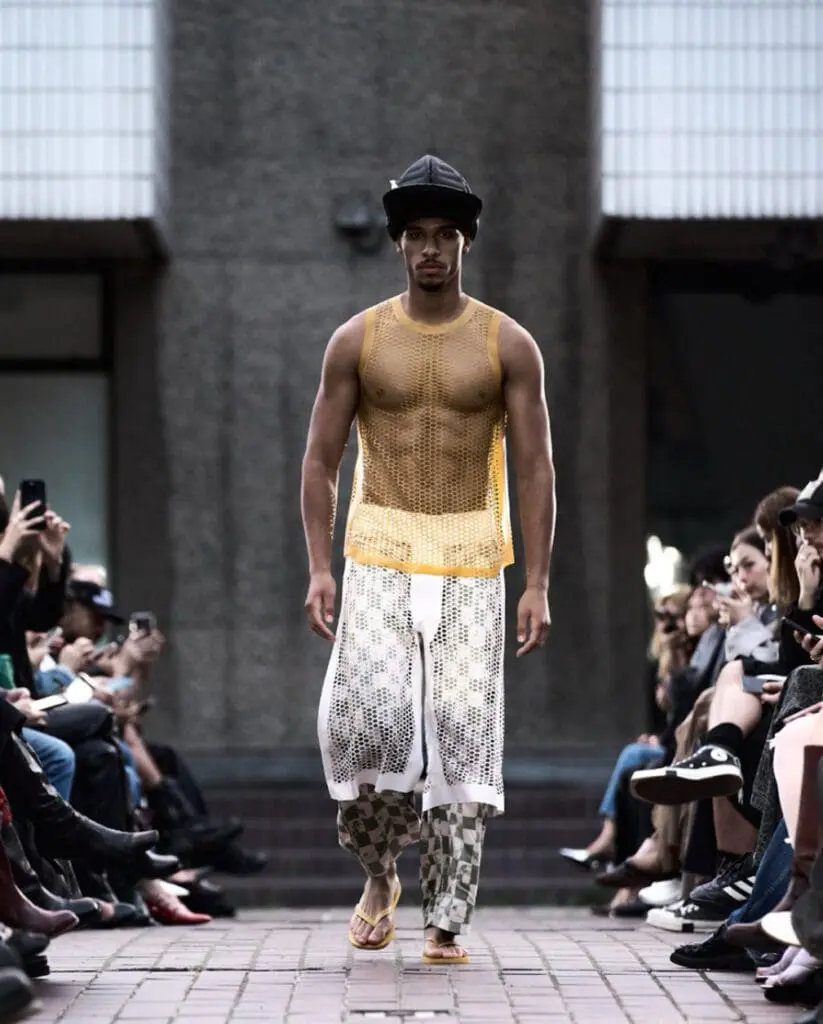
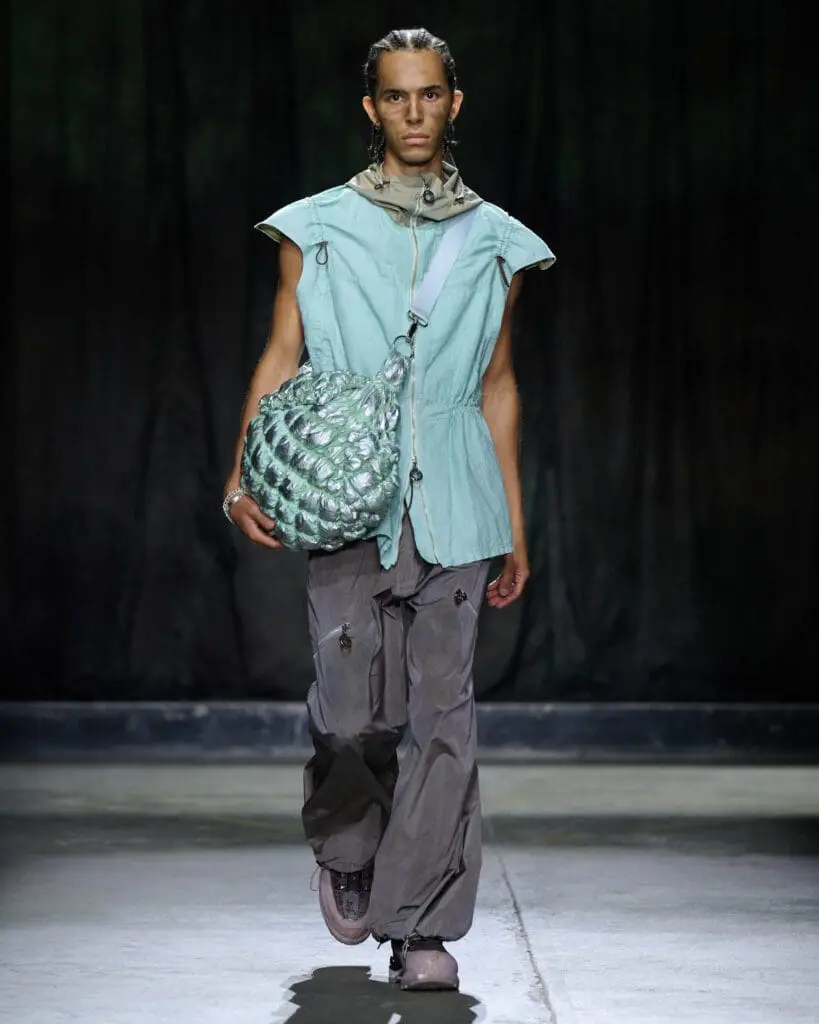
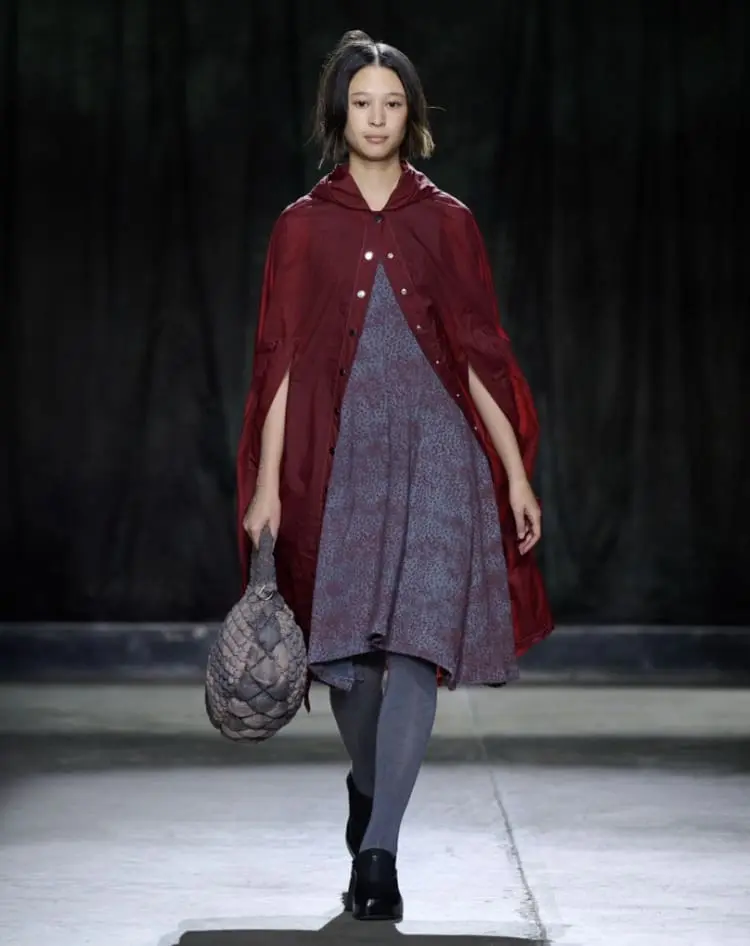
Inside the NEWgen showroom, Charlie Constantinou sent out a darker, more refined vision of his future – forward universe. SS26 saw the designer dial down his usual high – fluoro palette in favour of graphite greys and washed – out reds, letting silhouette and structure do the talking.
This collection felt like a maturation. Modular pieces like detachable brushes – silver skirts and nylon cargo trousers moved with new grace, while darted jersey dresses brought softness to his traditionally utility – focused designs. His signature expandable quilting returned, but more subtle – less of a party trick, more of a quiet flex.
Constantinou’s collaboration with Demon Footwear grounded the look in motion. Every garment felt like it was built for a life that doesn’t pause – a reflection of London itself.
Elisa Trombatore staged a gothic love story at St. Cyprian’s Church, casting her SS26 show in gold carvings and stained-glass melancholy. Ethereal music filled the church as models walked slowly down the aisle, dressed in sheer corsetry, jagged tweeds, and tattooed mesh embroidered with the word Amore.
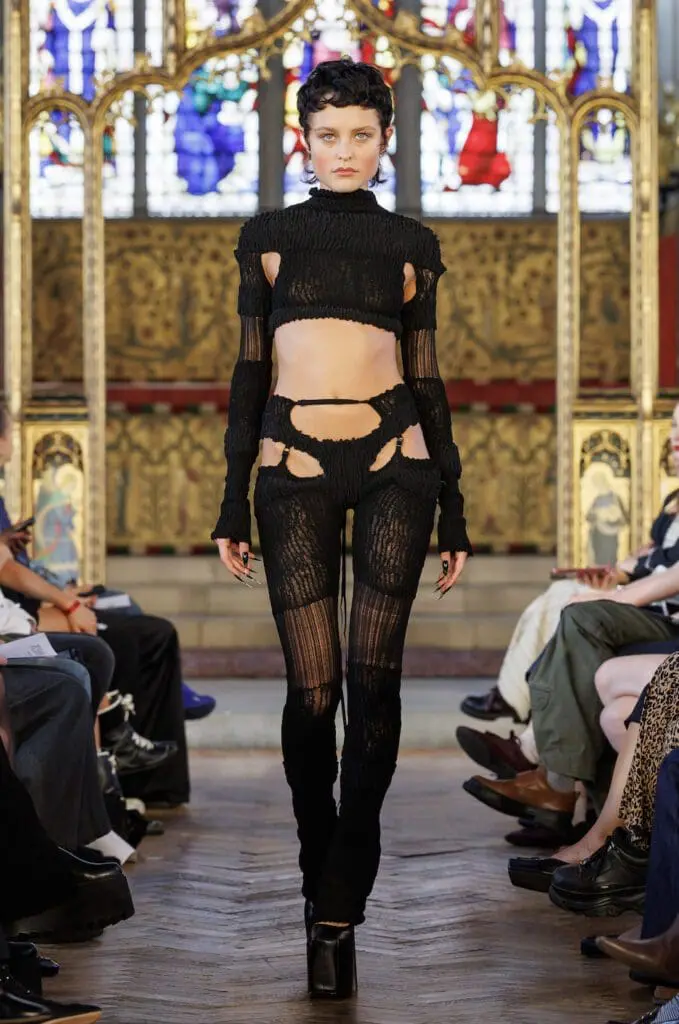
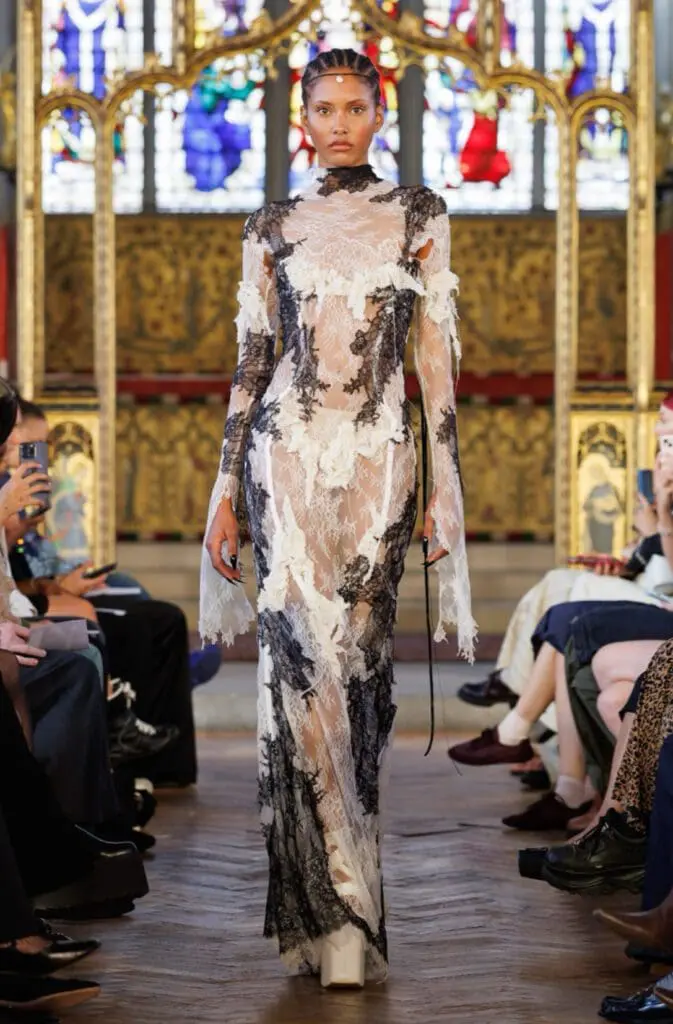
This was Dreaming Eli stripped of trauma and re-draped in romance. The collection moved from survival to softness, each look more emotionally charged than the last. Ripped tweed was romanticised into delicate layering, while Indian pinks and Sicilian motifs whispered familial memories.
“For me, it was about turning survival into softness,” Trombatore explained. That shift showed in every detail, with corsetry and embroidery carrying both fragility and strength. She doesn’t just design for women; she reveres them. SS26 was an ode to feeling – vulnerability as fashion, heartbreak made wearable.
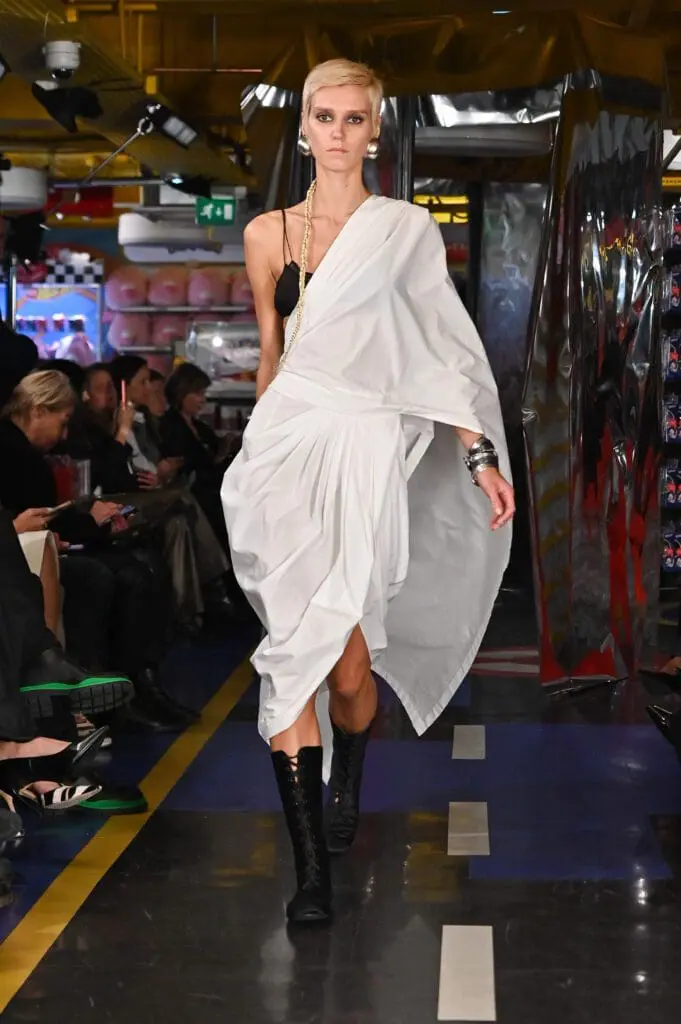
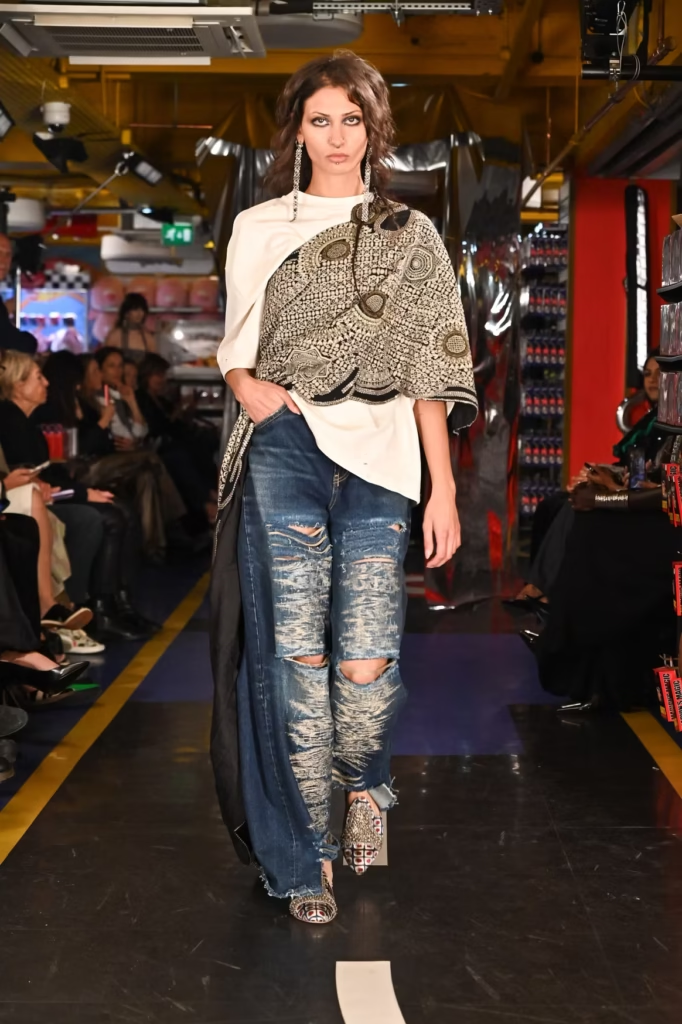
Forget the white cube. Anamika Khanna debuted her SS26 AK|OK collection inside Hamleys, threading traditional Indian silhouettes through shelves of Barbie dolls and Hot Wheels. It was surreal, but it worked – a perfect collision of childhood nostalgia and cultural inheritance.
The collection reimagined heritage through a London lens. Oversized Angarkhas worn with boots, sheer sari blouses over jeans, Chikankari coats paired with slouchy trousers – all subtle rebellions against the idea that Indian fashion must be ceremonial. Jewellery was key too, styled informally to challenge the notion that it’s too “ethnic” for everyday.
“I’m not interested in exoticism,” Khanna said backstage. “This is about how diaspora dresses every day.” That sensibility grounded the collection in lived reality, not fantasy. She modernises without dilution, remixing tradition into something both global and grounded. Each look felt like a conversation between cultures – not a compromise, but a remix.
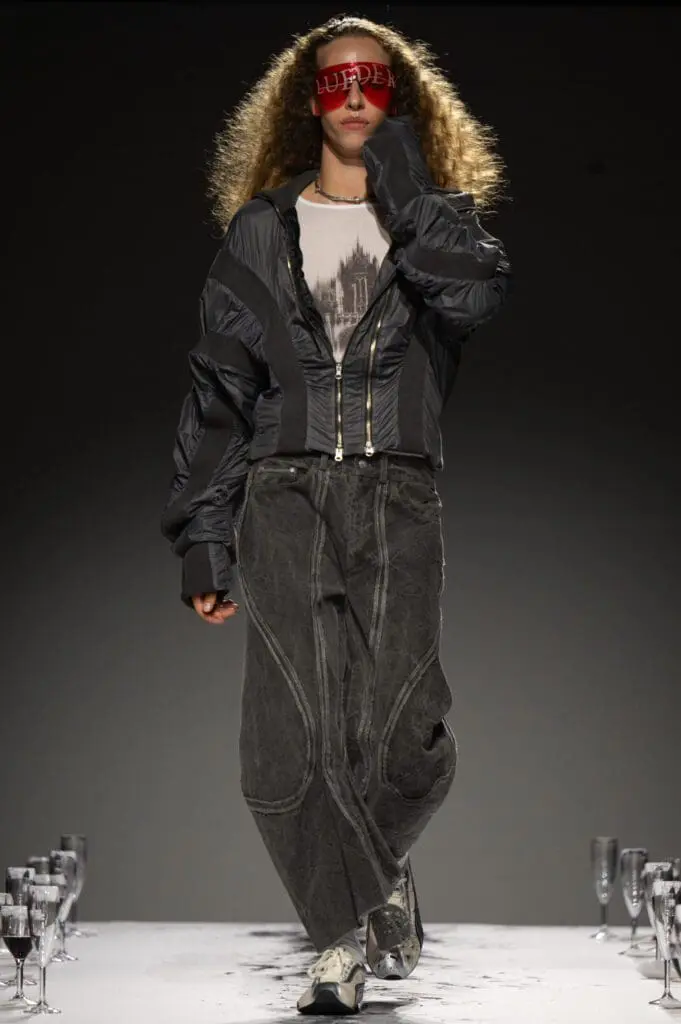
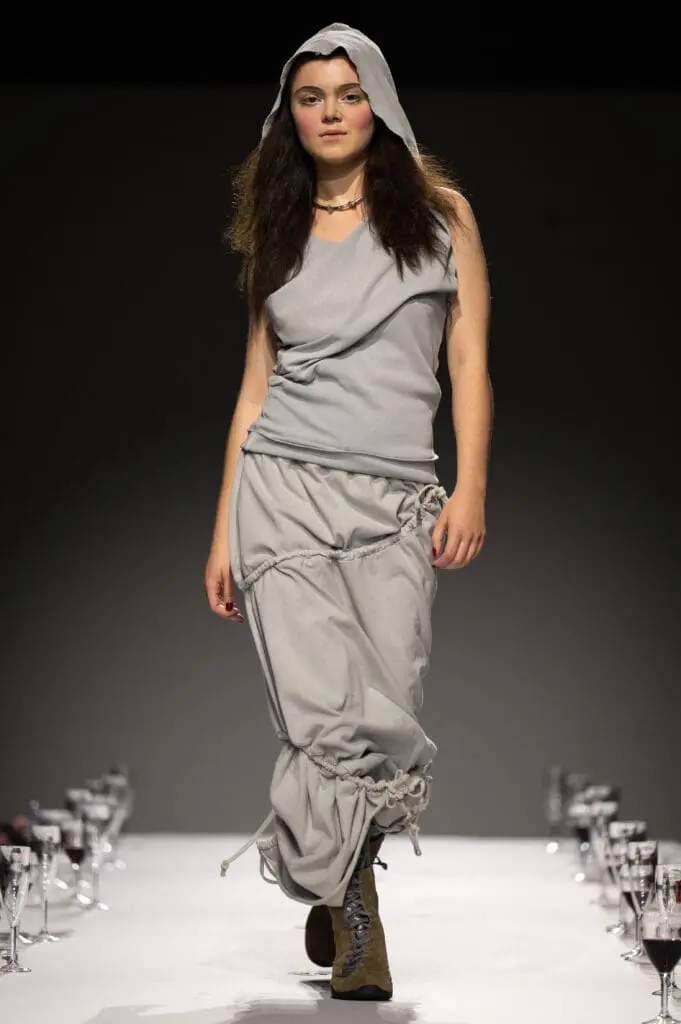
LUEDER’s SS26 show was a feast – literally. Models stalked a runway that doubled as a dinner table, watched by guests sipping wine and lounging like saints in a dystopian Last Supper. Titled Convivium, the collection was both devotional and defiant, a banquet of contrasts.
Inspired by football, folklore, and queer community, the clothes swung between softness and spectacle. Vintage kits became corseted dresses, swimwear tangled with medieval shirring, and outerwear sat somewhere between post-apocalyptic sportswear and clerical robes. The colour story – wine-stain reds, sunburnt asphalt, tarnished silvers – felt like a world rusting into something beautiful.
With Afra Zamara on set design and Tati Cotliar on styling, Convivium wasn’t just a collection – it was a communion. Sustainability was baked in (ocean plastics, deadstock tees) but never centre-stage. LUEDER isn’t trying to prove a point. She’s creating a world, and inviting us to sit at the table.
SS26 was big on feeling, but even bigger on theatre. Across London, designers reached for the spectacular: Fast channelling basslines into bodycon, Harri bending latex into everyday shapes, Trombatore draping heartbreak into romance, Khanna remixing diaspora wardrobes into daily dress, LUEDER staging an apocalyptic feast.
Fashion as performance. Clothes became narratives, each runway a set, each model a character. In a season obsessed with statement, subtlety never stood a chance.


