
Words by: Lola Carron
Edited by: Valerie Aitova
The eye is supposed to give everything away. Emotion, intention, sincerity. We are taught to look for the truth there. Sunglasses disrupt that logic entirely. They block interpretation. They suspend intimacy. They make the wearer difficult to read.
In fashion, unreadability has become increasingly aspirational.
Sunglasses are often treated as a seasonal accessory, but culturally they operate as something more precise. They are a technology of distance. They interrupt access without removing the wearer from view. You remain visible, styled, present, but your inner life is withheld. In a visual culture obsessed with transparency and self-disclosure, that withholding carries weight.
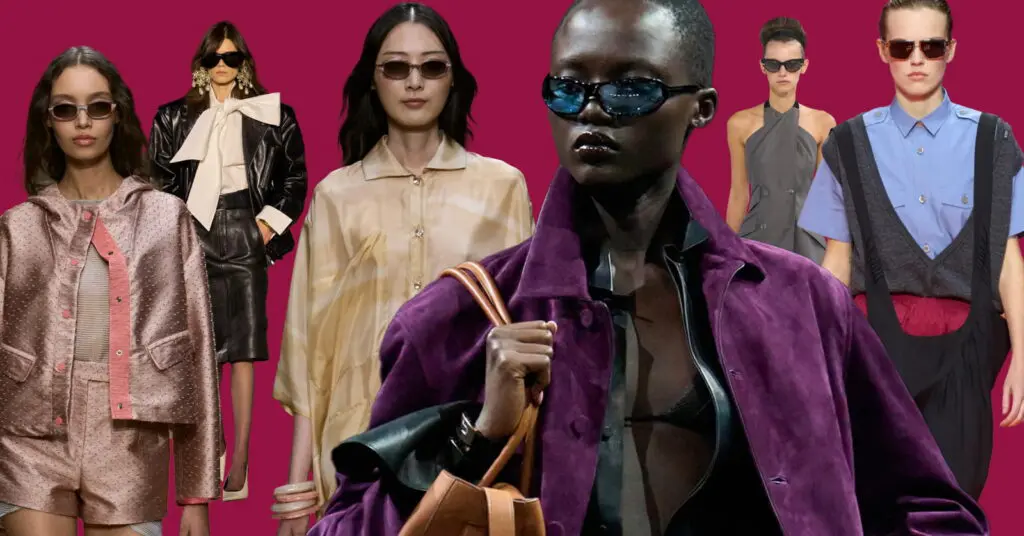
Fashion has long understood the value of mystery, but the current moment feels distinct. Today’s sunglasses are less about glamour in the traditional sense and more about control. They signal autonomy in a world that demands legibility. Faces are scanned, expressions decoded, personalities flattened into content. Sunglasses resist this economy. They refuse emotional availability while maintaining authority.
This shift is visible on the runway, where sunglasses increasingly function as structural elements rather than styling flourishes. Lenses are darkened to the point of opacity. Frames are thick, sculptural, historically loaded. Eyes disappear entirely. The effect is deliberate. The wearer is not inviting interpretation.
What is striking is the move away from instantly recognisable logos toward quieter, cult frames that reward knowledge rather than visibility. Brands like Jacques Marie Mage sit at the centre of this shift. Their sunglasses are heavy, architectural, and intentionally referential, drawing on mid-century design, jazz-era masculinity, and archival ideas of authority. They are not designed to circulate quickly or photograph sweetly. They demand presence. To wear them is to commit to a certain visual and symbolic weight.
When worn by figures who understand the strategic value of distance, the effect sharpens. Jeff Goldblum’s relationship to sunglasses, for example, is less about disguise than calibration. Oversized, dark-lensed frames do not obscure his persona so much as regulate it. The glasses act as a filter, editing what reaches the viewer and what does not.
A$AP Rocky approaches sunglasses with similar intent but a different register. His eyewear choices lean toward strong silhouettes and dense lenses, frames that feel authored rather than reactive. They reinforce a public image built on control, authorship, and selective exposure. Nothing feels accidental. Nothing is fully revealed.
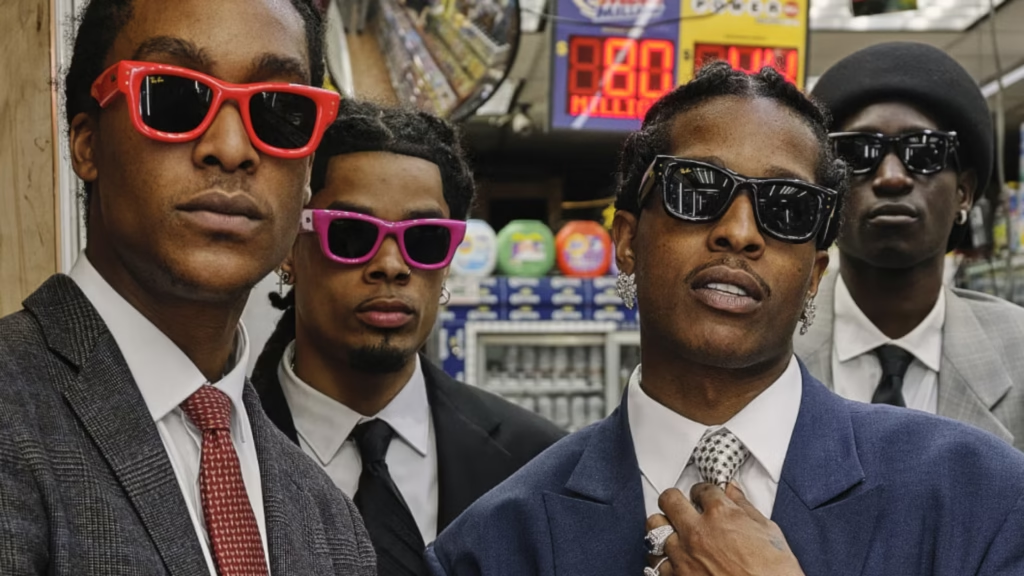
This marks a clear departure from the paparazzi-era sunglasses of the early 2000s, when frames functioned primarily as shields against intrusion. Today’s cult sunglasses are not defensive. They are assertive. They communicate that access is negotiated, not assumed. You may look, but you will not fully see.
That logic has filtered into street style, where sunglasses increasingly operate as emotional punctuation rather than practical necessity. Worn indoors, at night, or in situations where they are technically redundant, they disrupt expectations of openness. The wearer does not owe clarity.
This feels especially resonant at a time when personal branding has become compulsory. Social platforms reward relatability, emotional transparency, and constant disclosure. Sunglasses push back against that demand. They introduce ambiguity into spaces that increasingly penalise it.
Historically, sunglasses have been associated with figures who understood the value of distance. Artists, musicians, intellectuals, people whose authority depended on maintaining a boundary between self and audience. In this lineage, sunglasses are not playful accessories but tools of self-possession. They suggest an interiority that is not available for consumption.
What makes sunglasses compelling now is that they offer distance without retreat. You do not disappear when you put them on. You remain present, composed, intentional. But the terms of engagement shift. In fashion, where visibility is currency, this kind of controlled opacity reads as confidence.

Unreadability is not about aloofness for its own sake. It is a response to saturation. When everything is shared, explained, and optimised for engagement, the refusal to explain becomes potent. Sunglasses offer a visual shorthand for that refusal. An everyday object carrying philosophical weight.
In this sense, sunglasses are less about hiding and more about authorship. They allow the wearer to decide how they are seen, where they are porous, and where they are not. A line is drawn between the self and the world, quietly but decisively.
As fashion continues to grapple with visibility, identity, and the pressures of constant exposure, the current sunglasses moment reads less like a trend than a signal. Not a rejection of being seen, but a recalibration of access. A reminder that mystery still has currency. That distance can be elegant. That control does not need to announce itself.
In a culture that equates visibility with value, choosing unreadability becomes a form of control.


