
Words by Lola Carron
Edited by Valerie Aitova
The surfaces of the fashion industry have always been treated with pre-emptive hype and calculated scarcity. But 2025 wasn’t a year of effortless glamour. It was a year of friction. A year where designers seemed to operate under the explicit mandate to ask:
How far can we push the absurd before the consumer cries irony?
In a moment where sincerity feels risky and irony reads as cultural intelligence, pushing fashion into the unhinged became less about shock value and more about signalling awareness.
From viral micro-trends that combusted within a week to collaborations that made zero logical sense, 2025’s fashion drops weren’t just about garments. They were a fascinating, often hilarious, index of the cultural mood: cynical, over-saturated, economically cautious, and yet still desperate to be shocked.
The greatest takeaway from this year’s most talked-about releases is that designers are no longer selling garments – they are selling the joke of the garment. They’ve calculated that the fastest way to penetrate the attention economy is to produce something so visually, conceptually ridiculous that its very existence becomes a mandatory social media share.
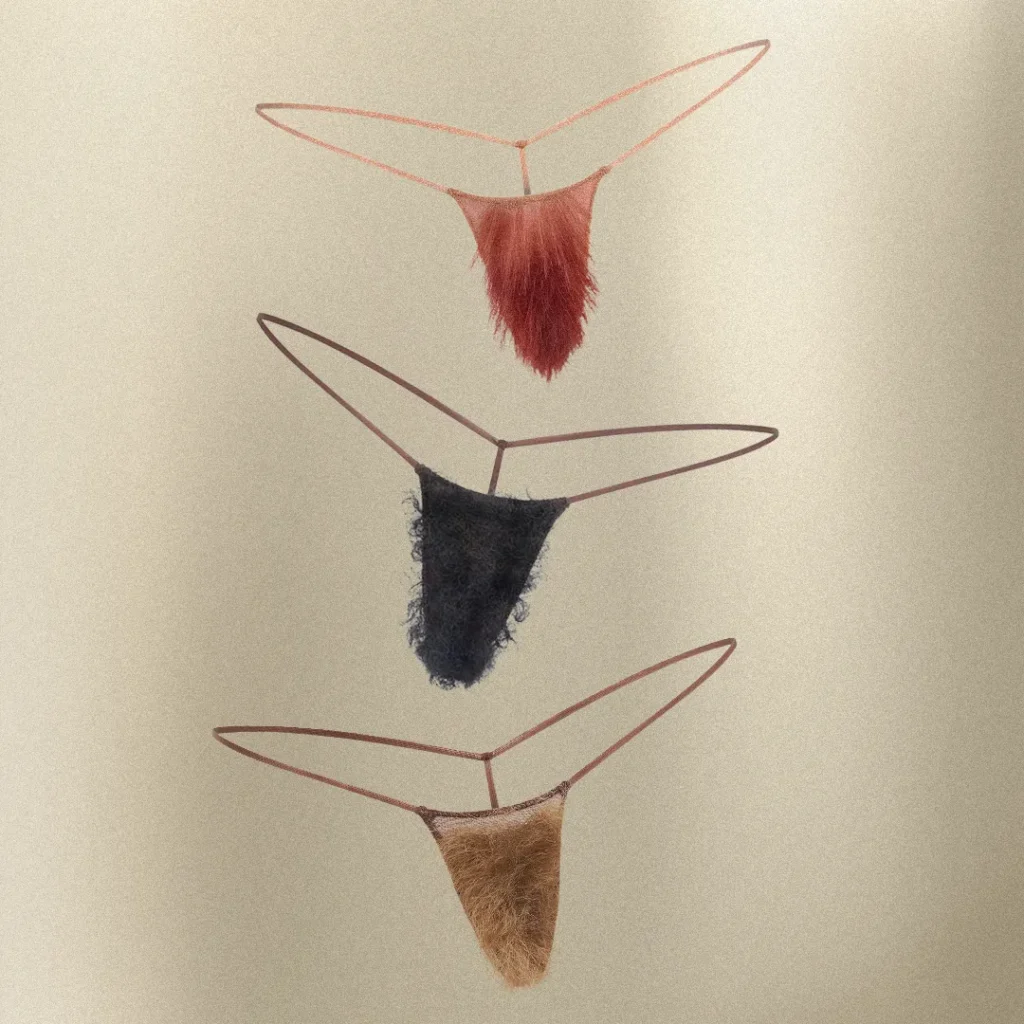
Take the infamous Skims Faux Hair Micro String Thong. For a few glorious hours, the fashion press and the public collectively lost their minds over a G-string featuring a meticulously placed patch of faux hair detail, priced for immediate, impulsive consumption. It sold out almost immediately. This wasn’t about shapewear – it was a pure, highly successful experiment in provocation. The industry, led by brands like Skims and Balenciaga, understands that outrage is the most reliable scarcity model of 2025.
You buy it not because you need it, but because you need to be in on the conversation.
This logic extended into the realm of true absurdity with Coperni’s One-Leg Denim Trouser – a pair of jeans with a single, precisely tailored leg priced at around £400. In a year where consumer anxiety was high, this drop was a glorious middle finger to practicality. It suggested a luxury consumer base so bored with traditional clothing that they were willing to pay a premium for visual non-sense. This is ironic as a status symbol: I am wealthy enough to purchase the sartorial punchline.

No drop this year better captured the bizarre friction of our merging realities than the late-year collaboration between Apple and Issey Miyake on the ‘iPhone Pocket’ – a 3D-knitted, pleated accessory designed to be worn on the body as a phone sock.
The concept itself is gloriously unhinged. A tech behemoth partnering with a legacy design house, not to create a sleek case, but a tactile, textile extra-pocket that completely envelops the iPhone.If Skims and Coperni traded in intimacy, Apple and Issey Miyake opted for irony as concept. It’s a beautifully simple, highly conceptual item that forces us to question our relationship with our most-used tool. We wear our technology; we carry it everywhere. By putting the phone into a soft, conceptual textile pouch, the design attempted to soften the cold, hard edges of our digital dependence, offering a moment of unexpected poetry in a chaotic consumer year. The fact that this high-priced, highly unconventional item still sold out proves that when two iconic brands collide, the resulting object becomes an instant, non-negotiable cultural artefact, regardless of its utility. More importantly, it suggests a potential blueprint for future fashion-tech collaborations, where meaning, materiality, and cultural commentary carry as much value as function itself.

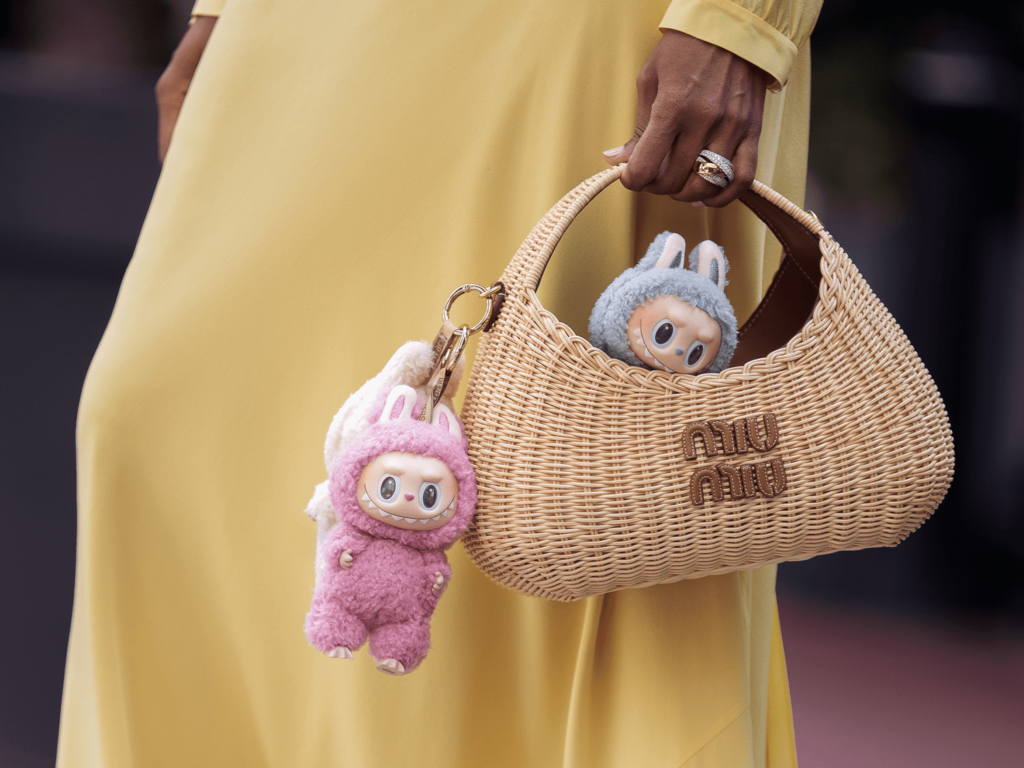
If the bizarre drops were loud, the micro-trends were a whisper of consumer caution. We saw the rapid rise of the Riding Boot – a structured preppy aesthetic subverted for casual wear, the return of the Fluffy Key Chain – adding playful personality to sombre accessories, and the omnipresence of Oddball Stripes – uneven widths and unusual colours.
These trends are not long-term style movements – they are seasonal mood experiments propagated by algorithm. They are less about sustained style and more about providing a brief, affordable thrill to the consumer desperate to feel “so now” before the next aesthetic quickly supersedes it. They showed a consumer base that was both cautious (seeking value and transparency) and impulse-led (needing the novelty of a new aesthetic injection). The lifespan of a viral aesthetic now peaks within weeks, meaning designers are chasing a phantom, forcing them to produce the next joke, the next nonsense object, the next collaboration.
2025 was a year where the fashion industry, sensing deep consumer distraction and economic volatility, chose to embrace chaos as strategy. The most successful releases were those that elicited a strong reaction, whether shock, laughter, or a moment of conceptual beauty.
The truly unhinged drops of the year reveal not a deterioration of taste, but a sophisticated understanding of the modern consumer: in an era of algorithmic boredom and screenshot culture, we are ready to pay a premium for anything that disrupts the scroll, even if we have to laugh at ourselves while wearing it.


