
Words by Isabel Johnson
Edited by Valerie Aitova
In West End Girl, Lily Allen lays bare the unravelling of her marriage to David Harbour, in raw, obliterative detail. Naming names, bulldozing euphemism and exposing the emotional wreckage left beneath the illusion of a supposedly liberated love.
It’s a cultural autopsy of modern intimacy; “We had an arrangement. Be discrete and don’t be blatant. There had to be payment. It had to be with strangers”. One that exposes the transactional and fragile underbelly of opening up a marriage.
“Sex toys, butt plugs, lube” are listed like line items on a receipt. Someone called “Madeline” is referenced. A lot. Nonmonogamummy and Pussy Palace watch the language of liberation trip over its own promise. In a culture fluent in therapy-speak and curated vulnerability, West End Girl reveals how openness, when unevenly balanced, feels less poly dream, more solo spiral.
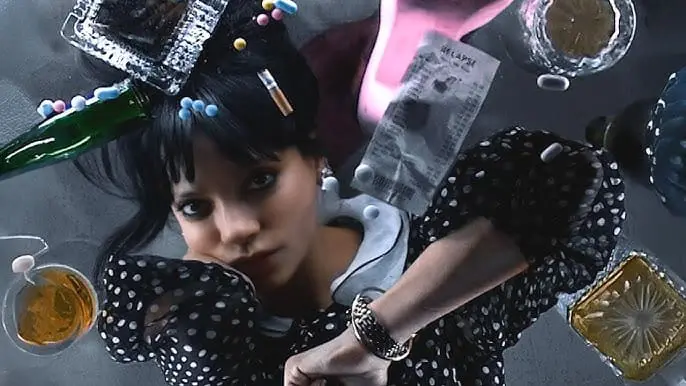
It’s a reckoning against the psychological labour required to make it work, and raises the question: Can it ever really work?
Allen’s story isn’t isolated, it mirrors a generational shift. We’ve all heard the pitch. Open marriage is often framed as the apex of evolved intimacy, where honesty, autonomy, and desire coexist without constraint. It’s been marketed as progressive, emotionally intelligent, and sexually expansive.
It’s not cheating. 100% not a crisis. It’s chic. Explorative. It’s about growth.
According to recent studies, Millennials are the generation most likely to engage in open marriages and consensual non-monogamy. An unsurprising outcome for those raised watching monogamy buckle under emotional repression and banal communication.
More traditional marriages often come with a fantasy clause, the expectation that one person will meet every need – emotional, sexual, intellectual, spiritual, logistical, and every other category we’ve stapled to the ‘forever partner’ job description. Open marriages present a challenge: what if we stopped pretending that one person can and should be everything, forever?

Even the data suggests that 70% of individuals in open marriages say their relationship is less likely to end in divorce than monogamous ones, and 75% report higher relationship satisfaction than their monogamous counterparts.
So, what’s the catch?
In the UK, open marriages last an average of 3.5 years, that’s less than half the lifespan of traditional ones. Progressive on paper, equals short-lived in practice, with jealousy and time management topping the list of most critical fault lines.
Enter the problem: open marriage is great, in theory.
But theory doesn’t sit across from you at dinner, emotionally vacant, while you pretend not to notice the glow of someone else’s name lighting up their phone. Theory doesn’t do the emotional admin while your partner rotates their roster. It doesn’t absorb the silence, manage the jealousy, or carry the weight of pretending everything’s fine because the arrangement’s “agreed”.
West End Girl has become a brutally public, forensic audit of what happens when openness is introduced not as a shared philosophy, but as a spotlight on emotional imbalance.
Non-monogamy, when retrofitted into a monogamous framework, doesn’t expand intimacy. It fragments it, because it was never mutual.
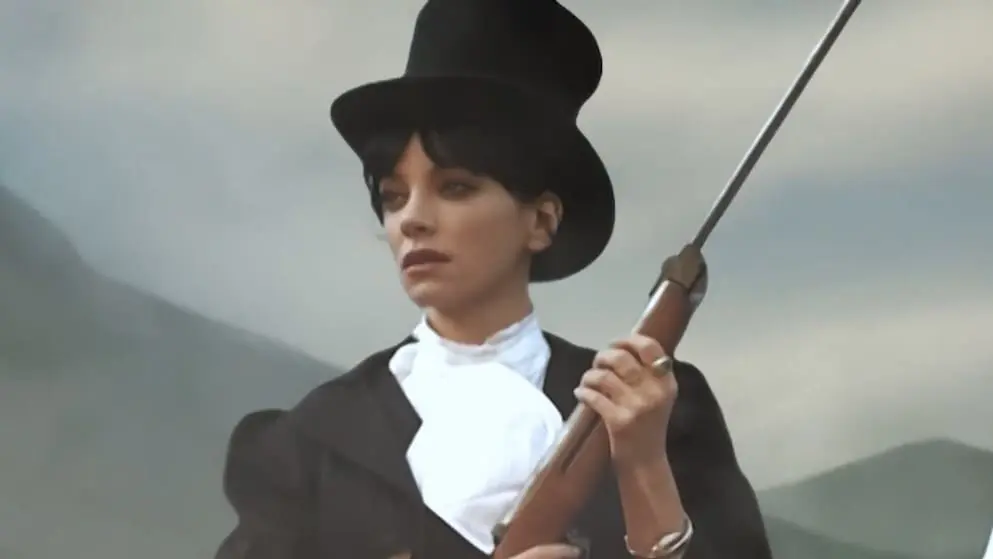
Allen lifts the lid on a painfully relatable truth: when emotional needs are mismatched from the start, openness isn’t liberating; it’s a breakup in slow motion. One that will collapse under the weight of logistics, spirals, and performative unbotheredness.
And, Madeline? Refreshingly not the villain, just the moment theory climaxed. And then checked if you were ok.


