
Words by Isabel Johnson
Edited by Valerie Aitova
There was a time when dating apps felt like the future. Circa 2015, swiping made it easy, a match equaled a quick serotonin hit, and intimacy could be scheduled between meetings. It was marketed as empowerment: love on demand, curated chemistry, and the illusion of infinite choice.
You could filter by height, politics, and whether someone had a dog named after a philosopher.
The more proactive could start the week with zero dates and end it with five; one charming, one excruciating, one fresh out of his ketamine phase, one polyamorous and one who tried to reenact a Regency-era seduction scene in their Cath Kidston bedsheets. All arranged from the comfort of your sofa. Efficient. Convenient. And for a while, enough.
Quietly, steadily, women began logging off, not just from the apps, but from the mindset they represent. The emotional multitasking. The performance of being “fun but not flaky” and “vulnerable but not too much”. It’s become increasingly irrelevant.
Somewhere between the third “hey” text, the man who asked if you’ve ever monetised your femininity, and the one who brought his mum’s dog to the date and asked about splitting the bill, the mood shifted.
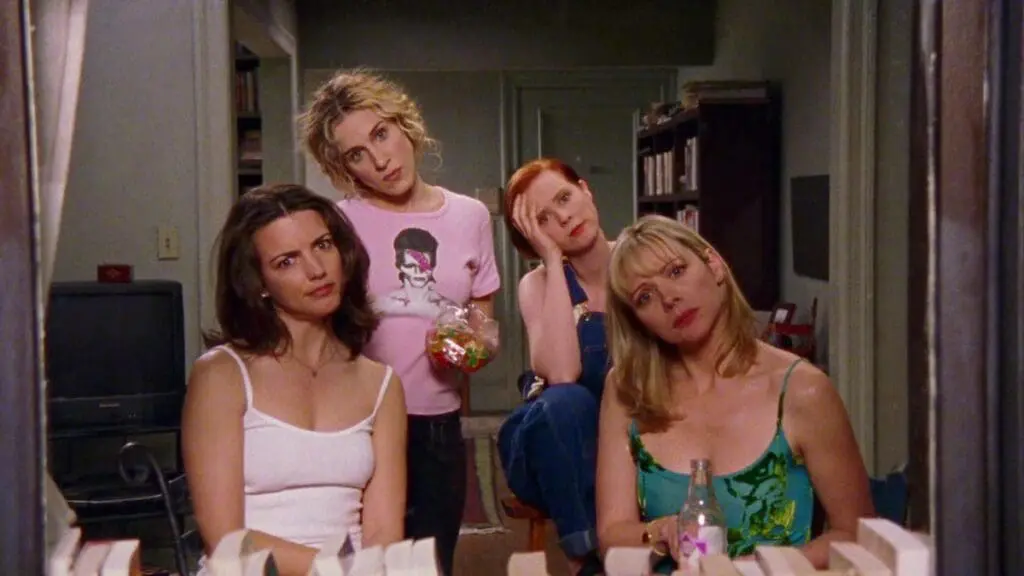
Women began to realise they weren’t dating, they were auditioning. For roles they didn’t apply for. In productions they didn’t believe in.
Online dating began as a niche experiment. In 1995 match.com launched, three years before Google, and became the first major online dating site.
By the early 2000s sites like eHarmony and Plenty of Fish gained traction, offering personality quizzes and compatibility scores. It was dating, but with homework. You could answer 200 questions about your childhood and still get matched with a man whose favourite book was “Rich Dad Poor Dad”.
Then, in 2012, came Tinder.
Suddenly, intimacy was mobile, visual, and instant. Apps like Hinge (2013), Bumble (2014), and Feeld (2016) followed, each promising a more “intentional” experience. Bumble gave women control. Hinge promised deletion. Feeld offered fluidity.
In 2019, reality intervened: a global pandemic.
Flirting moved to Zoom. Wi-Fi lag replaced chemistry. Ghosting became a national pastime. Emotional burnout hit like a third lockdown. When your boss, date and therapist all live in the same glowing rectangle, and your screen becomes a mood board of your collapsing boundaries, across ten tabs and two time zones, digital burnout is unsurprising.
Dating apps had promised abundance, but what they delivered was ambiguity, and men who think “emotional intelligence” means maintaining eye contact while talking about themselves.
The era of optimisation taught us to treat everything, career, wellness, even love, like a productivity metric. But dating like it’s a KPI has left many feeling disconnected. The idea that you can “manifest” or “schedule” intimacy is starting to feel hollow. There’s a growing rejection of the idea that love is something you can hack, swipe, or strategise into existence.
And the numbers are catching up. In 2024, Ofcom reported that in the UK, Tinder lost over 600,000 users between 2023 and 2024. Globally, over 350 million people use dating apps, but only 25 million pay for premium features, suggesting declining user investment.
A 2025 Forbes Health study found that 94% of women and 91% of men believe dating today is harder than ever. And that 68% of single women aged 18–34 said they want a romantic relationship, but many are opting out due to emotional fatigue, financial drain and the creeping sense that dating now feels less like connection and more like unpaid labour.
What’s emerging now is quieter, more self-protective. It’s the rise of slow dating, intentional solitude, and relationships that begin offline and unfold without urgency. Enter pottery workshops for singles who don’t do apps, bonding over clay and shared skepticism. The “you’d be perfect for Ben, he’s emotionally stable now” friend-of-friend setups. And singles supper clubs like Dinner for One Hundred, where you’re served three types of pizza, three different seating arrangements, and just enough biodynamic wine to start to mistake vulnerability for compatibility.
It’s women saying: “I’m not here to be picked, I’m here to choose, too”.
Influencers like Tinx and Victoria Paris have hinted at this shift, from swipe culture to self-reflection, from dating advice to digital boundaries. Tinx has reframed dating advice around self-worth and emotional ROI, often joking that “the guy you’re crying over can’t even spell reciprocity”. Victoria Paris has shifted from chaotic dating vlogs to content about therapy, boundaries, and the joy of being alone in a well-lit apartment.
The aesthetic has evolved — less “hot girl walk,” more “don’t text me unless it’s about art or dinner.”
So what now?
The death of the dating app isn’t a crisis. It’s a recalibration — a cultural correction. A quiet rebellion against the idea that love should be convenient, clickable, or monetised.
It’s about protecting emotional bandwidth. Curating who gets access. Refusing to audition for affection. This isn’t loneliness. It’s sovereignty.
And it doesn’t vibrate at 2am asking “wys.”
And somewhere between all this, a question: what is your #HaveYouGotYours?


