
Words by Isabel Johnson
Edited by Valerie Aitova
Pop has always thrived on women pitted against each other. Britney vs. Pink, Spice Girls vs. Destiny’s Child, Madonna vs. everyone. For female artists, the late ’90s and early 2000s weren’t a golden age so much as the height of the glitter‑splattered gladiator pit.
Teen idols were churned out like Happy Meals: fast, disposable, nutritionally bankrupt. Paparazzi flashbulbs staged breakdowns like blockbuster premieres, complete with sweatpants and custody battles. Women in pop became both the mascots of mainstream culture and its sacrificial lambs, consumed with equal appetite for their chart‑toppers and televised unravelings.
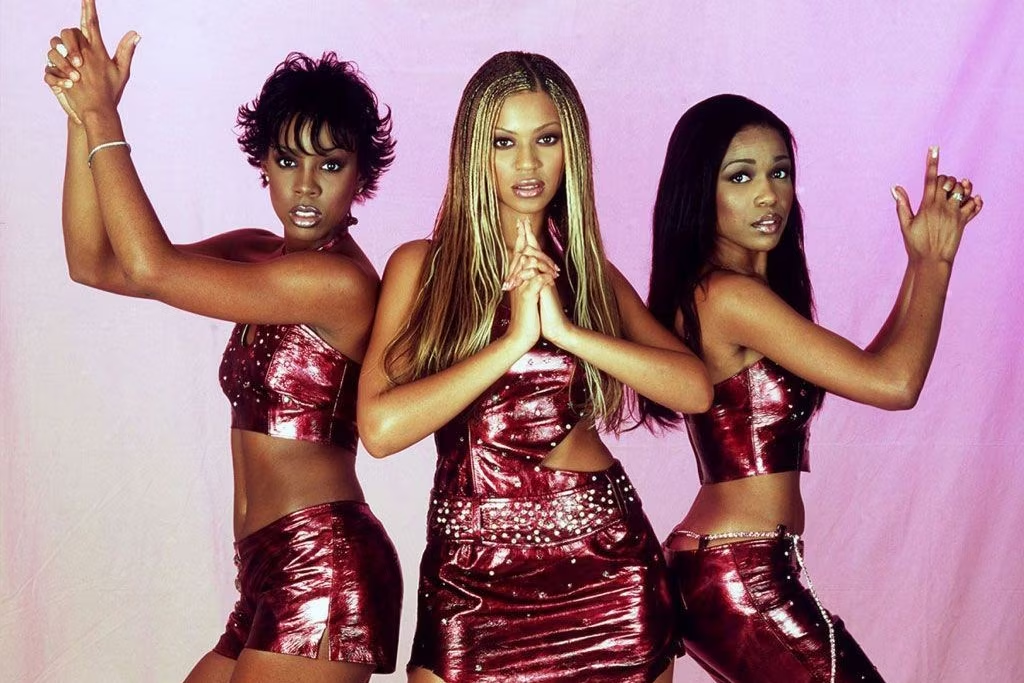
The industry demanded foils, so women were cast as mirrors, doubles, and enemies. Every chart battle was staged as a catfight; every reinvention framed as a reaction. Girl groups sold empowerment as choreography, but the story was still comparative: who led, who broke out, who was replaceable.
Fast‑forward to now, and the scaffolding still stands. Taylor Swift and Charli XCX may be penning their own songs, but they remain caught inside the same architecture. Swift refracts gossip, rivalries, and solidarity into myth; Charli turns the absurdity of pop’s ecosystem into meta‑commentary. Their rivalries aren’t just reactive, they’re self‑myth‑building strategies inside structural constraints. To write about another woman is to claim space in a system still insistent on comparison as currency.
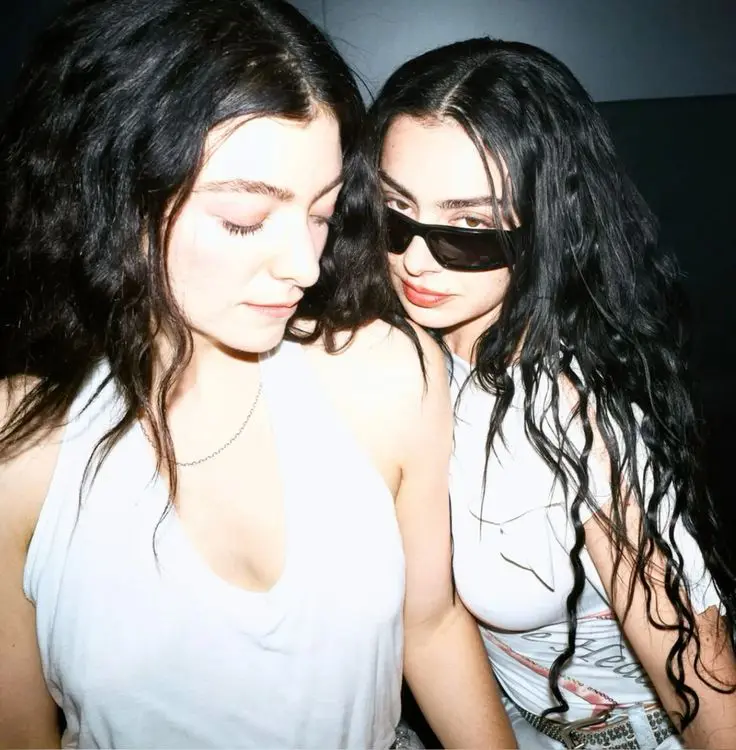
In Brat, Charli sings about the awkwardness of her relationship with another female artist, later confirmed to be Lorde. The remix turned the tension into collaboration, but the song itself is a perfect example of pop’s double bind: rivalry as both fracture and narrative device. Swift’s The Life of a Showgirl includes “Actually Romantic,” widely read as a direct response to Charli XCX. Dropping the acid-tipped line “I heard you call me ‘Boring Barbie’ when the coke’s got you brave,” Swift turns hearsay into ammunition, and it quickly became the most dissected track on the record.
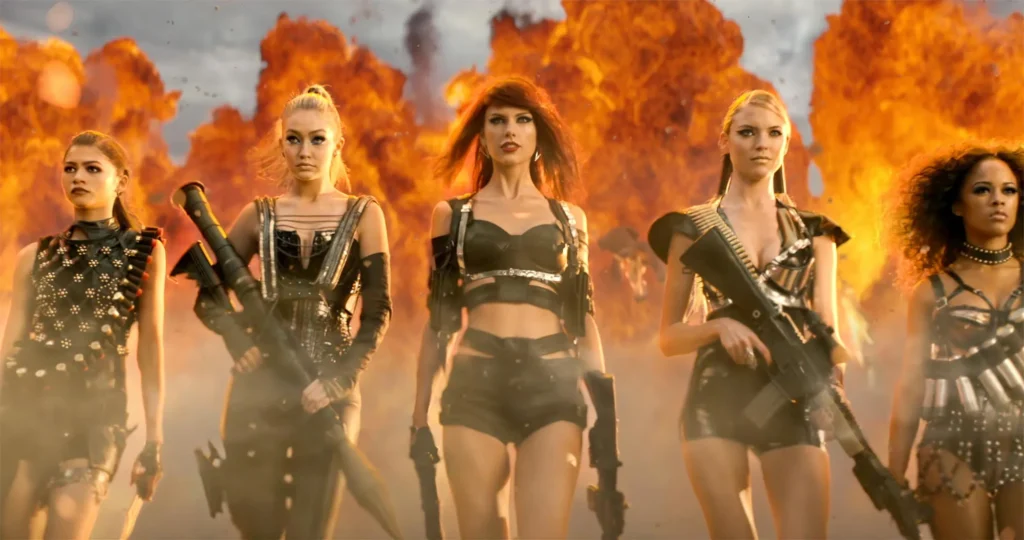
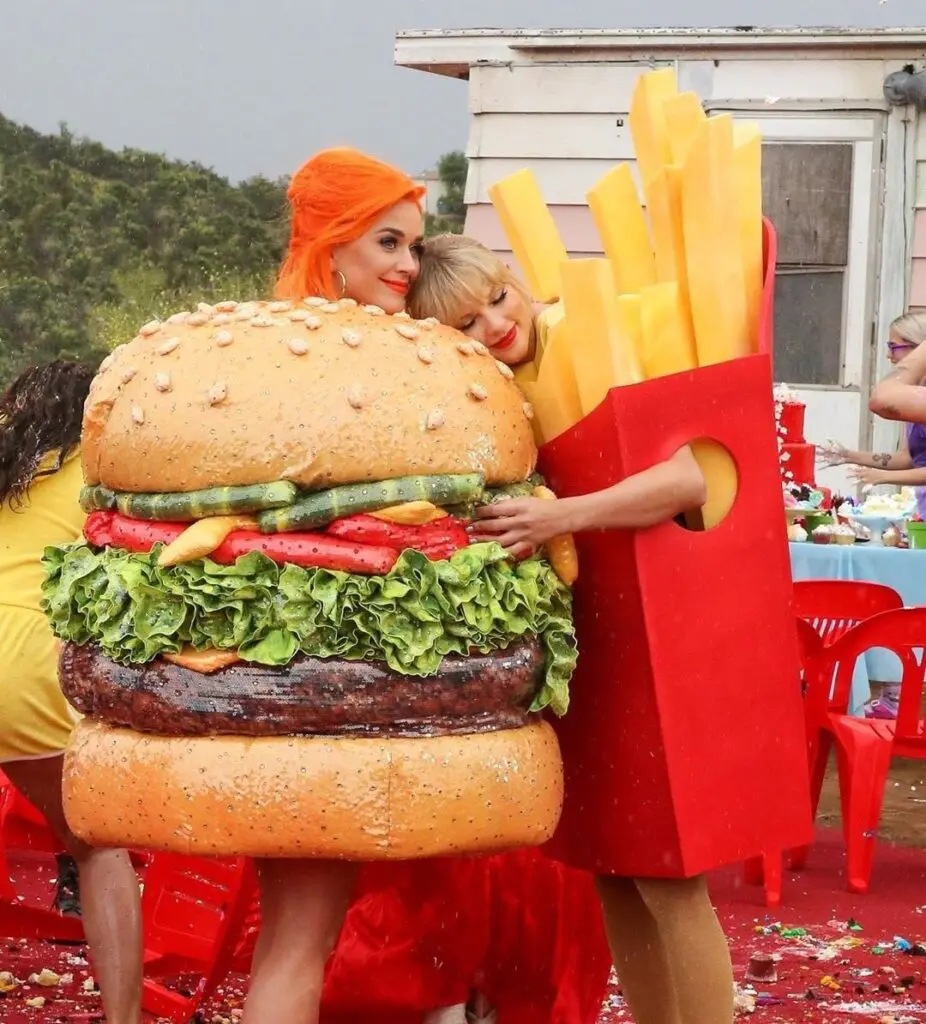
It’s not the first time Swift has turned coded rivalry into canon. “Bad Blood,” interpreted as a diss track aimed at Katy Perry, elevated gossip into myth. Its star‑studded video transformed the feud into a cinematic spectacle. Perry’s Swish Swish delivered the expected clapback, and together the songs have become firm entries in pop mythology.
For male artists, the dynamics of rivalry operate under a different cultural logic. Within mainstream pop, writing explicitly about other men risks being perceived as petty or trivial, undermining the seriousness of their persona. Male shade is displaced into rap and hip‑hop, where diss tracks are legitimised as competitive tradition. Rivalries such as Jay‑Z versus Nas or Drake versus Kendrick Lamar are inscribed into the genre’s history as evidence of artistry rather than gossip. Male pop stars, by contrast, are permitted to function as autonomous myth‑makers, narrating themselves without the tether of comparison.
Female rivalries, however, are consumed as serialised drama. A single lyric can spark weeks of discourse about who it’s aimed at, whether it’s shade or solidarity. Swift’s myth‑making and Charli’s meta‑commentary are sharp acts of authorship, revealing how women wield rivalry as a collective script, constructing fables rather than simply tearing each other down.

Rivalry isn’t only betrayal. It’s also a narrative device: a way for women to write themselves into the story. What tabloids once scripted is now embedded in lyrics – women turning their gaze on each other, authoring rivals and reflections in their own voices. Queer subtext often slips in alongside shade: the tension between admiration and desire, rivalry and intimacy.
What tabloids once did, Stan Twitter now does at warp speed. Rivalry is fandom’s favorite currency: shade traded like crypto, identities minted by who you worship and who you drag. TikTok accelerates the drama, and the algorithm has a type. It’s female-female. Betrayal is framed as personal, emotional, narratively rich; algorithmically irresistible.
Call it reclamation, call it authorship, but the truth is layered: rivalry is both trap and tool. Pop still scripts women as gladiators, but those gladiators are also lore bearers, writing themselves into history through the very comparisons meant to contain them. The numbers bear it out. Female artists may be surging in streaming power, with women’s share among the Top 100 U.S. artists growing by 130% between 2020 and 2024. Yet a study on media framing found that female artists are twice as likely as men to be covered in the context of rivalry or personal conflict.
Self‑authorship may look like progress, but rivalry remains the operating system for women in pop: sometimes corrosive, sometimes romantic, sometimes mythic. Not just anti‑feminist, but strategy, survival and cultural canon. It sells. And that’s the only logic pop ever needed.


