
Words by Lola Carron
Edited by Valerie Aitova
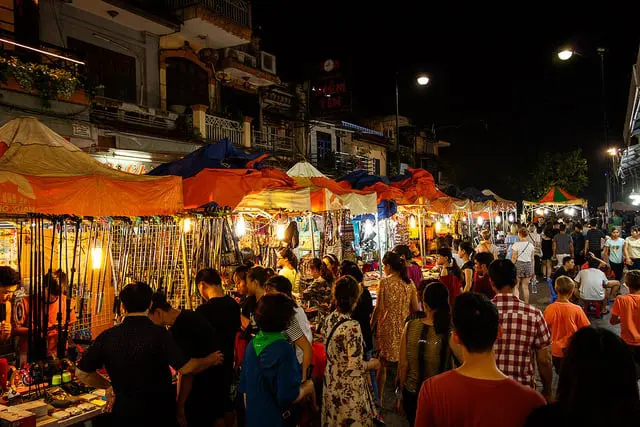
The friction of the Southeast Asian market offers a necessary antidote to the frictionless, algorithm-driven aesthetic of Western life. These spaces are not simply retail hubs, but sites of cultural signalling and performative contrast. Here, consumption gives way to curation: a process through which identity is assembled, adjusted, and displayed in real time.
For the outsider, the market becomes a stage where the self is edited and re-presented, using the chaotic visual language of the stalls to signal adaptability rather than tourism. Style operates less as fashion and more as communication – a way of navigating unfamiliar social and cultural terrain. For those of us arriving temporarily, the market becomes a stage where identity is edited and re-presented in real time.
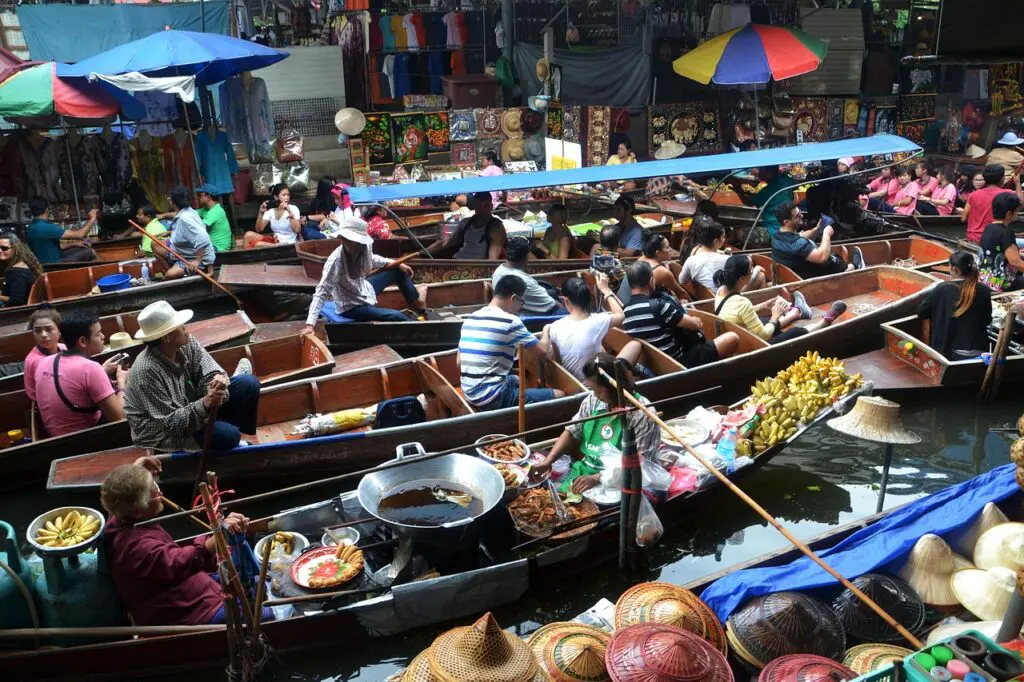
As you navigate the crowds of Bangkok, the temple routes of Angkor, or the alleys of Hanoi, the garments purchased are immediate tools. They are the essential style currency for the self on the move.
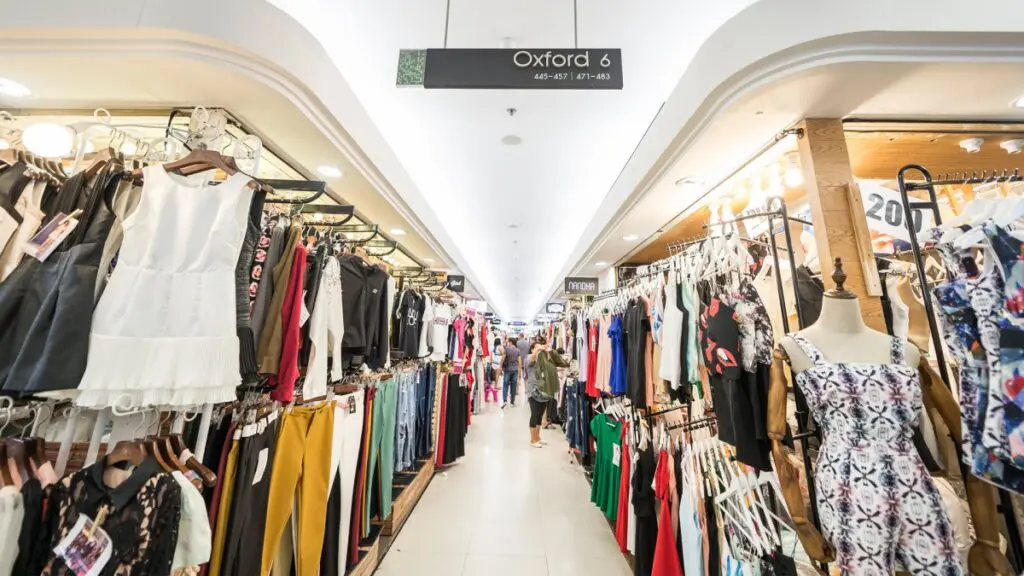
The most potent piece? The ubiquitous graphic T-shirt. Forget the minimalism of airport departures. Here, fashion is loud, cheap, and immediate. The shirt emblazoned with a saying or an image of a local logo, isn’t just a souvenir; it’s a social script. For 30 baht, it performs the identity of the ‘Knowing Tourist’ – the one who is slightly more experienced, slightly more attuned than the package-tour crowd. It’s an assertion of belonging, bought at a roadside stall, designed to reduce the friction between the self and the local landscape.
Then there is the great migration of the Alibaba Pant. Wide-legged, drop-crotch, and aggressively patterned, they are the visual equivalent of a sigh of relief. These trousers are the ultimate uniform of liberation, acting as a high-visibility membership card for a global community of seekers. It instantly communicates: I am on holiday; I reject the constraints of home; I embrace casualness. By adopting this silhouette, the traveler signals a shared value system of ‘unstructured living’ that is instantly recognizable from Tulum to Thong Sala. Crucially, they serve an immediate, respectful function, allowing seamless entry into a wat in Chiang Mai. They are an aesthetic tool for managing social space, enabling the wearer to perform the role of the ‘Unfussy Seeker’ without ever breaking a sweat.
But the most fascinating style contrast is found when we turn from the consumer to the constant. Where the traveler is dressing for performance, the local is dressing for survival.
In Vietnam, the dominant aesthetic is dictated by the scooter. The style is not casual; it is functional couture. The long sun-sleeves, the gloves, the protective face masks – these layers form a powerful uniform of urban defense. Against this backdrop of purposeful armor, the traveler’s linen and open skin look less like freedom and more like a lack of preparation – a fragile costume that only makes sense because of its expiration date. This style is an act of prudence, health, and labor against pollution and UV damage. It is the style of the person who has responsibilities, who must navigate the demanding reality of the city daily, standing as a formidable counter-aesthetic to the traveler’s temporary pursuit of ephemeral insight.
Their garments are tools for durability; ours are costumes for a short-lived role.
Similarly, the Cambodian Krama (the multifunctional checkered scarf) is the ultimate item of local pragmatism. Its power lies entirely in its utility: it’s a mask, a head covering, a sling. When adopted by the traveler, it attempts to borrow a sense of local history, a visual claim to endurance that feels deeply authentic in the face of ancient landscapes.
The friction is real: the clothing we buy is rarely intended for life beyond the tropics. The silk dress from Hoi An is a beautiful artifact of the ‘Romantic, Creative Self’ we briefly inhabited. The spiritual jewellery from Pai is the remnant of the ‘Heart-Opened Self’ we purchased alongside the cacao.
This style of consumption is the clearest sign that we are using the markets of Southeast Asia to purchase temporary identities-easy antidotes to the systemic exhaustion of our home lives. We buy the look, wear the persona, and when we return, the garment is often discarded, relegated to that limbo zone of the wardrobe: the part we won’t give away because there are too many memories attached, yet never actually wear again.
Ultimately, this cycle reveals the market’s true role in the global economy: it is less a place to buy objects and more a factory for the ‘transformed self,’ where the friction of the real world is packaged as a temporary, wearable escape for a middle class seeking relief from its own stability.
The market style successfully facilitated the escape, but it offers no help with the integration.
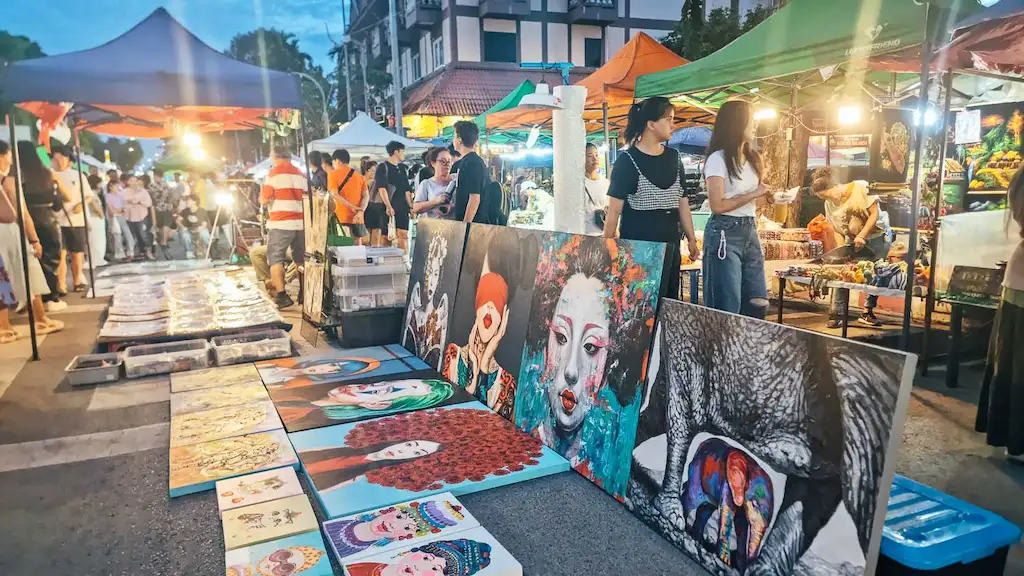
The question for us, the audience of this sartorial exchange, must be: Does the clothing we buy truly signify transformation, or is it merely a beautiful, affordable souvenir of the person we briefly pretended to be? The streets of markets prove that while buying a new self is easy, integrating it into the hard reality of life back home is the real fashion challenge.


