
Curated by the HYGY Editorial Team
November in London has a particular way of rearranging perception. It is a month that asks the city to look inward, allowing nuance and atmosphere to rise to the surface. With daylight fading early and the air carrying a crisp, metallic stillness, the city becomes a landscape of interiors—warm rooms, concentrated light, and spaces shaped by intention rather than spectacle. It’s within this atmosphere that London’s cultural institutions have assembled a season that feels unusually coherent. Across exhibitions, performances and festivals, the month traces a subtle but persistent theme: the examination of identity through movement, memory and the framing devices of art.
This November does not overwhelm with volume; it resonates through precision. The cultural offerings feel thoughtful, measured, attentive—inviting audiences not simply to attend but to look with more clarity, to listen with more patience, to consider the details that shape how we understand ourselves and the stories we inhabit.
At the Design Museum, Wes Anderson: The Archives unfolds like the inside of a filmmaker’s mind rendered in tangible form. Critics have praised the exhibition for its rare ability to externalise an auteur’s internal logic. Art critic Leonie Mercer described the show as “a moment when Anderson’s emotional architecture becomes physically legible,” a sentiment echoed across multiple reviews.


More than six hundred objects—stop-motion puppets, miniature interiors, marked-up scripts, colour palettes arranged like emotional registers—demonstrate the meticulous craft underlying his cinematic worlds. Curator Jessie Hesketh notes that “detail is not decorative; it’s emotional,” and within the exhibition, this becomes unmistakably clear. Anderson’s universe is not whimsy—it is discipline. Visitors often describe a feeling of stepping into a living storyboard, where every object seems to hum with the intention behind its creation. And in its symmetry, viewers find the quiet pulse of intention.
More at: designmuseum.org
At the Royal Albert Hall, 10 Years of Choose Love offered a different kind of architecture: one built not from objects but from sincerity. Critics described the evening as “activism staged like opera,” emphasising the emotional clarity of its performances. Music writer Daniel Peck called it “one of the few events where artistic expression and humanitarian purpose align without friction.”
What resonated was its restraint. Artists stepped onto the stage without fanfare, offering stripped-back performances and unguarded reflections. The atmosphere felt communal, almost unexpectedly intimate for such a monumental venue. In a season defined by introspection, the event provided a rare portrait of collective compassion—warm, imperfect, deeply human. For many, the night felt like a quiet reset, a reminder of the emotional infrastructure that binds communities together.
More at: royalalberthall.com and chooselove.org
Throughout the city, the EFG London Jazz Festival created a map of motion. This year’s edition was marked by a deliberate restraint that critics found compelling. Choreographer Wayne McGregor, appearing later in this article for his own exhibition, commented that jazz operates as “a sonic architecture—fluid, unpredictable, alive.” The festival seemed to embrace that ethos fully.
At the Southbank Centre, pianist Tigran Hamasyan delivered a performance The Independent’s Sarai Collins described as “composing in negative space—each pause as meaningful as each note.” Rather than the explosive improvisations often associated with jazz, the week’s standout performances were defined by clarity, sparseness, and a kind of quiet luminosity. Jazz became less a genre and more a form of sculpted movement. Across the city’s venues, audiences encountered performances that seemed to reframe sound itself as a form of spatial choreography.
More at: efglondonjazzfestival.org.uk
If jazz explored movement, the Taylor Wessing Prize examined stillness. This year’s portrait selection has generated significant discussion for its subtle confrontation with identity. Critic Amira Benton noted that the strongest works “capture a cultural atmosphere rather than a single subject,” using faces to express the emotional climate of our moment.
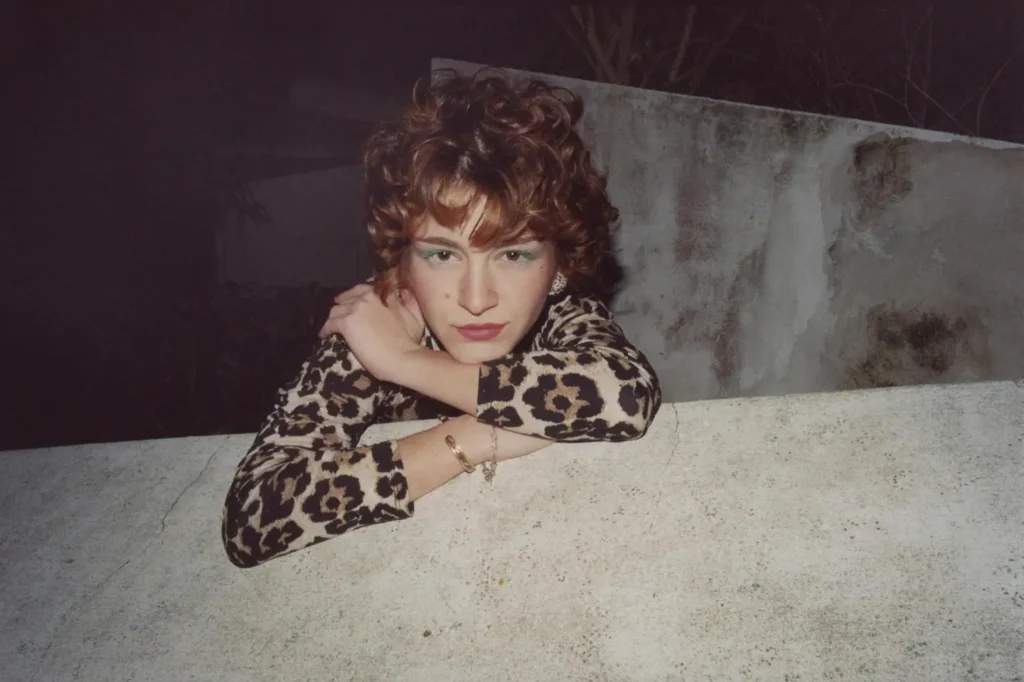
Natural light dominates many of the images—soft, unforced, attentive. Subjects appear unpolished, unposed, suspended between expression and introspection. In contrast to the calculated images of digital media, these portraits present the face as a landscape of nuance. Reviewers have praised the exhibition’s ability to slow the viewer’s gaze, encouraging a mode of looking that is both intimate and precise. The cumulative effect is a meditation on the subtleties that define a person beyond what is immediately visible.
More at: npg.org.uk
Among November’s cultural offerings, the London Korean Film Festival stands out for its emotional range and curatorial depth. Now in its 20th year, the festival has once again affirmed its position as one of the city’s most thoughtful platforms for contemporary international cinema. Writing in The Guardian, critic Hyun Park described this year’s edition as “a consistent source of radical tenderness,” highlighting its ability to navigate humour, grief and psychological tension with equal sophistication.
Film after film revealed a creative landscape marked by nuance. Yoon Dan-bi’s exploration of intergenerational relationships drew praise for its “unhurried emotional intelligence,” while Hong Sang-soo’s newest minimalist feature was singled out for its quiet formal daring. On the opposite end of the spectrum, Jang Jae-hyun’s thriller delivered tightly engineered tension, with critics admiring its controlled intensity.
Visually, the festival presented a striking variety—from neon-washed urban nights to muted domestic interiors rendered in natural light. As critic Amira Cho observed, “Korean filmmakers have an unusual ability to treat ordinary gestures with cinematic reverence.” This reverence permeated the programme, creating a portrait of contemporary life that felt both specific and universal, intimate and expansive. Its continued resonance in London speaks to the growing appetite for storytelling that blurs cultural boundaries while remaining emotionally exact.
More at: koreanfilm.co.uk
At the Design Museum, the exhibition devoted to the Blitz Kids reconstructs one of London’s most formative cultural incubators. What could have been presented as retro nostalgia instead emerges as an incisive study of self-fashioning. Fashion historian Dr. Coral Flint praised the exhibition for revealing “the birth of identity as a form of performance art,” noting how the garments—often sculptural, metallic, and radically inventive—anticipated shifts in gender, aesthetics and creative experimentation.
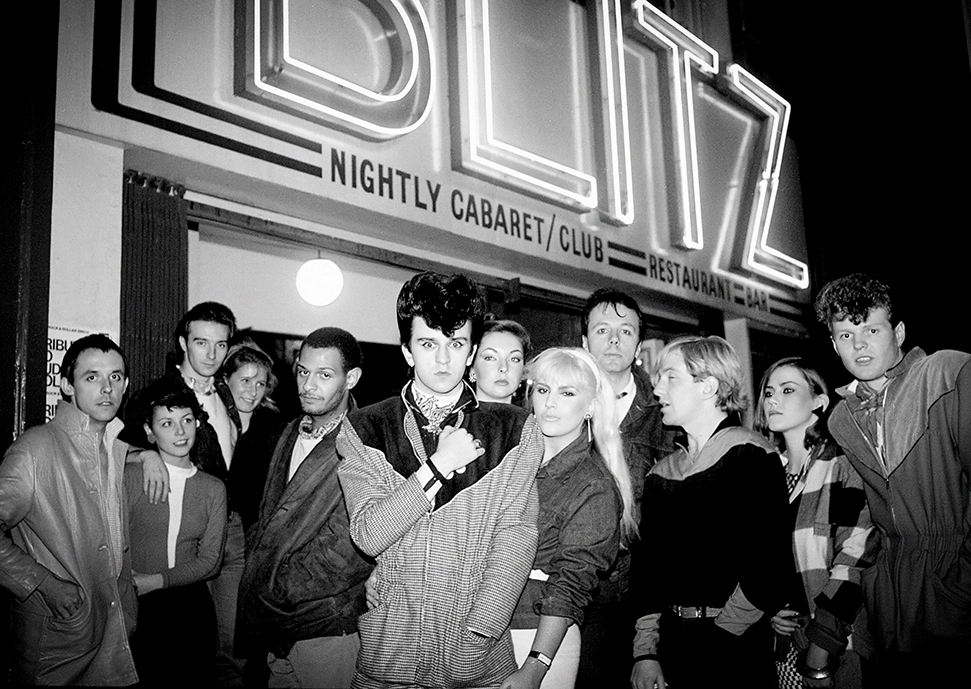
The show documents not just a subculture but a philosophy: identity as something not merely worn but authored. In revisiting this moment with such clarity, the exhibition frames the Blitz not as a relic but as a precursor to today’s fluid cultural landscape. Visitors move through the exhibition with a sense of witnessing the early choreography of modern self-invention.
More at: designmuseum.org
Wayne McGregor’s Infinite Bodies feels like the natural endpoint to a month defined by questions of movement and identity. Dance critic Leo Hartmann wrote that McGregor “isn’t choreographing bodies—he’s choreographing perception,” and the installation embodies that notion entirely. Motion-capture projections ripple and fragment; dancers appear as both physical presence and digital echo; bodies dissolve into shifting forms of light.

The work reimagines the human figure through technology, not to distort it but to expand it. Viewers are invited into an environment where identity appears fluid, continually remade in real time. It is one of the season’s most forward-looking works — challenging, elegant, disorienting, and unexpectedly intimate. The installation encourages viewers to reconsider the physical limits of perception, blurring the space between observer and participant.
More at: somersethouse.org.uk
Seen together, these seven cultural moments form a portrait of a city in a reflective state. They move between archive and activism, stillness and motion, individual identity and collective experience. What unites them is a shared commitment to intention: a belief that clarity—of form, feeling, or meaning—still holds power in an overstimulated world. It is this emphasis on deliberate expression that gives the season its cohesion, binding disparate works into a larger cultural conversation.
This November, London’s cultural landscape isn’t concerned with distraction. It is asking us to look more carefully, to listen more closely, and to engage with the subtleties that shape our understanding of who we are. In this shift toward depth and concentration, the city feels more sharply drawn, more emotionally resonant, and perhaps more itself than it has in some time.


