
Words by Mia Raja
Edited by Valerie Aitova
Modern dating is undeniably exhausting. Since the rise of dating apps, we theoretically have more choice than ever before. But the outcome is mindless swiping, meaningless messages and countless first dates spent thinking, ‘you did not look like this in your photo’.
It’s no surprise then that dating apps have fallen in popularity, with 78% of all dating app users reporting dating app burnout, according to Forbes. Although there’s a thrill that comes with online dating, a while of being single has made me realise I’d rather spend a Saturday night on the sofa or with friends, than with a man who can spend an entire date talking about nothing but himself.
But this doesn’t mean people have given up on dating altogether. Instead, there has been a cultural shift – with the rise of in-person dating events.
Curious about whether this is the new direction of the dating landscape, I attended three dating events in London, aimed at those in their twenties or thirties, to learn more about how, and if, they really work.
First, I attend Speedy Dating – a speed dating events company founded by New Business Manager, Gemma Courtney Davis, with the tagline, ‘Cupid’s gone corporate baby!’. Priced at £8 a ticket, singles are offered an affordable opportunity to meet new people after work without committing a whole evening to one date.
I arrive at Peckham Arches with an army of friends which admittedly calm the dating nerves but once I meet Davis, I know there is nothing to be worried about. Davis has the perfect personality for the tricky role of Cupid – she is immediately welcoming and consistently bubbly throughout the night.
Each woman sits at a candle-lit table with a card to note her three favourite dates, while the men rotate between tables. In each three-minute interaction, both decide if they’d like a second date and write down the other’s name. At the end of the night, cards are collected, and participants sheepishly wait to receive a text if a match is made.

Although the uneven split between women and men means the women aren’t always seated with a date, they naturally gravitate towards one another in the gaps – forming an informal huddle that becomes a kind of accidental debriefing table.
Swapping between tables feels significantly less vicious than swiping on apps and arriving with an open mind means I meet men I may not have considered romantically, but, at the very least, have interesting conversations with people I may not have ever met otherwise.
While some might argue three minutes is a brutally rapid amount of time in which a dater can judge a potential partner, one dater found that, on some dates, “three minutes felt like forever” so Davis found a sweet spot in her timing, keeping things moving. Some daters understandably seem nervous at the start: conversations feel abrupt and awkward. But as each date goes on, I watch hunched shoulders around the room gradually drop as daters learn how to navigate the quick conversations and seemingly relax with the realisation that everyone is here for the same or similar reason.
I learn that people are still cautiously optimistic about meeting romantic potentials in person. They want to make an effort to date and certainly haven’t relinquished all hope, they just need to see effort reciprocated, something that is impossible to determine over online chats. Speedy Dating calls for people seeking low-pressure yet efficient events. With a wider audience and keen participants, Davis creates a safe and hopeful environment for people to introduce themselves to people they may never have met otherwise.
Next I stepped into an event five times the size of the first, with a turnout of over 100 people. Aimed at men and women in their thirties, Red Lips Dating ‘put[s] women first’ – an idea born by journalist and author, Olivia Petter. After writing an article about throwing a singles party, Petter was inundated with requests to throw another one, leading to the creation of Red Lips Dating.
The night at Damsel Collective is sophisticated and relaxed but also busy and full of life. Tickets are sold in pairs – £40 for a woman who is required to bring her male friend along, to ensure even numbers but, also, a vetted man, giving the event a feminist spin. Petter hosts the evening on the bottom floor of the events space, with low mood lighting and a bar in the middle, meaning everyone has easy access to a bit of Dutch courage.
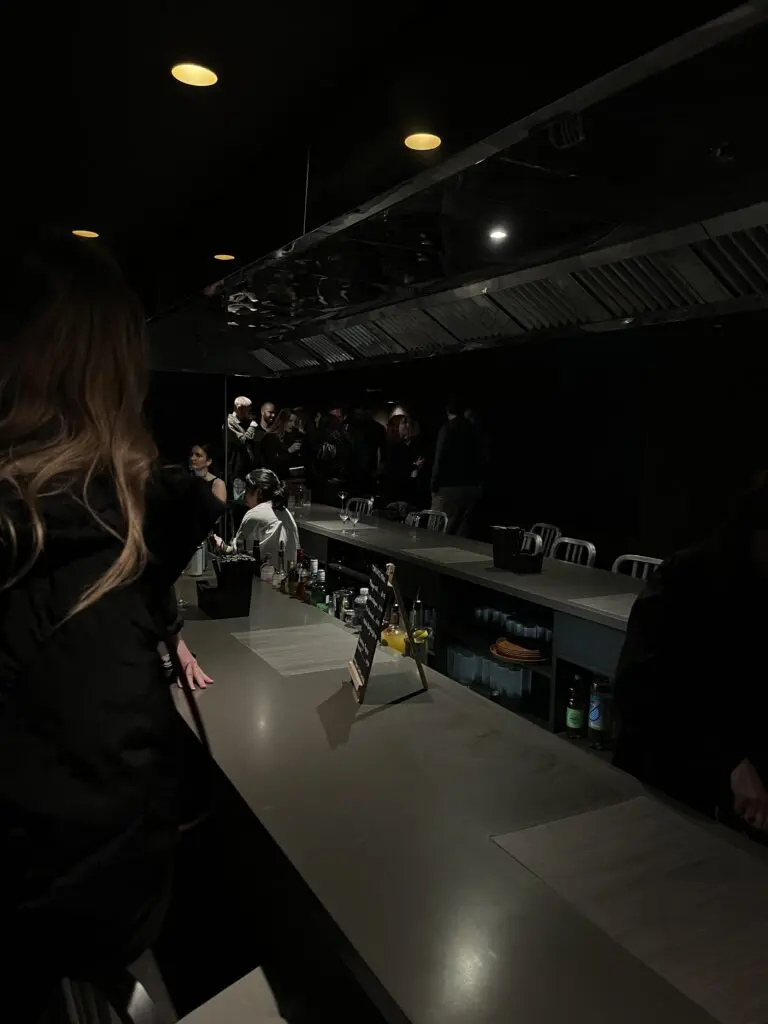
Petter encourages people to arrive from 7pm despite the speed dating beginning at 9pm to allow daters to settle in and mingle before it begins. Aware that speed dating, though fun, can be socially draining, the gradual ease-in is definitely welcome. By the time the speed dating begins, the conversations shared beforehand make it feel as though I’m already surrounded by new friends.
Throughout the night, the men rotate around the outer circle of the room with the women positioned in an inner circle. As I talk to more men throughout the night, something becomes clear – all the guys here are cool, collected and mature. Whether cool and artsy or stereotypically corporate, bringing in female-vetted men seems to foster a trustworthy environment for the women in the room.
It strikes me – is contemporary dating so exhausting that we need a filter to achieve a comfortable environment?
Something else remains consistent. When I ask people how they found out about the event, a clear consensus emerges: daters are tired of the apps. While a few stumbled upon Red Lips Dating by chance, most had actively sought out an event like this, and even encouraged friends to come along with them.
I leave Red Lips Dating with a little more hope for the dating future, seeing that there are men who fit my female friends’ description of a man who “only exists in books”. With both men and women evidently keen to meet partners in person, the anti-app narrative is louder and clearer than ever before.
Bored of Dating Apps, otherwise known as BODA, brands itself as the ‘OG anti dating app social’ – unmistakable in its purpose. Founded in 2022 by Jess Evans, BODA has been expanding ever since, hosting events from book shop socials to rooftop singles parties and building a grand following of 95,000 on Instagram.
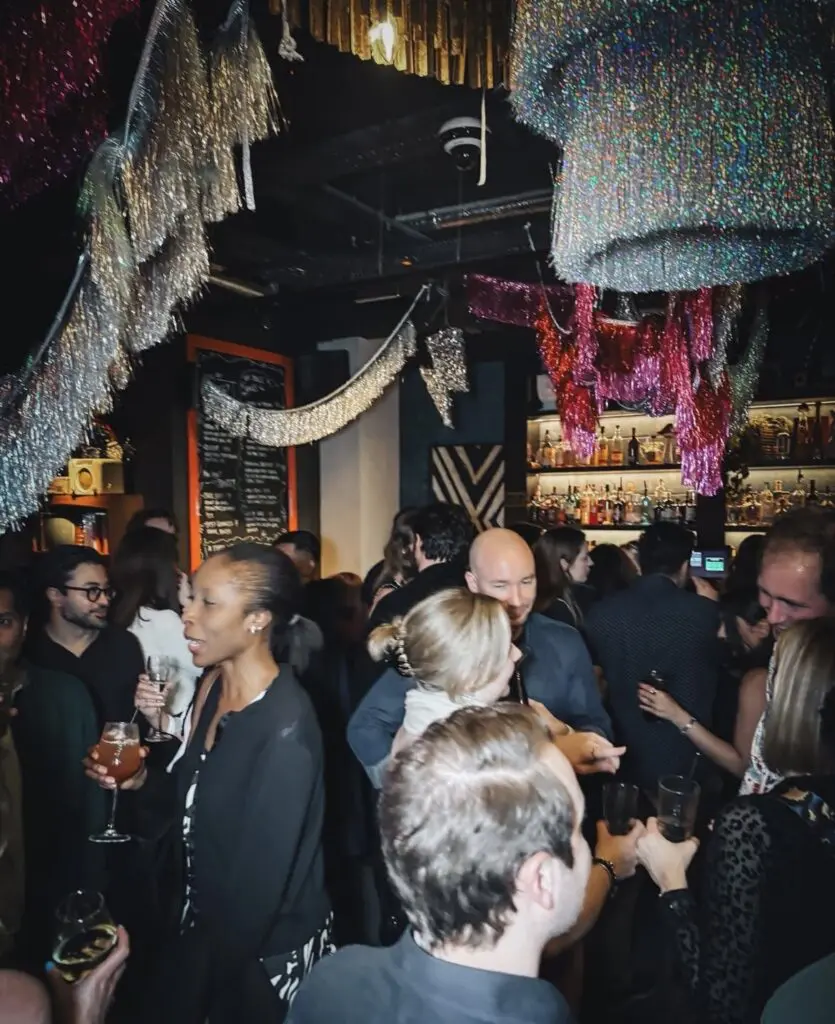
When a friend and I arrive at the Little Scarlet Door in Soho, the floor is packed with singles in their early twenties to late thirties who have paid between £20 to £25 each for a ticket. The crowd spans newcomers eager to try a new activity with friends to regular BODA attendees hoping to find a lifelong partner.
Everyone is left to mingle amongst themselves. The only requirement is to complete the icebreaker assigned at the door: a ‘free shot’ token that grants us two shots, one for ourselves and one for a stranger, prompting the first conversation of the night. After that, the evening is left unstructured, a format that may favour extroverts but could benefit from a few additional icebreakers.
The bustling crowd promises endless opportunities to meet new people ,but what I hadn’t anticipated was the number of conversations that might never happen. Though nerve-wracking, the speed-dating format of the first two events ensured the chance to meet everyone in the room. Here, people had to create their own opportunities – if you wanted to speak to someone it was your responsibility to do so, perhaps more authentic in a way. However, this did result in an uncomfortably long conversation with one man and a missed opportunity with another.
Having attended each of these events with friends, it doesn’t strike me until afterwards how daunting it can be to attend a dating event alone. Without a wingman around, it can be difficult to find an escape route. But one of the unique perks with BODA events is that they sometimes offer those attending alone to arrive earlier, in order to meet a friendly face before everyone else arrives.
As the night comes to an end at the Little Scarlet Door, conversations between the bar and the quieter corners of the room come to a soft close. In a Soho bar crowded with people who might otherwise have remained strangers, BODA manages to turn a typical night out into something slightly more intentional – where connection, in whatever form it takes, feels both possible and unforced.
Across all the events I attend, one thing remains consistent – people want to meet in real life again. Particularly in a city where dating can feel transactional and isolating, these events offer something looser and more human: a room full of strangers willing to talk, laugh, and momentarily suspend the pressure of finding ‘the one’.
Attending these events leave me with a newfound hope for dating in real life. These events don’t offer the same ease and instant gratification as swiping left and right. But what they do offer is something more tangible: practice at being open, present, and a little vulnerable in front of strangers. Hope is found in the act of showing up after work despite nerves, speaking to someone you might not have typically swiped right on, and leaving with a name saved in your phone rather than a curated profile to scroll past.
Unlike the infinite options on dating apps, progress here is quieter and slower. Yet there is optimism for the future of in-person dating, as long as people are willing to try – effort must be given before it can be received in return.


