Words by Eylul Ulug
Edited by Valerie Aitova

“Blue begins not with a start, but with a feeling — that unnameable shade between memory and longing.”
Elijah’s story unfolds like a fractured timeline; it offers neither a clear beginning nor a definite end, only transitions and the charged moments in between. BLUE is exactly that: a fragment of life, an intimate outpouring, a theoretical space, and an emotional map all at once. It is as precise as an academic argument, yet as intuitive as a poem. Each chapter speaks in a different language, with shifting tones, but always from the same place deep within Elijah — a place painted entirely in blue.

“My life never flowed in a straight line; it came in fragments, moments of clarity and collapse,” Elijah says. That’s why BLUE refuses to settle into a single genre. Narrative, theory, emotion, and analysis intertwine. The reader is expected not just to read but to feel these texts. Perhaps that’s why blue is so dominant. Here, blue is not just a color; it’s a state of mind, a space of memory, a ritual of passage. From the favorite color of childhood, to the emotional shadow sought during the encounter with depression, to the collective tone of grief, resistance, and hope.
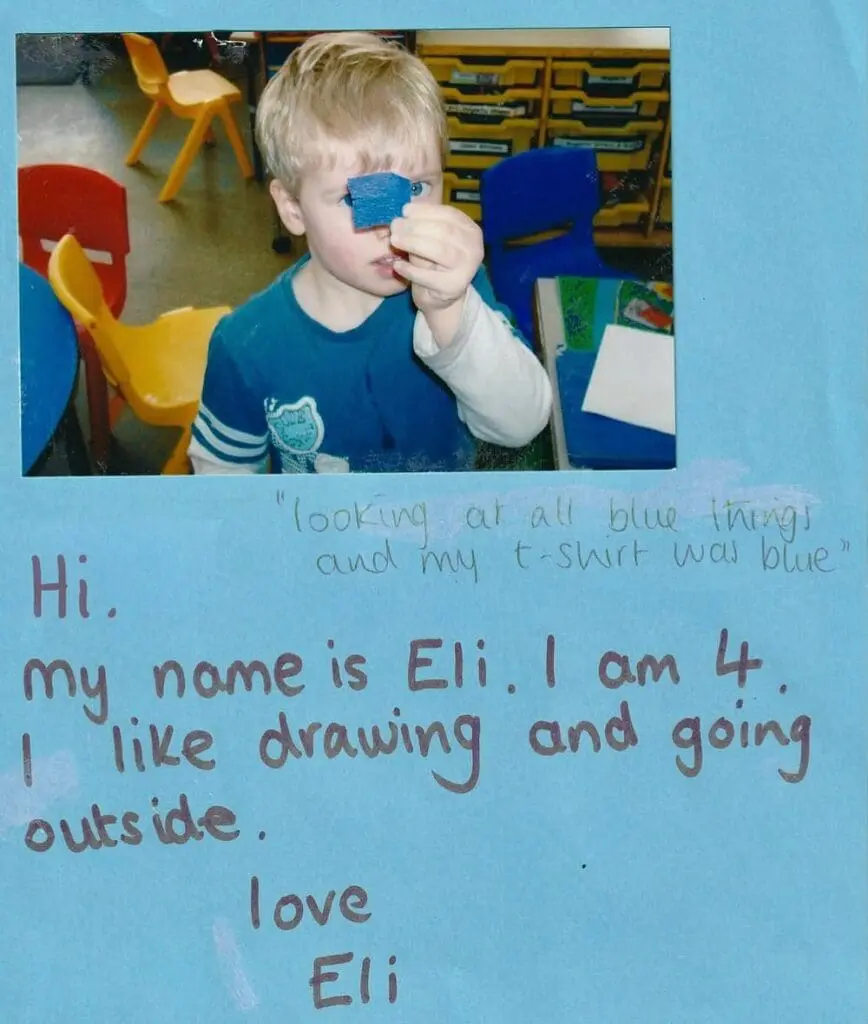
Blue was always there, but its meaning reshaped each time. “Blue is no longer just a colour: it has become a process, a path from pain to hope,” Elijah defines it. This process holds both individual loneliness and collective solidarity. Mental health struggles and climate justice. The vulnerability of a queer child and the anger of an activist youth. All intertwined, inseparable
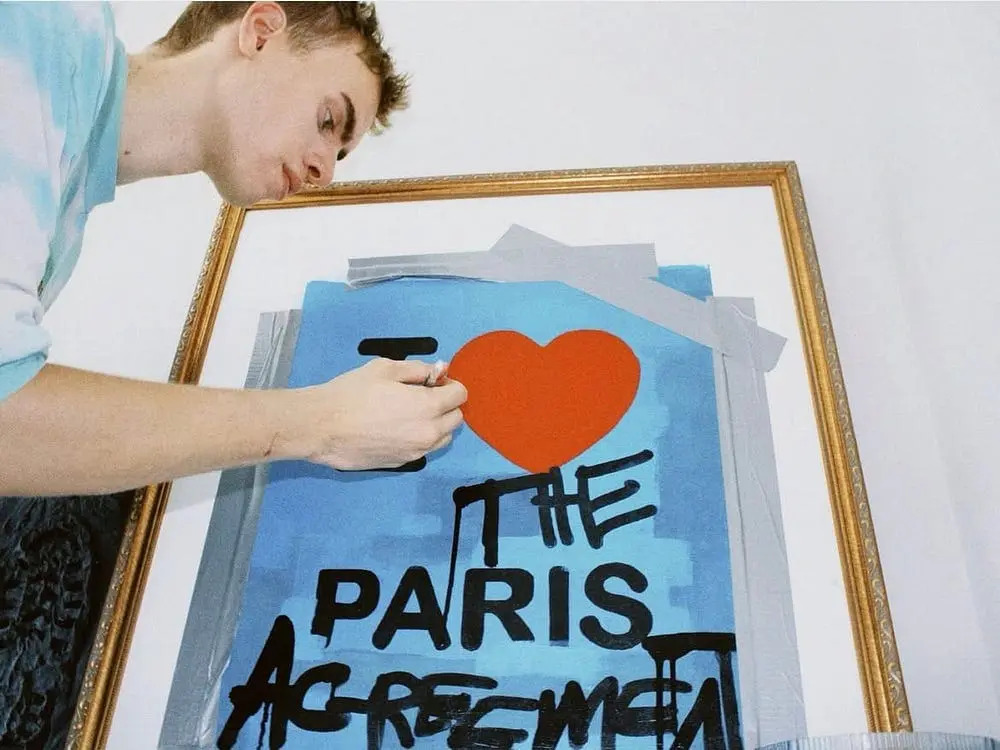
“Empathy must stand alongside education. Learning doesn’t only happen in the classroom,” Elijah says. This is the essence of BLUE. The book does not just tell; it makes you feel. It doesn’t shout to shake you; it speaks with an intimate, sincere voice. Because the echo of that inner voice lasts longer.
For Elijah, mental health is not just a personal issue; it’s a political space. In an era where youth are tested by depression, anxiety, and burnout, survival itself is an act of resistance. “Healing can also be a form of activism,” he says, referring not just to himself but to millions like him. Activism is no longer just shouting in the streets; sometimes it’s stopping, crying, healing, sometimes just surviving.
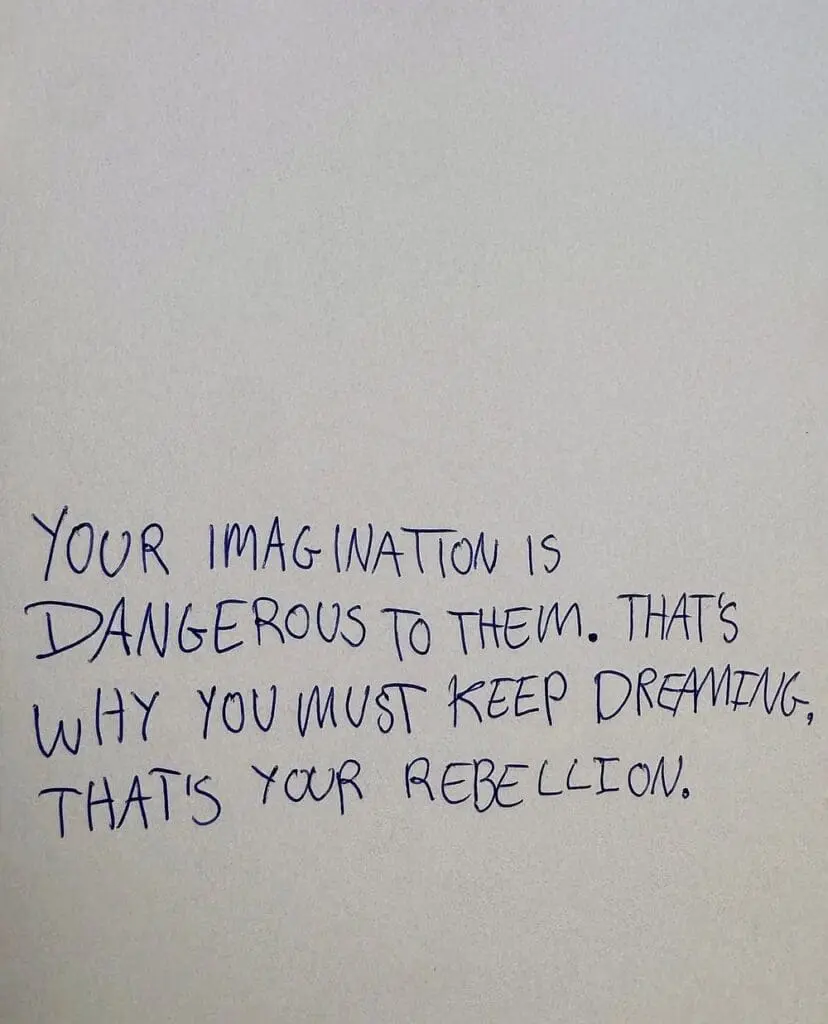
This is the exact opposite of the strong, silent, rational individual the system expects. Elijah’s life is fragile, emotional, intuitive, and deeply imaginative. “The way I stayed alive was by raising my voice,” he says — but that voice doesn’t always carry the same volume. Sometimes activism is a march, a speech, a public stand. Other times, it’s an essay written late at night, a quietly defiant piece of art, or simply the choice to keep something private, to protect the parts of himself that aren’t for public consumption. As he puts it, “Choosing what to share, when to share it, and what to keep close… that boundary is how I stay intact.” That interplay between medium and message — protest, art, or intimate reflection — is where much of his work’s power lives.
And everything in BLUE is connected. The vulnerability of a queer youth, the exhaustion of a dying planet, the mental strain of showing up day after day all are felt at once, without separation. To Elijah, pulling them apart would be to sever people from nature itself. His work moves in the opposite direction: building connections, opening links, creating passages. Language and softness are forms of resistance here: an insistence that care and beauty are as urgent as critique. “Intersectional thinking is not just a theory: it is the only way to build a resilient movement grounded in reality,” he says. In BLUE, climate justice, queer existence, and mental health are not parallel causes; they form a single web, stretched but unbroken, holding the weight of grief and the possibility of hope.
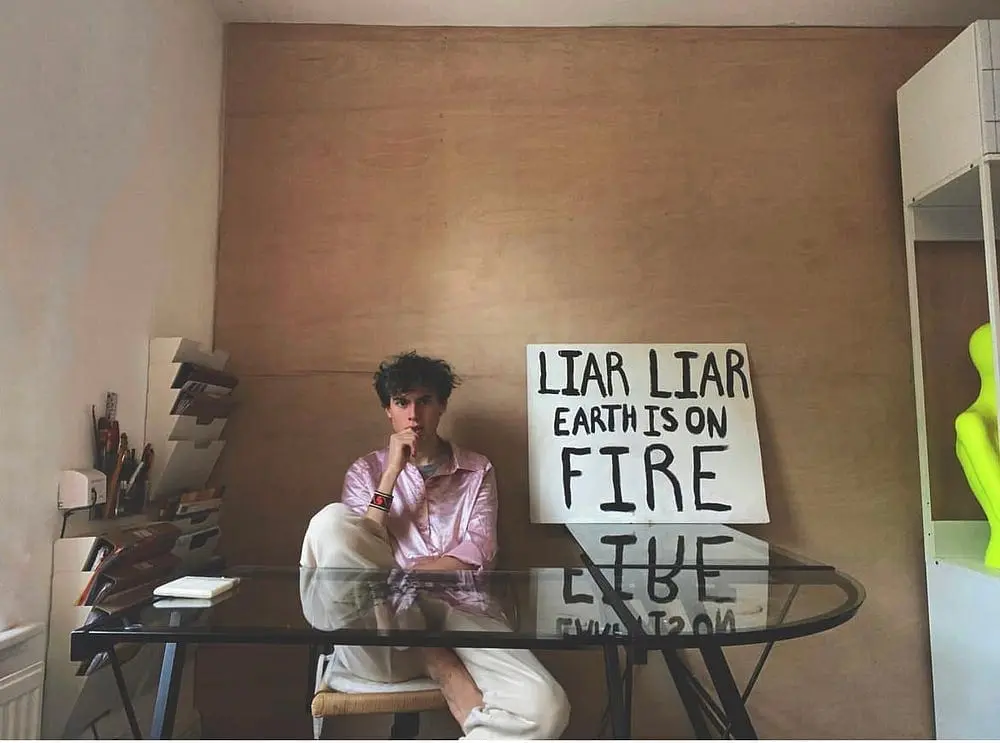
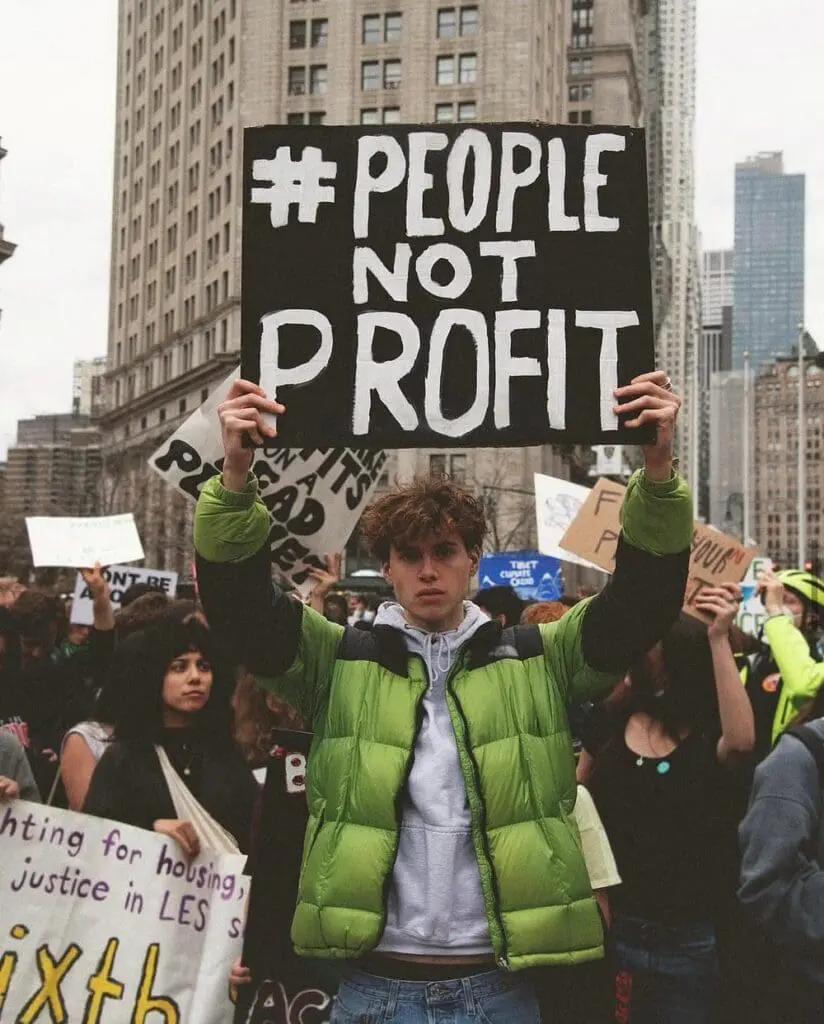
What remains most striking are his words about hope. “Hope is dangerous because it threatens systems based on fear, greed, and disconnection.” For him, hope is not a top-down promise; it is a power born from below, from small communities, from eyes that see each other, from hands that reach out. Fragile but strong, quiet but persistent. A revolution hidden within radical kindness.
BLUE turns not only to the reader but also back to the writer. Like a letter to 15-year-old Elijah: “Just because everyone wants to remember you as one version doesn’t mean you can’t change.” Change is possible, even inevitable. But it can happen with softness, kindness, and sensitivity.
“Not everything needs to be visible,” Elijah says. The solitude of an artist, the introversion of an activist, the privacy of a queer individual can be sacred. He doesn’t tell everything but fully unfolds what he does share. Sometimes the weight is left to a color, a metaphor, a sentence. And precisely because of this, the burden lightens.
Far beyond being an ordinary book, BLUE is a manifesto where fragility, resistance, and hope converge. Elijah’s voice is not just words; it’s a call that breaks patterns, a brave invitation to face our inner worlds. This work demands not only to be read but to be deeply lived, felt, and transformed. BLUE uncovers the deepest wounds hidden within us while embracing our purest hopes; in doing so, it reminds us how strong and unique we truly are. Most importantly, it whispers that change does not come through hardness but through softness, compassion, and courage the very things our age desperately needs.