
Words by: Francesca Francis
Edited by: Valerie Aitova
One way the performance of calm becomes visible in contemporary beauty culture is through its dominant format: the Get Ready With Me (GRWM) video. GRWM videos offer more than routines; they provide rhythm and structure, though the form is not uniform.
Some videos emphasise precise, timed sequences, such as “I have 20 minutes to get ready for an event”, where every movement is deliberate and polished while others unfold more casually, with creators speaking to the camera, sharing thoughts about their day, or venting as they apply makeup. Together, these approaches show that GRWMs aren’t a single kind of performance, but a spectrum of ways calm, composure, and presence are practiced on screen.
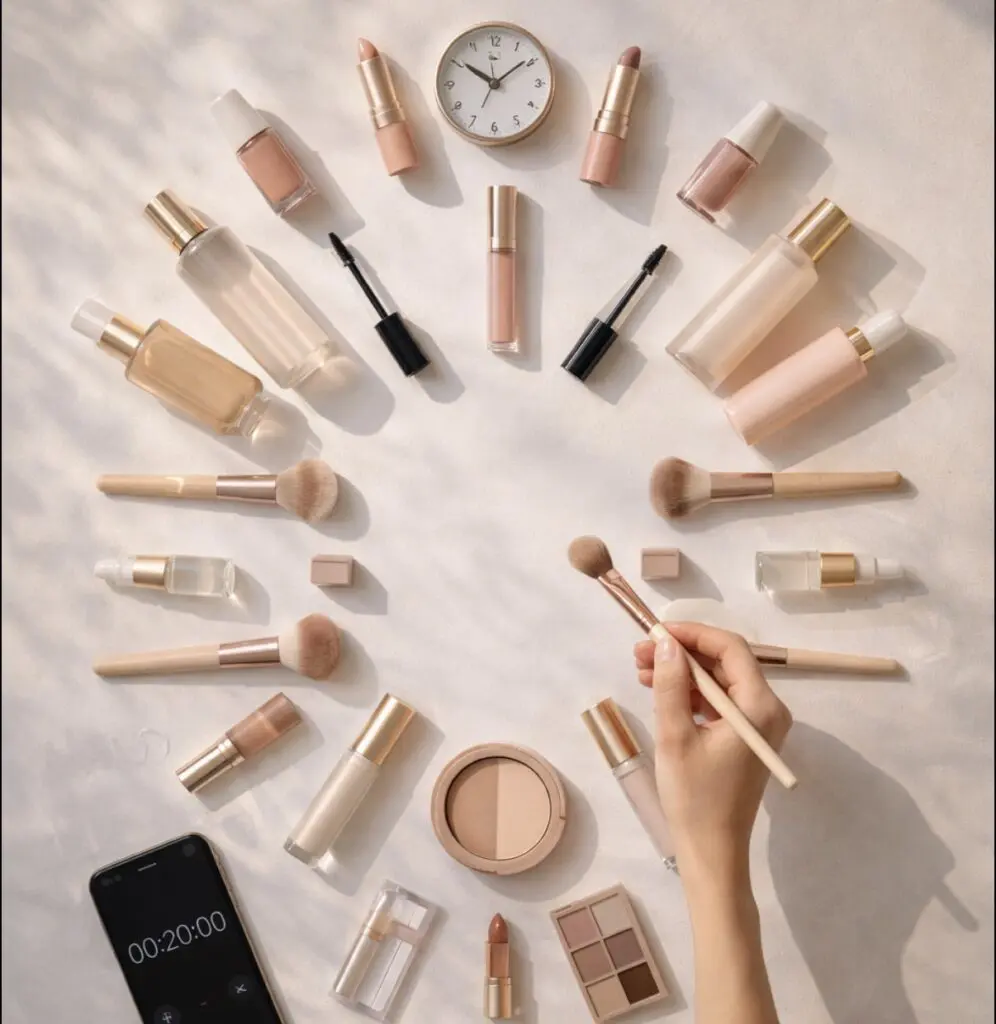
In all forms, makeup functions less as a tool for transformation and more as a performance of internal order: a shared cultural script that rehearses emotional steadiness in a digital space, leaving little room for the uncertainty of being in progress.Repetition, timing, and audience engagement create a sense of composure, even in more spontaneous formats. Psychologically, repetitive and predictable actions are widely associated with self-regulation, particularly in overstimulating environments, which may help explain why these videos feel calming to watch and perform. Viewers often describe them as “calming” or “grounding”, sometimes using cultural shorthand, such as calling certain aesthetics “2000s-coded”.
Earlier tween culture embraced experimentation in both content and aesthetics. Magazines, television, early internet spaces, and YouTube encouraged playful, unresolved practices: glitter eyeshadow applied generously, novelty lip glosses collected for colour rather than finish, routines shaped by curiosity rather than outcome. At the time, platform visibility favoured bright colours, novelty, and trend saturation, allowing experimental makeup to circulate widely. These practices were less about performance and more about exploration, allowing adolescents to inhabit the in-between.
Since 2020, aesthetics that translate cleanly across feeds have thrived. “Clean girl” minimalism, wellness-coded restraint, and neutral routines photograph well, repeat easily, and signal composure at a glance. GRWM videos reinforce this logic through predictable sequences, calm pacing, and visually legible outcomes. Even more spontaneous formats, such as ranting or conversational GRWMs, still operate within audience expectations, subtly signalling composure and engagement. Platforms tend to reward what is immediately legible content that communicates mood, intention, and affect at a glance. In contrast, aesthetics built around excess or inconsistency struggle to circulate, not because they lack value, but because they resist the unspoken rules of platform visibility.
The change is not only visual. Platforms no longer prioritise age-specific experimentation, instead promoting a narrower set of aesthetic norms. On TikTok, “beginner makeup” tutorials mirror established routines: neutral palettes, light coverage, and careful gestures. Watching these videos, it becomes clear that audience reactions often celebrate calm and refined routines, while playful or messy experimentation is framed as something to refine. Even celebrities are joining the trend, producing professional GRWMs that combine polished aesthetics with conversational intimacy, further signalling the cultural weight of being “camera-ready”.
For Gen Z, who have grown up within always-visible digital spaces, makeup is less an experiment and more a rehearsal for public presentation, where composure must be immediately legible.
GRWMs aren’t just routines – they offer insight into how Gen Z lives under conditions of constant visibility. Within these videos, composure is practiced as part of everyday self-presentation, shaped by the quiet but persistent awareness of an audience. Even informal rituals, like GRWMs, can help organise attention and emotion, providing structure within environments that are constantly stimulating. What emerges is a ritual that holds both creativity and the weight of being continually prepared to be seen.

What changes here is not adolescence itself, but the conditions under which expression occurs. Beauty rituals shaped by consistency, timing, and visibility reduce the space for experimentation, reflecting a broader emphasis on habit, routine, and measurable engagement in contemporary media systems.
Early YouTube beauty hauls functioned as spaces of proximity rather than instruction, with products collected without a clear outcome. As platforms professionalised, these formats gave way to streamlined GRWM-style edits, structured skincare regimens, neutral makeup, and repeatable sequences optimised for circulation, alongside conversational formats that still communicate composure.
The loss is not youthfulness, but flexibility. Adolescents enact these performances through gestures, timing, and shared routines, producing outcomes that are visually coherent and culturally legible. The in-between – the messy, playful experimentation vanishes, not because of individual failure, but as a structural consequence of platform logic.
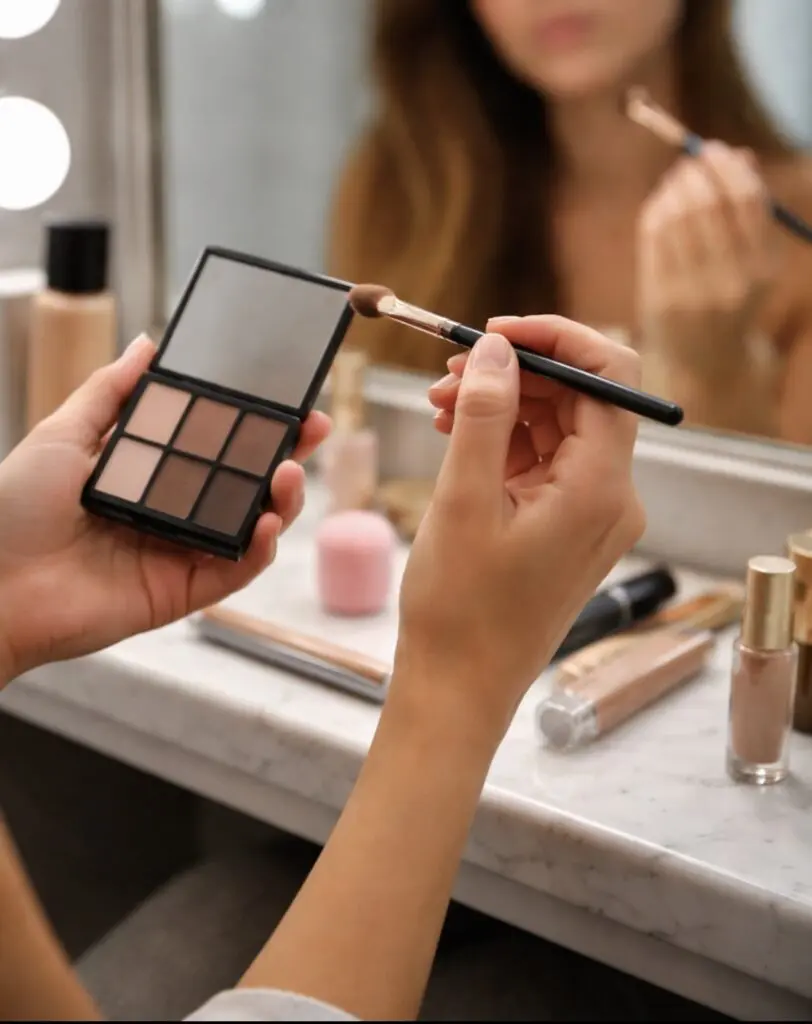
Gestures such as swiping on mascara, blending eyeshadow, and applying lip gloss are no longer private explorations but visible rehearsals for an audience. The mirror reflects not just a face, but the conditions of contemporary beauty culture: calm, composed, and visibly “ready.” These routines are subtle and ordinary: a familiar sequence, a steady pace, a few words shared while getting ready. They offer comfort and structure, both to watch and to perform. What they reveal is less about makeup than about how calm is learned and practiced in public, and how little space is left to be visibly unsure.


