
Words by Natasha Djanogly
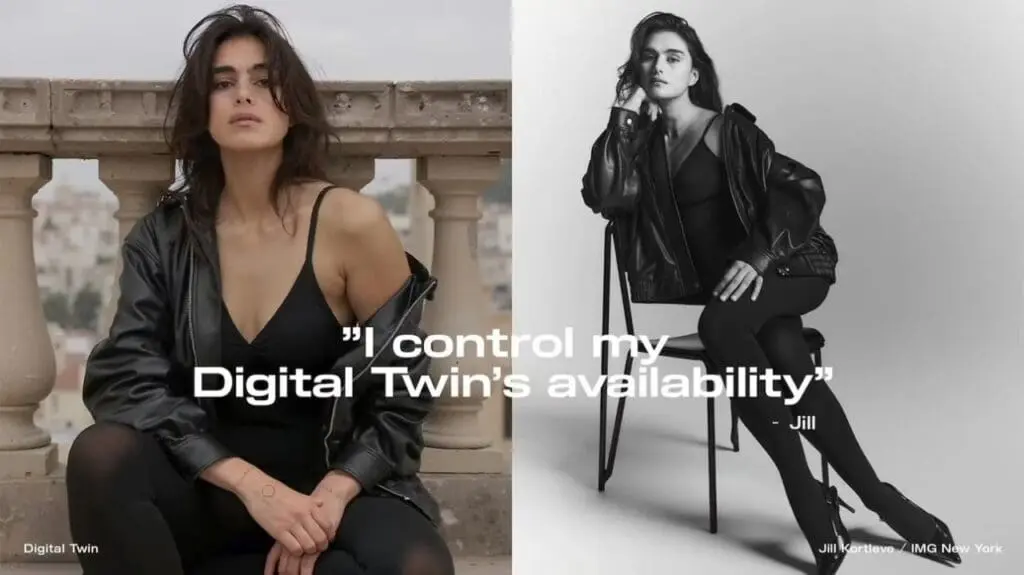
AI isn’t just fixing essays or turning dogs into humans — H&M is using AI to do something weirder. The company now plans to create 30 virtual “twins” of real-life fashion models.
From Bella Hadid kissing digital avatar Miquela in a 2019 Calvin Klein ad to Levi’s 2023 AI-generated models and now H&M’s monumental new proposal, the use of AI has skyrocketed in recent years.
Not only are AI fashion models changing the way brands market their clothes, but they could potentially transform the entire creative industry. The question of whether this is for better or worse has sparked worldwide debate regarding model rights and creative job security, as well as fueling broader concerns about AI and technology ethics. Given the scale and influence of 4,000-store-strong retail giant H&M, their new initiative is leading the conversation.
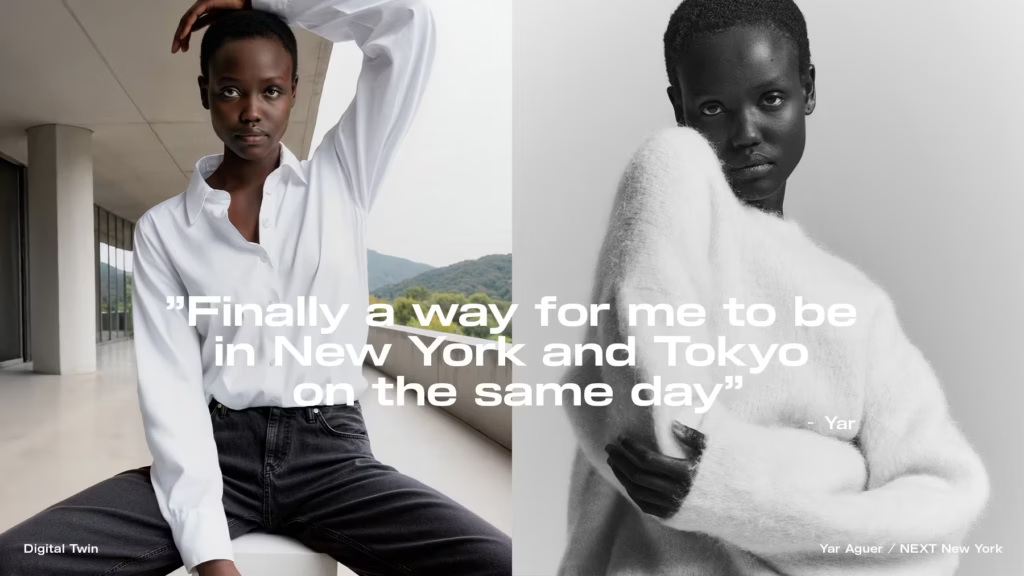
In their self-proclaimed “human-centric” plan, H&M, in partnership with company Uncut, will photograph fully consenting models in various conditions to be then replicated accurately. While not all the details are fine-tuned, models should have complete ownership and rights of their “twin.” Therefore, they can make themselves available to other companies, work multiple jobs simultaneously, and should be paid, as usual, by image use.
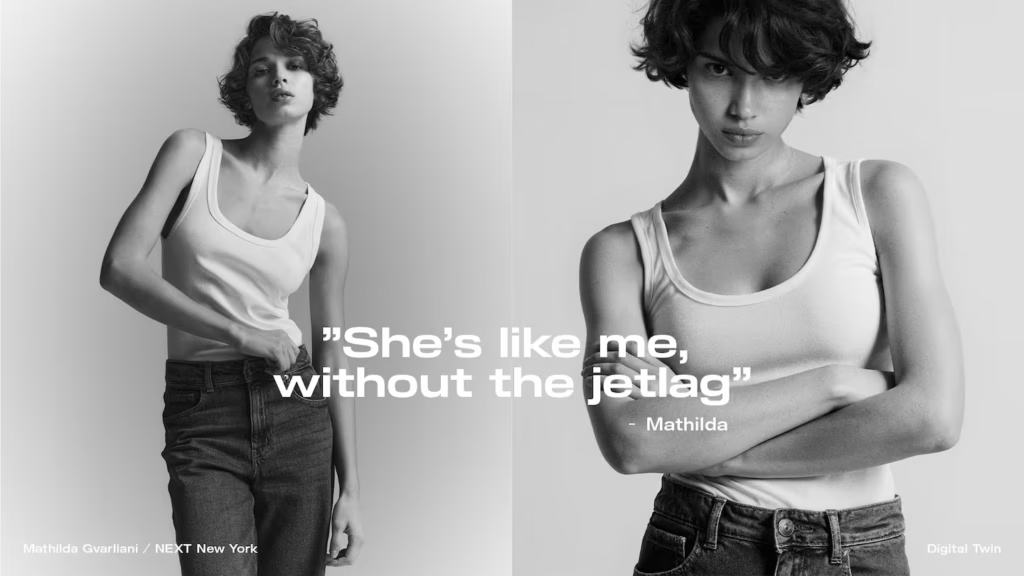
Undoubtedly, there are many arguments that support the use of AI fashion models. Firstly, when it comes to AI “twins,” models could maximise their profit by being in numerous places simultaneously. “She’s like me, without the jetlag,” says Top 50 model Mathilda Gvarliani.
Secondly, AI fashion models could be more cost-effective and eco-friendlier by reducing the need to hire or transport models, crews, and equipment, and by minimising returns. Returns generate 5 billion pounds of waste a year, and as founder of digital model startup LaLaLand.ai Michael Musandu explains, “In theory, if you know what the product looks like on you, when you buy it, you’ll probably keep it instead of returning it.”
This brings us onto inclusivity, another possible benefit of AI. In an industry that favours thinness, whiteness, and being able-bodied, AI fashion models enable brands to effectively portray their clothes on diverse, relatable body types, encouraging the visibility and celebration of all bodies.
However, while using AI fashion models may solve one thing, it promotes a whole host of other issues. For instance, the ecological benefits of reducing transport and waste are undermined by the huge energy consumption of training and running image-generative AI.
Moreover, AI fashion models are also putting into question the future of model careers: how can a real model with a life compete with a constantly available, AI-generated version that can be programmed to look exactly like — and do exactly what — brands want? Or will models with AI twins saturate the market, working multiple jobs simultaneously, blocking other models from work?
Even models with AI replicas face concerns over their “twin” being used non-consensually or without compensation. Fortunately, the Model Alliance Fashion Workers Act in New York, taking effect in June, is expected to protect models from AI threats by requiring written and detailed consent when creating or using a digital replica.
It’s not just models; the entire creative industry could feel the impact. Reducing photoshoots threatens the careers of crew behind shoots. Bectu, the union for the creative industry, found that 54% of its workers believed AI would negatively impact the industry. Sara Ziff, director of Model Alliance, has also been vocal regarding H&M:
“In an industry that has historically been a backwater for workers’ rights, H&M’s new initiative raises critical questions about consent and compensation and has the potential to replace a host of fashion workers — including make-up artists, hair stylists, and other creative artists in our community.”
AI models also pose a risk to brands. From Alex Consani making hilarious TikTok videos and promoting trans visibility to Nara Smith sharing her aesthetic recipes, the world’s most successful supermodels come with a story; they are entertaining, charismatic, and human. Though hyper-realistic, these AI models — watermarked with an AI label in H&M’s case — are missing this alluring and relatable human essence, potentially limiting customer connection and sales. This process of modelling clothes also loses, as Hugo Boss model James Yates puts it, “any creative individuality or the moments in between which are the true sparks in fashion.”
Amongst the long list of concerns surrounding AI fashion models, the most concerning is its potential to camouflage and perpetuate marginalisation, discrimination, and inequality. For example, in 2023 Levi’s announced they would use AI-generated models to represent their products on diverse bodies, causing uproar. It was interpreted as a lazy and regressive attempt to avoid paying global majority or plus-size models, and as a sort of “digital blackface.”
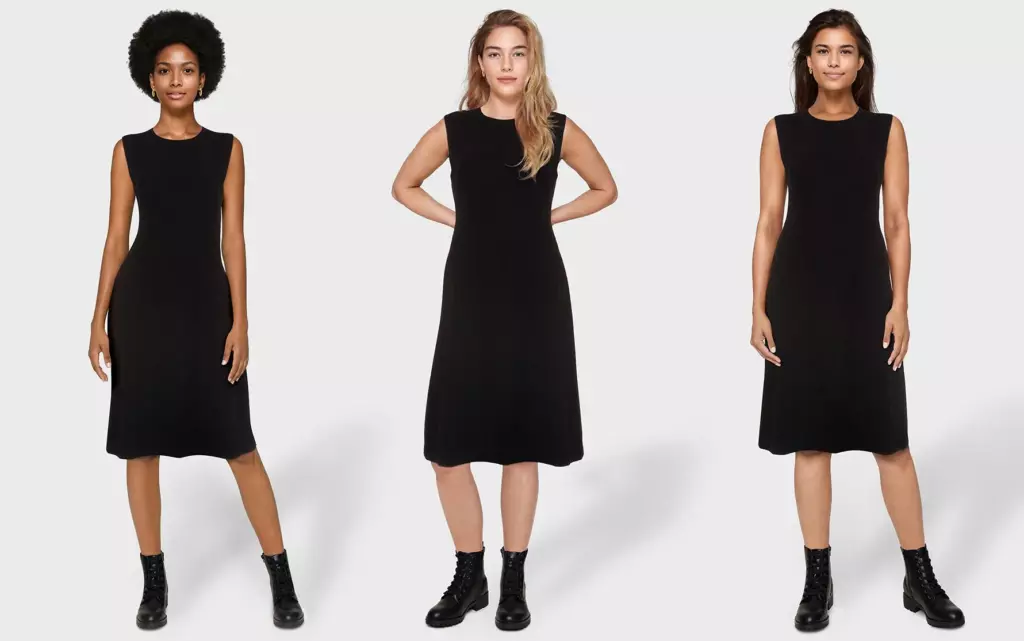
Notably, Levi’s apologised and emphasised that they wouldn’t reduce live shoots, but this incident shone a light on the industry’s performativity and tokenism.
AI is often used as a shortcut to an inclusive and ethical fashion industry. However, marginalisation, prejudice, and inequality are so deeply ingrained that they must be actively, comprehensively, and aggressively worked on with systematic change — not only brushed over with a quick prompt or a fake “diverse” model.
Trailblazing British model Kai-Isaiah Jamal addressed this in a powerful statement:
“I question who is making these images. Is this just another way for white, cis, straight men to push their desire once more? Until we are at a state in which models from all identities, backgrounds, races and sizes and presentation can be booked, then our focus is in the wrong place. Not hiring a dark-skinned Black model or a curve girl but ‘creating one’ poses many questions about the performative truth of our industry.”
It’s not just the masking of social issues; AI models actively engage in these injustices, for example with algorithmic bias. AI has absorbed racist ideals and stereotypes and is now reinforcing them. For example, Taiwanese American model Shereen Wu sparked outrage on social media when she shared that an image of her on designer Michael Costello’s runway was altered to make her appear white — something she described as “very dehumanising.”
Susan Scafidi, academic director of Fordham’s Fashion Law Institute, explains the shocking reality:
“The modified image of Shereen spotlights the possibility that an AI program that has absorbed mainstream beauty preferences may erase the race of a model altogether, turning back the clock on the fashion industry’s progress toward diversity on the runway.”
Now that companies can increasingly use AI to easily represent what Western society generally deems “attractive,” will models become even more youthful, thin, or white, reinforcing these oppressive beauty standards?
Clearly, if applied carelessly or abused, the use of AI models could be harmful. However, AI is everywhere and something that fashion must face. Given that AI is so powerful and accessible — and that fashion is so influential — AI’s incorporation is a huge responsibility and must be especially thoughtful and controlled. Brands, creative workers, consumers, and decision-makers must come together and fight for strict, adapted regulation and ethical consideration around AI that protects model rights and creative careers, and limits prejudicial human representation.
Certain industry members are leaning in the right direction, for instance with new laws and industry leaders speaking out, however it’s not enough.
It’s now time to choose.
Will we lean into the temptation of this shiny new technology and collapse into a miserable reality dominated by profit margins, soulless algorithms, and discriminatory stereotypes?
Or will we fight for an industry that is bursting with creative collaboration, human expression, and community spirit?


