Interviewed by Valerie Aitova
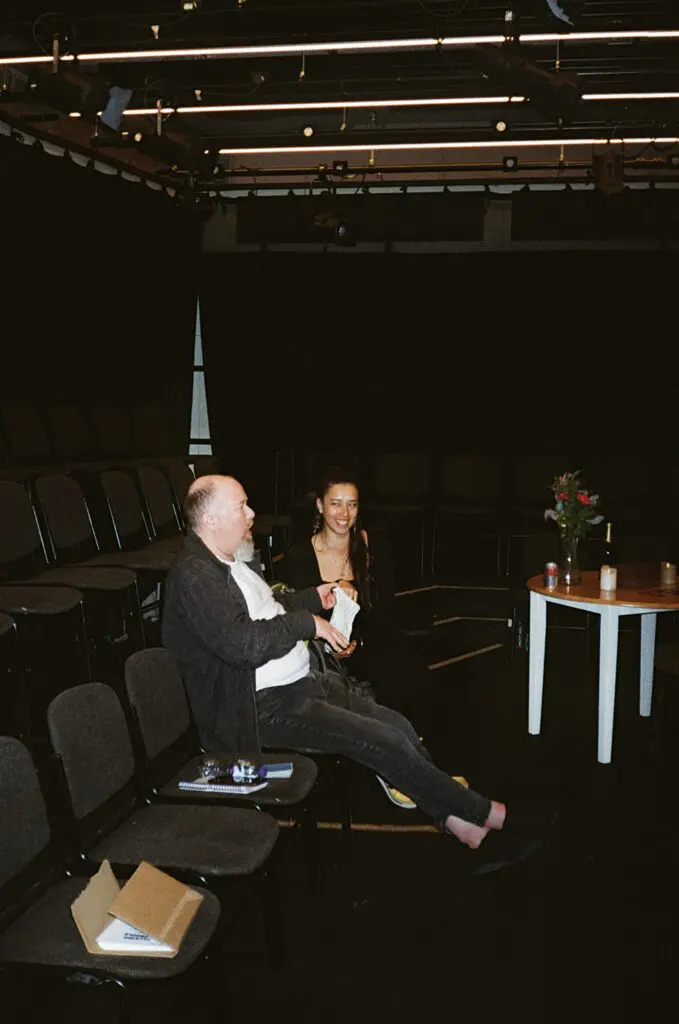
There is a particular kind of focus in a room when no one knows what will happen next. Not anticipation in the theatrical sense, no expectation of a rehearsed moment arriving on cue, but something quieter and more exposed. A shared understanding that whatever unfolds will exist only here, only now, and only between the people present.
This is the atmosphere that defines Talking People. Built around presence and performance, it resists spectacle in favour of something more demanding: attention. The actors arrive without a script, working within a clear improvisational framework; the audience arrives to watch trained performers listen, respond, and build together as the story unfolds in real time.
At a time when so much cultural production is endlessly replayed, refined, and archived, Talking People operates on an opposing logic. It asks what storytelling might look like if it were allowed to remain temporary, and what that impermanence makes possible.
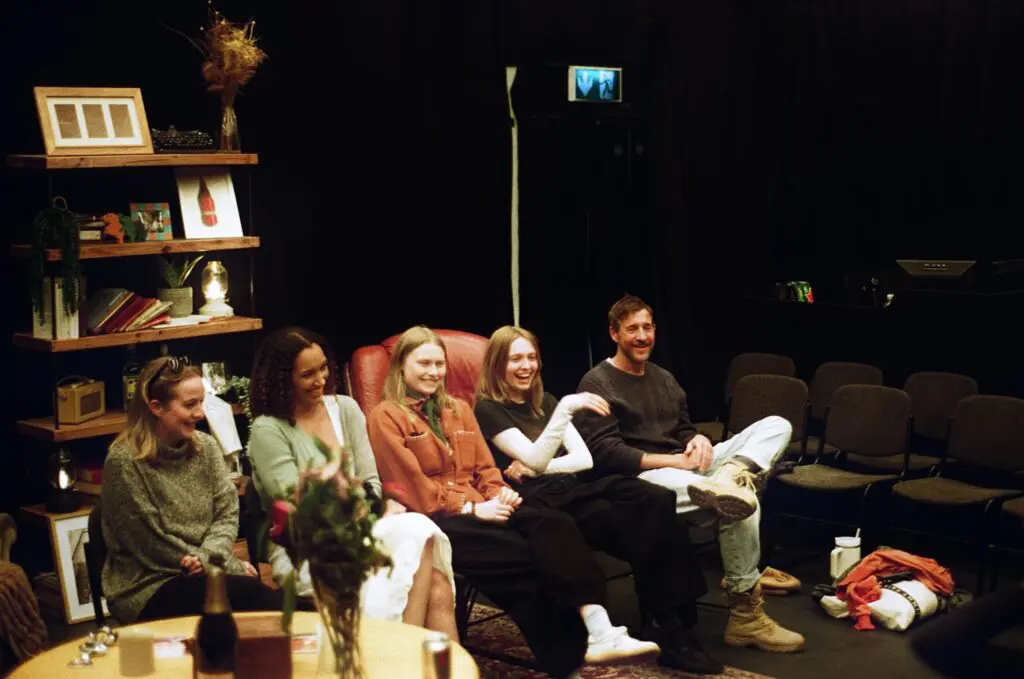
The project grew out of The Sessions, an underground workshop space created for actors to work without the pressures that usually define their industry. For producer Elina Saleh Franck, the impulse came from noticing how much of an actor’s life is shaped by survival: auditions, contracts, the constant calculation of what comes next. She speaks about an industry that often leaves little room for curiosity or risk, where work becomes about endurance rather than expression. Over time, that way of working can pull performers away from the reason they began acting in the first place.
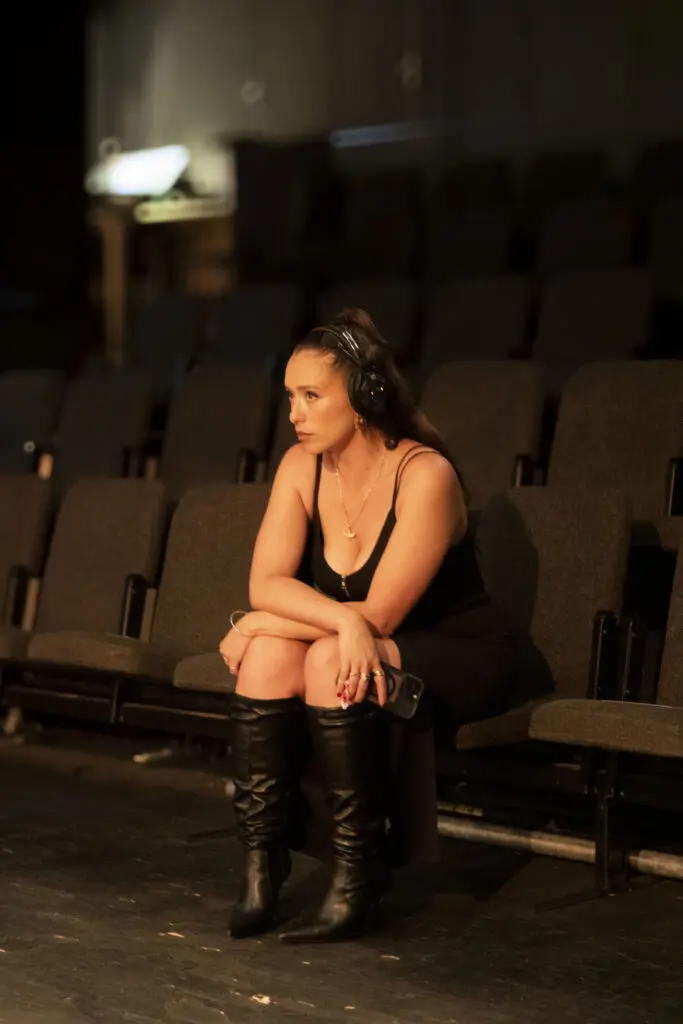
When that pressure was removed, something shifted. The work became more immediate, more alive. Connections between actors formed quickly, without hierarchy or competition. Diversity, of background, training, and lived experience became central to how the work functioned, not as representation, but as creative necessity. For Elina, this diversity is what allows the stories to feel expansive rather than predetermined, shaped by multiple ways of seeing and responding to the world.
Culturally, the timing mattered. In a moment shaped by social, political, and emotional uncertainty, audiences have grown increasingly drawn to experiences that feel genuinely alive – not just happening in real time, but capable of holding real feeling. Talking People meets that desire by asking audiences to sit with uncertainty rather than resolve it.
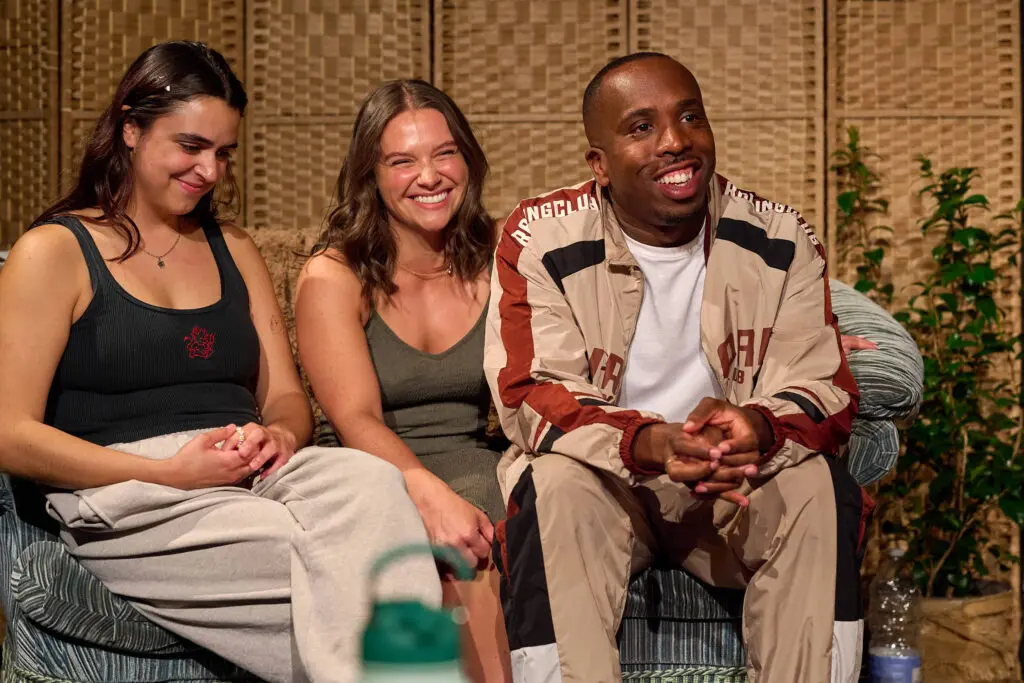
Improvisation, however, often arrives with assumptions: comedy, speed, the safety of laughter. Talking People deliberately refuses that framing – its improvisation is non-comedic by design, rooted instead in character, emotional truth, and human behaviour. That doesn’t mean humour is absent; moments of lightness and comedy emerge organically, in the same way they do in real life.
In a performance landscape shaped by polish and predictability, improvisation becomes a way of returning to risk – a reminder that performance is not about control, but responsiveness.
The structure itself is quietly destabilising. The first act opens with a live Q&A, where the audience contributes fragments that help shape the characters before the narrative begins. This is not participation designed to perform engagement, nor to embarrass or expose anyone, as is often the case with audience interaction. Instead, it reframes the audience as part of the architecture of the story – a way of creating connection rather than spectacle, reminding us that storytelling is something constructed collectively, not delivered.
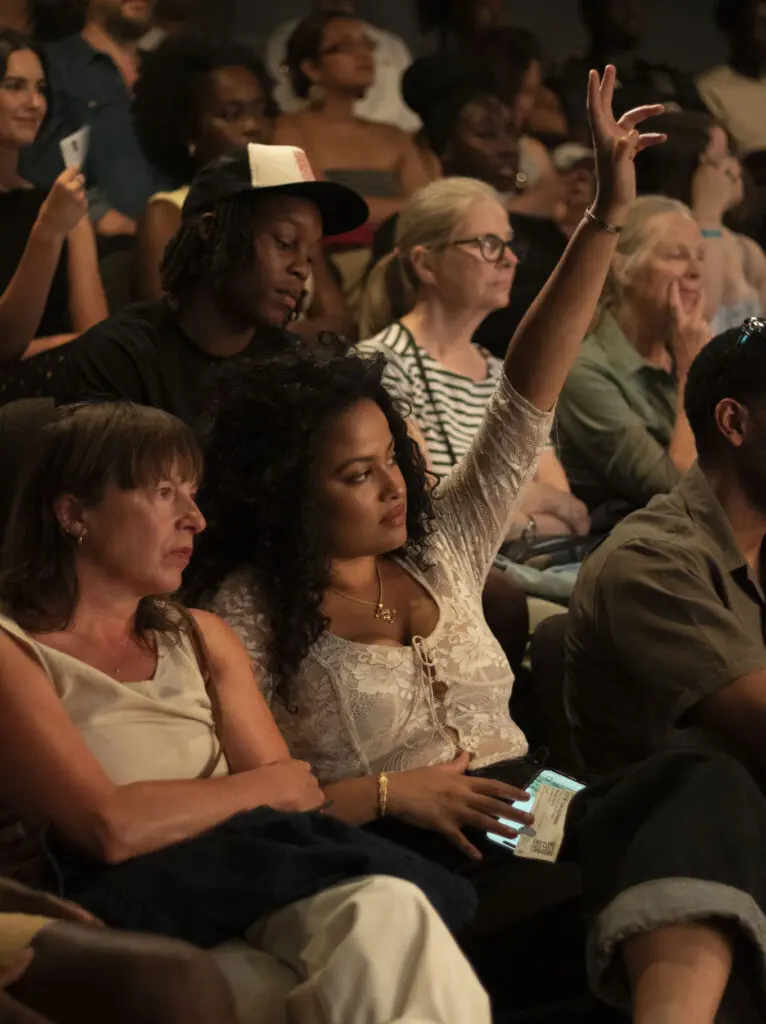
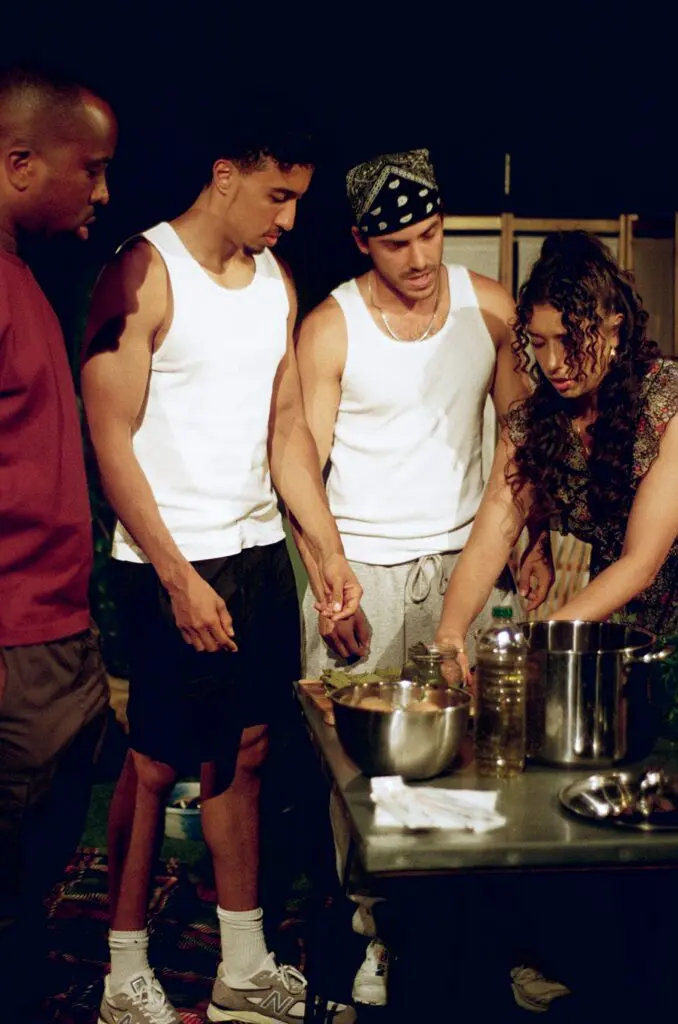
This structure was developed by director Richard Vincent, whose role extends far beyond facilitation. His improvisational system treats spontaneity not as chaos, but as craft. Vincent developed the form as a disciplined framework that allows freedom to exist without collapse, demanding listening, precision, and sustained attention. It is this balance, freedom held within form, that keeps the work emotionally rigorous rather than uncontrolled.
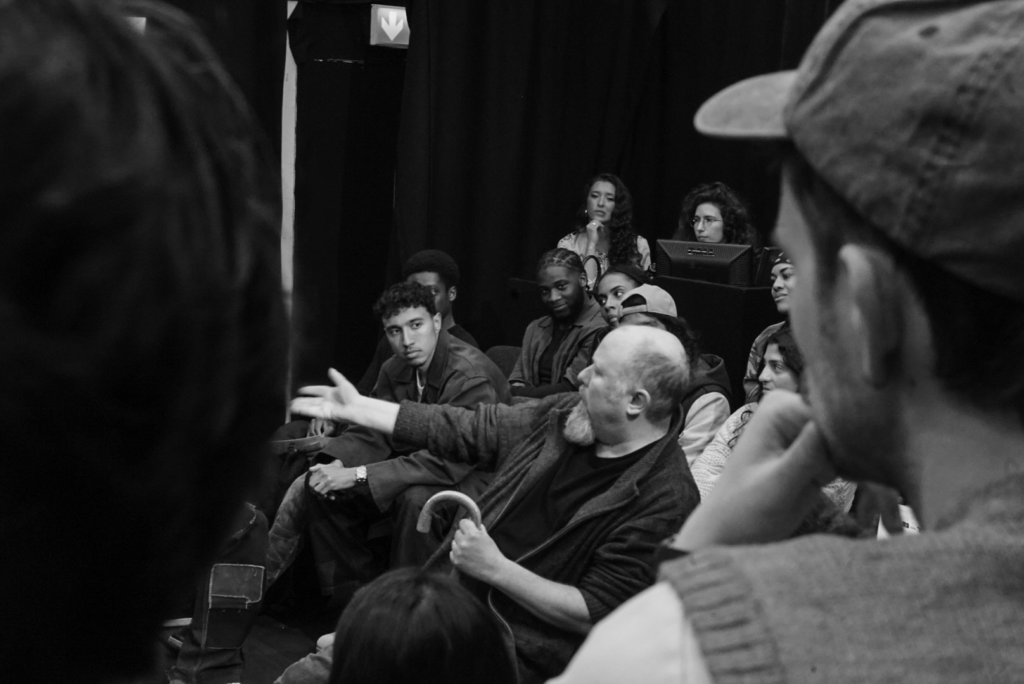
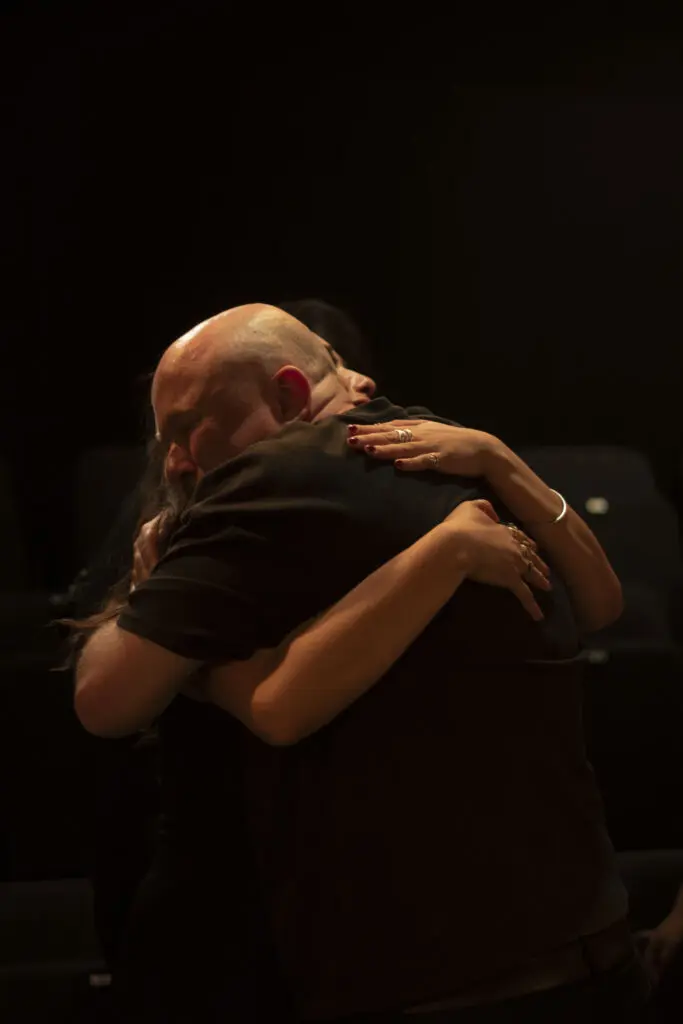
For the actors, working inside that structure is both exposing and expansive. Jonathan Ajayi recalls a moment during a performance when a scene that began around family dynamics gradually shifted into grief, unfolding in a way that demanded complete emotional presence. Without a script to return to, the moment relied on instinct rather than planning, creating space for something unexpectedly honest to surface.
Aliyah Odoffin describes a contrasting moment of emotional whiplash: a proposal unfolding on stage, quickly followed by betrayal. Joy gave way to distance within minutes, neither turn planned nor anticipated. For her, improvisation sharpens an actor’s ability to remain present rather than protected – listening so closely that the body responds before the mind has time to intervene.
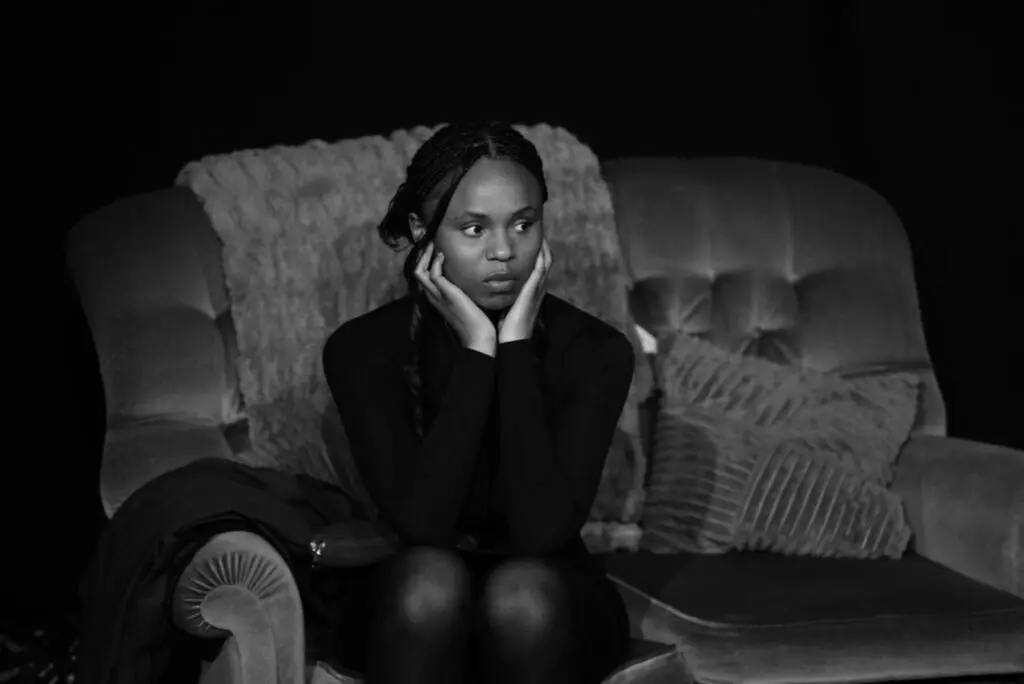
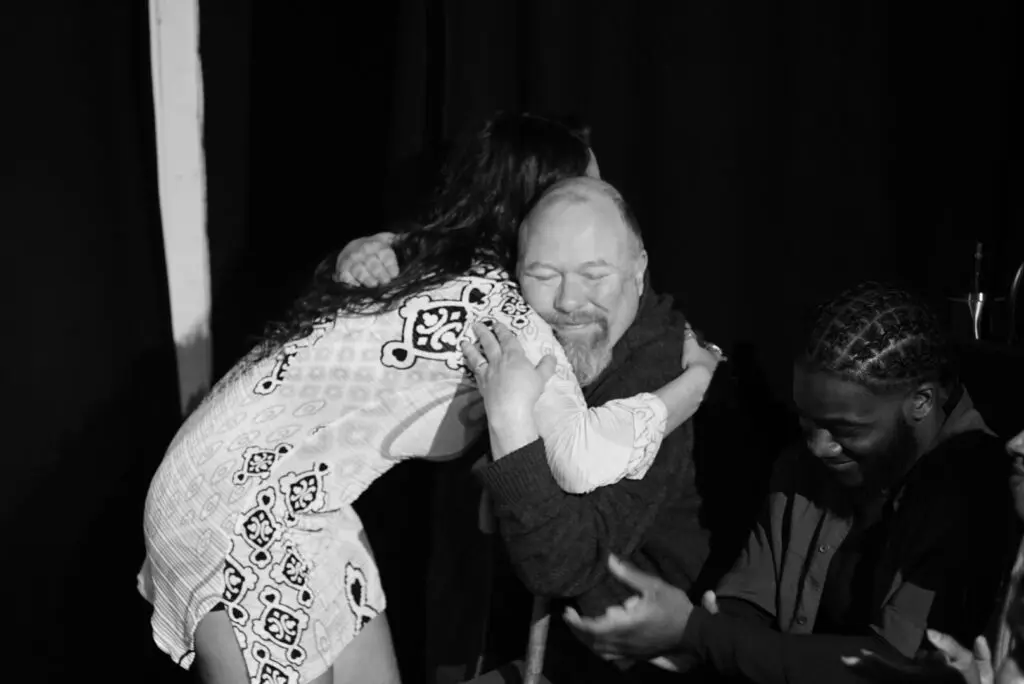
Each performance exists once, and only once. There is no definitive version, no repetition to return to. Each performance happens only once, and that one-time nature gives the work its intensity – a shared moment that can never be recreated. Knowing a story will never be replayed sharpens attention for everyone in the room.
What distinguishes Talking People is not only its format, but the ecosystem it sustains. A consistent community of actors working within the same unscripted structure develops a shared language of trust, risk, and attentiveness over time. There is currently no other space quite like it – one that treats improvisation as a serious mode of authorship, capable of pushing the boundaries of how stories are created and experiences on stage.
Looking ahead, Talking People continues to grow carefully. New casts, new spaces, and early television development are beginning to take shape, but the motivation remains rooted in enjoyment and connection. As both Elina and Richard return to repeatedly: what is the point of making work if it isn’t rooted in joy and excitement? That belief underpins the desire to take the project beyond London – to share this way of working internationally, without losing the intimacy that defines it.
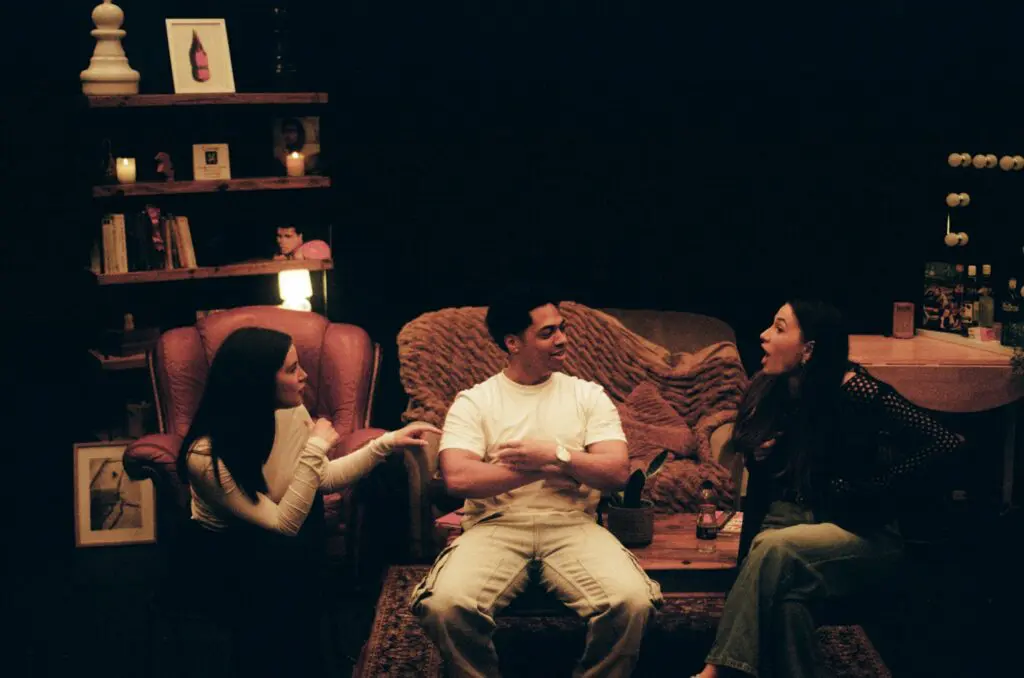
The next performance, taking place on February 16 at Underbelly Boulevard in Soho, is another iteration of that ongoing experiment – a reminder that no two versions of the work are ever the same.
What Talking People ultimately offers is not an argument against scripted theatre, but a recalibration of what performance can be. And that some of the most meaningful stories are the ones that exist only once, shared between strangers, then carried quietly away.