
Interviewed by Valerie Aitova
Long before cross-market careers became an industry talking point, Carson Allen was already living one. An American actress based between Seoul and Los Angeles, her work has unfolded within Korean film and television as much as within Western systems – quietly challenging the idea that creative legitimacy must begin in one place.
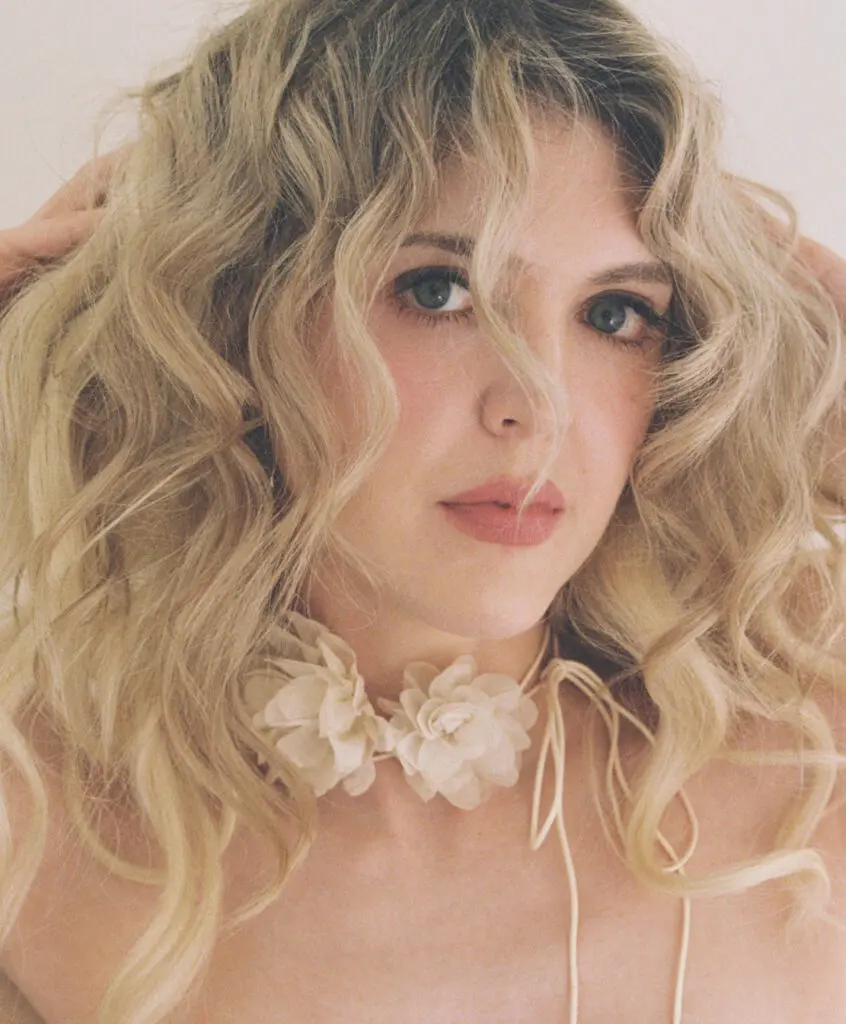
Rather than following a conventional Hollywood trajectory, Carson built her foundation within the Korean entertainment industry – a decision that shaped her creative instincts early on. She doesn’t describe her career as something carefully mapped out, but as a process guided by intuition and curiosity rather than expectation.
“Starting my career outside of Hollywood shaped me creatively in a way that naturally draws me toward the unconventional”, she says. “It challenged many of the industry ‘rules’ people are told early on in their careers, and because of that, I now find it difficult to believe in the idea of the impossible”.
“Beginning my career in Korea taught me to trust my instincts and to see creativity not as something fixed, but as something that grows through risk and curiosity”, she adds.
What that choice gave her wasn’t just opportunity, but freedom – the freedom to move without waiting for permission. “Creatively speaking, that has given me the freedom to keep pushing boundaries and to approach my career in ways that aren’t always obvious or even, at times, recommended”.
“I hope I never lose sight of that sense of fearlessness as I continue to evolve as an artist”, she says.
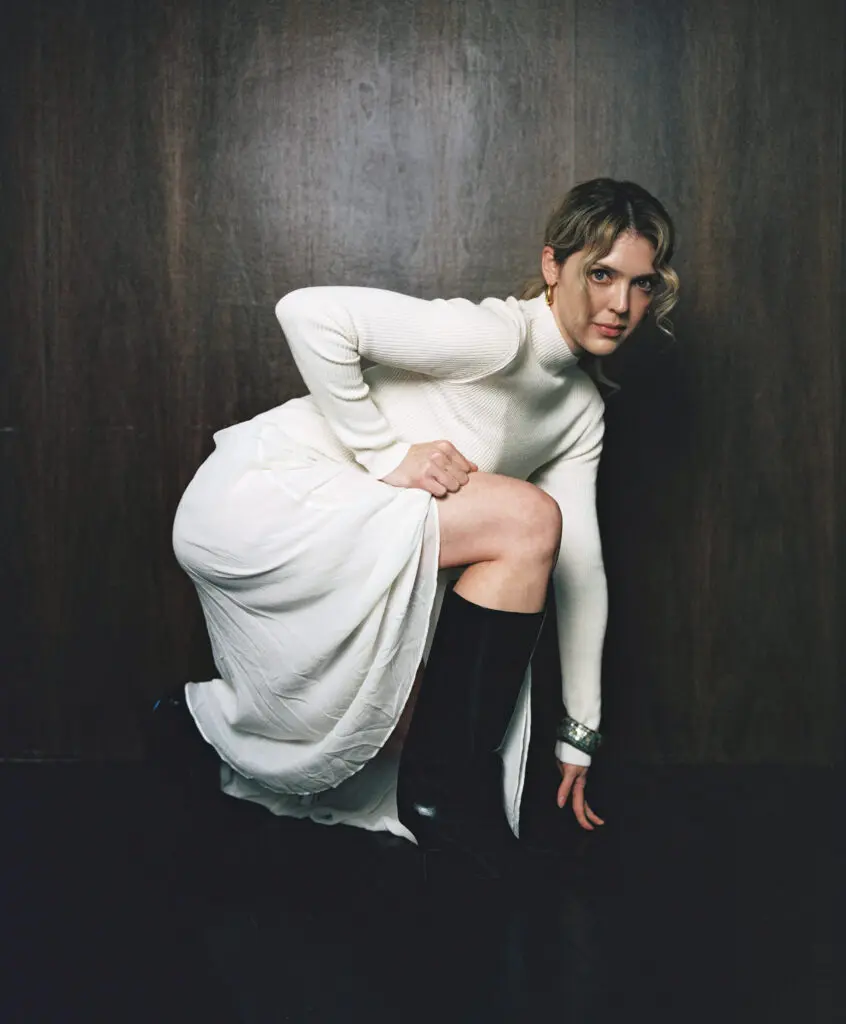
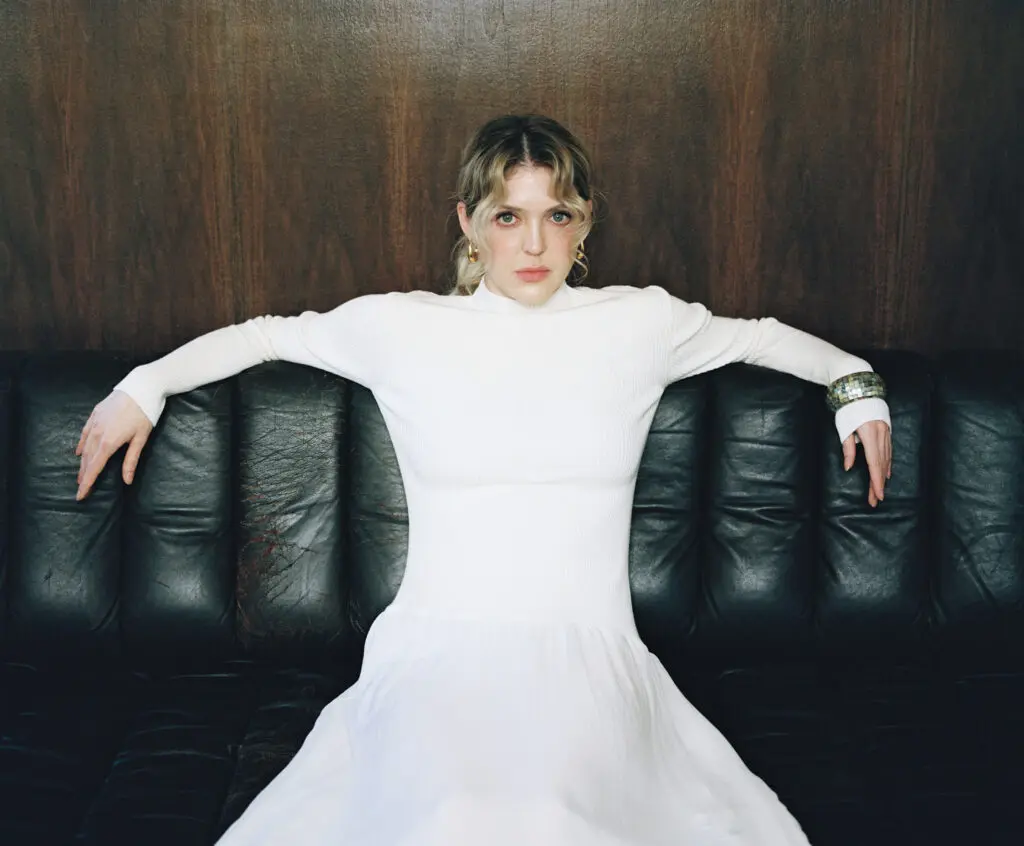
While the path may appear fearless from the outside, Carson is quick to note the internal work it demanded. “It pushed me to question how to stay grounded while constantly moving forward”, she says. Creativity, for her, became something fluid rather than fixed – shaped through risk, curiosity, and motion rather than certainty.
Much of that understanding was refined through Korean storytelling itself, where restraint carries as much weight as expression. “Korean is a language built on nuance”, she explains. “Where so much meaning can be conveyed with very few words”.
“A single glance or a moment of stillness can carry enormous emotional weight”, she says – one of the reasons Korean cinema feels quietly captivating and deeply resonant to her.

Her training within Korean acting academies reinforced this philosophy. Many actors begin with heightened theatricality – “large movements, strong vocalization, and heightened emotions”. Paradoxically, it’s through that expansiveness that control is found. “Restraint doesn’t come from suppression”, she says, “but from understanding emotion so fully that you can express it with the smallest, most honest gesture”.
Today, Carson moves between Seoul and Los Angeles: two industries with distinct rhythms and expectations. “Working between Hollywood and Korea is always a culture shock”, she says, “but it’s a life I wouldn’t trade for anything”.
Several Hollywood projects she’s involved in are now being filmed in Seoul, creating moments of overlap between both systems. “In those moments, what shifts most for me is my awareness – of the people, the energy, and the unspoken dynamics at play”, she says.
“On set, empathy, trust, and communication are just as important as performance”.
Working across cultures, however, hasn’t been without friction. Being misunderstood, Carson admits, is one of her biggest fears. “In Korea especially, there are many unspoken rules around hierarchy and communication. I’ve often worried about making mistakes in how I address people” she says. Even language carries unexpected weight. Titles, formality, and cultural nuance demand care – not out of fear, but respect.
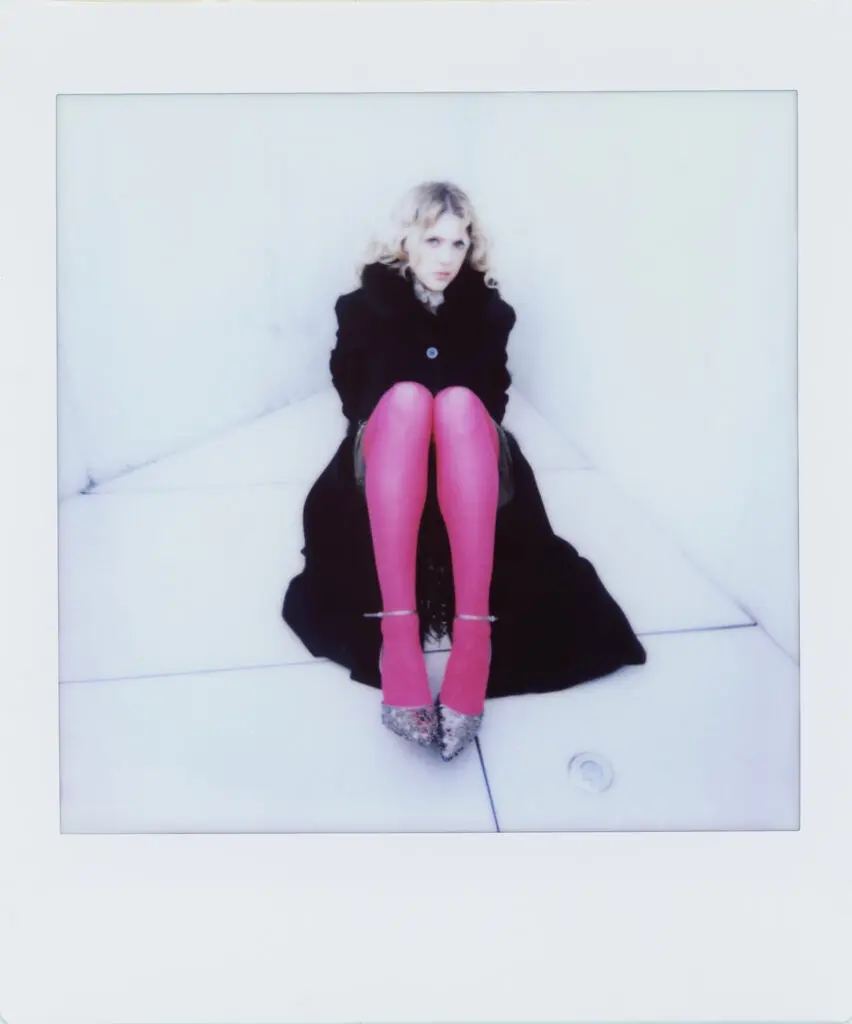
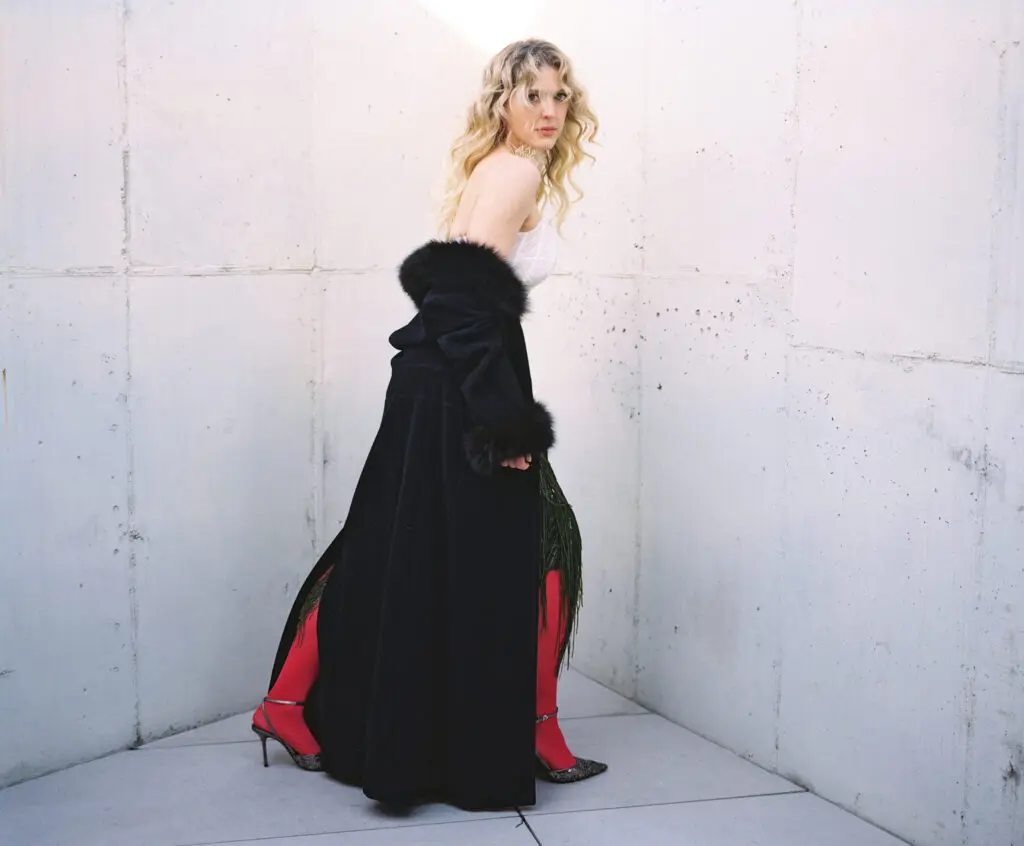
In contrast, Hollywood often feels more relaxed creatively, with flatter hierarchies and informal collaboration. Rather than choosing one system over the other, Carson has learned to value both – the openness of one and the structure of the other, understanding that each shapes creativity differently.
Being bilingual and culturally fluid also comes with a persistent sense of in-betweenness. Having grown up outside of the U.S. for much of her life, belonging has rarely felt singular. “I’ve often carried the feeling of never fully belonging anywhere”, she says. “While I’m made up of little parts from all the places I’ve lived, that’s different from feeling like you’re truly from one place”. Over time, she’s learned to see that duality as balance rather than division. “Staying connected to both cultures gives me a broader perspective”, she says.

Her breakthrough role in Netflix Korea’s So Not Worth It introduced her to a global audience through a Korean lens. “What made it special was how closely it reflected my real life in Korea”, she says. “That authenticity is why it resonated with such a wide global audience”. The series followed young foreigners building lives in Korea, connecting with viewers already there, as well as those who dreamed of creating a life of their own.
“I’m honored to have been part of a platform that created such meaningful cultural impact”.
Streaming platforms, she notes, have reshaped what a sustainable acting career looks like. “Geography is no longer the barrier it once was”, she says. “Actors can now reach worldwide audiences through projects made anywhere in the world”. But with that reach comes responsibility – adaptability, cultural awareness, and openness to different creative systems. “This shift opens exciting possibilities not just for actors, but for storytelling as a whole”, she reflects.
Away from set, Carson’s sense of home is something she builds deliberately. “Home was never about a specific location”, she says. “It’s about how you shape your surroundings”. Routine plays a grounding role. “Routines give me stability even when I’m constantly moving”, she adds. “In that way, a little bit of home is always with me”.
When uncertainty arises, she returns to fundamentals. The Meisner technique, which shaped her earliest training, remains her anchor. “When in doubt, just listen and react to your scene partner. It removes the pressure of trying to get it right and allows me to trust the moment”, she says.
“Confidence comes from knowledge”, she says. “Acting deserves the same discipline and respect as any profession”.
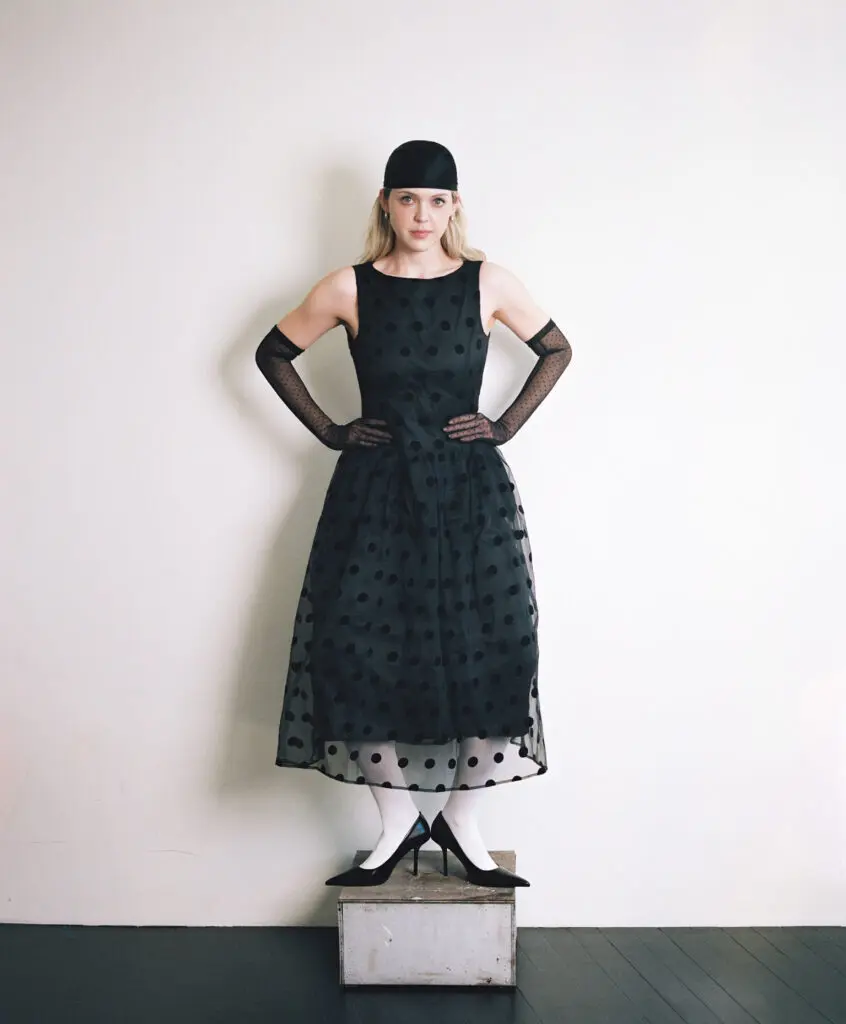
Looking ahead, Carson finds herself drawn back to the genres that first shaped her relationship with Korean storytelling. “I would love to be part of a classic Korean romantic comedy”, she admits. “There’s something timeless about watching two people slowly fall for each other”, she adds, especially when warmth and emotional depth coexist. She also hopes to see more narratives reflecting cross-cultural realities. “As Korea becomes more multicultural, it feels natural for film and television to reflect that reality”, she says
Reflecting on her younger self, Carson speaks with clarity. She remembers the early fixation on appearance and the pressure of beauty standards. “I would warn her about the many voices that will comment on her appearance and remind her not to let that noise distract her from what truly matters – the work”.
“Those fears didn’t end up defining my path”, she adds.
As her career continues to expand, Carson now enters a new phase. Following her breakthrough in So Not Worth It, she is set to appear in Disney+’s upcoming series Armorsaurs, premiering globally on February 18, 2026.
Rather than a departure, it feels like a continuation – another step along a path shaped across cultures, languages, and creative systems.

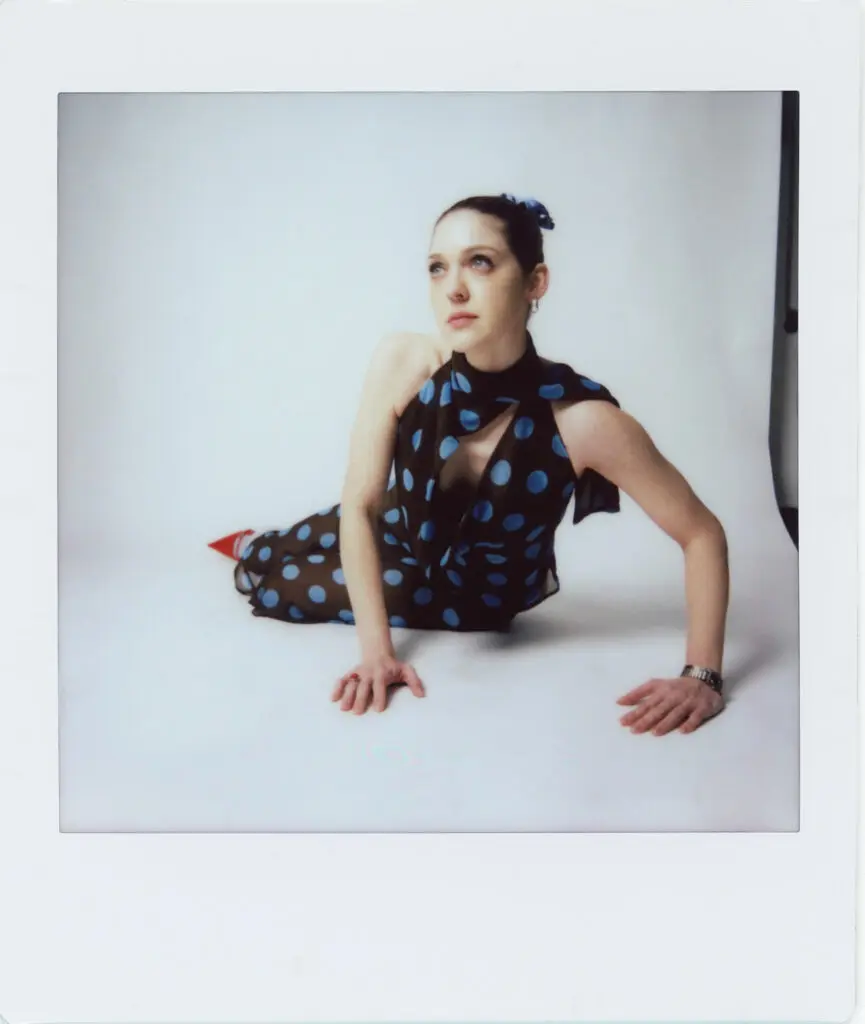
HYGY’s question, Have You Got Yours?, lands naturally within her philosophy.
“If there’s ‘yours’ people discover through my work”, she says, “I hope it’s the courage to trust their instincts and follow their hearts”.
“Paths evolve, industries change, and dreams take unexpected shapes”, she reflects. “When I first began my acting career in Korea almost a decade ago, many people questioned that decision and encouraged a more traditional Hollywood route”.
“Watching Korean film and television grow into the global force it is today has reinforced what I’ve always believed”, she adds. “The future is impossible to predict, and insisting on only one path can limit what’s possible”.
“If you can wake up genuinely loving what you do”, she says, “then you’ve already found something meaningful”.