
Words by Valerie Aitova
Every December comes with its own quiet rituals. You wait for Spotify Wrapped to tell you what you already suspected about your year, you put up the Christmas tree, you start thinking about what stays and what doesn’t. And somewhere in that end-of-year pause, there’s another reveal people scroll through almost absent-mindedly: Pinterest’s annual prediction report.
Unlike trend cycles that announce themselves loudly, Pinterest’s forecasts tend to arrive quietly, pulled from what people save rather than what they perform. Long before something appears on a runway or reaches TikTok saturation, it’s pinned, archived, and held for later. Nothing about it feels rushed – it feels planned.
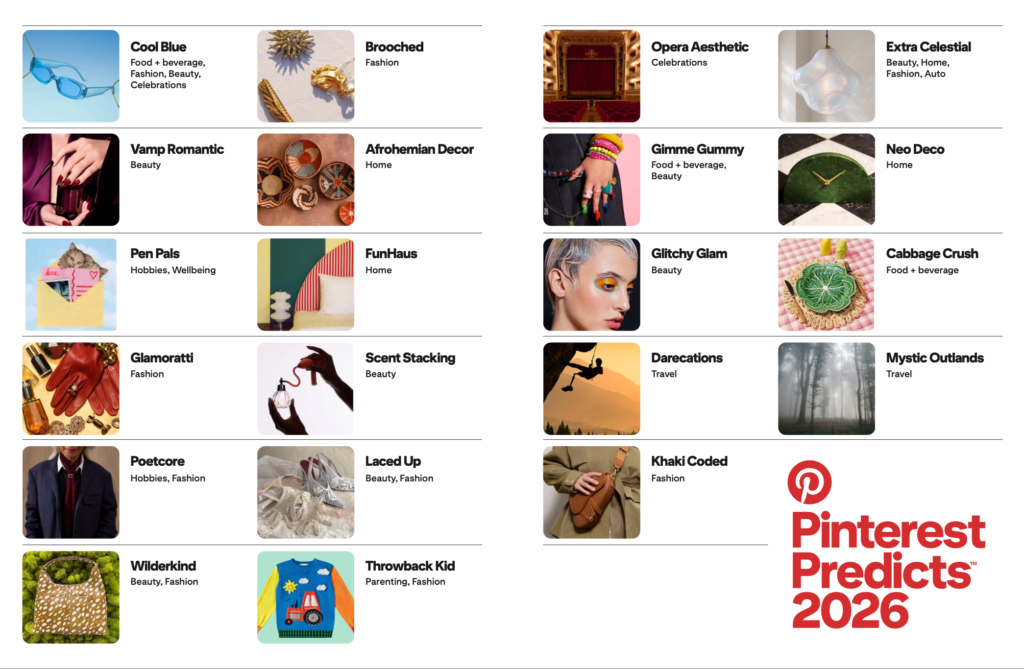
This slow-burn quality is also why Pinterest’s forecasts tend to age well. Many of the aesthetics that later feel suddenly “everywhere” – from the return of quiet luxury to the soft romanticism of coquette imagery – spent months, sometimes years, circulating on Pinterest boards before reaching runways or social media saturation. Long before they were named, they were being collected: silhouettes saved, colour palettes grouped, references pinned without explanation. In that sense, Pinterest doesn’t so much invent trends as give them space to form: quietly, collectively, and without the pressure to perform.
The 2026 edition feels less like a checklist of trends and more like a reading of the room. Across beauty, fashion, interiors, travel, and celebration, the same mood keeps surfacing – cooler, slower, more composed.
The future, as it’s sketched here, doesn’t announce itself. It shows up gloved and slightly frost-tinted, held together with brooches and lace. There’s drama, but it’s disciplined rather than chaotic – ornamental, yes, but carefully kept in place.
What people save before they speak often reveals more than what they perform publicly. In that sense, the 2026 forecast from Pinterest feels less predictive than diagnostic. It doesn’t introduce something entirely new; it makes visible what’s already forming quietly in the background.
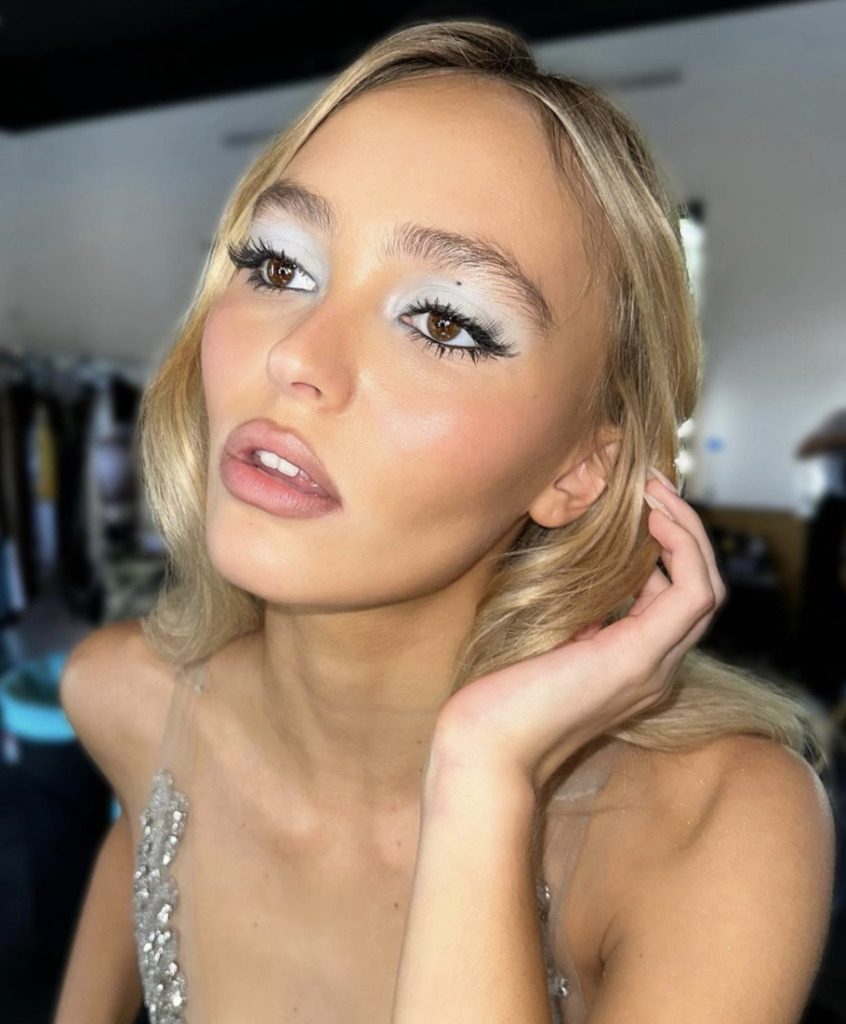
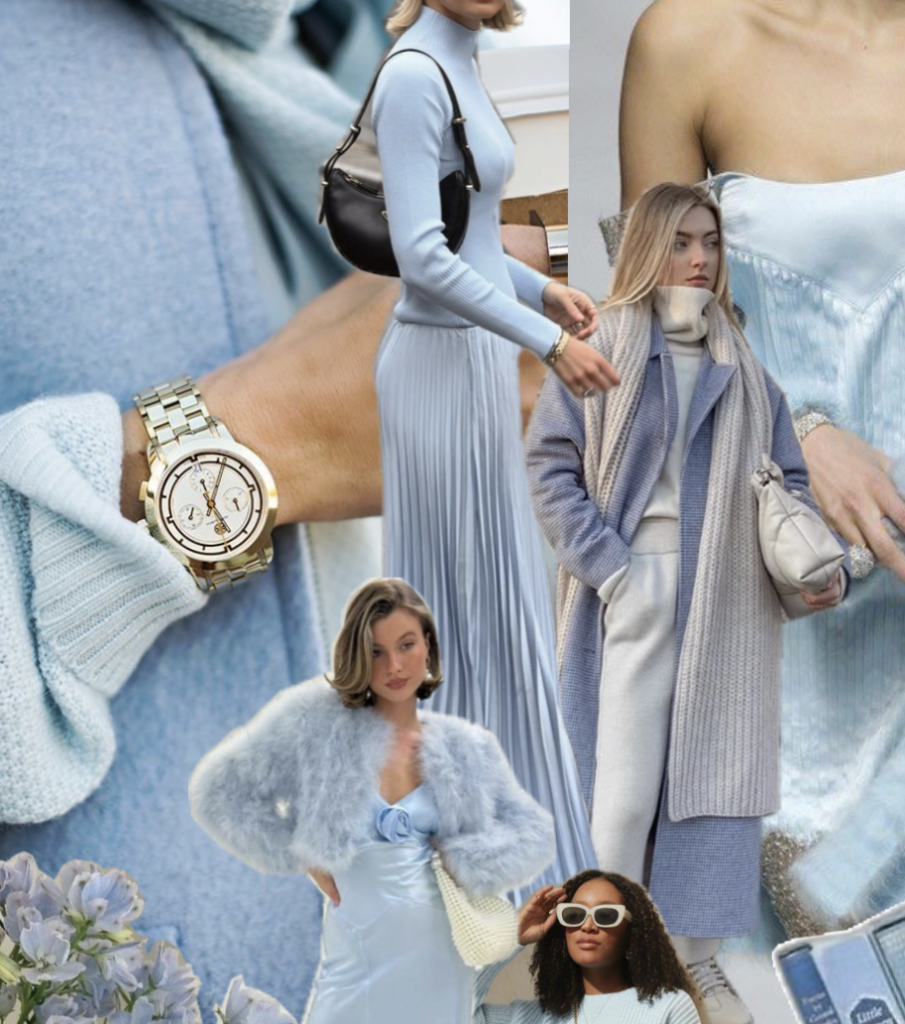
One of the clearest signals is a collective cooling. Icy blues appear again and again – in makeup that looks translucent rather than flushed, in fashion that leans toward glacier tones and pale steel, in wedding imagery that swaps warmth and cream for something more restrained. This isn’t really about colour. It’s about emotional temperature.
Coolness becomes a way of stepping back. A way of holding things at a distance. Beauty, here, doesn’t try to reassure or invite closeness. It can be calm, contained, even slightly untouchable, and that feels intentional.
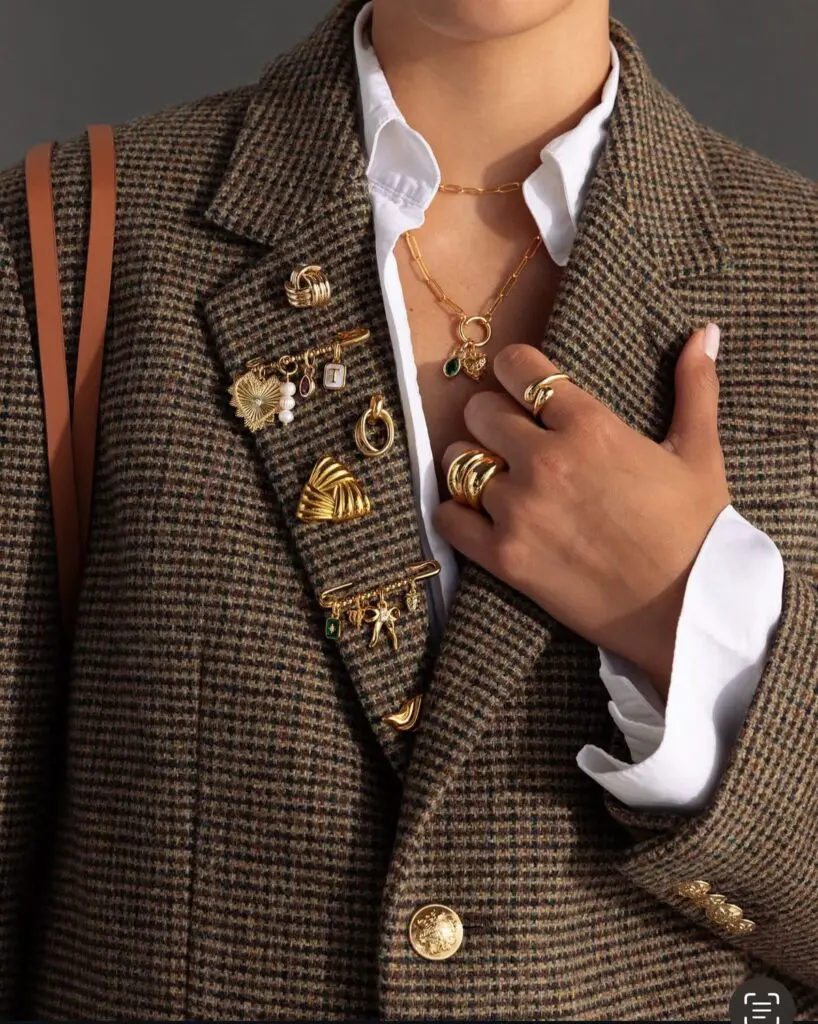
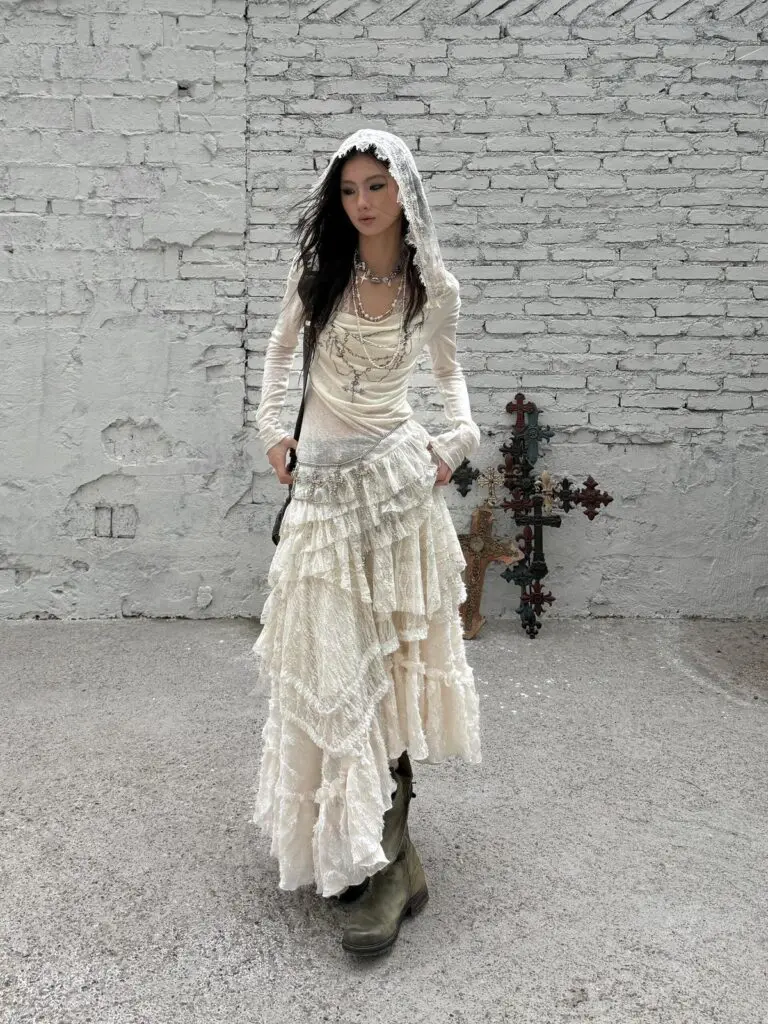
Alongside this cooling comes a renewed interest in detail, but not the kind that overwhelms. Brooches, pins, heirloom jewellery, velvet gloves. Objects that don’t move easily, that fix garments in place rather than letting them drift. They introduce friction. They slow the body down.
There’s something telling about the return of these kinds of accessories. They suggest a desire for boundaries, for structure, for dressing that feels deliberate rather than fluid. Even emotion, in this vision of the future, seems better when it’s organised.
Celebration follows the same logic. Opera aesthetics, draped ceilings, theatrical silhouettes – gatherings imagined less as spontaneous moments and more as carefully staged scenes. The feeling is heightened, but controlled. Expressive, but never messy.
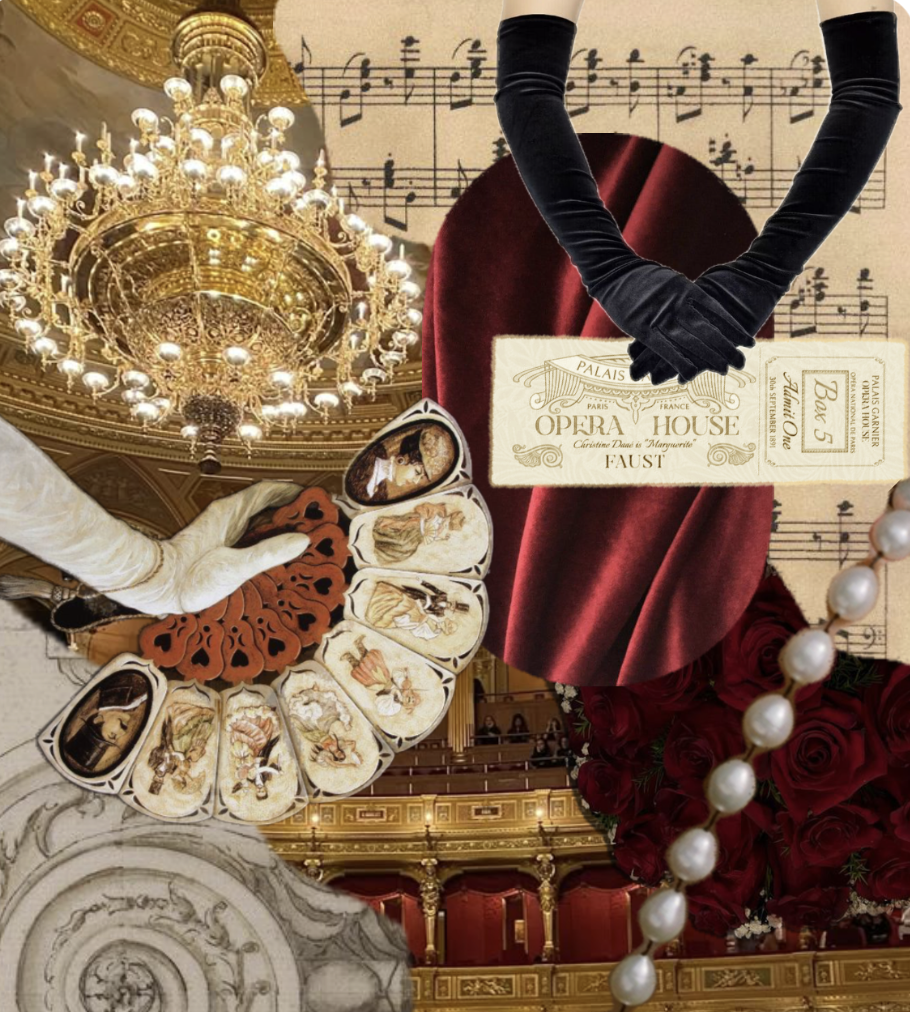
Softness, when it appears, comes with rules. Lace spreads across categories – clothing, accessories, even everyday objects, but it doesn’t feel nostalgic or romantic in the traditional sense. It feels intentional, almost architectural. Something chosen carefully, not inherited.
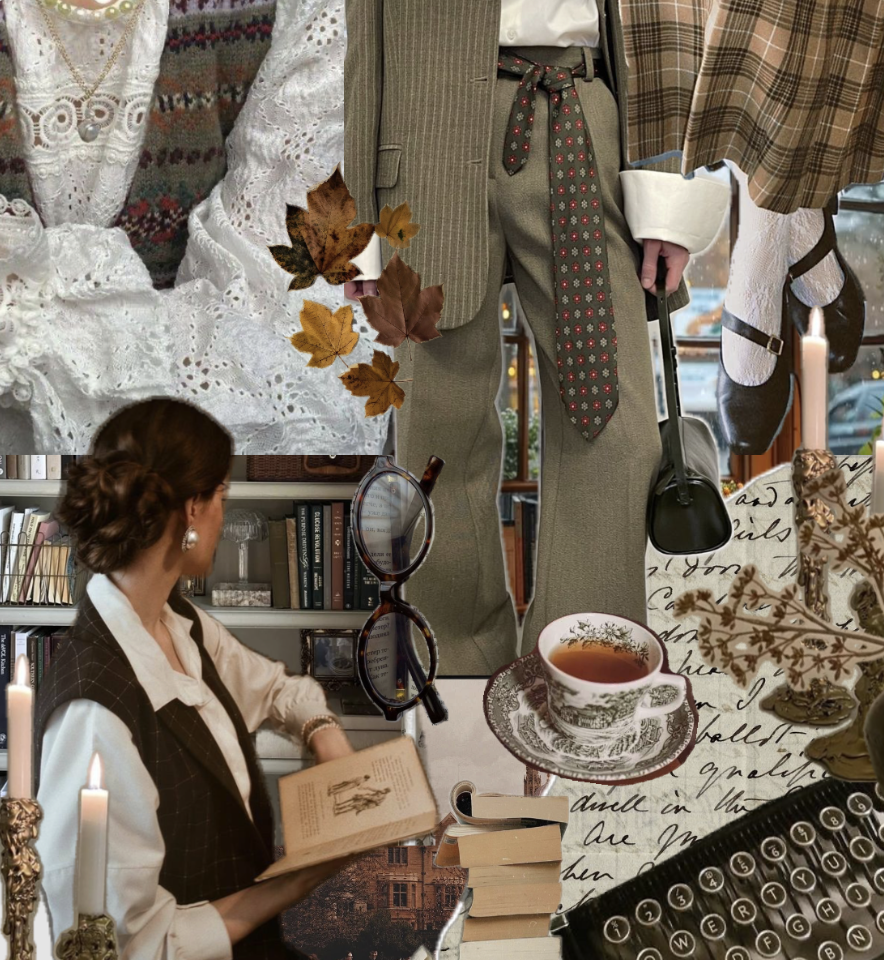
Poet-core sits nearby. Oversized knits, tweed, satchels, fountain pens. A version of identity that turns inward rather than outward. Writing instead of posting. Reading instead of reacting. The appeal isn’t visibility, but authorship – the sense of being in conversation with yourself rather than an audience.
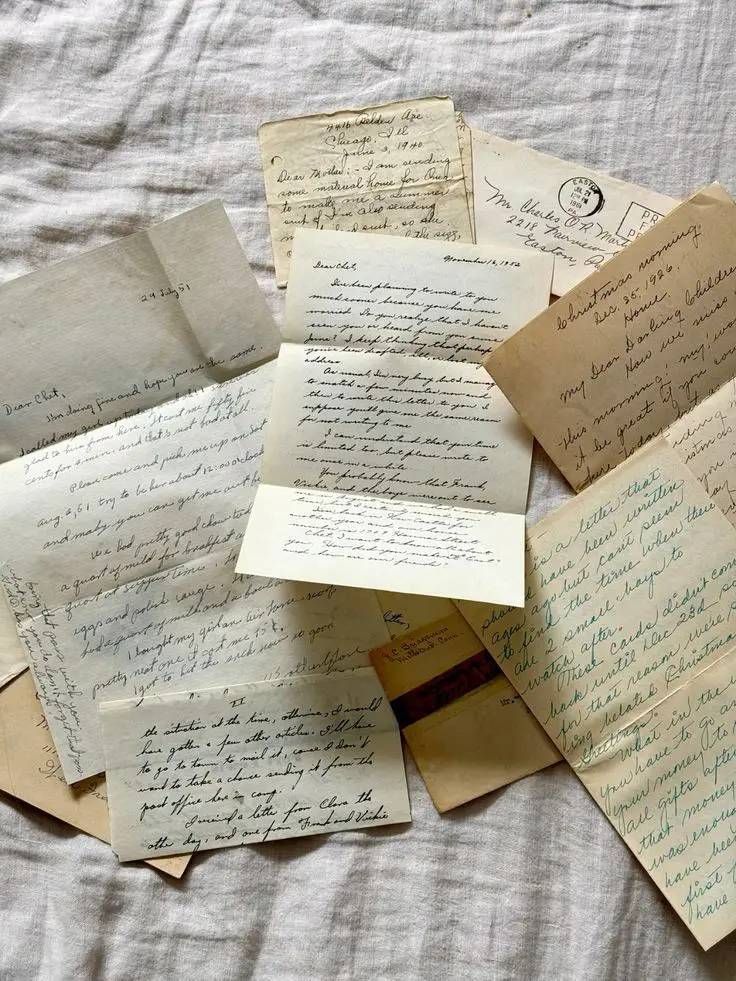
Communication slows as well. Handwritten letters return not because they’re practical, but because they’re deliberate. Envelopes, stamps, handwriting – each part becomes a decision. A small ritual. A way of staying present without being immediately available.
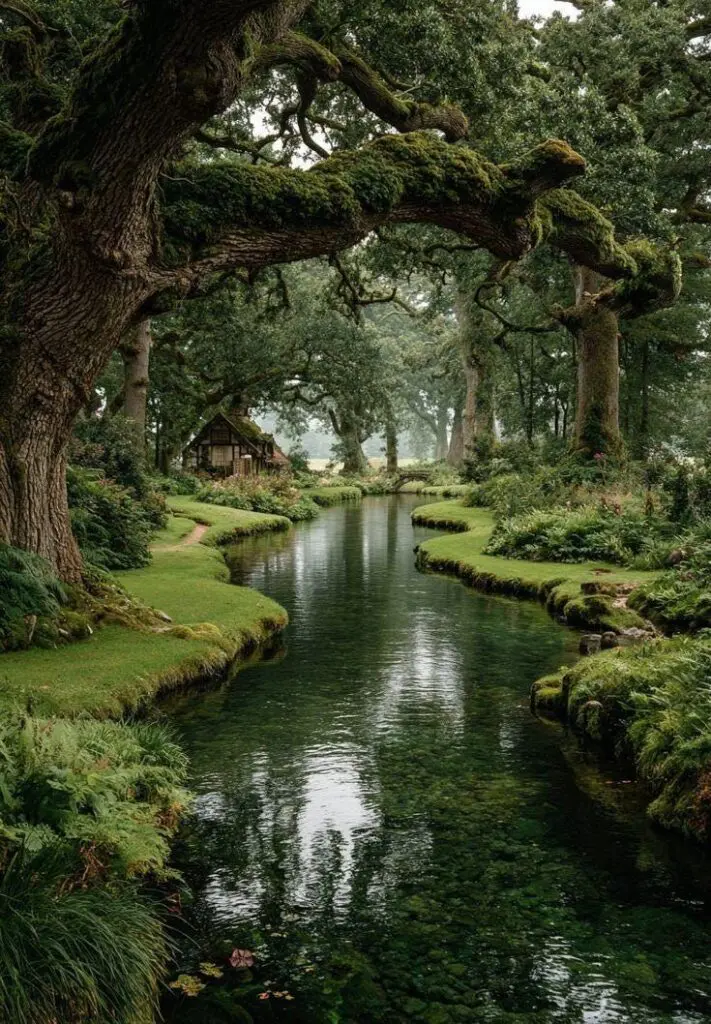
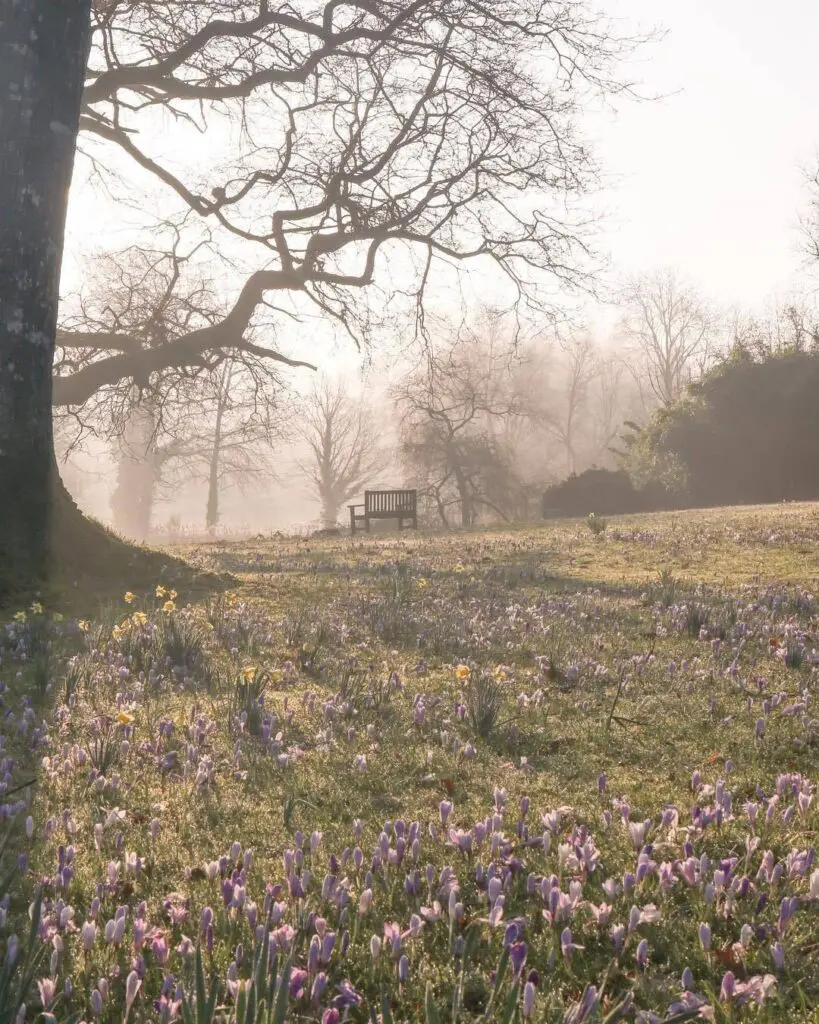
Nature, too, shifts tone. Enchanted forests, misty landscapes, animal and insect motifs appear not as comfort, but as atmosphere. These aren’t places meant to soothe. They’re places meant to unsettle slightly. Fantasy returns, but without optimism – less escape, more ambiguity.
What connects all of this isn’t maximalism or minimalism – it’s containment.
After years of constant visibility, self-presentation, and algorithmic pressure, culture seems to be dressing itself up – not to be admired, but to feel held together – lace, brooches, icy tones, opera, letters, rituals. These aren’t trends so much as ways of slowing things down. The future, as it’s being quietly imagined here, isn’t loud; it’s dressed, deliberate, and it keeps a certain distance.


