
Words by Isabel Johnson
Edited by Valerie Aitova
Women in politics don’t simply get dressed. Every outfit is a credibility test. Semiotics with a dry-cleaning bill. A blazer isn’t just a blazer, it’s a ballot. A dress isn’t just a dress, it’s a referendum. And a print? Ask Angela Rayner’s leopard spots how quickly they mutated from pattern to scandal.
The credibility penalty is real: men’s suits are treated as invisible uniforms, while women’s wardrobes are parsed as evidence. Every hemline is a headline, every neckline a negotiation.
A jacket can frame competence; a shoe can undermine it. Women must look polished but not too polished, stylish but not fashion-forward, bold but never boundary‑pushing, expensive, but not too expensive.
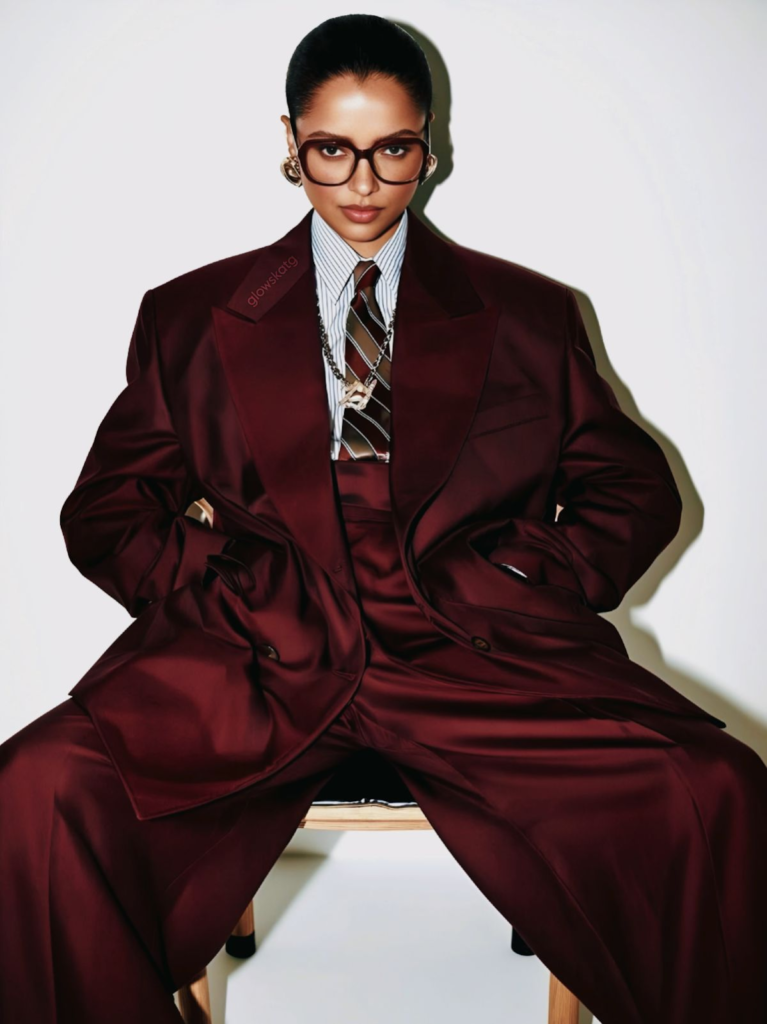
Too plain? You’re dowdy. Too daring? You’re frivolous. The line between gravitas and glamour is razor‑thin, and women are punished for crossing it.
Michelle Obama captured this tension in The Light We Carry, recalling how even her choice of a cardigan was politicised: praised as approachable, then dismissed as too casual, then dissected as a question of competence.
As she puts it, “our appearance is never just about us, it’s always being read as something more”.
Image and perception are inseparable, and for women in politics, clothing is both liability and leverage.
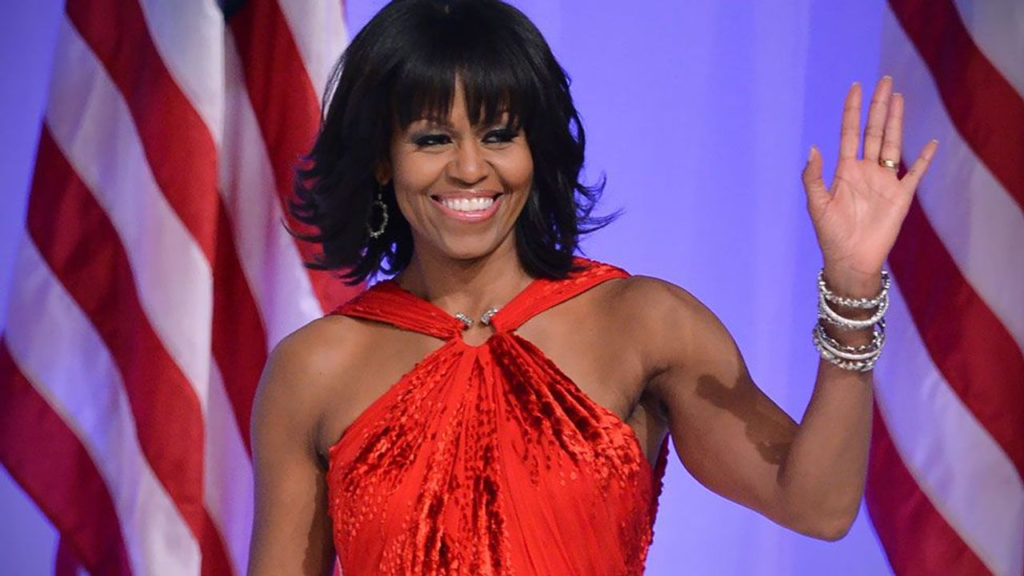
In her recent book, The Look, she makes the point explicit: clothes aren’t just fabric, they’re soft power. A sleeveless dress could signal modernity, a bold color palette could project confidence, and even a pair of boots could set the tone before she spoke a word.
As she writes, “What I wore was important…once I got their attention, they listened to what I had to say.”
The hemline tax for women in politics isn’t just a penalty, it’s also a paradox.
The paradox isn’t new. In the 1980s, Margaret Thatcher’s power suits were calculated armor, crafted to project authority in a political arena that questioned her legitimacy. Hillary Clinton’s pantsuits decades later carried the same coded weight, signaling steadiness and control while simultaneously becoming a cultural shorthand for her candidacy.
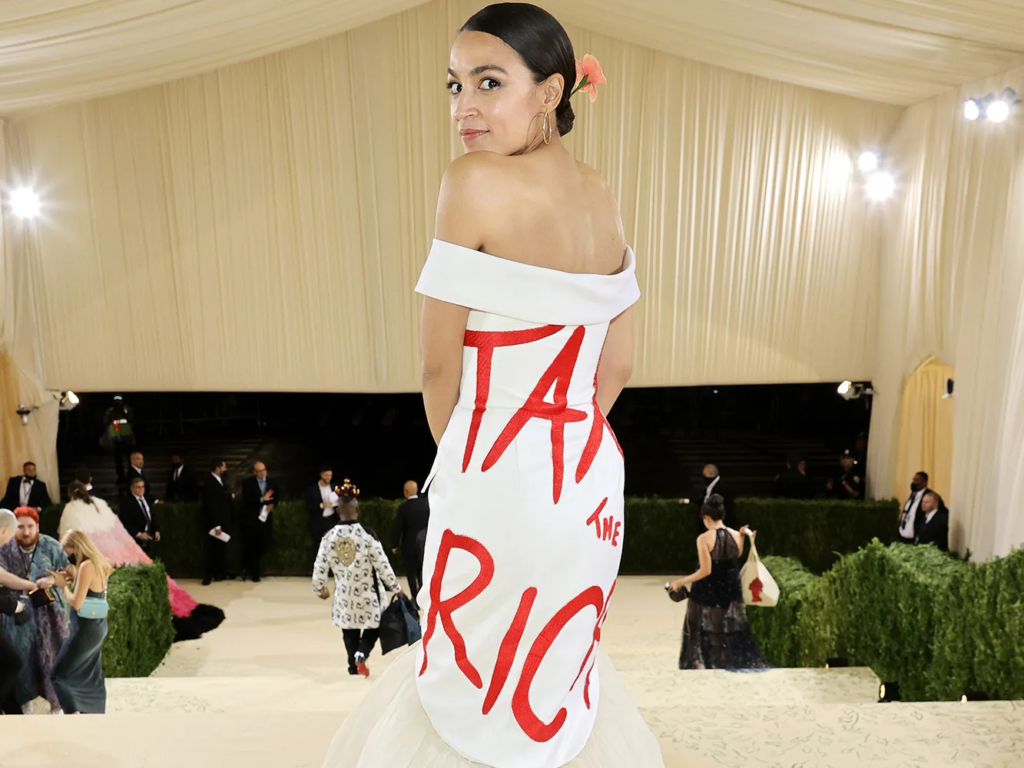
Alexandria Ocasio‑Cortez’s ‘Tax the Rich’ gown at the Met Gala was read as audacious, hypocritical, and iconic. Kamala Harris’s Converse sneakers were celebrated as relatable, a deliberate break from the stiffness of political dress, then critiqued as ‘too casual’ for a Vice President. Theresa May’s ‘Legs‑it’ moment showed how quickly commentary can trivialise presence; reducing a Brexit summit to a side‑by‑side of her calves against Nicola Sturgeon’s. The backlash was just as revealing: outrage at the coverage laid bare the absurdity of the scrutiny.
And the gallery of flashpoints doesn’t stop there. Nancy Pelosi’s red coat and sunglasses became the political equivalent of a Marvel origin story. Madeleine Albright’s snake pin wasn’t jewellery, it was clapback couture, Saddam Hussein called her a serpent, she accessorised accordingly. Jacinda Ardern’s korowai cloak wasn’t a fashion statement, it was about projecting respect and heritage.
The scrutiny isn’t accidental, it’s rooted in gendered expectations and amplified by the media’s hunger for visual shorthand. Women in politics are asked to perform authority twice: once through their words, and again through their wardrobes.
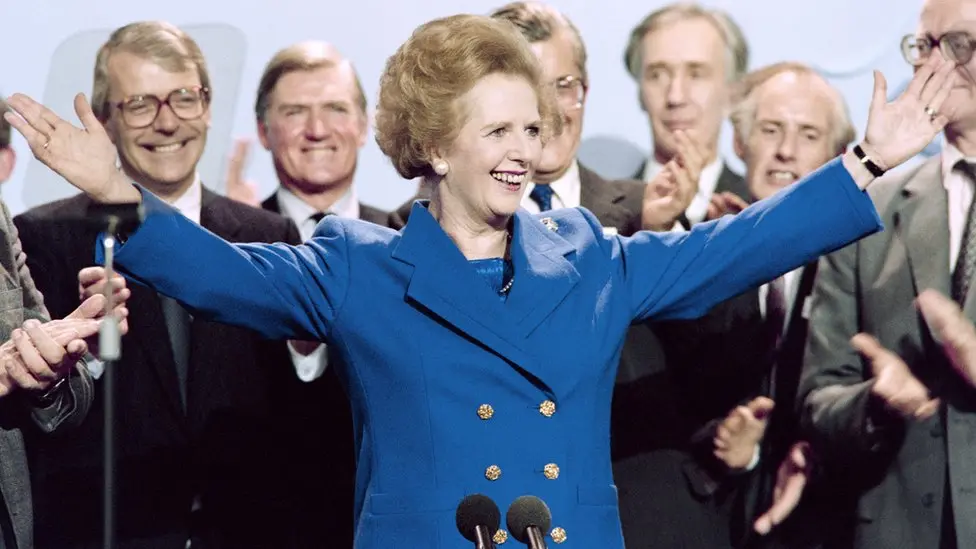
Clothing in politics is never neutral; it’s a language, and women must learn to speak it – fluently.
Social media has turned scrutiny into a perpetual loop. The pressure isn’t to dress for virality, but to survive it: every choice has the potential to be magnified, stripped of context, and replayed until it becomes its own headline. In the social media loop, the risk isn’t invisibility but the wrong kind of visibility, going viral not for policy, but for a hemline, a heel, or a misplaced accessory.
Meanwhile, the credibility penalty remains gendered. No one asked if Rishi Sunak’s tie undermined his fiscal competence. Spoiler alert: it didn’t need to in the end. The difference isn’t the clothing, it’s the reading: men’s outfits dissolve into background noise, women’s are magnified into foreground text.
And this isn’t confined to Westminster or Washington. It’s not just the unfair rules of men versus women. It’s the semiotics of power bleeding beyond politics, shaping how gender is read, performed, and contested everywhere. Boardrooms, red carpets, even the school gates – fashion is never just clothing. It’s a game played in plain sight.
Until neutrality itself is rewritten, women in politics will keep paying the hemline tax.


