
Words by Lola Carron
Edited by Valerie Aitova
The surfaces of our lives, from the screens we touch to the architecture we inhabit, have been rendered slick, sterile, and perfect by the digital age. This pursuit of high-resolution smoothness has dominated our collective aesthetic for almost a decade, defining the aspirational wardrobe with its cold, dazzling perfection, exemplified by the rise of ultra-clean techwear silhouettes that prioritized function and flawless surface.
For too long, fashion has been optimised for the flat, unforgiving gaze of the smartphone camera, resulting in slick, technical fabrics and minimalist surfaces. This visual culture left our hands, perhaps our most curious sensory organs, unemployed; we watched the spectacle, but we rarely touched.
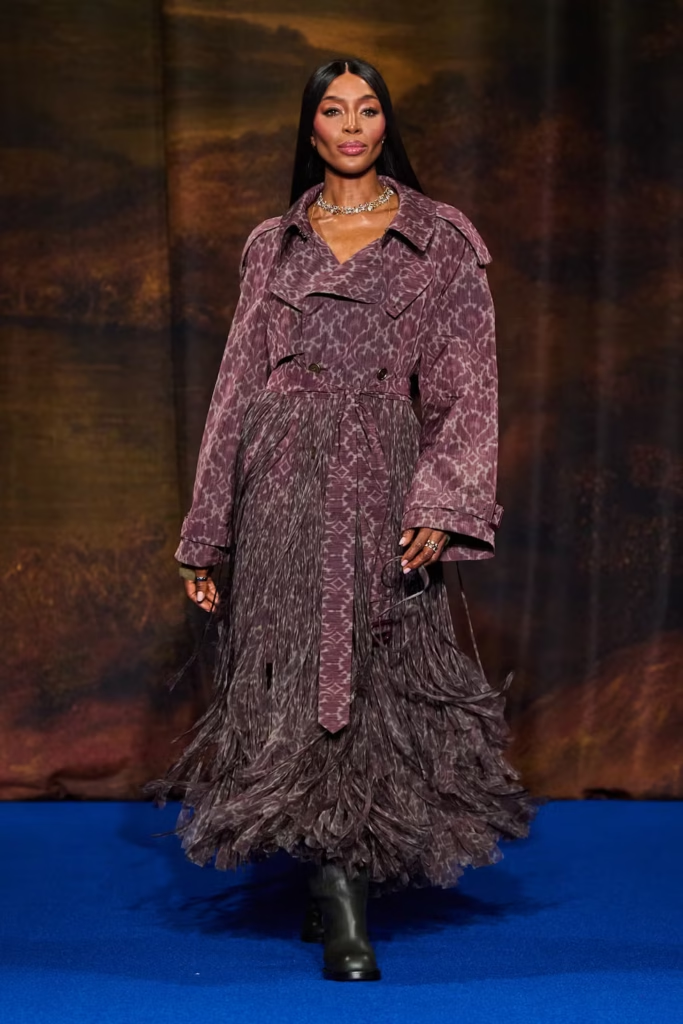
But as we grow profoundly weary of this two-dimensional living, fashion is staging a dramatic, visceral intervention. For Autumn 2025, the industry is indulging our deepest sensory craving, swapping digital polish for the undeniable comfort of the tangible. A seismic shift is occurring on the catwalks: this isn’t merely a trend, it’s a sensory counter-revolution.
The message is clear: the true measure of luxury resides not in what we see, but what we can finally feel. The clothes of this season are, quite literally, demanding our attention.
The desire for texture speaks to a deeper craving for authenticity and tangibility in a world saturated by fleeting digital images. When you wear a heavily textured garment, you are physically connected to the craft and the time it took to create it. This is the quiet luxury of the moment: not a screaming logo, but a satisfying, physical experience. As fabric forecasters at Première Vision and Tiffany Hill Studio have attested, the focus has moved beyond the visual to the embodied experience of dress, where the “fabric hand” becomes paramount, emphasising 3D embellishments and multi-layered weaves over simple prints.
This profound focus on the feel of a garment is also evident in the commercial sector. For its AW25 collection, The White Company has highlighted “beautiful textures” across its range, moving heavily into shearling, suede, and luxury bouclé and textured loop knits to evoke an immediate sense of comfort and investment. Furthermore, brands like COS have leveraged this trend by consistently featuring architectural silhouettes in technical yet touchable materials, such as heavyweight boiled wool, brushed alpaca blends, and sculptural leather, appealing directly to the consumer’s desire for tactile quality over fleeting trends. The message is clear: the true value of clothing in 2025 lies in its longevity and its capacity to engage our senses.
This intentional shift toward durable, substantial, and heritage textures, like dense shearling and boiled wool, naturally reinforces the slow fashion ethos, positioning longevity and robust craftsmanship as the ultimate ethical statement.
AW25’s textural trinity is both challenging and comforting, moving far beyond simple knitwear to establish the definitive language of elevated dressing.
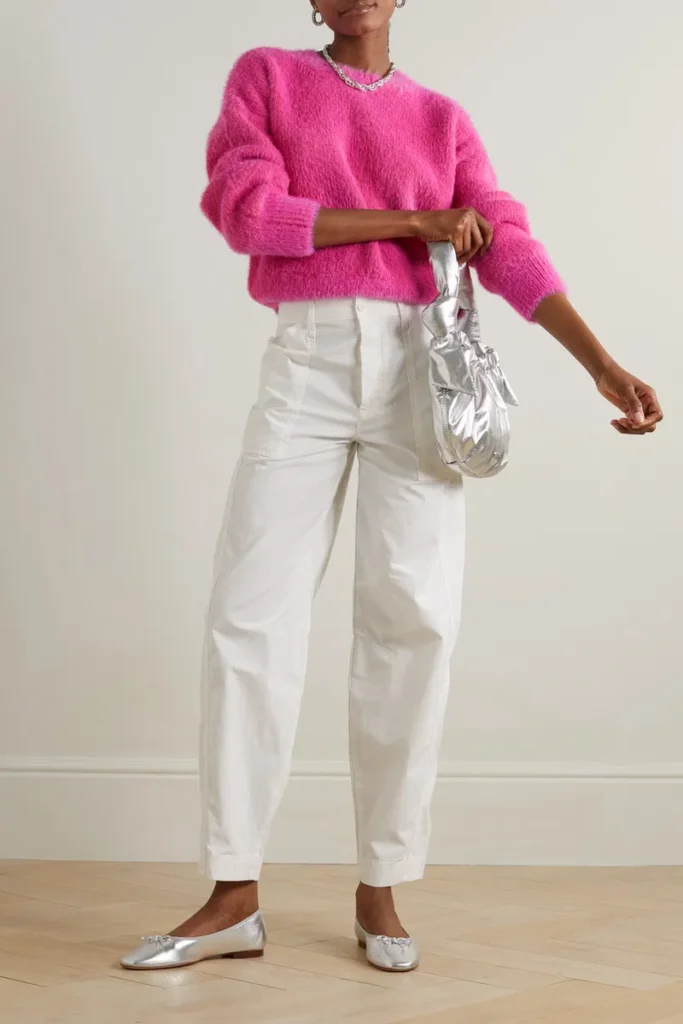
The first hero of the season is the resurgence of mohair. Forget the flimsy, fine gauge knits of past seasons. The mohair of 2025 is deliberately, wonderfully shaggy with its fluffy, brushed finish that carries a comforting, almost unruly quality. On the runway, this was seen not just in traditional jumpers, but in unexpected places: designers like Stella McCartney used exaggerated, brushed mohair blends in structured outerwear, creating a visual friction against sharp tailoring. Its slight, yet noticeable, texture is a deliberate choice: a refusal to be silently smooth. This “hot fuzz” trend, also evidenced in the rise of borg and luxury faux furs at Miu Miu and in commercial ranges like those at Marks & Spencer (M&S), offers an immediate, palpable warmth and softness. In an increasingly digital and flat sensory landscape, these intentionally tactile textures satisfy a profound cultural desire for physical connection and grounded reality.
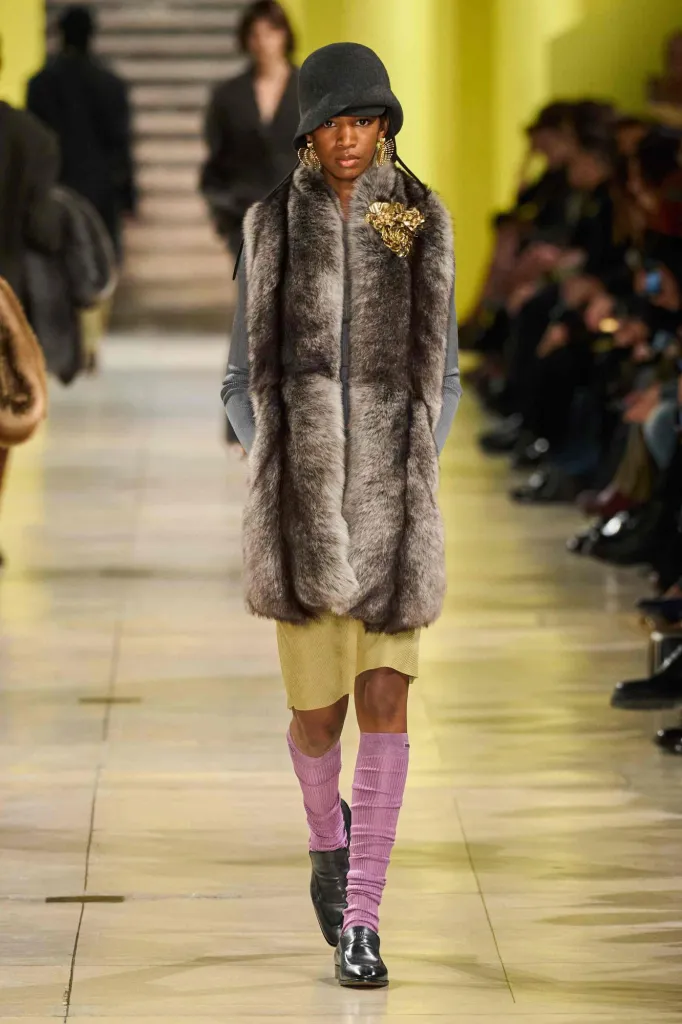
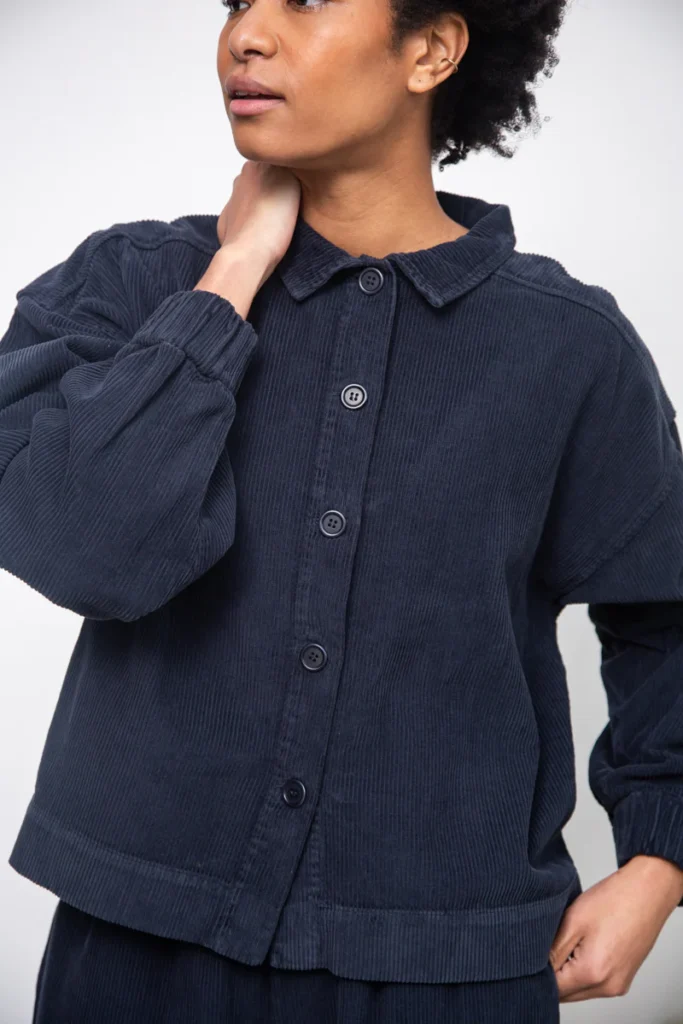
Next, the gritty resilience of corduroy has been entirely revitalised. Once the reserve of the rural gentry and academics, corduroy is now appearing in sharp, contemporary silhouettes. This is not the stiff, wide-wale cord of the 1970s, but a more fluid, often fine-wale (or ‘pinwale’) version, often presented in sophisticated jewel tones. The fine ridges of the cord offer a rhythmic tactility that creates a subtle, shifting shadow-play across the garment, a dimensional quality that looks exceptional in motion. The sustainable brand Beaumont Organic, for instance, championed organic cotton corduroy in relaxed, boxy overshirts designed for tactile layering, demonstrating how this heritage fabric can align with modern ethical concerns and a contemporary fit.
Finally, the ultimate decadent dive: crushed velvet. This is the texture that most clearly rejects the digital realm, as its very nature embraces imperfection. Unlike pristine, smooth velvet, the crushed variety carries the memory of every fold and touch, looking lovingly lived in. Houses like Burberry and Versace showcased it in rich, saturated colours, as they reimagined the fabric in fluid silhouettes. Furthermore, its commercial adoption, with brands like Warehouse offering crushed velvet wide-leg trousers and blazers, confirms its mass-market resonance for evening and sophisticated daywear. This is a sumptuous, anti-perfectionist statement that demands to be stroked.
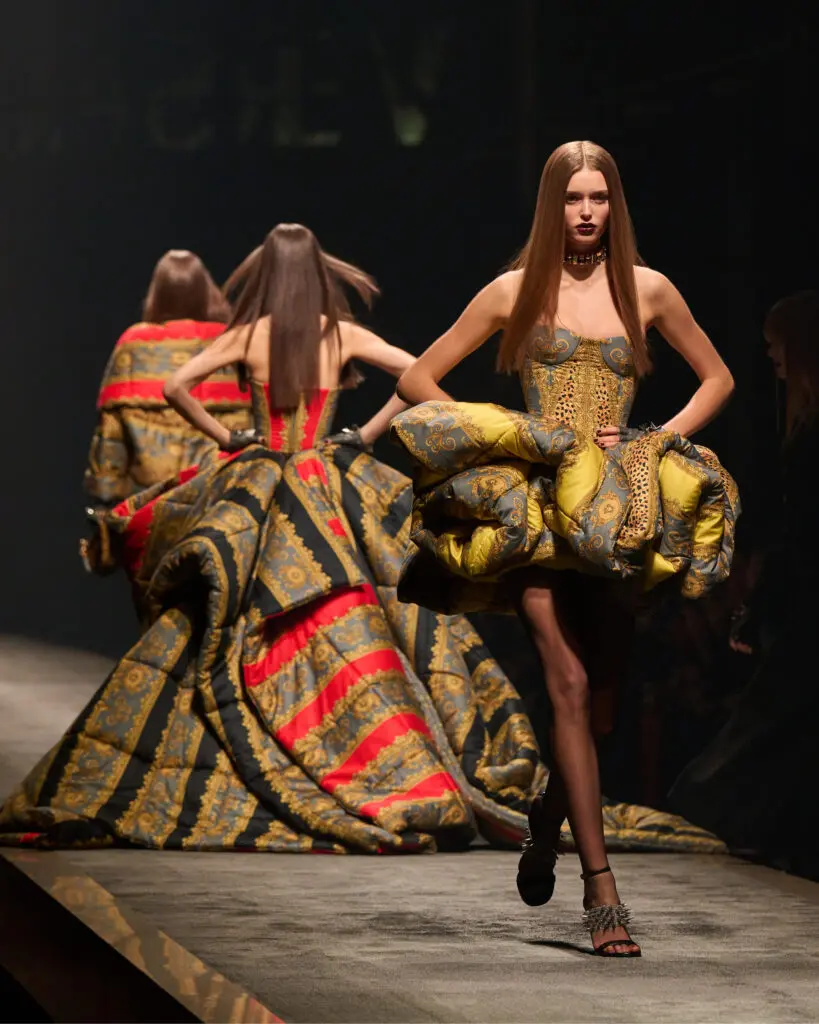
Autumn 2025 is not just dressing for the weather; it is dressing for the senses. It is an invitation to step away from the glare of the screen and truly engage with the physical world through our clothes.


