
Words by Alexander Seale
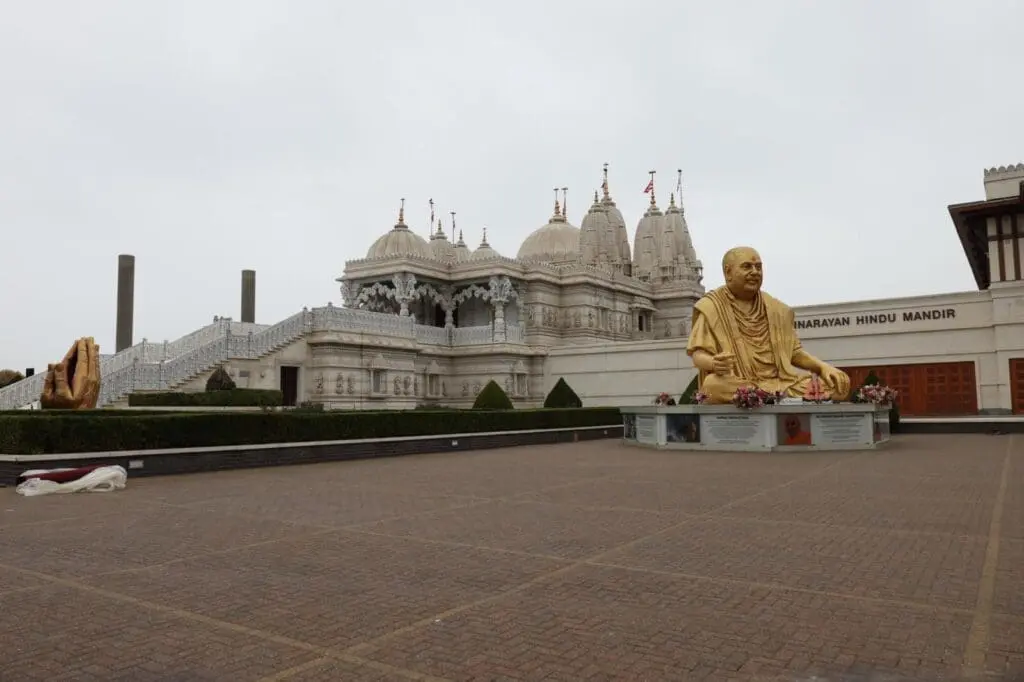
It rained the morning Their Majesties visited Neasden Temple — a fine, silvery drizzle that made the marble shimmer and umbrellas bloom across north-west London. The royal visit marked the temple’s 30th anniversary, but it also cast light on a quieter story: how a London landmark has inspired the creation of France’s first traditional Hindu temple, now rising near Paris.
Completed in 1995, the BAPS Shri Swaminarayan Mandir was the first traditional Hindu temple in Europe — conceived as both prayer and sculpture. Carved from limestone and marble by artisans in Gujarat, its design follows ancient Vedic architectural principles: no steel, no concrete, only the precision of interlocking stone.
In an era of rapid construction and fleeting trends, Neasden’s temple stands apart — handmade, harmonious, and enduring.
That same spirit has crossed the Channel. During the anniversary celebrations, King Charles III and Queen Camilla were shown a scale model of the BAPS Mandir Paris, due for completion in 2027. Like Neasden, it will be built entirely by hand, using the same traditional geometry and techniques — part spiritual architecture, part cultural bridge.
“This is more than a temple,” says Krunal Patel, a volunteer involved in the Paris project. “It’s a collaboration between artisans in India, communities in Europe, and everyone who believes beauty can be a form of peace.”
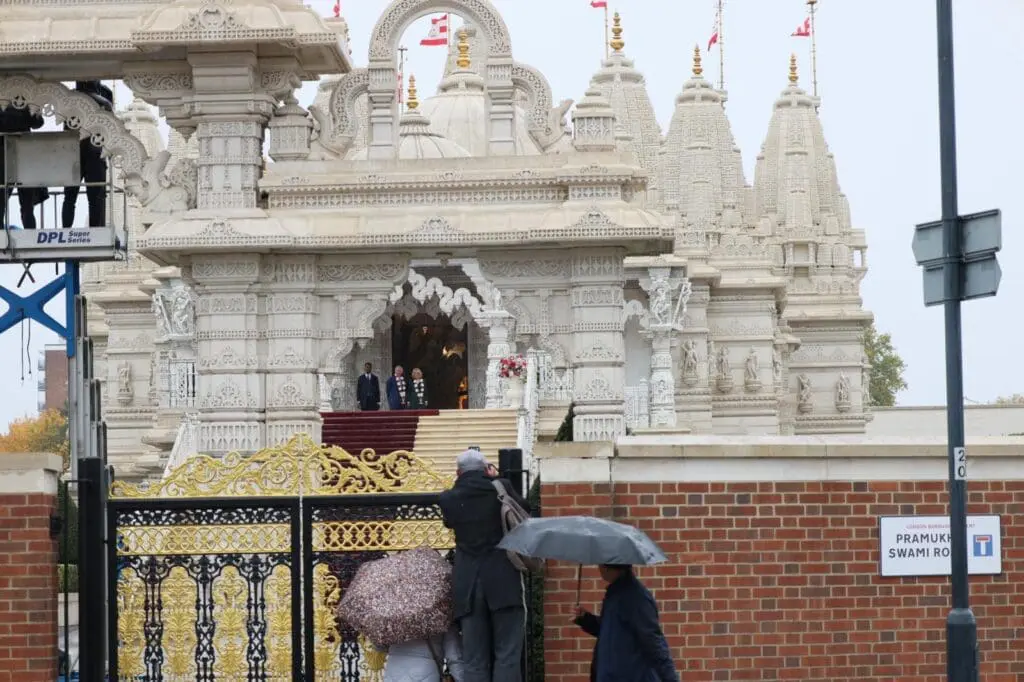
For the craftspeople shaping both sites, architecture itself becomes ritual. Each block of stone, measured and carved, carries the rhythm of devotion. The result is not just a building, but a dialogue between body and spirit — where structure becomes prayer.
Neasden’s marble interior was assembled by volunteers from across Britain, many without formal training but guided by faith and care. Their collective effort produced something both intricate and serene: a space that feels carved out of stillness. It is this blend of precision and humility — design as service — that the Paris Mandir seeks to continue.
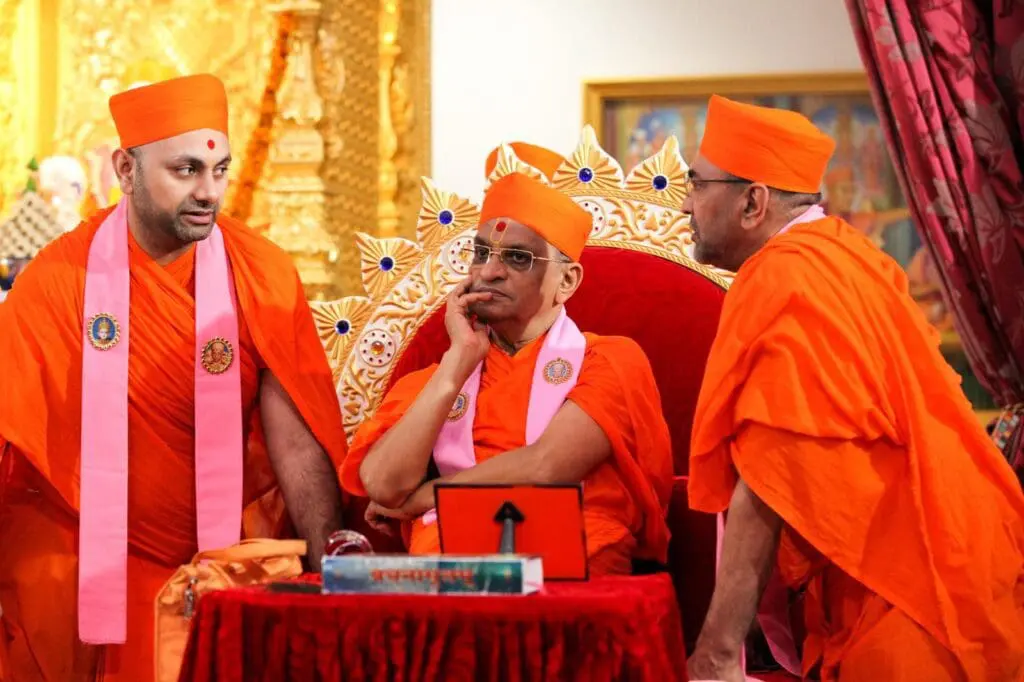
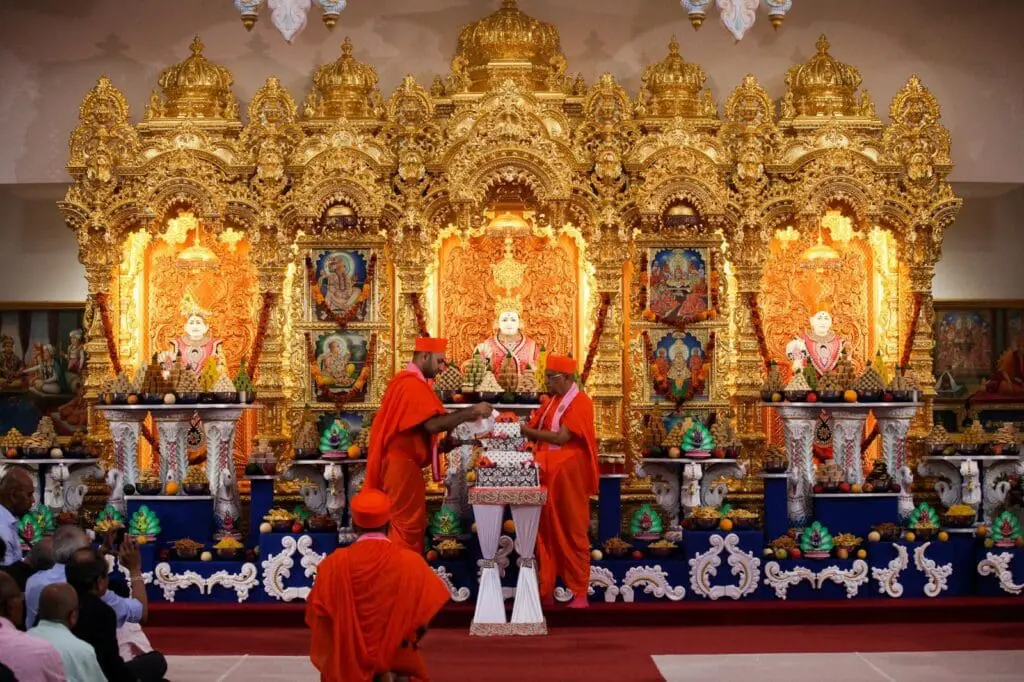
Beyond its beauty, Neasden functions as a living community space. Its adjacent Haveli hosts exhibitions, classes, and cultural events that welcome visitors of every background. The “Understanding Hinduism” gallery offers a quiet education in faith and philosophy, while the temple’s charitable work — from food redistribution with The Felix Project to women’s empowerment initiatives — extends its purpose into the city beyond.
“Sacred architecture isn’t only about the divine,” says Patel. “It’s about how people gather, how they share and serve together. The temple is a kind of social sculpture.”
Outside Neasden’s gates, the anniversary unfolded beneath umbrellas and soft rain. Crowds of well-wishers and curious neighbours stood quietly as the royal cars arrived. From a distance, the temple appeared to glow against the grey sky — its carved domes luminous, serene, and enduring.
Soon, on the outskirts of Paris, artisans will begin carving the first stones of its sister Mandir. Each chisel stroke will echo this London morning — rain on marble, people gathered in quiet connection, faith expressed through form.
In an era that builds fast and forgets faster, these temples offer another rhythm: sanctuaries of patience, precision, and peace. Between London and Paris, between stone and spirit, a dialogue continues — enduring, human, and carved in light.


