
Words by Lola Carron
Edited by Valerie Aitova
London Fashion Week has always been a site of creative rebellion – a place where new names aren’t just introduced, they’re ignited. While the marquee names may set the tone, it’s the next generation that rewrites the future. And this season, they did so with texture, intimacy, and transformation. These were the shows you didn’t scroll past. You felt them in your bones.
Octi Ransom doesn’t just make jewellery. She preserves it. Her SS26 collection is a meditation on geological time, cast in metal, set in stone, and rooted in a type of stillness that vibrates. Inspired by the rocks of the Jurassic Coast, Octi’s new body of work turns natural textures into relics of the now: bitter melons as mountain ranges, water ripples as wood grain, fossils reborn as necklaces.
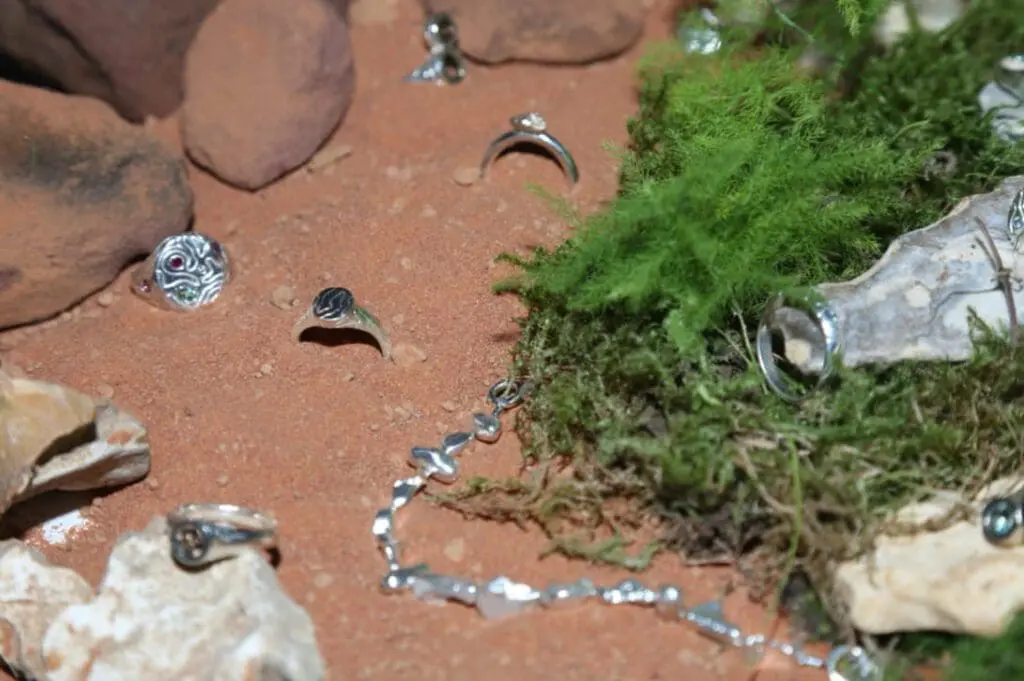
Presented as a sensory world of three climate-controlled islands, her LFW debut felt more like an earth-bound odyssey than a product launch. Each island – Jurassic, Forest, Desert – came scented (Courtesy of Malin + Goetz), lit, and styled to reflect the collection’s elemental themes. At the centre of it all? Oversized ears, carved by Lucy Page, hung like alien relics beside chains and pendants that shimmered like wet rock.
“Texture is a big part of my practice.” That logic plays out beautifully in the show’s companion film, where tiny human figures navigate jewellery as if it were landscape: crawling across silver terrain, ducking under engraved earrings like ancient arches.

Octi is for the wearer who doesn’t want jewellery that just glints. They want jewellery that tells stories – slow, geological ones.
With a title like Silent Engravings, you expect delicacy. What Alisa Dudaj delivers is closer to incision. Her SS26 collection, rooted in Albanian craft traditions and made tactile through wool, embroidery, and wet felting, proves that silence is a strength. The show whispered, but it never wavered.
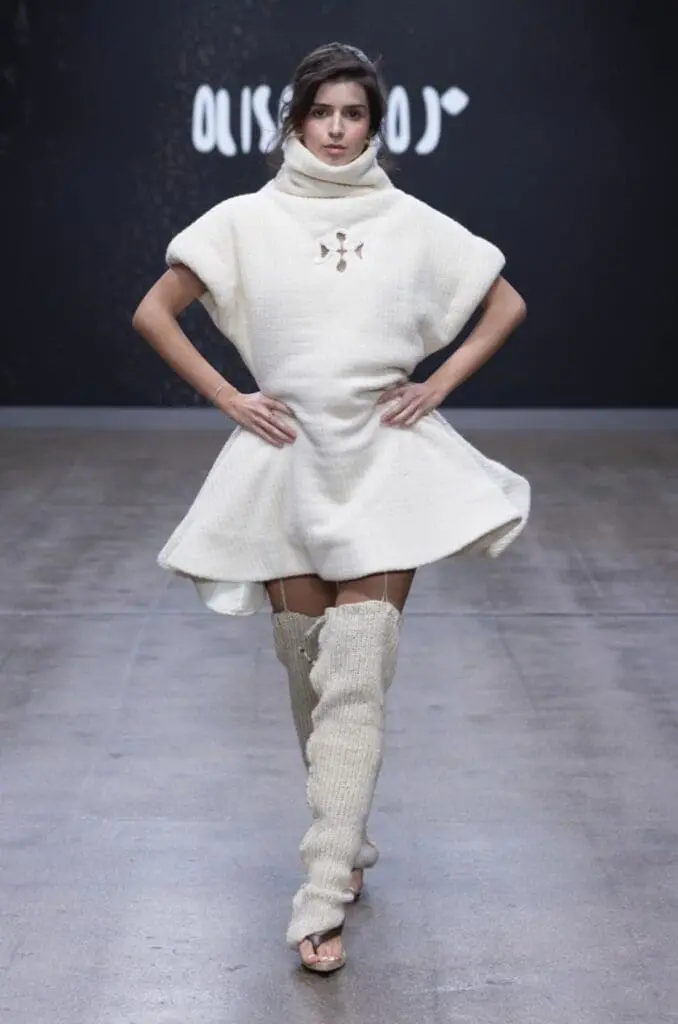
Inspired by her great-grandfather’s straw artworks – thousands of slivers hand-laid into mesmerising patterns – the collection favoured restraint over bravado. Clean lines. Structured silhouettes. Subtle embellishment that you could miss if you blinked too fast. But it’s that restraint that made it so haunting.
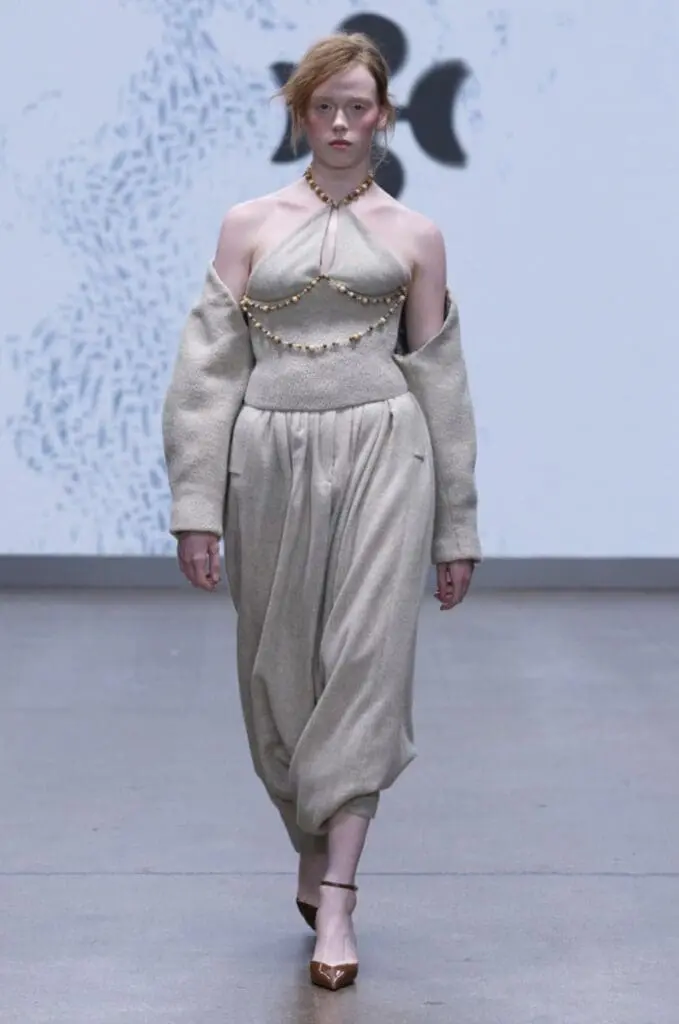
“Craft doesn’t need to speak loudly to be remembered,” Dudaj explained. Silent Engravings speaks of heritage through fabric rather than flags. It was a welcome pause in a week of sonic spectacle – an invitation to look closer, feel more.
Jenn Lee doesn’t do half-measures. Celebrating ten years in fashion, the Taiwanese designer transformed Village Underground into a gothic temple of sensual rebellion. Think pleated qipaos, unusual accessories reimagined as jewellery, and cracked red lips. It was dark. It was seductive. It was unforgettable.
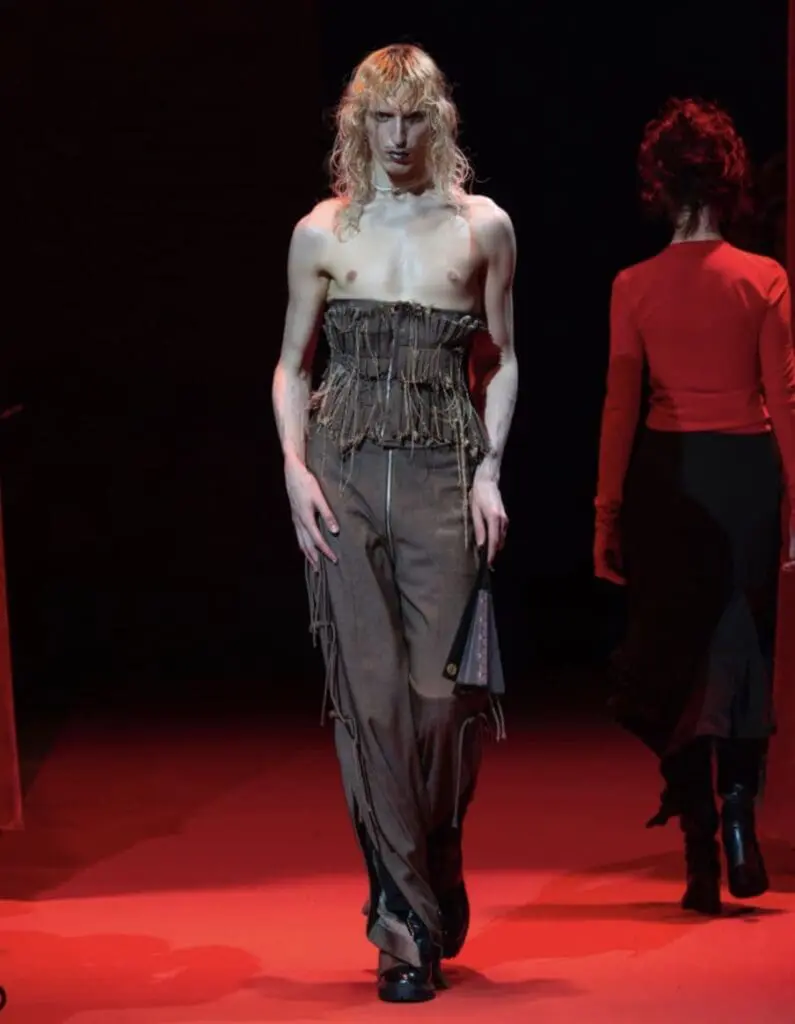
Inspired by Dream of the Red Chamber, Lee blended East Asian craftsmanship with London’s club-kid grit. The standout Fan Dress, pleated like an heirloom folding screen and fastened with dragon-and-phoenix buttons, felt like a new visual language – part couture, part curse.
In the hands of lesser designers, this could have tipped into costume. But Lee walks the tightrope with poise. Her decade-defining collection wasn’t nostalgic – it was a séance. And every look summoned something fierce.
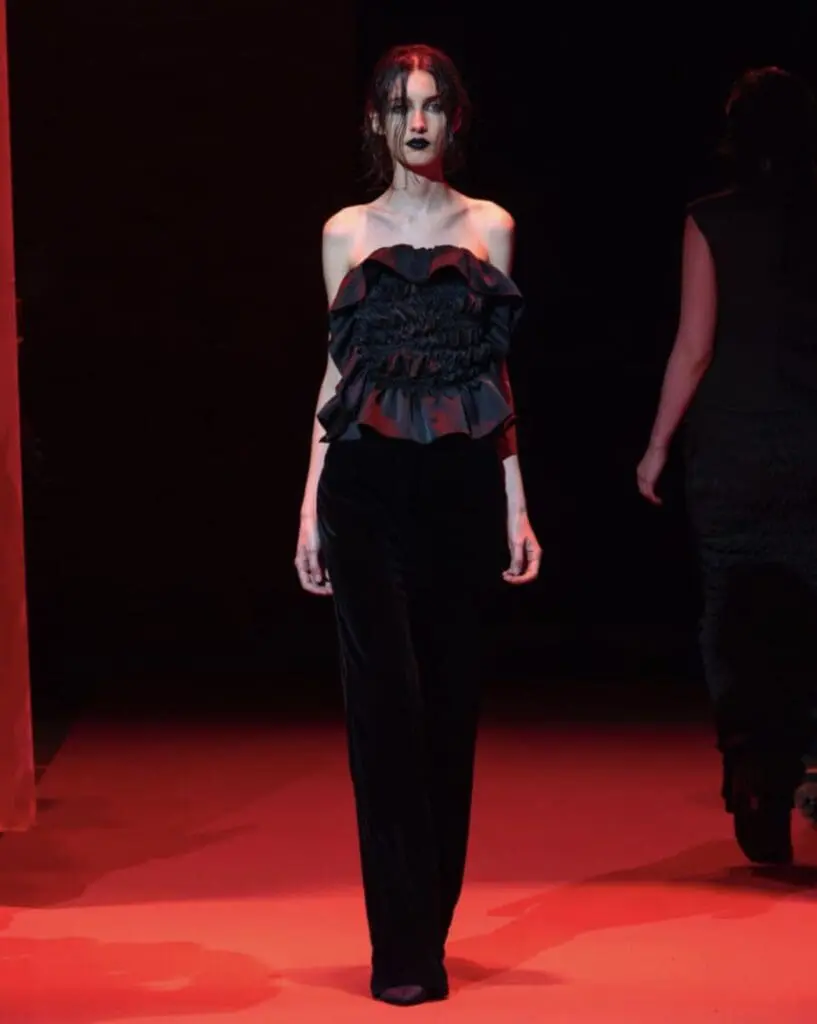
Known for dressing Beyoncé and Lady Gaga, AGRO Studio made their official ready-to-wear debut at LFW with Prophet. Designed by George Oxby and Angus Cockram, the collection wasn’t just an expansion. It was an eruption.
Set against pounding basslines and strobes that pulsed like warning signals, the venue felt more like a bunker than a runway. The audience shifted forward in their seats, pulled into the energy of the room. Every entrance drew gasps; every metallic gleam caught the light like fire.

These were clothes built for movement, danger, and drama – sculpted jackets, distressed metallics, and silhouettes that looked forged rather than sewn. The AGRO wearer is someone who wants to wear a memory, not a moment. Every piece felt like armour for a party you might not survive. In the best way.
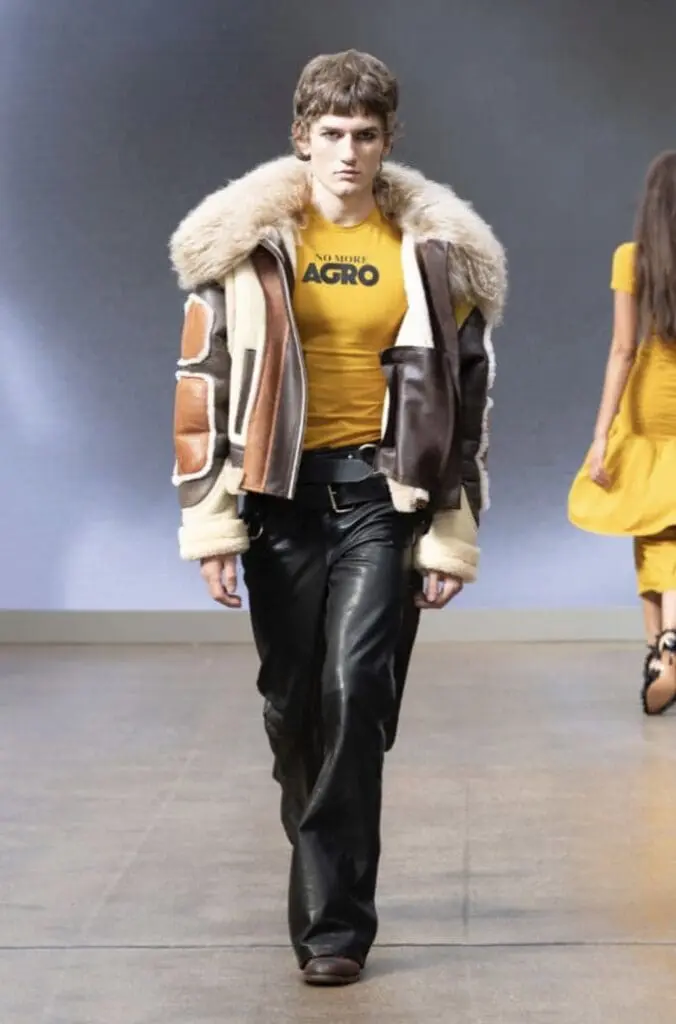
At just 20, Josh Birch Jones is the youngest member of the British Fashion Council. And yet, his SS26 show didn’t lean on novelty or youthfulness. It leaned on pure, unshakable vision.
In Mayfair’s gilded halls, the show opened with a reverent hush before giving way to applause that rolled like thunder. Phones rose, but when the Rose Dress – a scarlet, 27-metre statement of romance and resolve – appeared, the crowd stilled, almost afraid to break the spell. Among them, the Marchioness of Bath walked the runway with a poise that underlined the designer’s confidence.
“I think about her the whole day,” he said of the women he designs for. “What makes her feel confident? That’s what drives every decision.”
And it shows. This wasn’t a young designer trying to shock. This was someone designing to last.
Together, these new voices don’t just reflect where fashion is going. They shape how we’ll feel when we get there. With jewellery that listens to rocks, garments stitched in memory, and silhouettes designed for gods, the next generation isn’t interested in the old rules. They’re too busy making new worlds.
At London Fashion Week SS26, the future didn’t wait its turn. It carved itself into stone, stitched itself into fabric, and demanded to be worn.


