
Words by Valerie Aitova
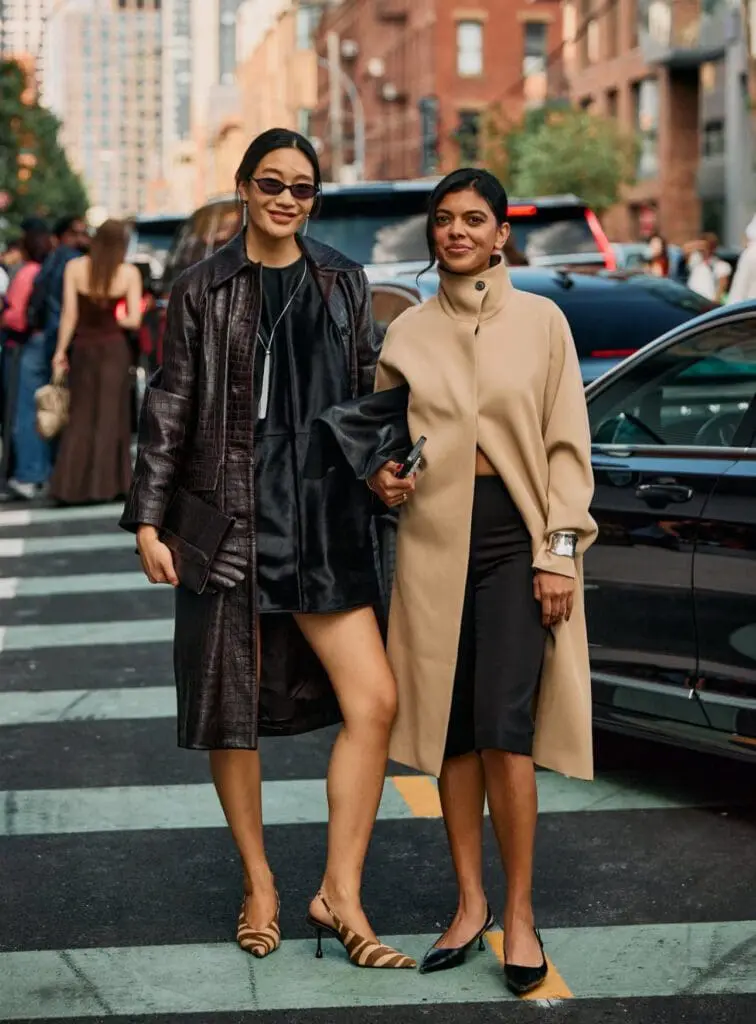
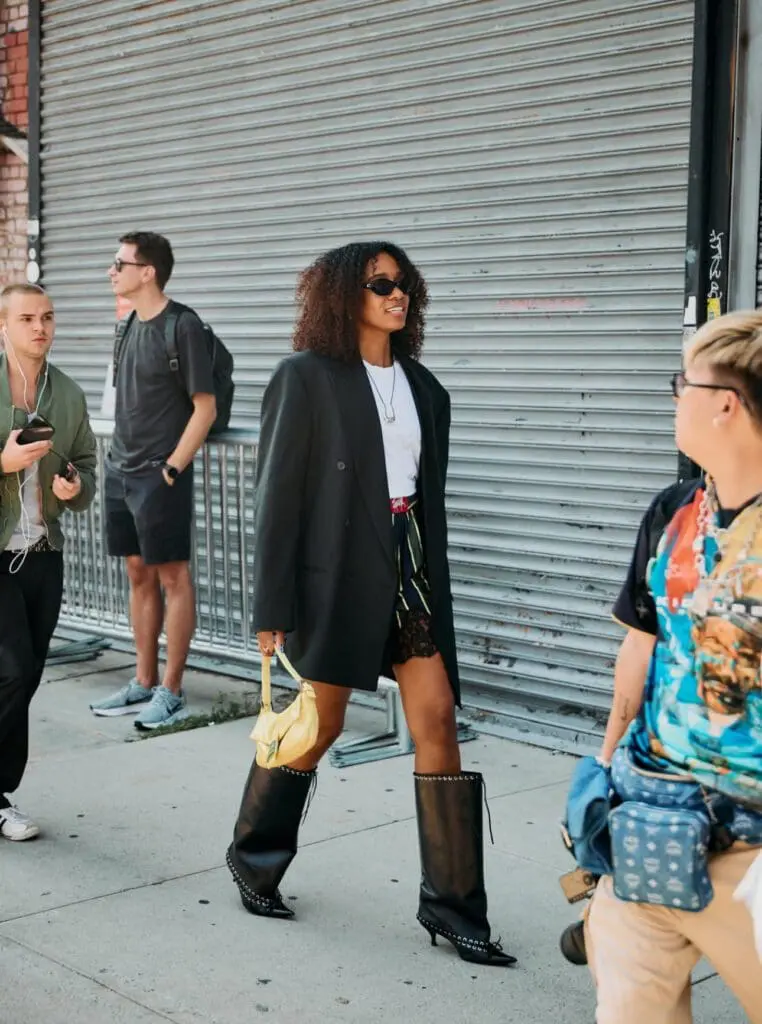
September in New York is always a collision of rhythm and fabric. Models rushing between venues, editors darting into black cars, sidewalks transformed into living lookbooks where plaid checks clash with lace skirts, suede bombers brush against sequined dresses, and ballooned trousers sweep across subway grates. This season, the mood leaned toward layering and tactility: ballooning pants brushing against cropped denim jackets, leather softened by suede, plaid prints colliding with romantic lace. Everything seemed designed to be seen, caught in the flash of a camera.
But while the streets and the main stages throbbed with spectacle, the most memorable stories unfolded elsewhere — on quieter runways, in collections that didn’t announce themselves with celebrity front rows or pyrotechnic stunts. They were smaller shows, subtle gestures, but they held the weight of something more lasting. Four names in particular – Diotima, Lii, Ashlyn, and Rùadh – emerged as the season’s quiet disruptors, reshaping NYFW not with scale but with substance.
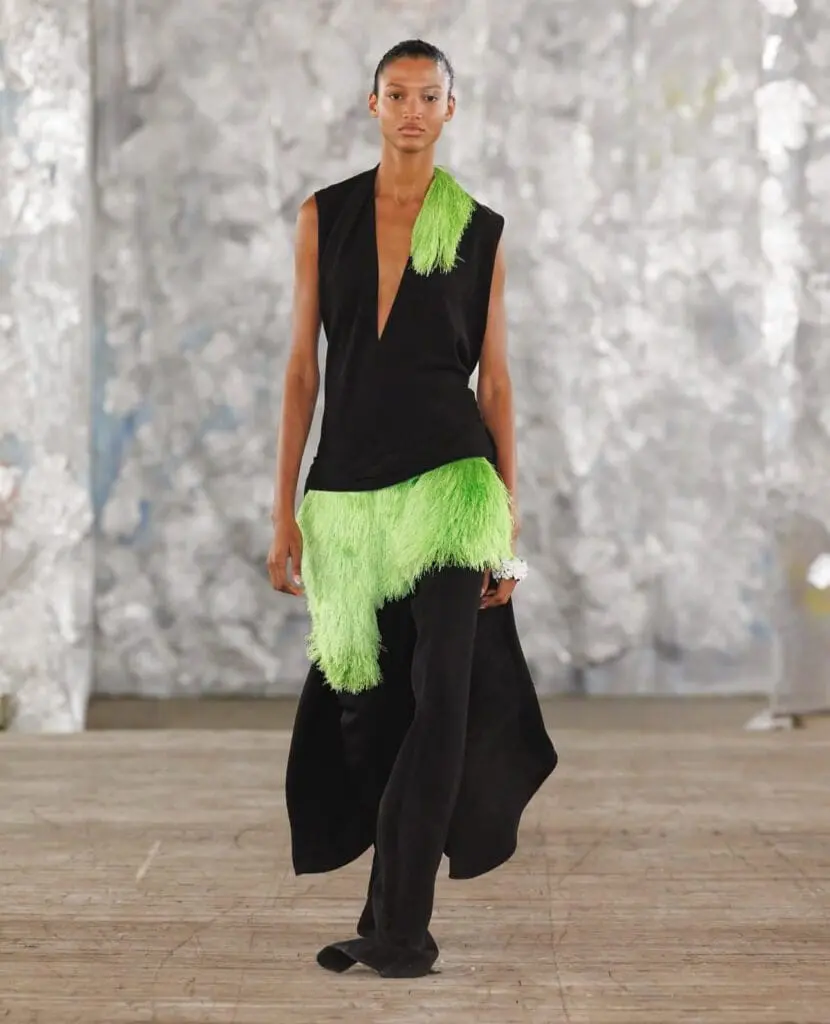
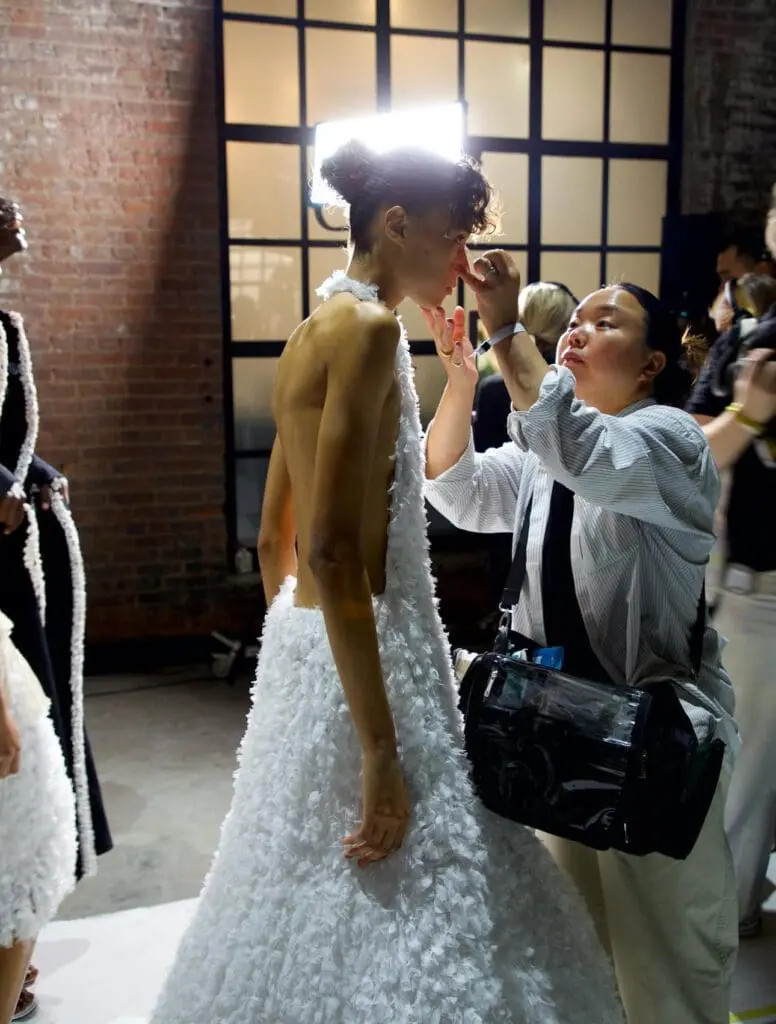
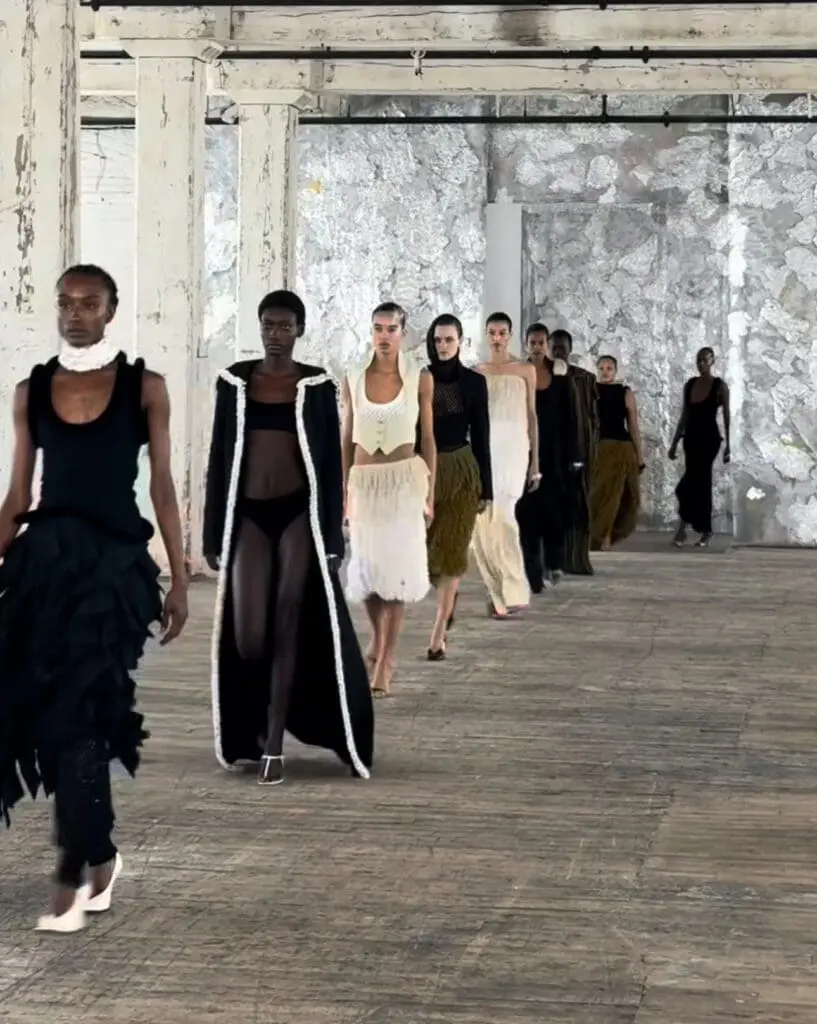
Rachel Scott’s Diotima opened with a focus on texture that felt both deliberate and tactile. White dresses were built from feather-like clusters of fabric, their surfaces catching the light with a subtle shimmer. Some were layered over trousers, elongating the silhouette, others cut into sculptural shifts that hovered between softness and structure. Black gowns and coats introduced sharper lines, trimmed with raw white edges that emphasized contrast rather than polish. Then came the shock of color – a slash of neon green across a black dress, a sudden interruption that electrified the otherwise muted palette of ivory, onyx, and moss. The collection balanced precision with vulnerability. Fringes appeared deliberately unfinished, hems frayed just enough to feel alive in motion. There was a quiet power in the restraint: nothing excessive, no decorative clutter, just a steady insistence on material, proportion, and surface. In a week where street style leaned into checks, lace, and layered bombers, Diotima’s runway stood apart for its clarity. It wasn’t chasing a trend; it was establishing a mood – modern, textured, and unmistakably confident.
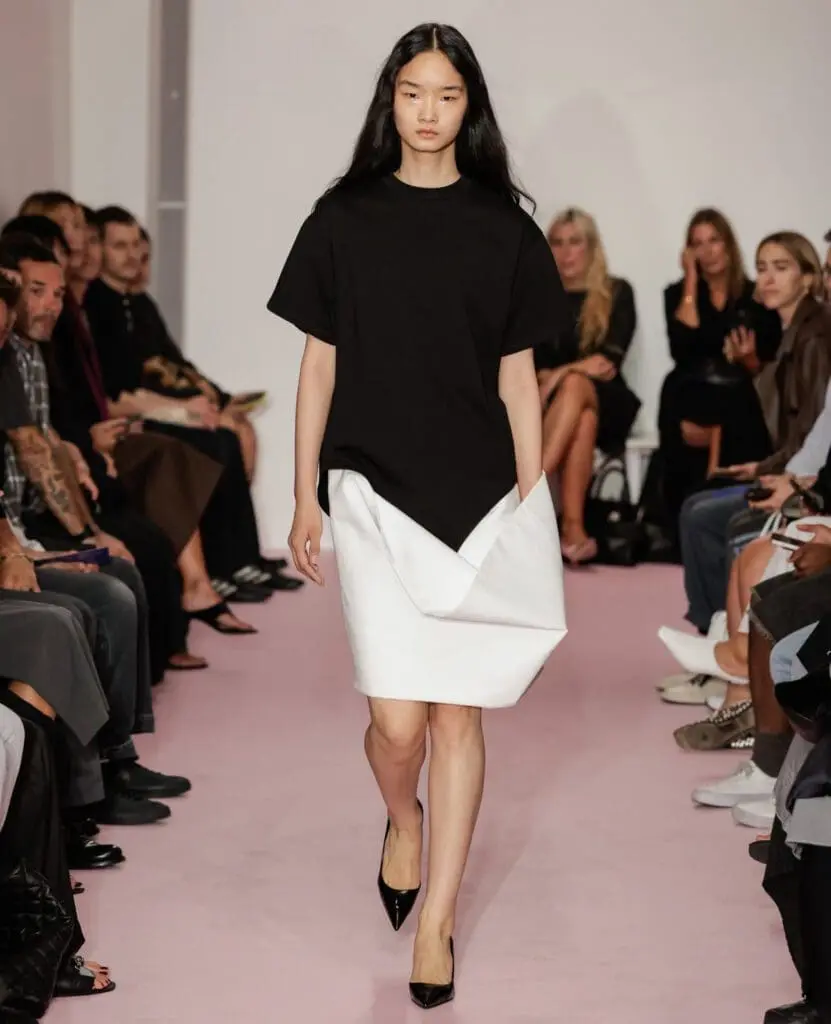
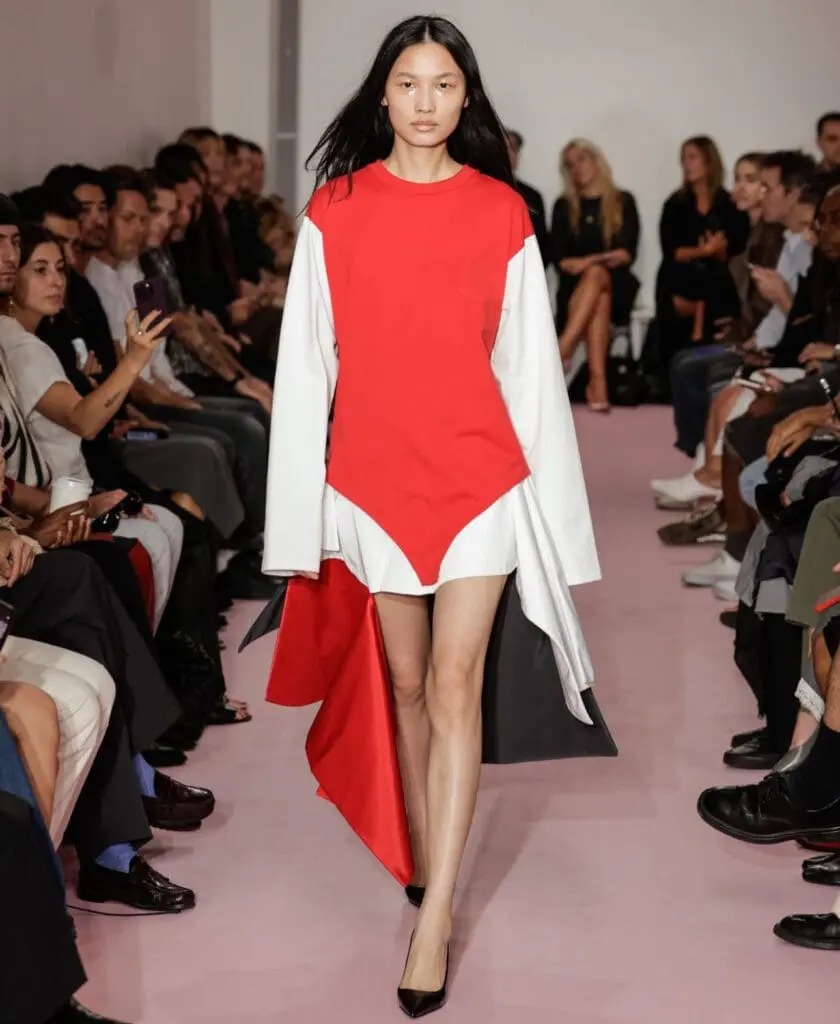
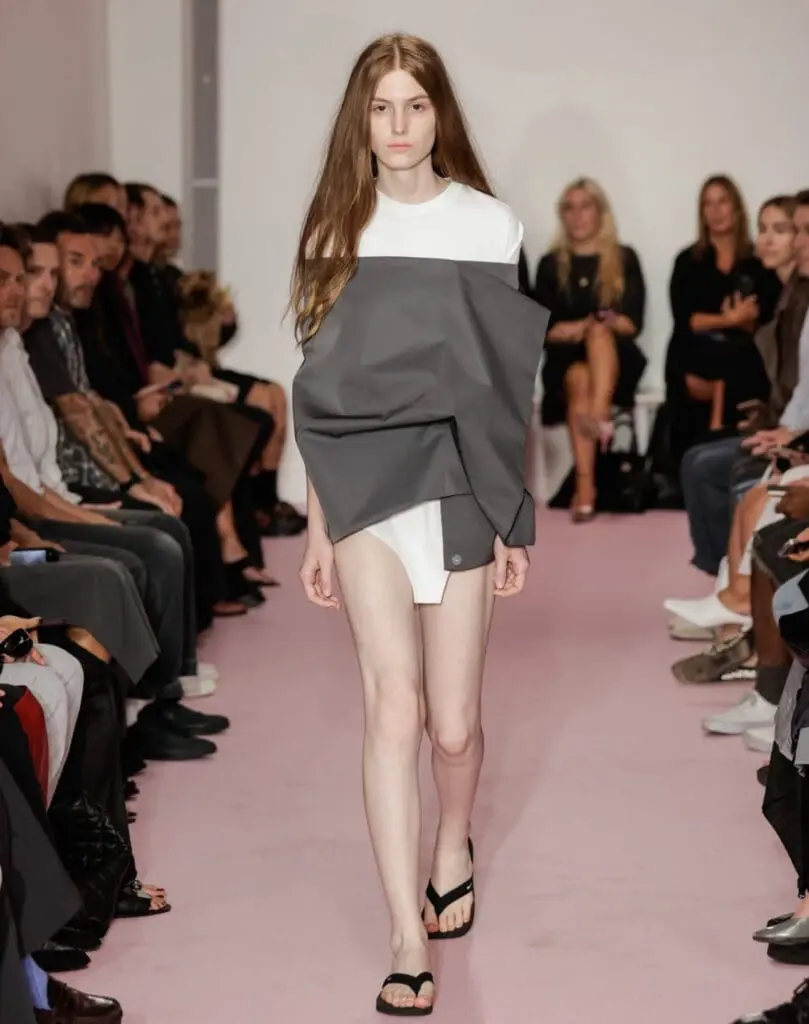
Zane Li’s debut runway for Lii unfolded with a precision that felt both stark and sculptural. The collection stripped garments down to planes of fabric, reassembled into asymmetrical folds that looked almost architectural in motion. Monochrome black and white dominated the palette, interrupted only by flashes of saturated red that sliced through the severity like punctuation. A grey drape folded across a white dress looked like construction in process; a black tee tucked into a sharply folded white skirt became more sculpture than clothing. Even the footwear, simple flip-flops and pointed heels – underscored the duality of ease and edge. What made Lii’s debut compelling was its refusal to decorate. At a Fashion Week thick with lace trims and layered textures, Li showed how restraint itself can be radical. Every piece was pared back until what remained was form, cut, and proportion — an exploration of how little is needed to make something resonate. It was minimalism sharpened into an attitude, less about nostalgia and more about recalibrating what “new” can look like at NYFW.
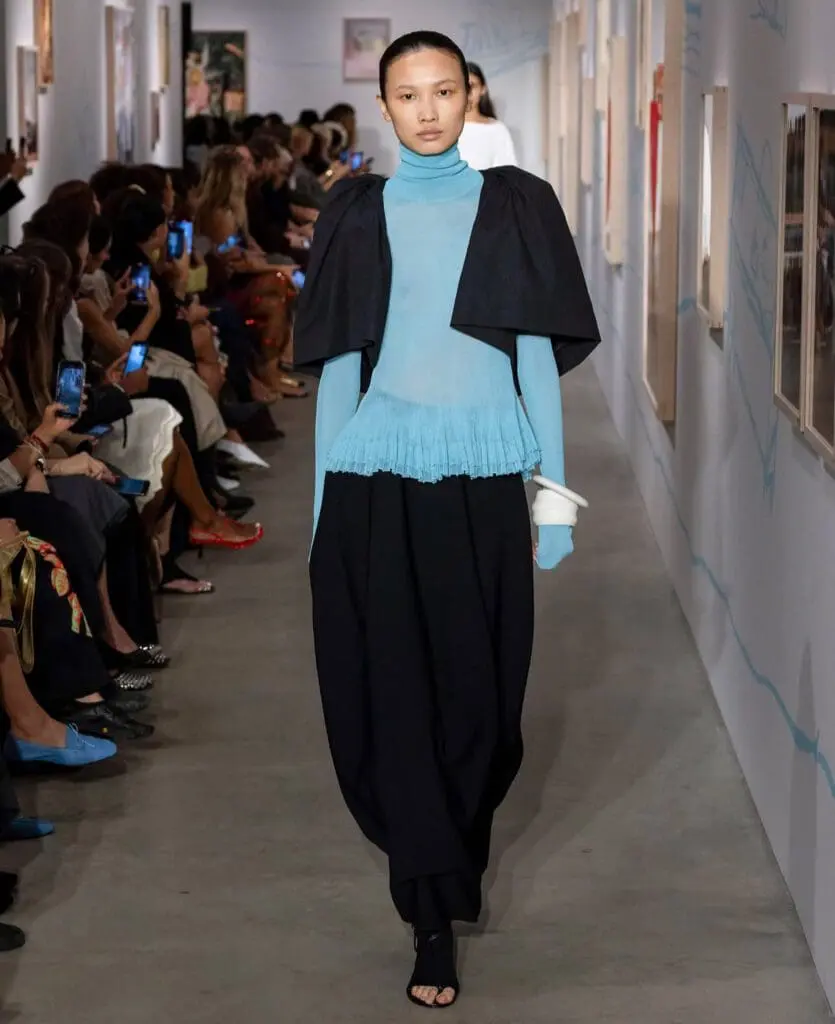
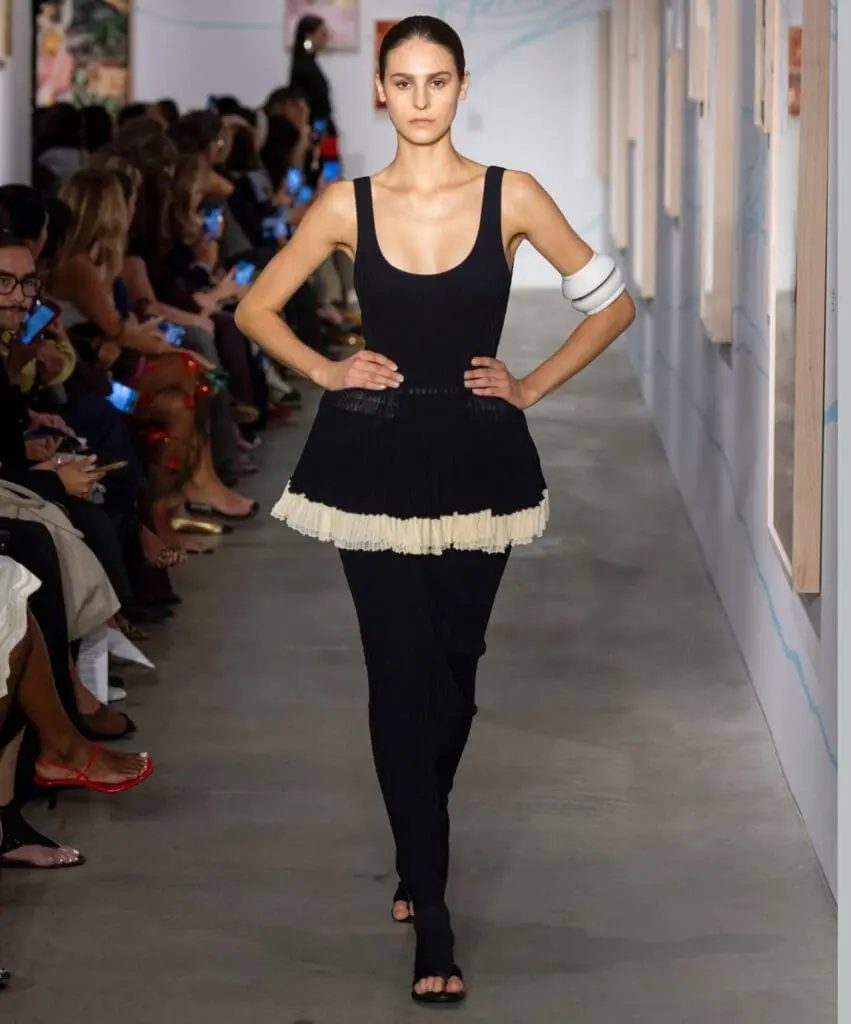
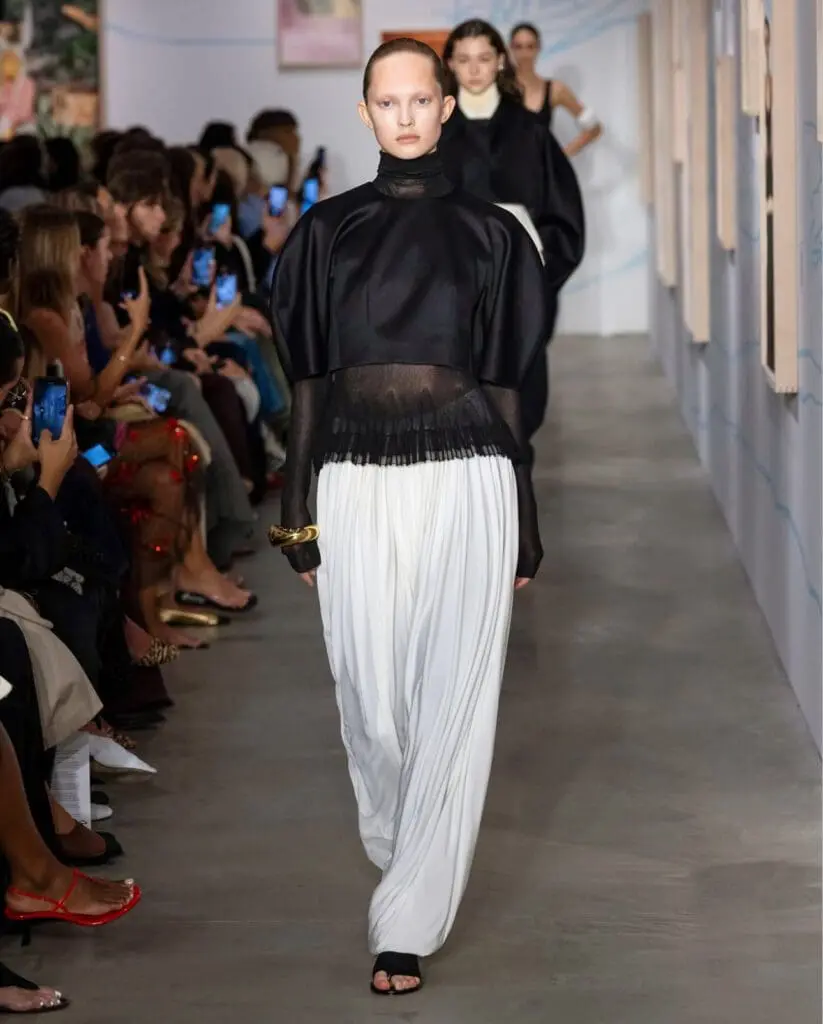
Ashlynn Park’s latest collection for Ashlyn didn’t chase spectacle – it dismantled it. A Korean-born designer approached her runway with surgical care, garments revealing their own construction, seams placed like declarations. Pleated hems framed the body like punctuation, softening the severity of black tunics, wide-leg trousers, and sculptural sleeves. She leaned into contrasts – sheer against opaque, volume against narrowness, but nothing felt forced. Even a flash of pale turquoise carried the same calm precision as the monochrome looks that surrounded it. In a week full of theatrics, Ashlyn carved out a space where minimalism spoke loudly – rigorous yet easy, intellectual yet wearable, proof that beauty doesn’t have to perform sustainability when it can embody it.
And then came Jac Cameron’s Rùadh, who brought a sharp sense of heritage to NYFW, grounding the week with clothes that carried both clarity and ease. Denim shirts layered under blazers, wide pleated trousers, and cropped knits felt effortless yet deliberate, bridging casual wear with something more elevated. Against a tartan backdrop, tradition became a quiet anchor rather than a costume — most striking in a cream suit worn with a sporran at the hip and a green beret tilted just so. Cameron’s strength lay in making heritage feel lived-in, not staged: garments that spoke of identity while slipping easily into the present.
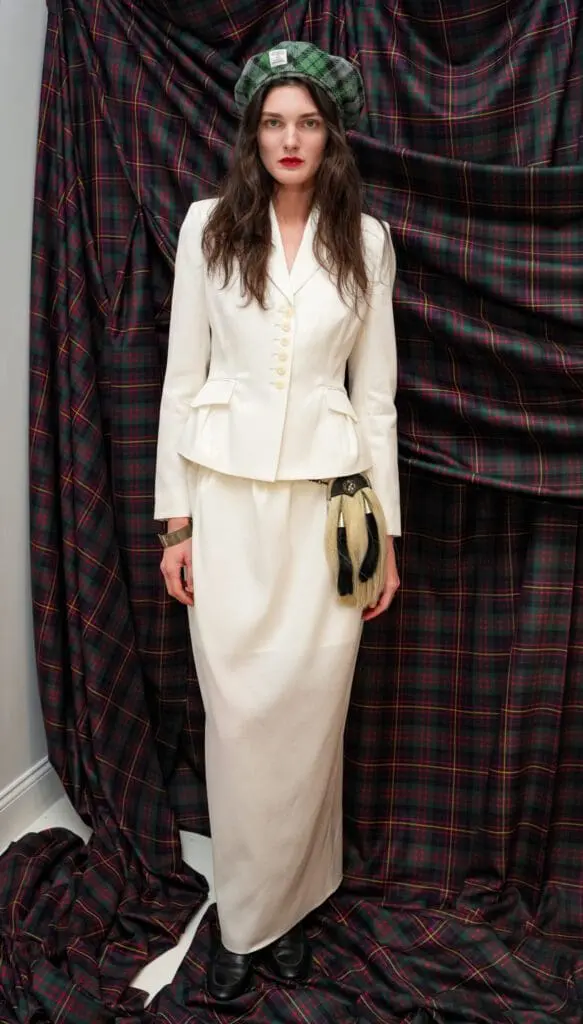
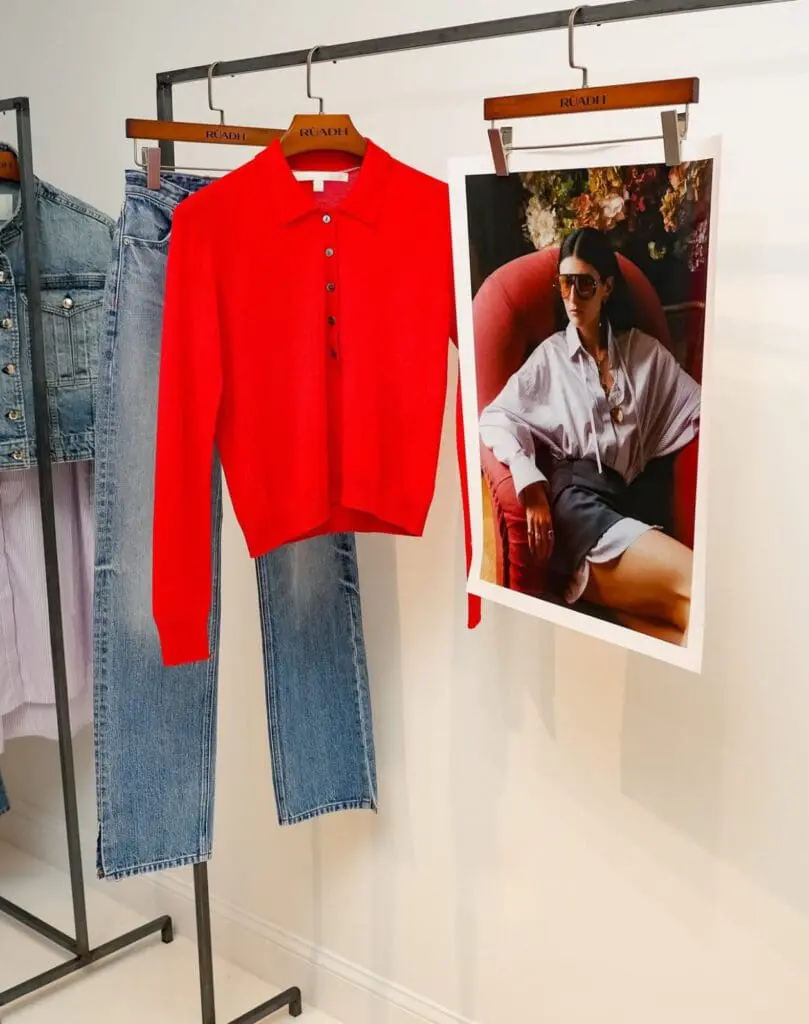
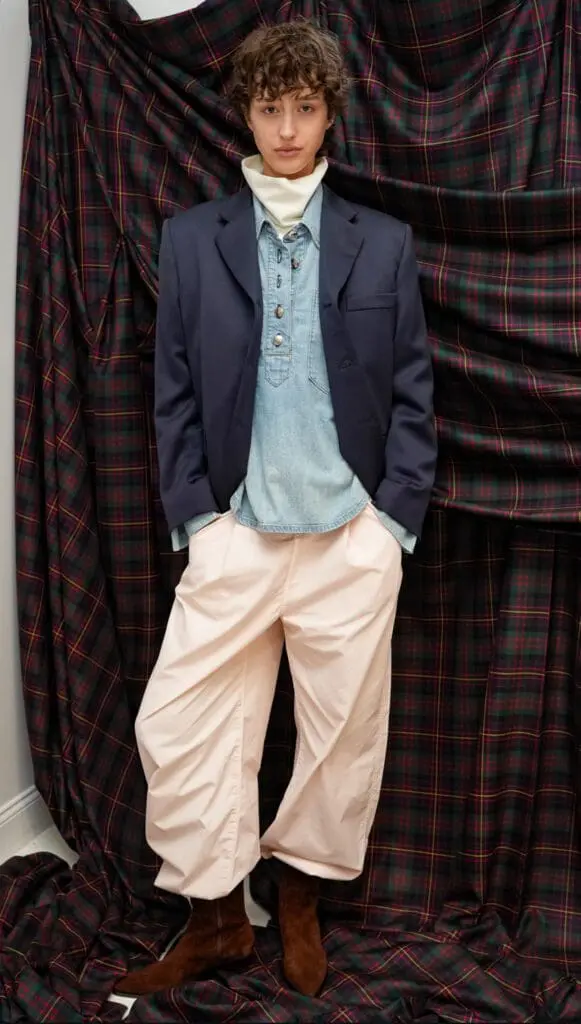
These designers share little in silhouette or palette. Diotima leaned into texture – feathered dresses, fringed hems, and raw trims set against sharp tailoring. Lii unfolded in sculptural minimalism, red, black, and white folded like origami across the body. Ashlyn balanced rigor and ease, her pleated hems and precise contrasts carrying the discipline of her hand. Rùadh grounded everything in heritage, tartan anchoring denim, blazers, and cream suiting with a quiet sense of lineage. What they shared was not aesthetics but attitude: a rejection of spectacle for conviction, proving that resonance doesn’t require scale.
In a season where the most visible trends were checks, lace, layering, and ballooned proportions, their restraint felt like its own form of rebellion. They weren’t chasing novelty or virality – they were building vocabularies for durability, intimacy, and atmosphere. Clothes that echo street layering and texture, but reworked into something sharper, more permanent.
It arrives in restraint, in silhouettes that don’t demand attention but command it. The future of New York Fashion Week, if these voices are any indication, isn’t written in sequins or neon. It will be cut in clean lines, layered in raw fabric, stitched into memory – proving that sometimes a whisper can reverberate louder than any headline


