Words by Lola Carron
Edited by Valerie Aitova
Virtual try-ons, smart mirrors, and algorithmic skincare routines are reshaping beauty – but at what cost?
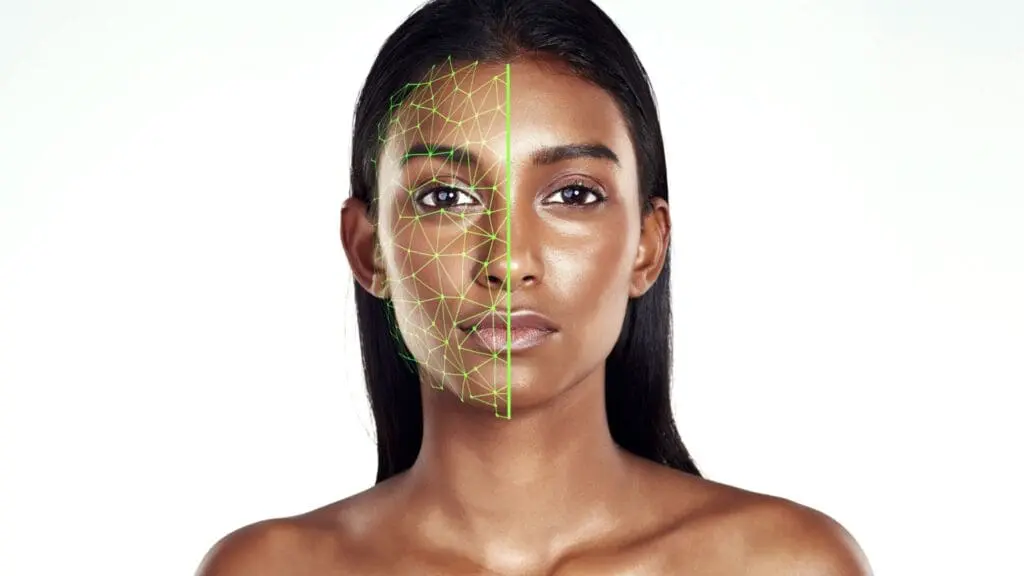
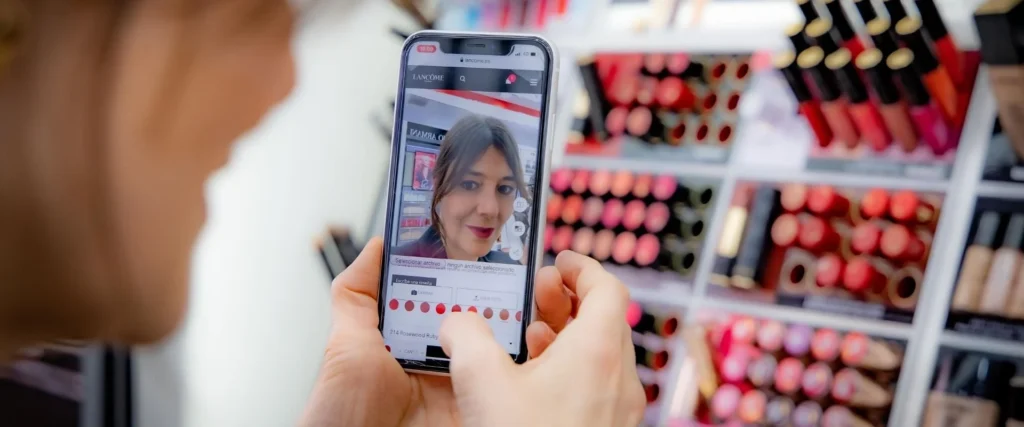
Buying makeup once meant sticky counters, sample pots, and quick decisions under the fluorescent lighting of a department store. Now? You open your front camera and try on twenty lipsticks from your sofa. Tap to swipe a foundation onto your face. Let an app scan your pores. No awkward swatching. No returns. Just frictionless, filtered consumption.
AI in beauty isn’t new. L’Oréal acquired ModiFace back in 2018. But the tech has quietly crept from novelty to necessity. In 2025, the beauty industry doesn’t just sell products. It sells predictions. Precision. And the promise of a perfect match, tailored to your face, your skin, your needs.
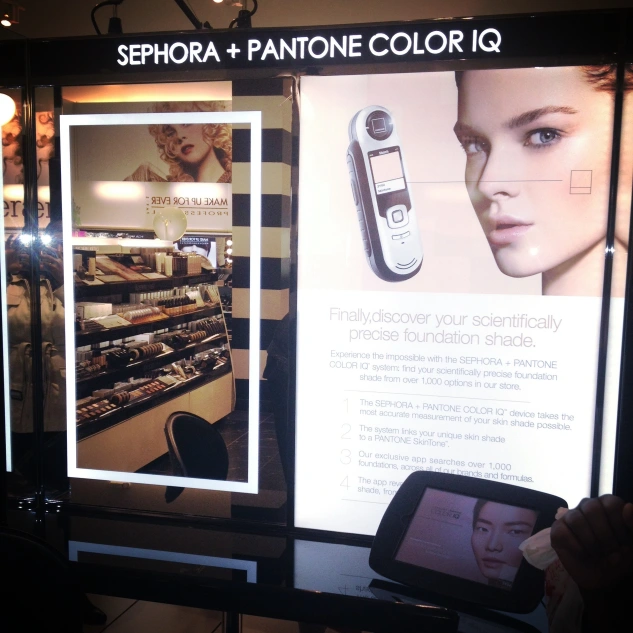
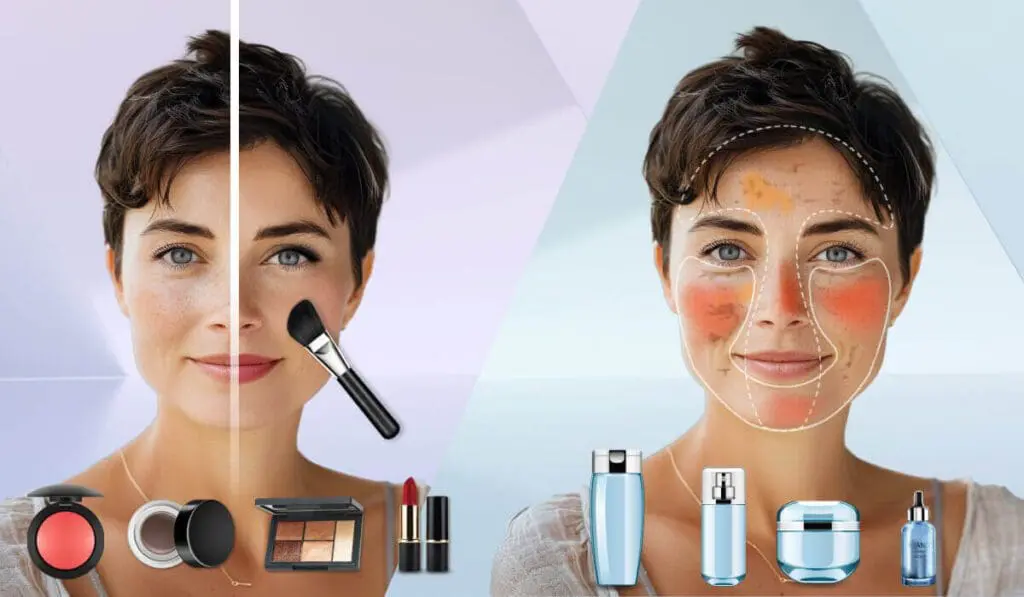
The first shift has been personalisation. Tools like Sephora’s “Colour iQ” or Charlotte Tilbury’s“Pro Skin Analysis” go far beyond light, medium, or neutral. They analyse your skin tone, undertone, even concern zones like pores, fine lines, and dryness. They build a dynamic profile, often more flattering than your own mirror. This isn’t just about foundation. Skin-tech brands like Revea and Haut.AI offer selfie-based diagnostics that spit out bespoke routines, complete with pH levels, collagen estimations, and microbiome insights. Do they work? Sometimes. But even when they’re not perfect, they’re persuasive. Clinical language meets clean-girl aesthetics. The vibe is “dermatologist meets Glossier.”
There’s an emotional pull too: the idea that your skin is a problem waiting to be solved with just the right product, the right peptide, the right prompt. And consumers, increasingly overwhelmed by infinite choice, often trust the data over their gut. For younger shoppers raised on algorithmic feeds, that trust feels natural. For older demographics, the reliance on tech in such an intimate space can feel unsettling, even invasive.
From diagnostics, the industry moves to simulation. What began as a pandemic-era fix has become the front line of digital retail. Whether it’s Maybelline’s AR lipstick filters or MAC’s shade simulations, the tech lets you “see” before you spend, with wildly high conversion rates to match.
In-store, smart mirrors are replacing testers. But they’re not gimmicks. They offer guided consultations, remember past purchases, and suggest complementary colours: “this eyeshadow suits your iris tone.” For retailers, it’s personalisation at scale. For shoppers, it’s intimacy with a digital twist – uncanny, but effective. Importantly, this tech is also reshaping access and inclusivity. Early AR tools struggled with deeper skin tones or non-binary faces. But many tools now offer more nuance in undertone, texture, and lighting. Fenty Beauty’s 50+ shade standard helped push the conversation forward and now, the tech is (mostly) catching up. Still, hair texture, facial asymmetry, and real-world lighting remain blind spots.
At the same time, the creative backend is shifting. Generative AI is increasingly used to design product visuals, simulate swatches, or generate mock campaigns before the product even exists. For brands, it’s agile creativity. For users? Often indistinguishable from the real thing. The result: a smoother, faster pipeline but also homogenised aesthetics, uncanny marketing, and ethical grey areas.
The Advertising Standards Authority has already raised questions about deepfake beauty visuals. If a lipstick only exists in pixels, does it count as beauty marketing? Does it still promise the same result? And if shoppers are persuaded by something that isn’t real, does consent matter? Questions of trust and authenticity loom large, particularly for communities already sceptical of how the beauty industry has historically represented, or excluded them.
All of this points to a deeper cultural shift. Beauty tech promises objectivity, the “right” shade, the “best” routine. But that promise flattens individuality. It risks replacing instinct with algorithm, emotion with optimisation. It’s a beauty counter with no mess, but also, maybe, no soul.
And that’s the tension. For users, the tools often feel helpful, even liberating. Especially for those historically excluded from traditional beauty spaces, personalisation tech offers new points of entry. But the line between tailored and templated is thin.
The risk is that AI makes beauty more precise, but less human, that our uniqueness is slowly shaped to fit the data, not the other way around, turning personalisation into standardisation. The opportunity is to use these tools critically, seeing AI not as a mirror but as a lens, one that reflects our evolving relationships to self-image, beauty, and identity.
At its best, beauty tech isn’t about perfection, it’s about possibility. And that might just be the most human thing of all.