Words by Lola Carron
Edited by Valerie Aitova
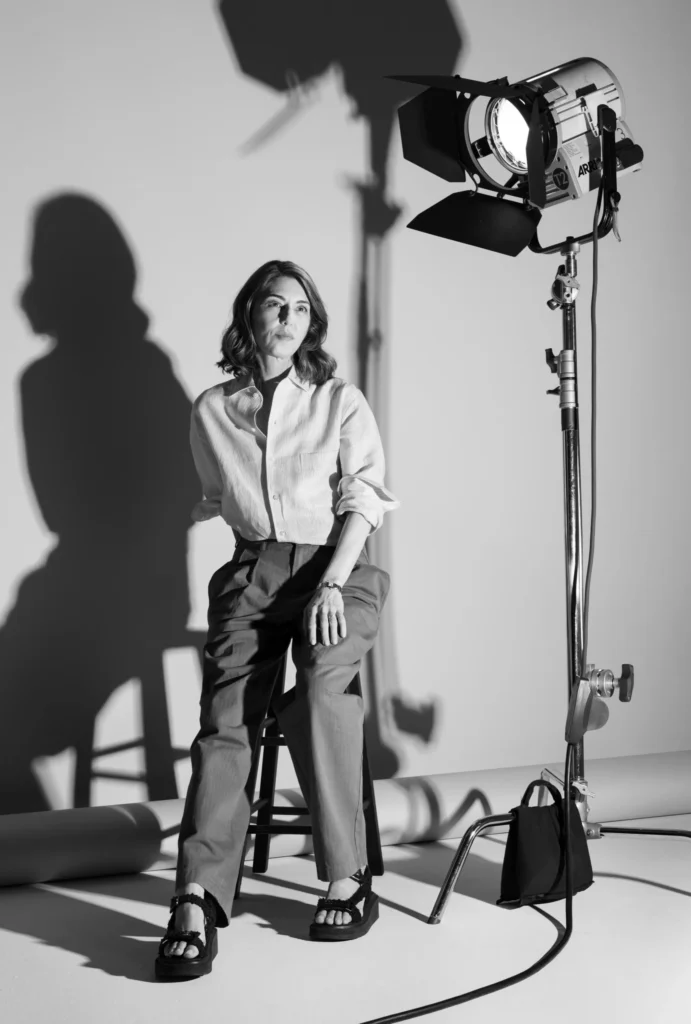
Sofia Coppola didn’t invent girlhood, but she gave it a language – one that’s still echoing in bedrooms, cinemas, and TikTok timelines 25 years later. Her films don’t just depict teenage girls, they live inside their contradictions: dreamy but deadpan, sensual but still, adored but misunderstood. In a post-everything internet landscape where aesthetics come and go faster than a clean girl’s Sunday reset, Coppola’s world remains.
It’s a world of soft light and heavy feeling. Of suburban boredom and satin sheets. Where girlhood isn’t a phase to be outgrown, but a condition to sit in: weird, wistful, and not quite nameable.
Take a scroll through TikTok and you’ll see it: the gaze out of car windows, the Lana Del Rey edits, the Phoebe Bridgers soundtracks. But this goes deeper than trend. Coppola’s aesthetic isn’t just being mimicked, it’s being emotionally inherited. Her work laid the foundation for a cinematic vocabulary of young femininity that’s dreamy, yes, but also heavy with feeling.
You can feel her fingerprints on everything right now. In Priscilla, which reads like a Coppola cover version in the best way, all gauzy tension and repressed emotion. In the rise of indie “girl films” like Aftersun, Past Lives, and All Dirt Roads Taste of Salt. They’re not similar in plot, but they’re spiritually adjacent: Aftersun explores fragmented memory and unspoken grief through sun-washed visuals and quiet observation. Past Lives simmers with longing and the ache of what-ifs, holding tension in its silences. All Dirt Roads Taste of Salt uses imagery and gesture in place of narrative, letting emotion surface through rhythm and repetition. All unhurried. All emotionally exacting. All shot through with a certain stillness that Sofia made cool.
Because Coppola’s influence isn’t just visual – it’s atmospheric. She taught us that a girl sitting in silence could say more than a monologue. That a close-up of chiffon curtains or smeared lip gloss or a too-long stare wasn’t filler, it was feeling. She made girlhood cinematic, not as a spectacle, but as a state of being.
Take The Virgin Suicides. The Lisbon sisters drift through the film like ghosts, all matching nightgowns and vacant stares. But the camera isn’t interested in them as individuals. It’s obsessed with how they’re seen. Their wardrobes (curated by Nancy Steiner) aren’t just costumes – they’re projections. The wedding dress Cecilia wears is not just eccentric but elegiac. A symbol of becoming too early, too much.
That’s the Coppola gaze: girlhood not as a plot point, but a mood. In Lost in Translation, we watch Scarlett Johansson’s Charlotte lie on a hotel bed in Tokyo, still in her pink knickers, suspended in something tender and numb. She’s not exactly heartbroken. But she might be. She’s not exactly in love. But she might be. The film holds space for contradiction – for not knowing.
That same ambiguity now runs through a new generation of female-led narratives. Films where women are allowed to linger in their feelings without having to solve them. In Aftersun, Charlotte Wells lets grief pool in the margins. In Past Lives, Celine Song lets longing simmer rather than peak. These aren’t copies of Coppola, they’re continuations. Inheritors of her emotional logic. The belief that not everything needs to be plot-driven or “important” to matter.
This idea of lingering is crucial. In a culture obsessed with the plot-twist, Coppola lets moments breathe. We watch Kirsten Dunst eat cake alone in Marie Antoinette. We stay too long on Elle Fanning’s face in Somewhere. These aren’t gaps in the story, they are the story. Silence, slowness, mood: they become the tools for telling emotional truth.
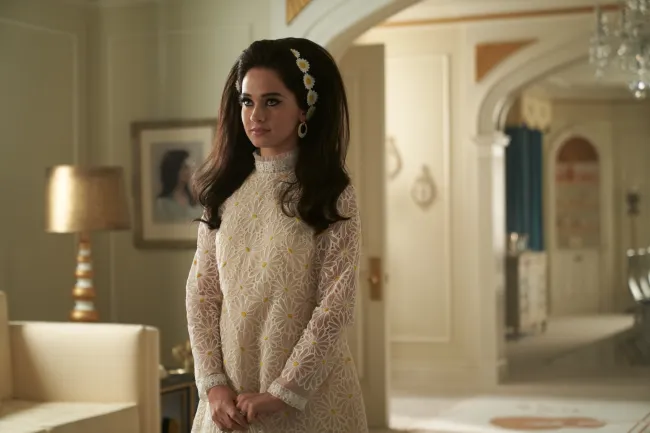
Which is why Priscilla, her latest film, hits such a chord. It’s not a biopic in the traditional sense. It’s a portrait of a girl in a gilded cage, told in hushed tones and gauzy light. Cailee Spaeny’s Priscilla moves through the frame like a ghost, barely allowed to speak, surrounded by soft touches and controlling hands. Coppola doesn’t dramatise her trauma. She just lets us sit in the quiet of it.
TikTok’s obsession with this kind of storytelling speaks volumes. It’s about a hunger for emotional resonance. Clips of Past Lives go viral not because of what happens, but how it feels: the pace, the atmosphere, the emotional interiority. The internet has become a space where slow cinema can thrive, not despite its stillness, but because of it.
While male auteurs like Terrence Malick or Nicolas Winding Refn are praised for their moody stillness and visual abstraction, Coppola’s own mastery of mood is often shrugged off as aesthetic fluff. The double standard is familiar: when men do atmosphere, it’s art. When women do it, it’s vibes. Her work has long been dismissed as “style over substance” – a lazy critique that ignores how, in Coppola’s hands, style is substance. She uses beauty not as decoration, but as a way to frame discomfort, to lull you into softness before revealing the ache beneath. That she does this through femininity through chiffon, stillness, longing, light is precisely what makes it radical. She’s an auteur not in spite of the pretty frames, but because of how precisely she wields them.
And yet, the Coppola effect is more than just a moodboard. What’s quietly radical is how it’s empowered a generation of women filmmakers to explore vulnerability without spectacle. Directors like Charlotte Wells, Celine Song, and even Emma Seligman (though tonally different) are crafting stories where women are the emotional core, not the consequence of someone else’s arc.

Because girlhood, under Coppola’s lens, is not just an age. It’s a perspective. A way of seeing the world that’s hyper-aware, a little removed, and always romantic. And while some critics still dismiss her work as style over substance, that take feels increasingly tone-deaf. In a culture that filters women’s stories through urgency, trauma, or resolution, there’s something quietly subversive in letting beauty, boredom, and stillness take centre stage.
Yes, Pinterest might be filled with Coppola-core moodboards and TikTok is full of sad girl cinema edits. But beneath the satin and sighs, something real has shifted. A generation is finally seeing softness as strength. Finally recognising girlhood not as a stepping stone to adulthood, but a cinematic space all its own.
Because as Sofia Coppola taught us, girlhood isn’t just dreamy, it’s a kind of captivity that forces you to imagine your way out, and a language that lets you linger in it a little longer.