
Words by Mia Raja
Edited by Valerie Aitova

For years, music has invited us to be vulnerable. Certain melodies have a unique power to stir emotions and draw hidden feelings to the surface. But it is lyrics, in particular, that often give voice to feelings we struggle to articulate ourselves. Whether you grew up blasting rock and roll lyrics about being misunderstood through bedroom walls or healing through break ups with a Best of Taylor Swift playlist, lyrics have likely, in some way or another, played a cathartic role in your life.
Now, with the rise of platforms like TikTok, certain songs are acting as emotional permission slips for young people, in particular, to project their personal stories online. But what is it about these tracks that resonate so strongly with us? And what makes them go viral for this reason?
The recent release of Chappell Roan’s The Subway has sparked a new TikTok trend in which users are using the lyric, ‘she got away’, as a medium to share what they ‘got away’ from: a toxic relationship, a small hometown and even nightmare in-laws.
Although some are taking to the comments to point out that the song is not about ‘getting away’ but losing someone who ‘got away’, most TikTokers are simply adapting the lyrics to fit their emotional truths.
The range from confessional captions like, ‘How it feels to never have to marry into that family’ to more poetic statements like, ‘I’m going places you’ve never been, listening to music you’ll never understand’ prove that it’s never really about the original meaning of the lyrics — it’s about how we, as listeners, interpret them.
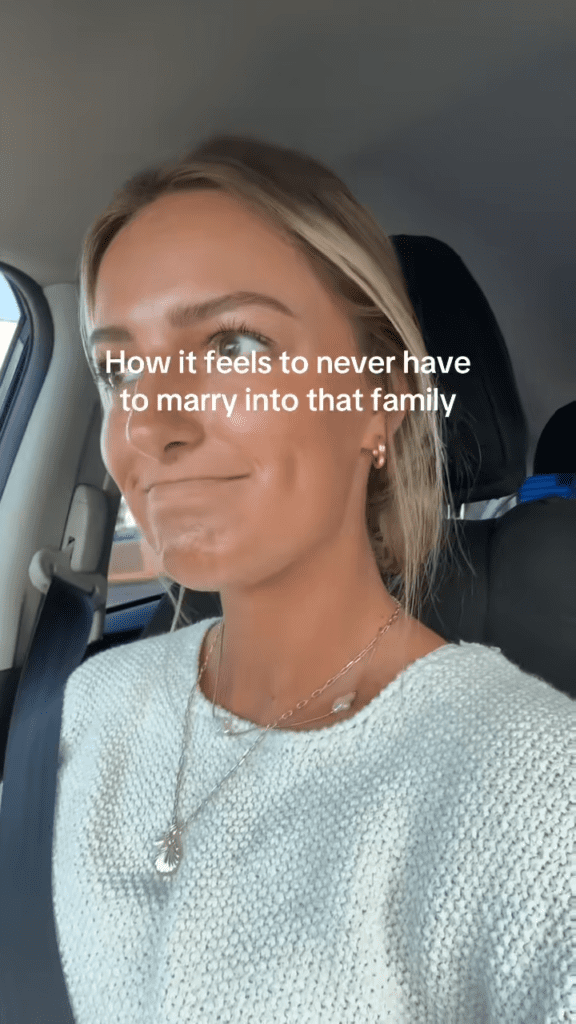
Consciously or subconsciously, we try to find meaning in the lyrics that we listen to, in a way that makes sense to us.
In this case, it may be the simplicity of the lyric ‘she got away’ that resonates, allowing us to interpret it through our own experiences of escaping an unhappy environment. But this isn’t the only time we’ve seen this trend across the app.
Another one of Chappell Roan’s tunes went viral when users, namely young women, found Casual to be the perfect track to a situationship.
Young women across the app used the sound to create videos discussing the disorientating moments that blurred the lines between casual and serious — like when a partner kissed their forehead or stayed up talking with them, making the relationship feel more meaningful than it was.
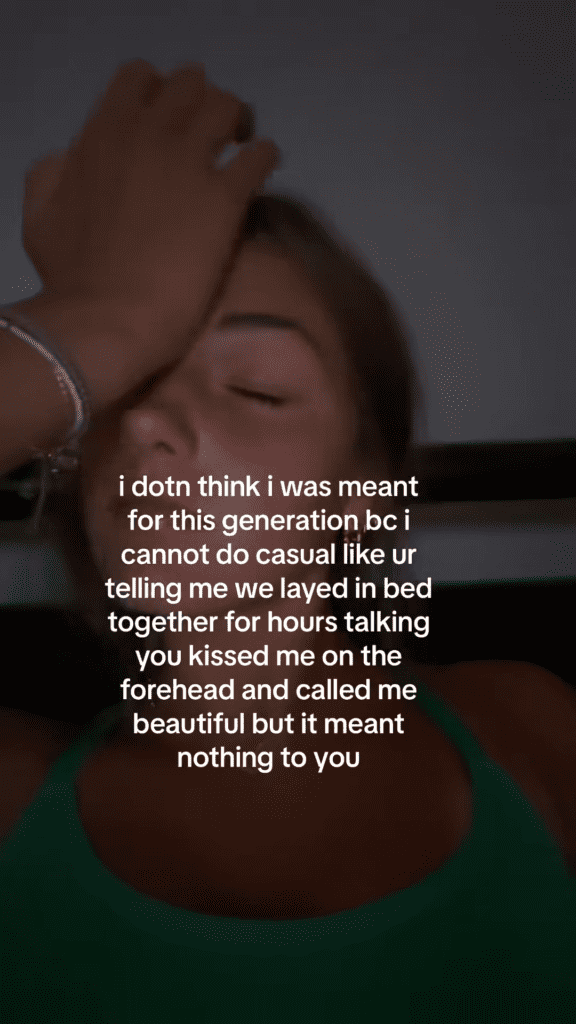
Others paired the sound with the caption, ‘tell me about your ‘is it casual’ moment’ — prompting a flood of comments sharing how a partner had led them to believe the relationship was genuine.
In this way, Chappell’s lyrics, ‘is it casual’, validate our feelings about situations where we’ve felt confused, hurt and maybe a bit embarrassed for feeling more than we should. The vulnerability that we suppress with casual connections is given a cathartic release through Chappell’s words.
Similarly, six months after the release of Olivia Rodrigo’s Guts album, TikTok users began a trend in which they search for where Olivia ‘hid the cameras’ in their room to illustrate how applicable they feel the 22-year-old’s songs are to their personal situations.
Users refer to a variety of Olivia’s tracks in their videos such as the grudge and scared of my guitar, using snippets of the lyrics: ‘‘I try to understand why you would do this all to me / You must be insecure, you must be so unhappy’ and ‘Barely sleep when you sleep next to me / But I keep thinkin’ I’ll find a cure’.
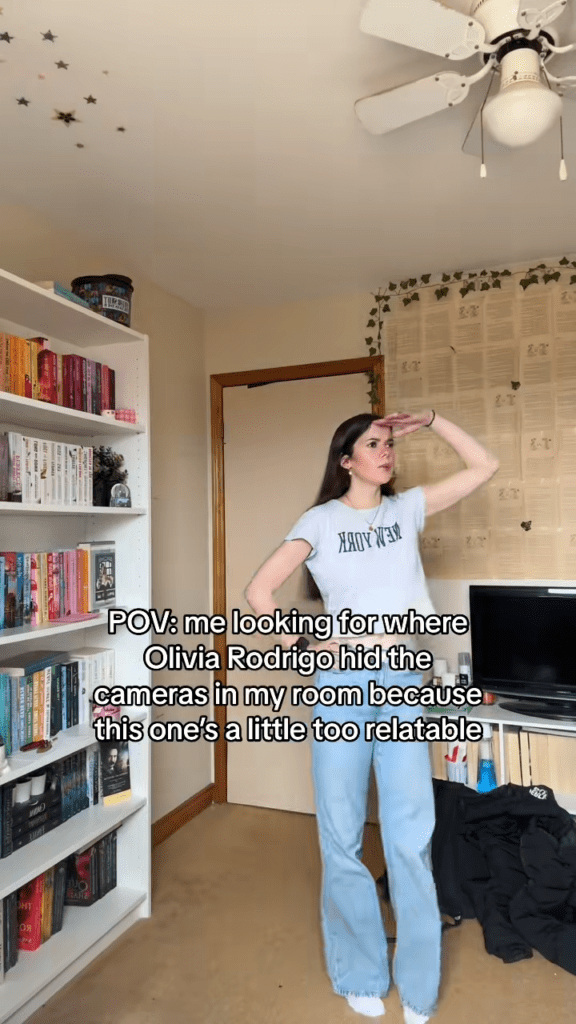
While Olivia’s lyrics can feel deeply personal and specific, she crafts them to capture universal reactions to betrayal or heartbreak — from sleepless nights to the struggle of making sense of someone else’s behaviour.
So, although the lyrics to these viral tracks can feel eerily specific, this is because they tap into heavy emotions that we all experience in some way or another. These are universal feelings — no matter the unique circumstances that sparked them.
Music alone can stir deep emotion. But it is the addition of lyrics that really evokes vulnerability.
In 1994, a study was carried out on college students to examine the comparative effects of lyrics and music on mood. While music alone boosted positive affect, combining it with lyrics produced the opposite effect. The experiments found that sad lyrics, even when performed in an upbeat style, decreased positive affect and pairing a melody with sad lyrics led students to rate the melody alone as less pleasant.
Ultimately, the study proved that adding lyrics to music produced a stronger effect on mood than music alone. With lyrics enhancing emotion, it is no surprise that, when they feel relatable, our emotional attachment to a song deepens.
Once a few people share their story online with these lyrics as the soundtrack to their videos, this sparks a ripple effect of reposts and replies with others posting their own experiences and finding reassurance in knowing these intense emotions are widely shared. Understandably then, this creates a sense of both intimacy and community on social media platforms.
It’s easy to feel isolated in our emotional pain, and social media tends to amplify that. In an age where terms like ‘ghosting’, ‘breadcrumbing’ and ‘orbiting’ exist, relationships feel incredibly confusing and being vulnerable feels harder than ever before.
It takes even greater courage to share our personal stories online. But, framed through the comfort of familiar lyrics, the weight of vulnerability feels a little lighter.
And as these confessions ripple across the internet we’re gently reminded, again and again, that our struggles are shared and that none of us are ever truly alone.


