
Words by Taha Abdullah
Edited by Valerie Aitova
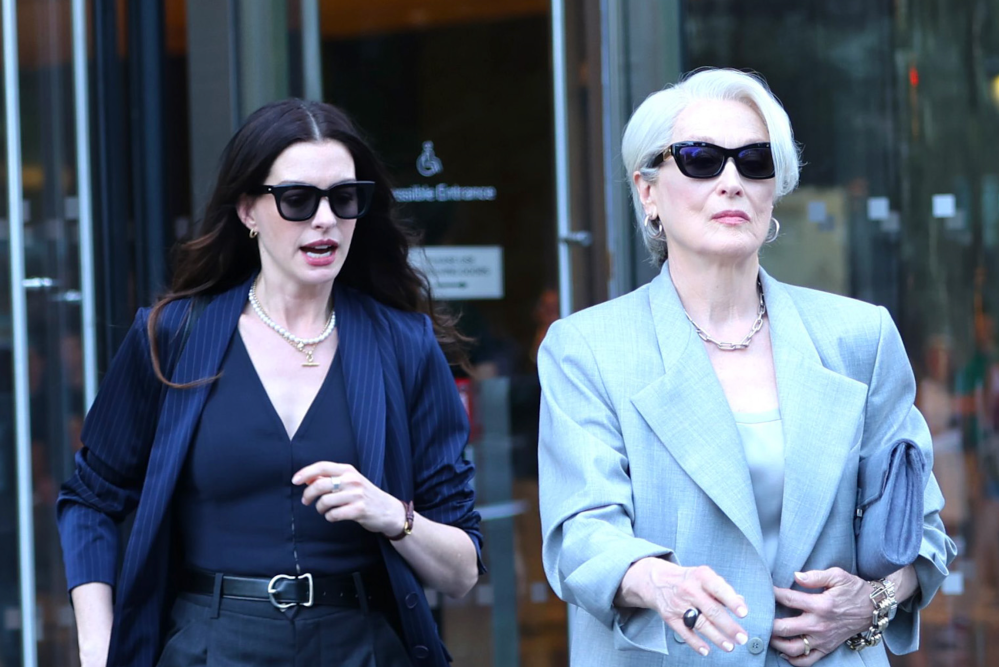
Films used to thrive with the power of suggestion, withheld glamour, and a slow-building spectacle. However, the aura of exclusivity that once sold Hollywood and created stars is being traded for instant relevance. This need for significance has caused fatigue. The Devil Wears Prada Sequel has generated much buzz right now; however, not everyone is excited.
The buzz of the Prada 2 (currently mid-production) has swept social feeds, but in doing so invoked lethargy. Almost daily, a new angle, look, or scene circulates online, and for the most part this is accompanied by commentary or even entire fan-theorised narratives. Social platforms are flooded with speculative plotlines, celebrity wardrobe IDs and hyper-analysed stills. Strangely, the production seems unbothered as there’s been no effort to reduce visibility or manage the flow of information. Without much searching at all, our feeds are updated with character arcs, costume reveals and even tonal cues, handing us what once would’ve been carefully protected. What should be anticipation is starting to feel like exhaustion. Even fans are pre-empting the disappointment that comes with knowing too much too soon. This kind of visibility may guarantee global reach and free marketing on a massive scale, but it also comes at a cost of drama. It’s a trade-off that Hollywood seems increasingly willing to make. However if a film is already thoroughly dissected before it premieres, does it still have the power to move us? Are we witnessing the magic of movie-making disappear in real time?
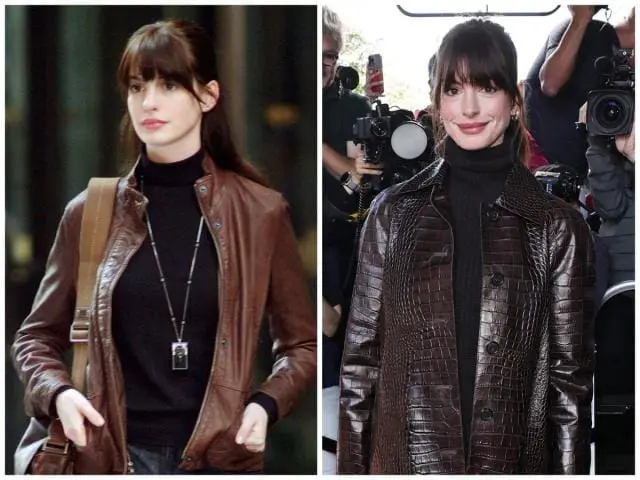
The 2006 original became a cultural phenomenon by letting the viewer enter the world of elite fashion journalism. Today, the sequel is not only bringing back its ensemble cast – including Meryl Streep, Anne Hathaway, and Emily Blunt – but it’s doing so with the added spectacle of high-profile guest cameos and paparazzi-documented sets. Staying true to form, the film uses New York City as its backdrop, and the film’s constant updates show us exactly why this is the city that never sleeps.
In today’s Hollywood, the line between homage and rehash is razor-thin. Legacy sequels have become a kind of cultural shortcut – a cheat code to garner attention. They come pre-packaged with recognition, hashtags, and audience recall. Nostalgia however, is a delicate fabric that if pulled too hard, will fray. For every Top Gun: Maverick, which earned its stripes through emotional depth and updated stakes, there’s a dozen sequels that collapse under the weight of their expectations.
So where does the Prada 2 fit? The original wrapped its narrative with purpose. The titular character, Andy Sachs, had a complete character arc – she went from a wide-eyed assistant with dreams of becoming a journalist in the big city, to someone who walked away from the machine with her values mostly intact. To bring her back now risks undermining the growth we once applauded. Sequels of this ilk often end up as pure fan service, their core offering reduced to recycled dialogue, familiar shots, or fashion throwbacks that feed social media more than they serve the story.
The story of the iconic ice queen Miranda Priestley was not one of a simple antagonist. She was an arbiter, a figure of power in an industry that historically defined standards. However, that power has eroded in an era of influencers and instantaneous trends. Where once a magazine editor could set a season, now a 30-second video can flatten a runway into a dozen forgettable drops. If the sequel leans only on fashion spectacles consisting of montages, cameo-studded walkways, and luxury brand placement, it risks losing the moral core that made the first film resonate.
When the original movie premiered, it wasn’t just a fashion film; it embedded itself in pop culture. It dressed up the makeover trope in Prada and Chanel, but beneath the gloss was something sharper. It was a story about ambition, compromise and the politics of taste. It didn’t just satirise the fashion industry, it made a case for why it mattered. “You’ve made a choice that exempts you from the fashion industry,” Miranda scolds Andy, delivering one of the most remembered monologues from the film as a whole. The thesis Miranda lays out made fashion feel consequential and displayed the importance of the industry. It tied fashion commerce to culture and self-expression which is why it still holds weight in the fashion world nearly two decades later.
So, what does the sequel offer? Another fish-out-of-water storyline? More walking-in-heels montages? A meme-ready line delivery from Meryl Streep? And more importantly, can those elements still mean something? In 2006, fashion was a gated palace; now, it’s a carousel. Social media has given everyone a front-row seat, but what happens when nobody’s watching the show because they’re too busy watching the next reel?
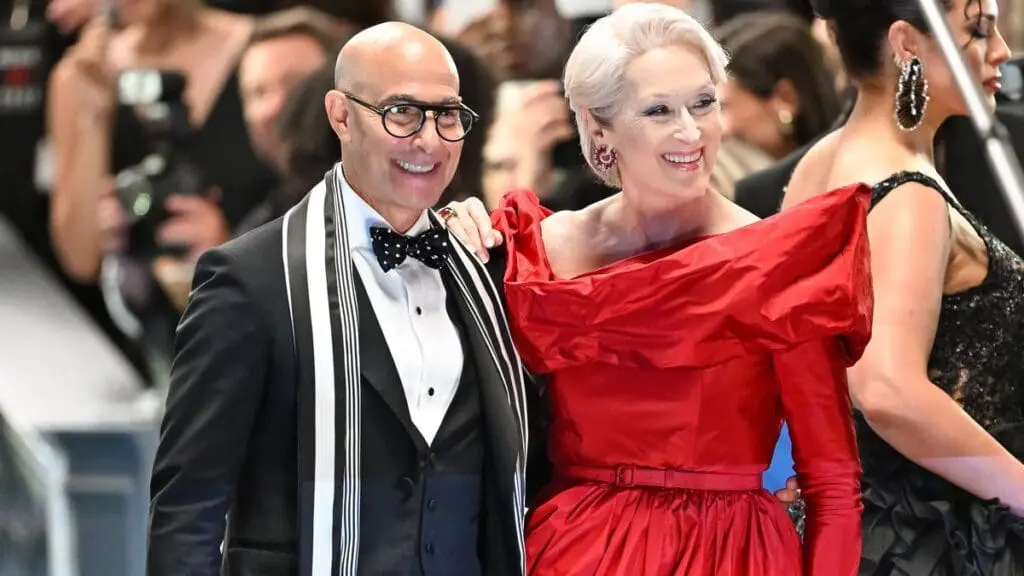
There’s already early chatter that Prada 2 may be more about runway nostalgia than character evolution. And in a media environment where virality often takes precedence over narrative substance, the temptation to lean into aesthetic fanfare is strong. But if a legacy sequel can’t move the story forward or complicate its themes and all it offers is a mirror of what once was, does it deserve the runway at all?
Of course, some of this discourse is irresistible. The joy of fandom has always been about speculation, rewinding trailers at 0.25x speed, freeze-framing for clues and assigning meaning to every facial expression. That kind of engagement can build hype – and it’s organic. But Prada 2 isn’t teasing breadcrumbs…it’s serving the whole cake. And that raises the question: who does this level of exposure benefit? For audiences, the charm is wearing thin. In a story where glamour and exclusivity were once central themes, this transparency feels out of sync and at times artificial. And without mystery, the spectacle starts to vanish.
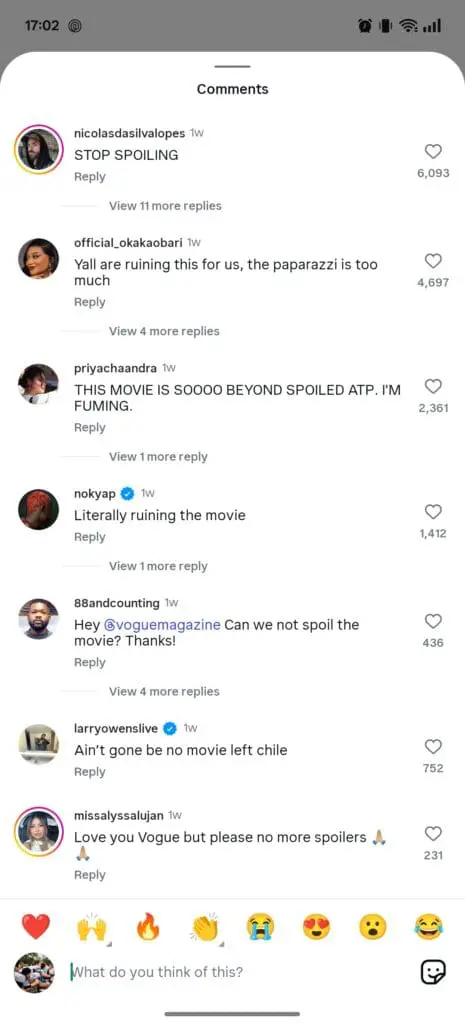
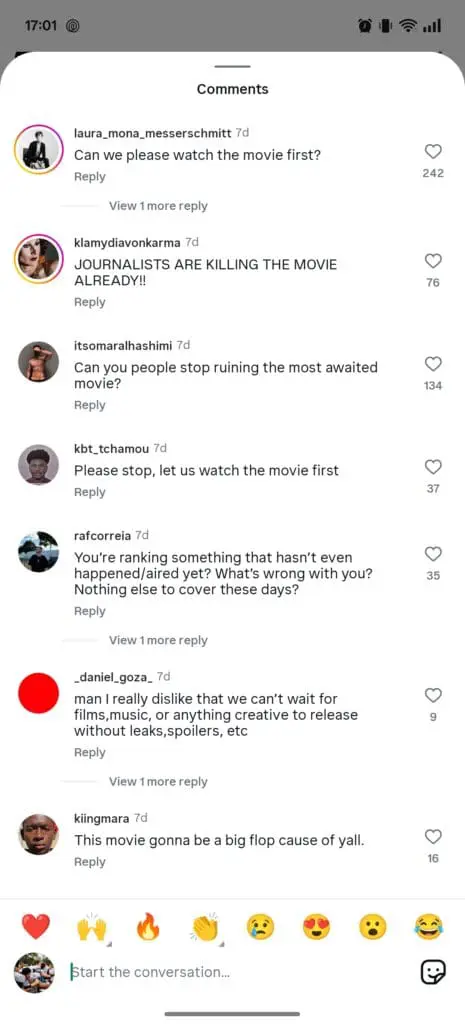
All this discourse, however, isn’t fan-led. Almost all fashion magazines, major and minor, have released their takes on the viral BTS content. Notably, Dazed and Vogue suggest how ‘all is revealed’ and to follow the ‘link in bio’ to catch all the ‘exclusive BTS bits’. These outlets are fueling online fatigue by running ‘exclusive’ BTS photos, or ranking outfits, or treating costume reveals as a daily spectacle. All this talk is damaging the movie’s perception among audiences – look at their comment sections above. The social media marketing ecosystem requires the industry to give a significant push; however, viewers are tired of this gossip culture mode of reporting. The fatigue caused internally reveals a systemic issue, not just a byproduct of fandom.
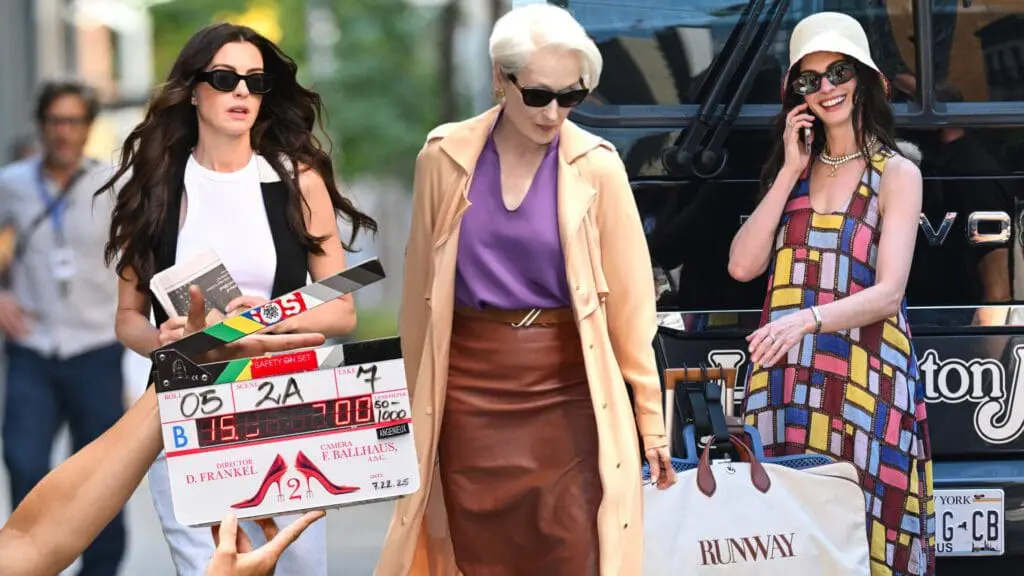
Although these publications hold significant weight in terms of relevance, influencers determine the majority of trends and have replaced many editors in that sense. Many magazines have followed suit and gone digital, utilising the tactics influencers use. As a result, credibility is now often found in the comment sections. The fictional Runway Magazine from the film will need to be reinvented. In the real world, we’ve seen how even the most significant publications have been forced to adapt and buy into trends. Will Miranda’s old-school ‘Book’ hand-delivered, or in-person ‘Run-Throughs’ survive in this world? Can the fashion priestess still dictate what’s next when everyone thinks they already know? There’s a risk that the sequel will trade its bite for banter. The original had cultural weight because it took itself seriously enough to make a statement. If Prada 2 wants to do more than chase clout, it will have to do the same.
“There is no one who can do what I do.” – Miranda Priestley, 2006
Miranda’s line was a claim about irreplaceability in a business of reinvention. Legacy demands more than virality; it requires vision. Prada 2 can still reclaim integrity – but only if it resists the social media machine’s easy wins. If it leans into surprise, character, and stakes instead of relying on pre-release spectacle, it might remind viewers why movies mattered before everything became an object for repost.
“Are we going to see the whole movie over reels?” – Viral Instagram comment
Reels make every moment previewable and therefore, disposable. What used to be yesterday’s news is now an hour-old headline. Buzz is fleeting, and if the buzz is fleeting, what does it do for a film? The irony is that Prada 2’s marketing engagement may hit record numbers, but by that same logic, the attention it garners could evaporate just as quickly. The spectacle risks burning out before the first ticket is sold.
Continuing a legacy demands more than virality; it requires vision. If Prada 2 forgets the wit, layered performances, and knowing commentary on ambition and sacrifice that made the first film endure, then no number of reels, retweets, or runway shots will regain that magic. In a world that rewards virality over substance, the true challenge is to slow down long enough to make something worth remembering. It’s clear we’re demanding the magic, and if this point isn’t acted upon soon, it will only confirm the fear in that viral comment: that we are, in real time, watching movie magic disappear.


