
Words by Valerie Aitova

Ever find yourself lost between endless Pinterest boards and TikToks about marrying fictional characters? So deep that the boundary between what’s real and what’s imagined starts to blur? In that moment, you’re not broke. You’re not exhausted, not underpaid, not spiraling. You are her — the main character of a hyper-curated, neon-soaked, emotionally scored life that exists entirely in your mind.
Welcome to the delulu era — where delusion isn’t dysfunction, it’s power.

What started as internet slang, born from the playful mispronunciation of “delusional,” has spiraled into a generational mantra. Gen Z didn’t just reclaim the term — they (and here I mean “we”) crowned it.
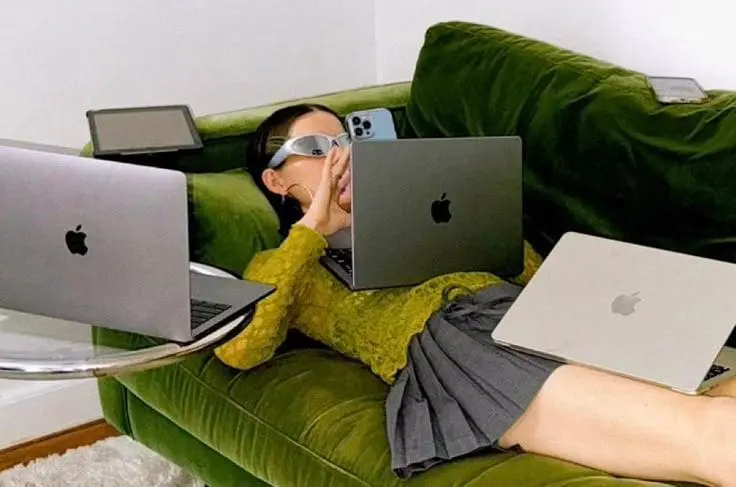
It isn’t just a meme.
It’s a cultural thesis.
A coping mechanism.
Delulu is not denial — it’s design.
To understand today’s delulu culture, we have to trace its roots back to Tumblr — the kingdom of raw, sprawling identity experiments. Tumblr was where Gen Z first learned to dress their pain in poetry, to perform vulnerability like an art form, and to build entire worlds from gifs and reblogs. It was a slow burn of self-discovery, a digital diary layered with hope and heartbreak.
But as TikTok took over, that slow burn became a neon flash: rapid, performative, and endlessly remixable. Delulu evolved from a less quiet confession to a more bold manifesto. The fantasy wasn’t just a refuge anymore — it was a stage.
Gen Z was raised in a constant, curated noise — avatars before adolescence, filters before first kisses, infinite scroll before any real sense of self. We learned early that the version of ourselves the world wanted wasn’t always the version we wanted to be.
So we built new ones.
Girlboss CEOs at 14, raised on Pinterest vision boards and Legally Blonde reruns. Sad indie boys with Tumblr trauma dumps and Spotify playlists of heartbreak. And German heiresses with forged bank statements and Inventing Anna accents. We became fluent in aesthetic language.
Fluent in unreality.
In many ways, delulu is how we survive late capitalism. When you have no savings, no healthcare, and no idea if your city will even be habitable in 50 years…
Why not manifest a life where you’re the star of your own novel?
Why not pretend your morning matcha is a potion of prosperity?
Why not fall in love with a K-pop idol who doesn’t know you exist?
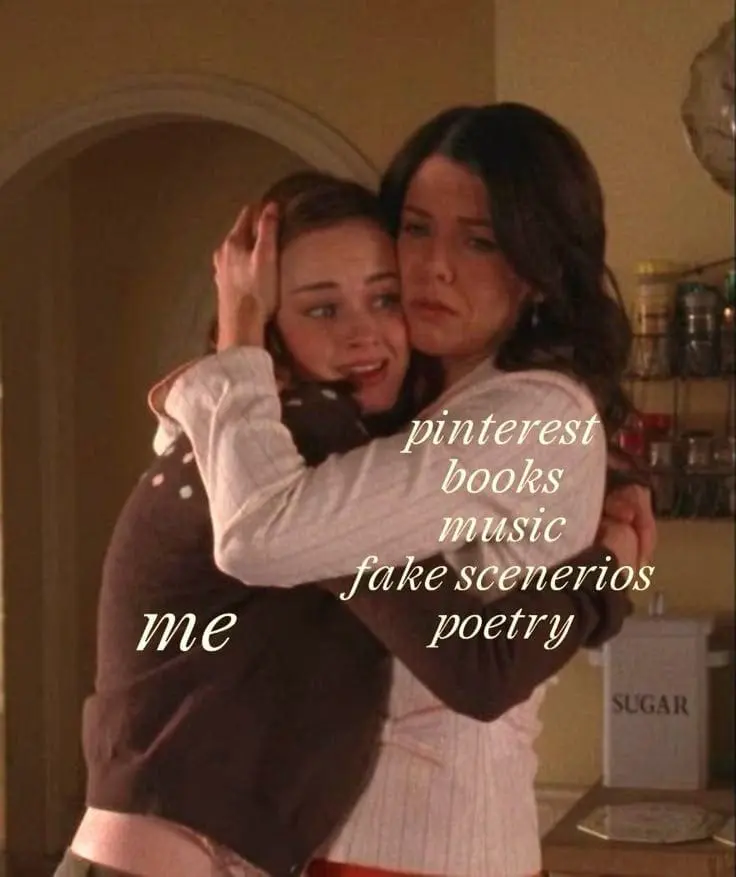
It’s not a delusion.
It’s aspirational fiction with benefits.
Reality hasn’t exactly offered much comfort lately. Everything’s expensive, the news is exhausting, and dating feels more like a glitchy game than anything romantic. It’s no wonder people start living in their heads a little. Because building a better story in your head sometimes feels smarter — even safer — than accepting the chaos outside it.
In that way, delulu isn’t a detour from awareness. It’s emotional intelligence.
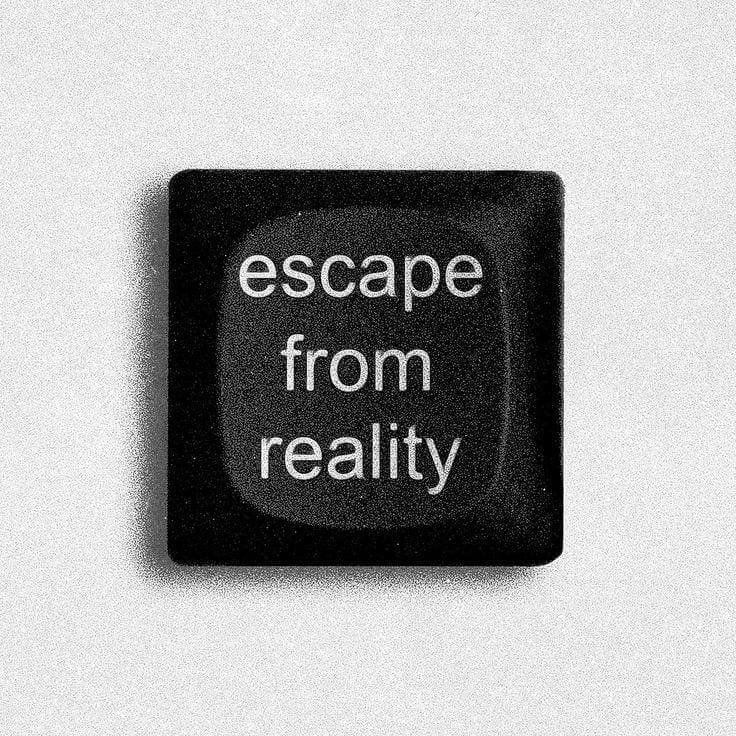
Escapism Isn’t Weak — It’s Strategic
It’s how we take control of narrative in a world that constantly writes over us. We see this in the obsessive rewatching of comfort shows like Friends until the lines blur and Chandler’s sarcasm becomes your internal monologue. We move through Taylor Swift eras like horoscopes — folklore one week, reputation the next — each aesthetic not just a mood but a full identity transplant. And we treat each walk to the coffee shop like an Emily in Paris season premiere.
These aren’t just trends. They’re survival scripts. Emotional armour stitched from pop culture and fantasy. We build realities that protect us. When you see TikTok’s captioned “me walking to my minimum wage job pretending I’m the main character,” that’s not just a cute delusion. That’s identity alchemy. It’s a way of turning the ordinary into something cinematic; of making your life feel like it matters, even when the world treats you like background noise.
The girl who pretends her crush is obsessed with her isn’t clueless — she’s creating a version of herself who’s wanted, in a world that constantly makes her feel replaceable. The guy who thinks he’s in a romcom isn’t out of touch — he’s giving his own story the attention no one else will.
Because when everything feels unstable, identity stops being a fixed fact and becomes something you create. Something you choose.
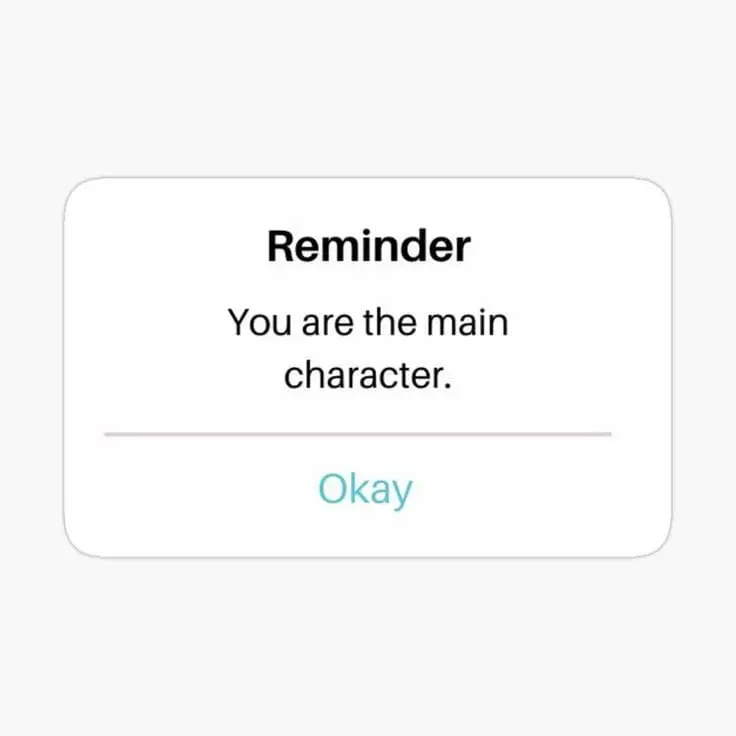
It’s emotional theatre. And we’re all directors now.
But delulu isn’t always safe. When does fantasy stop helping us and start controlling us? How do we know if we’re healing or hiding? There’s a fine line between romanticising life and detaching from it completely. Between being the main character and forgetting there’s a real world behind the script.
Escapism, if held too tightly, becomes a kind of emotional numbness. It tells you everything’s okay, as long as it looks okay. It convinces us we’ve processed something just because we’ve posted about it. The internet — infinite and addictive — makes that numbness feel natural. It rewards surface over substance. It blurs vulnerability with branding.
We learn to speak in curated captions and inside jokes, not because we’re disingenuous, but because it’s easier than sitting with what’s raw and unresolved. The more we disappear into the fantasy, the harder it becomes to feel fully present in our actual lives. And when the performance ends, there’s often an emotional hangover. A kind of ache that says:
“I don’t know who I am without the character I’ve been playing”
You close the app, and suddenly the silence is too loud. The room feels too real. You realize the version of yourself that felt invincible online is nowhere to be found offline — and that gap between the fantasy and the lived experience can feel like a kind of grief.
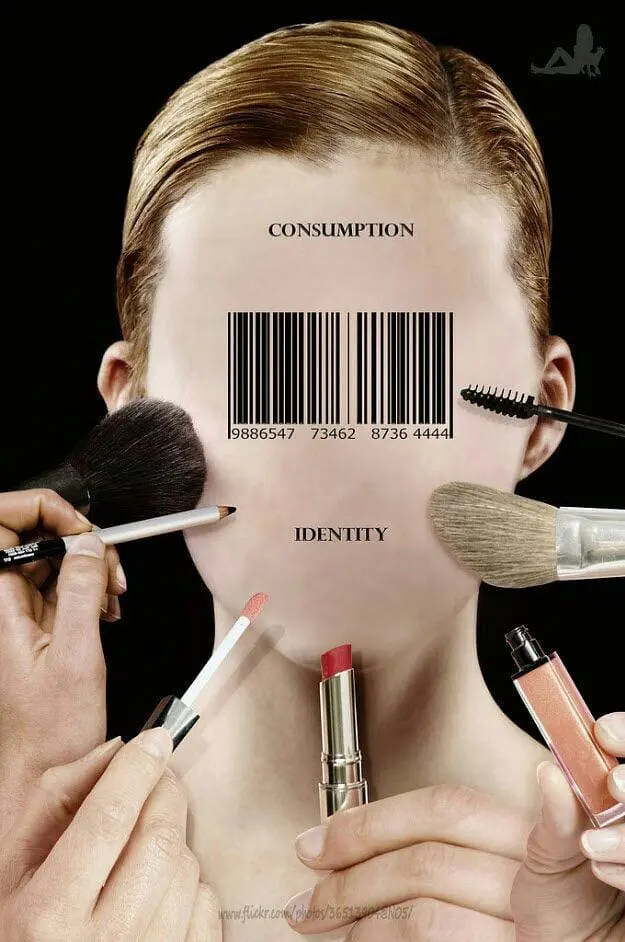
Delulu can start as survival. But if we never step out of it, it can become a loop — a beautiful, softly lit, emotionally distant loop. Real connection, with others and with ourselves, slips further away. What begins as a coping mechanism quietly becomes a cage.
And still — we need it. Not to disappear, but to breathe. We’re learning, slowly, how to hold the fantasy without letting it hold us. To log off not with shame, but with softness. To let the real world feel quiet, unfiltered, and enough.
Because when you start being over-connected to all the pain, the pressure, the impossibility of modern life. And in that overflow, fantasy becomes the only container big enough to hold it all. So, Gen Z didn’t break reality. They just refused to be broken by it.
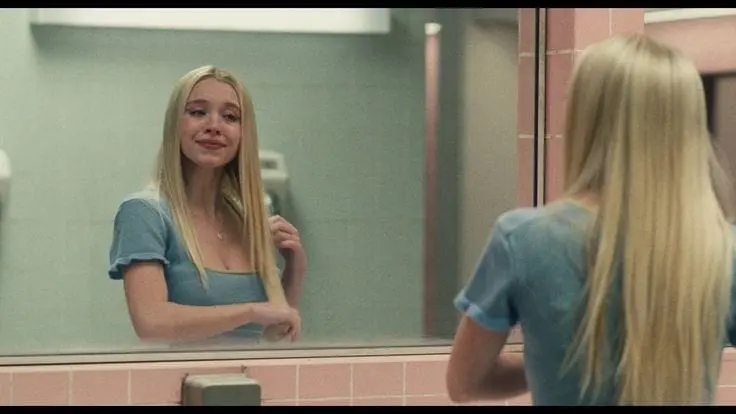
Delulu isn’t a cure-all. It won’t fix the economy, answer your texts, or make the sharp edges of reality any softer. But it offers something just as important: a gentler kind of survival. A story you can live inside when everything else feels overwhelming.
Delulu is the solulu — not because it saves you, but because it reminds you that you’re still worth saving. It’s not about believing the fantasy forever, but believing in the part of yourself brave enough to create it.


